Rapid Detection of Black Pepper Adulteration with Endogenous and Exogenous Materials: Assessment of Benchtop and Handheld Infrared Spectrometers
Paul Rentz, Alina Mihailova, Horacio Heinzen, Martine Bergaentzlé, Elisa Ruhland, Marivil D. Islam, Islam Hamed, Christina Vlachou, Simon Kelly, Said Ennahar, Dalal Werner

TL;DR
This study shows that infrared spectrometers can quickly detect black pepper adulteration with high accuracy, even using portable devices.
Contribution
The novel use of benchtop and handheld infrared spectrometers with chemometric models for rapid detection of black pepper adulteration is presented.
Findings
FTIR-ATR and FT-NIR achieved 100% accuracy in identifying authentic black pepper and adulterants.
The handheld microNIR 1700ES showed 91.30% classification accuracy for black pepper adulteration.
DD-SIMCA models using FTIR-ATR had 100% sensitivity and specificity for detecting multiple adulterants.
Abstract
Black pepper is the most widely used spice crop globally and has significant economic value, making it a target for economically motivated adulteration. A wide range of organic and inorganic bulking materials has been used as adulterants in black pepper. Development of rapid non-targeted screening methods for use at different stages of the black pepper supply chain is extremely important for the identification and prevention of evolving fraudulent practices. This study has assessed the potential of benchtop Fourier Transform infrared with attenuated total reflectance (FTIR-ATR), benchtop Fourier Transform near-infrared (FT-NIR), and two handheld NIR spectrometers, coupled with chemometrics, for the discrimination of black pepper (Piper nigrum), pepper from other species and genera (non-Piper nigrum) and a broad range (n = 27) of endogenous and exogenous adulterants. Spiked samples were…
Genes, proteins, chemicals, diseases, species, mutations and cell lines named across the full text — each resolved to its canonical identifier and authoritative record.
Click any figure to enlarge with its caption.
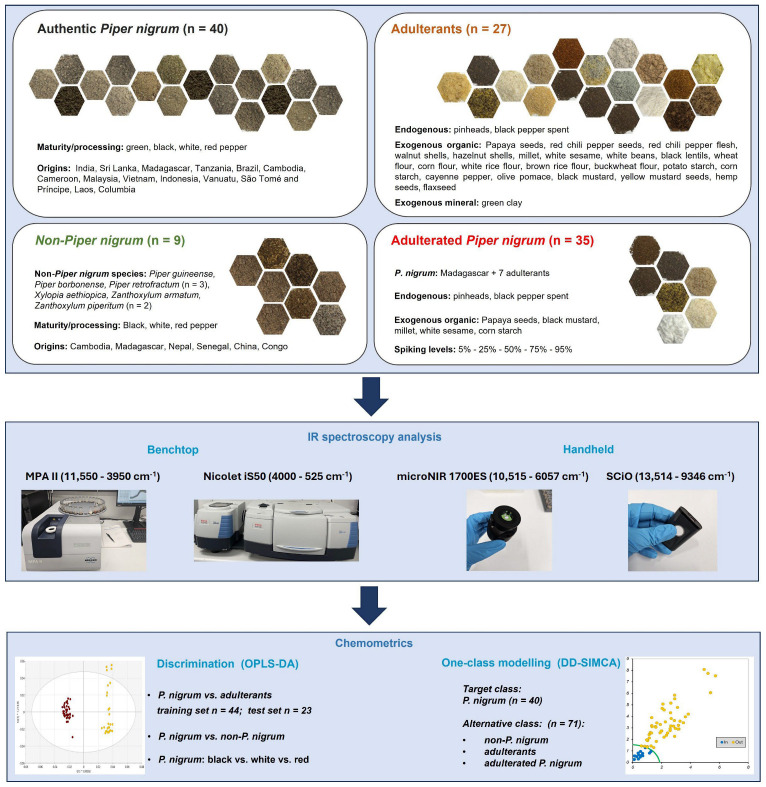 Figure 1
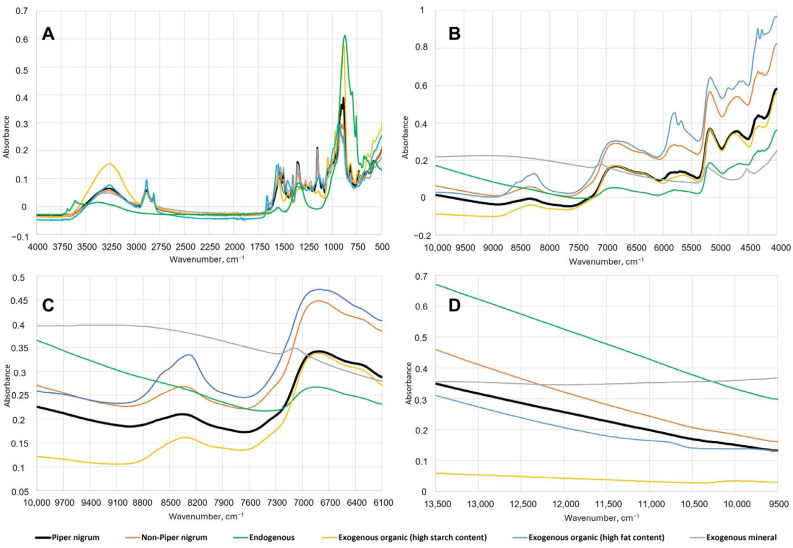 Figure 2
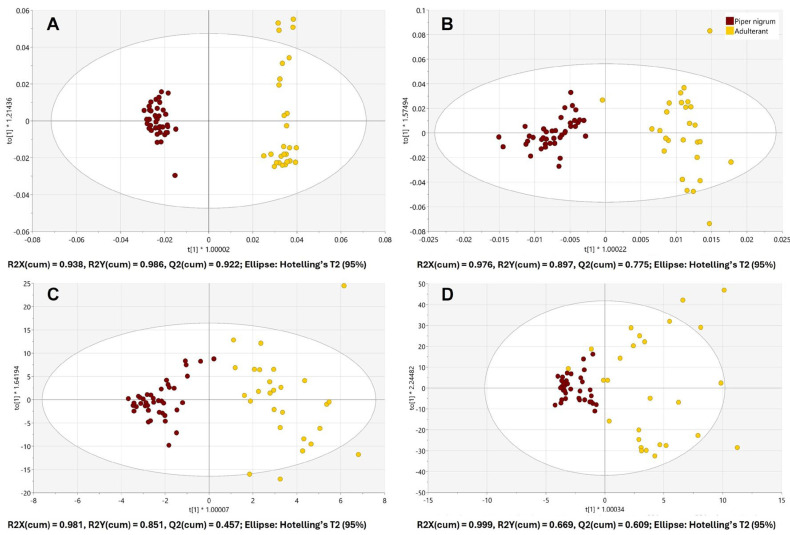 Figure 3
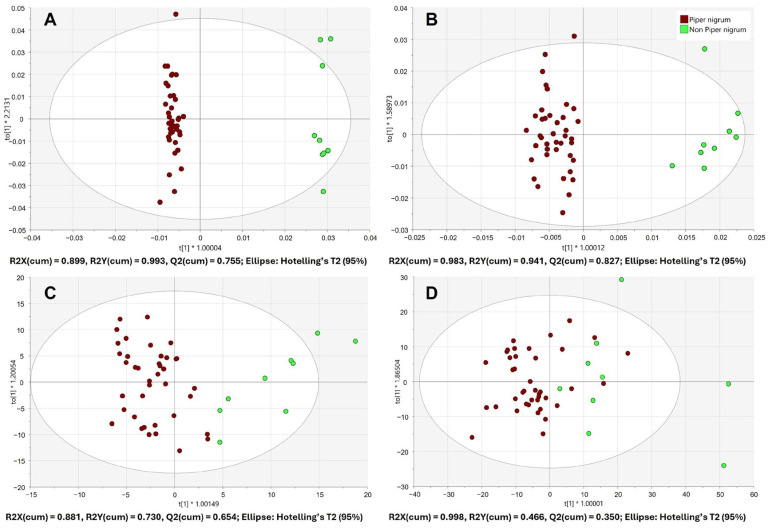 Figure 4
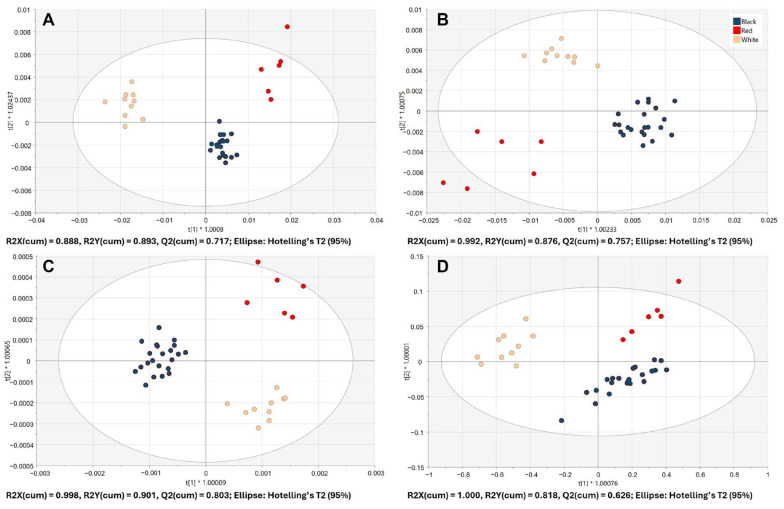 Figure 5
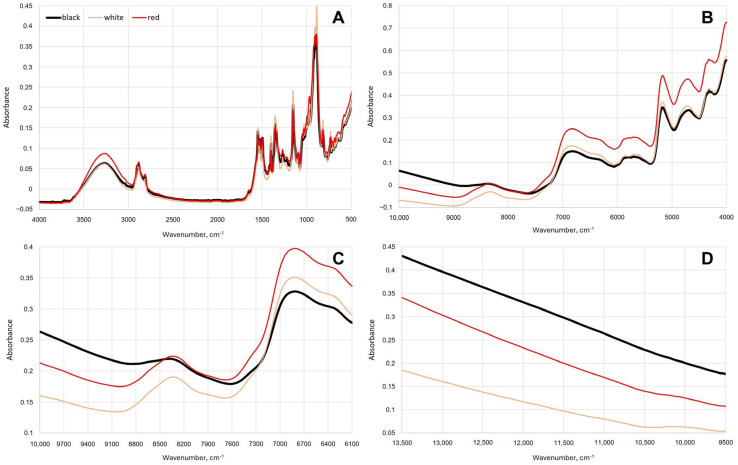 Figure 6
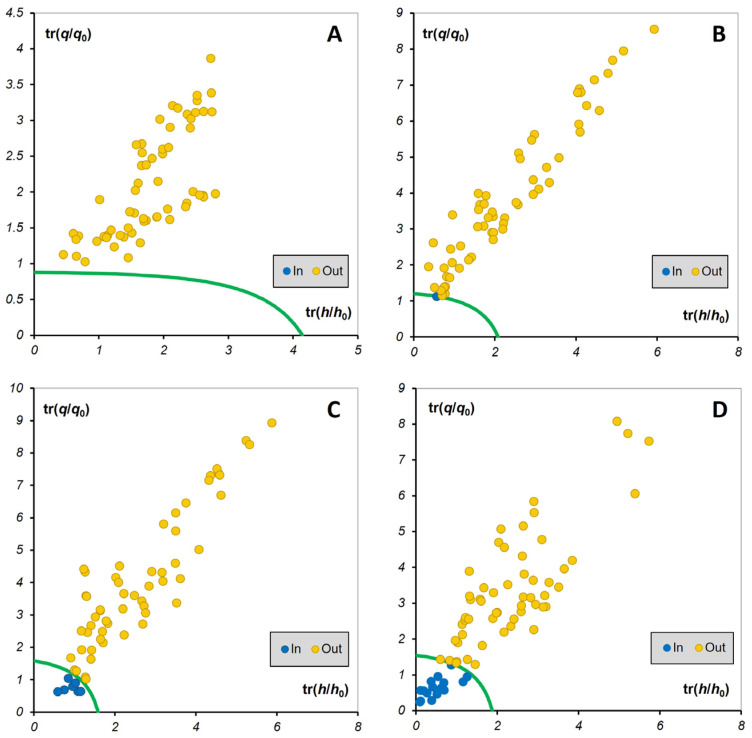 Figure 7
Peer Reviews
No public reviews on file for this paper yet. If you reviewed it on a platform where reviews are public (OpenReview, ICLR, NeurIPS, ICML), you can paste yours below so the community can read it here.
Videos
No videos yet. Explain this paper in a talk, walkthrough, or lecture? Add one.
Taxonomy
TopicsSpectroscopy and Chemometric Analyses · Piperaceae Chemical and Biological Studies · Food Drying and Modeling