Plant-Derived Secondary Metabolites Modulating Inflammation-Driven Pathways in Hepatocellular Carcinoma: Preclinical Insights
Sergio Arael Mendoza-Calderón, Holanda Isabel Cruz Luis, Laura Pérez-Campos Mayoral, Itzel Patricia Vásquez-Martínez, Eduardo Pérez-Campos, Irma Leticia Bazán Salinas, Juan de Dios Ruiz-Rosado, Nahui Samanta Nájera-Segura, Efrén Emmanuel Jarquín González

TL;DR
This paper reviews plant compounds that may help treat liver cancer by targeting inflammation pathways, but more clinical studies are needed.
Contribution
The paper systematically reviews preclinical evidence of plant-derived metabolites modulating inflammation-driven pathways in HCC.
Findings
Phytochemicals like resveratrol and curcumin modulate key signaling pathways in HCC models.
These compounds induce apoptosis and inhibit cancer progression in preclinical studies.
Clinical translation is hindered by bioavailability and safety data gaps.
Abstract
Hepatocellular carcinoma (HCC) is a leading cause of cancer-related mortality worldwide, primarily driven by chronic inflammation from viral hepatitis, metabolic dysfunction, alcohol-induced liver disease, and cirrhosis. Conventional therapies often fail in advanced stages, highlighting the need for mechanism-based, precision-guided interventions. Plant-derived secondary metabolites represent a promising class of bioactive compounds with structural diversity, multitarget activity, anti-inflammatory effects, and favorable toxicity profiles. This review follows a semi-systematic narrative that synthesizes preclinical and experimental evidence on the anti-inflammatory and anticancer properties of key phytochemicals, including epigallocatechin-3-gallate, galangin, resveratrol, quercetin, curcumin, berberine, genistein, and thymoquinone. These compounds consistently modulate critical…
Genes, proteins, chemicals, diseases, species, mutations and cell lines named across the full text — each resolved to its canonical identifier and authoritative record.
Click any figure to enlarge with its caption.
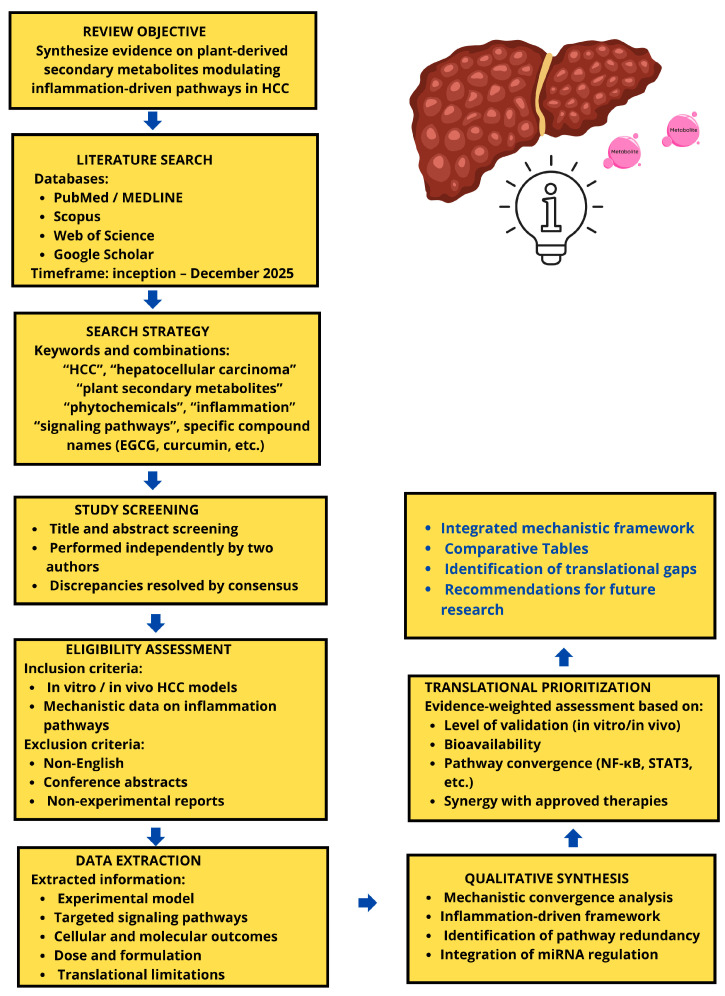 Figure 1
 Figure 2
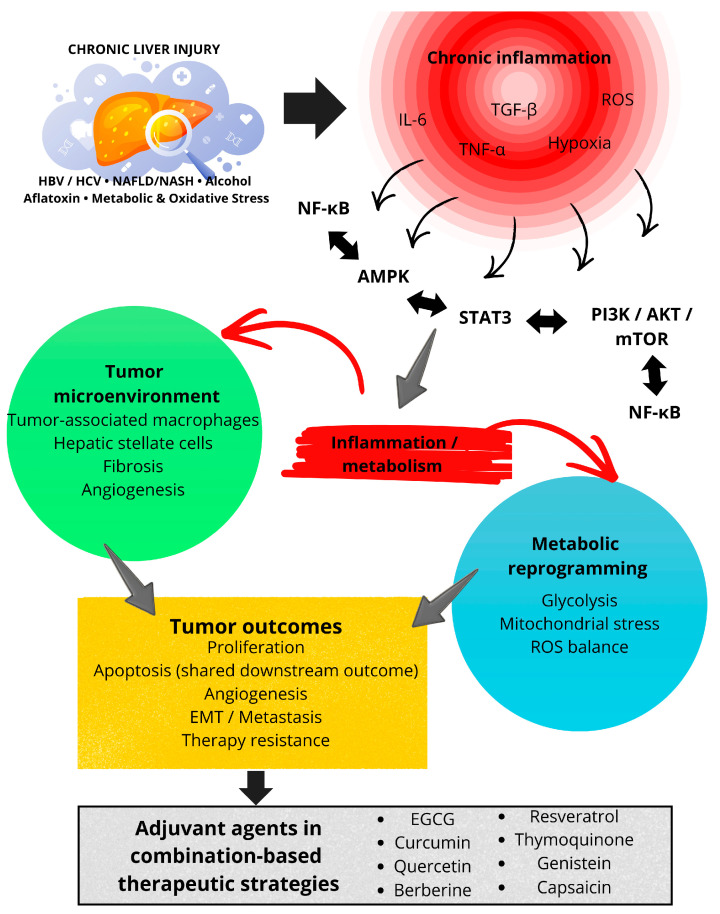 Figure 3
Peer Reviews
No public reviews on file for this paper yet. If you reviewed it on a platform where reviews are public (OpenReview, ICLR, NeurIPS, ICML), you can paste yours below so the community can read it here.
Videos
No videos yet. Explain this paper in a talk, walkthrough, or lecture? Add one.
Taxonomy
TopicsBerberine and alkaloids research · Flavonoids in Medical Research · Bioactive Compounds in Plants