A Phase 1 Dose Escalation of Lapatinib and Paclitaxel in Recurrent Ovarian Cancer
Connie D. Cao, Joseph Robert McCorkle, Donglin Yan, Hoda Saghaeiannejad Esfahani, Rani Jayswal, Dava Piecoro, Ning Li, Lauren A. Baldwin, Rachel W. Miller, Christopher P. Desimone, Charles S. Dietrich, Frederick R. Ueland, Jill M. Kolesar

TL;DR
A clinical trial found that combining lapatinib and paclitaxel is safe and shows promise in treating recurrent ovarian cancer.
Contribution
The study identifies a safe and effective dose combination of lapatinib and paclitaxel for platinum-resistant ovarian cancer.
Findings
The combination of lapatinib 2000 mg twice daily and paclitaxel 80 mg/m² is safe and shows clinical efficacy.
An overall response rate of 50% was observed, with a 71.4% response rate at the recommended phase 2 dose.
CA 125 levels significantly decreased over six cycles, supporting clinical responses.
Abstract
Platinum-resistant ovarian cancer holds a poor prognosis and is often treated with single-agent chemotherapy. The development of ABCB1-mediated resistance limits the clinical efficacy of paclitaxel in recurrent ovarian cancer. Lapatinib is a small-molecule reversible tyrosine kinase and ABCB1 inhibitor that has been shown to reverse paclitaxel resistance during in vitro studies. The combination of pulsed lapatinib 2000 mg twice daily given two days prior to weekly paclitaxel 80 mg/m2 has a clinical efficacy signal and is safe in recurrent ovarian cancer patients. Objective: The development of ABCB1-mediated resistance limits the clinical efficacy of paclitaxel. Lapatinib is a small-molecule reversible tyrosine kinase and ABCB1 inhibitor that could prevent resistance. Our objective was to determine a recommended phase 2 dose (RP2D) of the combination of paclitaxel and lapatinib.…
Genes, proteins, chemicals, diseases, species, mutations and cell lines named across the full text — each resolved to its canonical identifier and authoritative record.
Click any figure to enlarge with its caption.
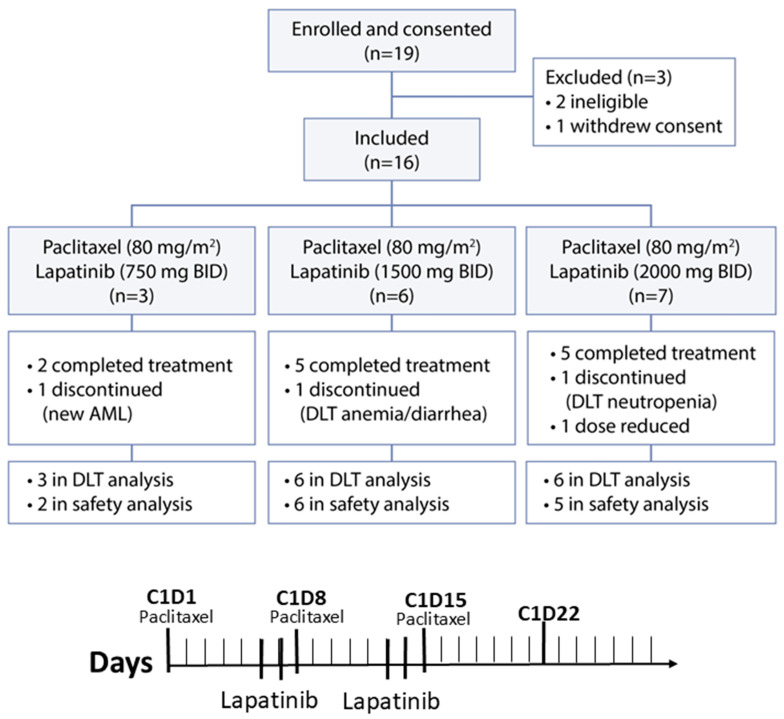 Figure 1
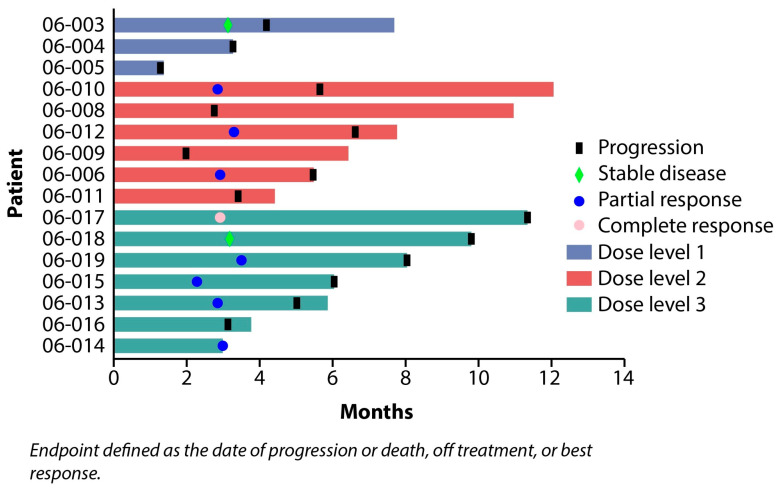 Figure 2
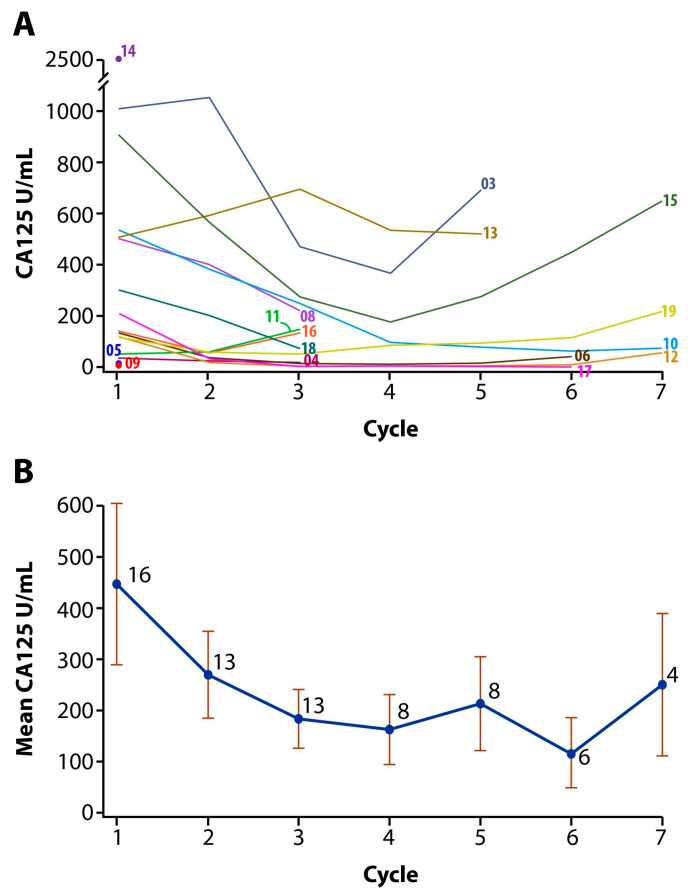 Figure 3
 Figure 4
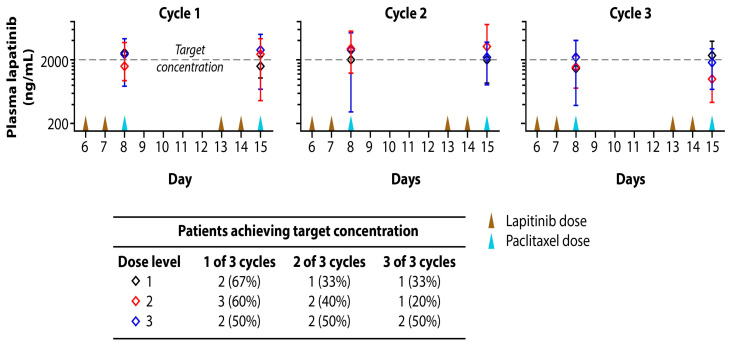 Figure 5
Peer Reviews
No public reviews on file for this paper yet. If you reviewed it on a platform where reviews are public (OpenReview, ICLR, NeurIPS, ICML), you can paste yours below so the community can read it here.
Videos
No videos yet. Explain this paper in a talk, walkthrough, or lecture? Add one.
Taxonomy
TopicsDrug Transport and Resistance Mechanisms · Ovarian cancer diagnosis and treatment · PARP inhibition in cancer therapy