Septic Cardiomyopathy: Age-Dependent Physiology and Hemodynamic Aspects—A Narrative Review
Marianna Miliaraki, George Briassoulis, Evangelia Dardamani, Panagiotis Briassoulis, Stavroula Ilia

TL;DR
Sepsis-induced cardiomyopathy (SCM) affects children and adults differently, requiring tailored cardiovascular assessments and management strategies.
Contribution
This review highlights age-dependent hemodynamic profiles and the need for multimodal diagnostics in managing SCM.
Findings
Adults with SCM often show hyperdynamic vasoplegic states, while children typically exhibit hypodynamic profiles.
Multimodal diagnostic tools like echocardiography and hemodynamic monitoring improve detection of myocardial dysfunction.
Pediatric SCM evidence is limited, with treatment strategies largely extrapolated from adult studies.
Abstract
What are the main findings? Sepsis-induced cardiomyopathy (SCM) is an acute, reversible, non-ischemic myocardial dysfunction in children and adults, ranging from subclinical biventricular impairment to overt cardiogenic shock.Pediatric SCM often presents with hypodynamic profiles, while adults frequently show hyperdynamic, vasoplegic states, reflecting age-dependent differences in cardiovascular physiology.Multimodal diagnostic approaches, including echocardiography and advanced hemodynamic monitoring, improve detection of subtle or evolving myocardial dysfunction. Sepsis-induced cardiomyopathy (SCM) is an acute, reversible, non-ischemic myocardial dysfunction in children and adults, ranging from subclinical biventricular impairment to overt cardiogenic shock. Pediatric SCM often presents with hypodynamic profiles, while adults frequently show hyperdynamic, vasoplegic states,…
Genes, proteins, chemicals, diseases, species, mutations and cell lines named across the full text — each resolved to its canonical identifier and authoritative record.
Click any figure to enlarge with its caption.
 Figure 1
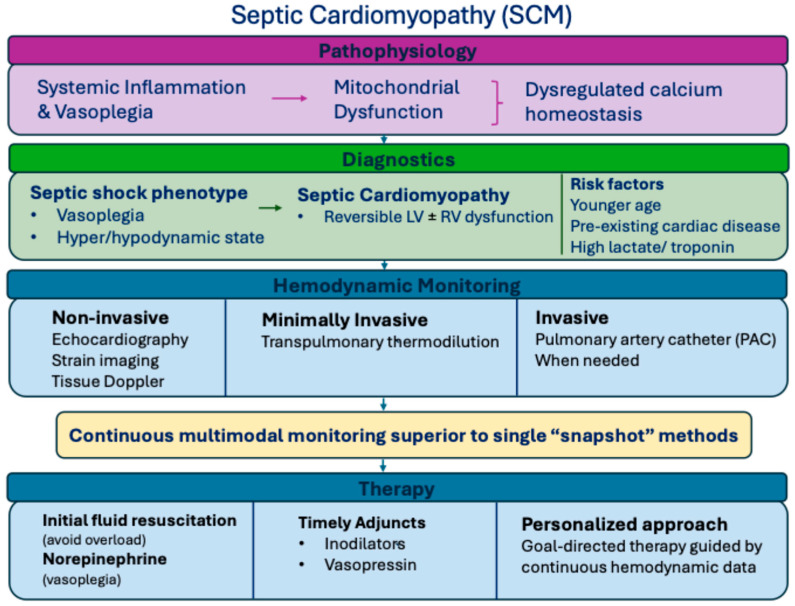 Figure 2
Peer Reviews
No public reviews on file for this paper yet. If you reviewed it on a platform where reviews are public (OpenReview, ICLR, NeurIPS, ICML), you can paste yours below so the community can read it here.
Videos
No videos yet. Explain this paper in a talk, walkthrough, or lecture? Add one.
Taxonomy
TopicsSepsis Diagnosis and Treatment · Hemodynamic Monitoring and Therapy · Acute Kidney Injury Research