64Cu-DOTATATE-PET/CT in Neuroborreliosis Shows Increased Tracer Uptake in Dorsal Root and Paravertebral Ganglia
Mathilde Ørbæk, Marie Øbro Fosbøl, Anna Maria Florescu, Christian Midtgaard Stenør, Micha Phill Grønholm Jepsen, Jonathan Frederik Carlsen, Christian Thomas Brandt, Pelle Trier Petersen, Helene Mens, Åse Bengaard Andersen, Flemming Littrup Andersen, Ian Law, Annika Loft

TL;DR
A PET/CT scan using 64Cu-DOTATATE shows increased uptake in nerve ganglia in patients with neuroborreliosis, possibly reflecting immune activity, but does not add diagnostic value beyond standard methods.
Contribution
This study is the first to demonstrate symmetric 64Cu-DOTATATE uptake in dorsal root and paravertebral ganglia in neuroborreliosis patients.
Findings
10 out of 15 NB patients showed symmetric 64Cu-DOTATATE uptake in dorsal root and paravertebral ganglia.
No controls showed lumbosacral ganglia uptake, suggesting specificity to NB.
Only one patient had focal PET uptake matching MRI findings and clinical symptoms.
Abstract
Background: Macrophages play a key role in clearing Borrelia burgdorferi infection and express somatostatin receptor subtype 2 (SSTR2), a potential imaging target. This study investigates immune activation in neuroborreliosis (NB) and assesses the diagnostic value of 64Cu-DOTATATE positron emission tomography/computed tomography (PET/CT) alongside magnetic resonance imaging (MRI). Methods: Prospective cohort study (2024–2025) enrolling patients with suspected NB from four Danish hospitals. NB was defined by the following ≥2 criteria: neurological symptoms, cerebrospinal fluid (CSF) pleocytosis, and intrathecal B. burgdorferi-specific antibodies; patients not meeting these criteria served as controls. Results: The study included 20 participants: 15 NB patients (75%) and 5 controls (25%). PET/CT was performed after a median of 9.5 days of antibiotic treatment. Symmetric 64Cu-DOTATATE…
Genes, proteins, chemicals, diseases, species, mutations and cell lines named across the full text — each resolved to its canonical identifier and authoritative record.
Click any figure to enlarge with its caption.
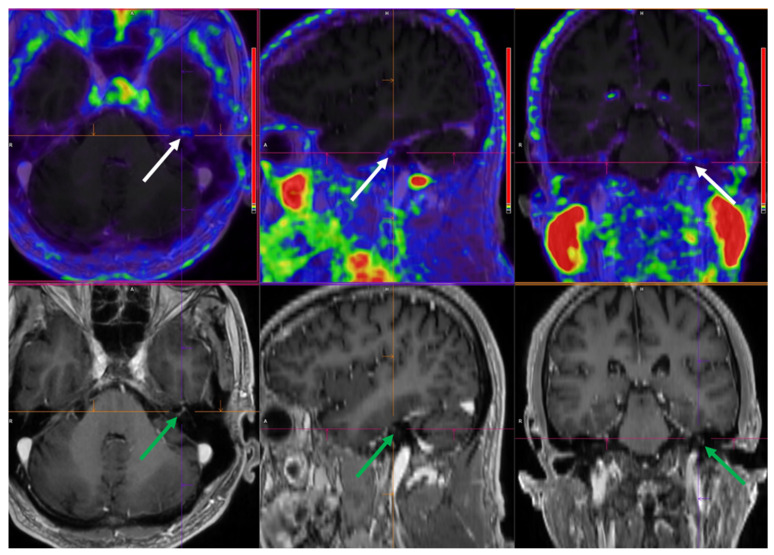 Figure 1
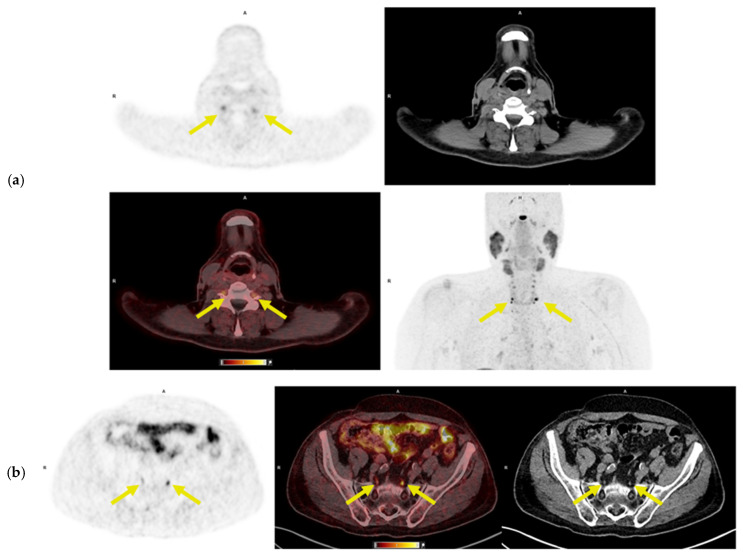 Figure 2
 Figure 3
 Figure 4
Peer Reviews
No public reviews on file for this paper yet. If you reviewed it on a platform where reviews are public (OpenReview, ICLR, NeurIPS, ICML), you can paste yours below so the community can read it here.
Videos
No videos yet. Explain this paper in a talk, walkthrough, or lecture? Add one.
Taxonomy
TopicsVector-borne infectious diseases · Virology and Viral Diseases · Bacterial Infections and Vaccines