Immune Checkpoint Inhibitors in Malignant Pleural Mesothelioma: Efficacy, Real-World Outcomes, and the Search for Predictive Biomarkers
Giusi Bondì, Serafina Martella, Dimitrios Stylianakis, Alberto Terminella, Filippo Lococo, Alessia Ciarrocchi, Alfonso Fiorelli, Giacomo Cusumano

TL;DR
This paper reviews how immunotherapy is changing treatment for a rare lung cancer called mesothelioma, but notes that results vary and better biomarkers are needed to guide treatment.
Contribution
The paper highlights the complex interplay of genomic, immunologic, and clinical factors affecting immunotherapy response in mesothelioma and emphasizes the need for integrated molecular profiling.
Findings
Combination immunotherapy (nivolumab plus ipilimumab) improves survival in non-epithelioid mesothelioma compared to chemotherapy.
Genomic alterations like BAP1, NF2, and CDKN2A influence tumor response to immunotherapy.
Current biomarkers lack predictive value for immunotherapy response in mesothelioma.
Abstract
Malignant pleural mesothelioma is a rare and aggressive cancer, often linked to asbestos exposure, for which treatment options have long been limited. Immunotherapy has introduced new opportunities, but its benefits vary widely among patients and are often less pronounced in routine clinical practice than in clinical trials. Outcomes appear to depend on several factors, including tumor subtype, patient characteristics, and the biological features of the tumor microenvironment. Genetic alterations such as BAP1, NF2, and CDKN2A may influence how tumors respond to immunotherapy, yet no biomarker is currently reliable enough to guide treatment decisions. A deeper understanding of how genetic changes, immune activity, and clinical features interact will be essential for developing more personalized therapeutic strategies and improving future outcomes. Immunotherapy has significantly…
Genes, proteins, chemicals, diseases, species, mutations and cell lines named across the full text — each resolved to its canonical identifier and authoritative record.
Click any figure to enlarge with its caption.
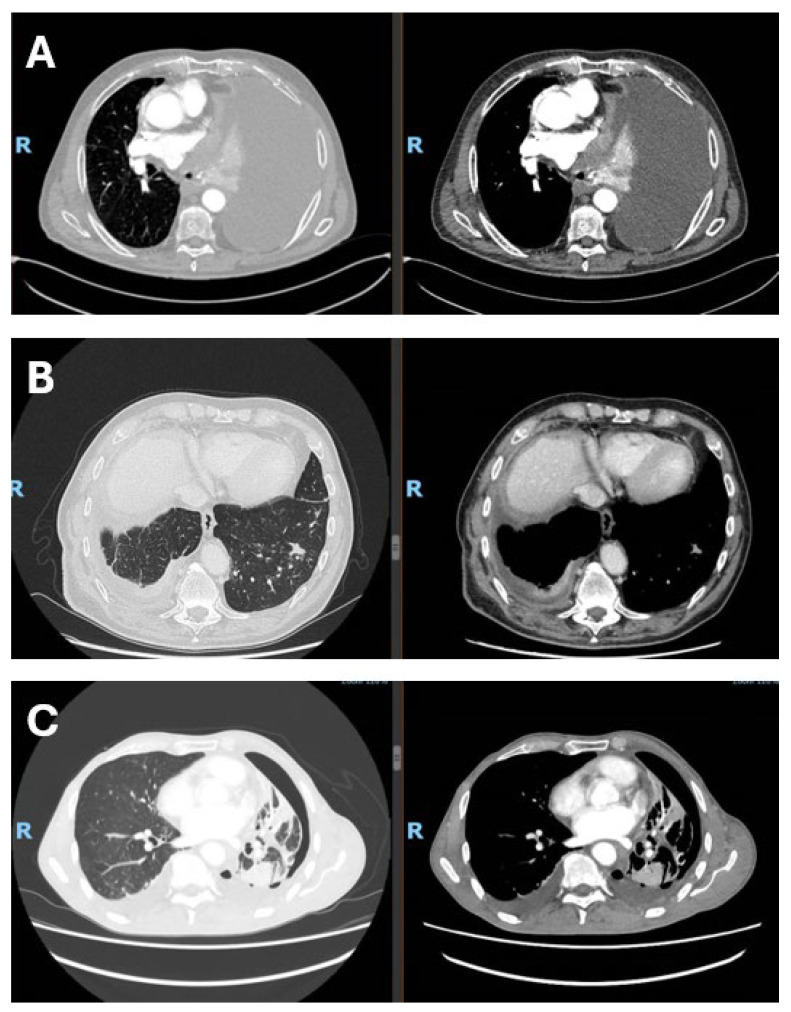 Figure 1
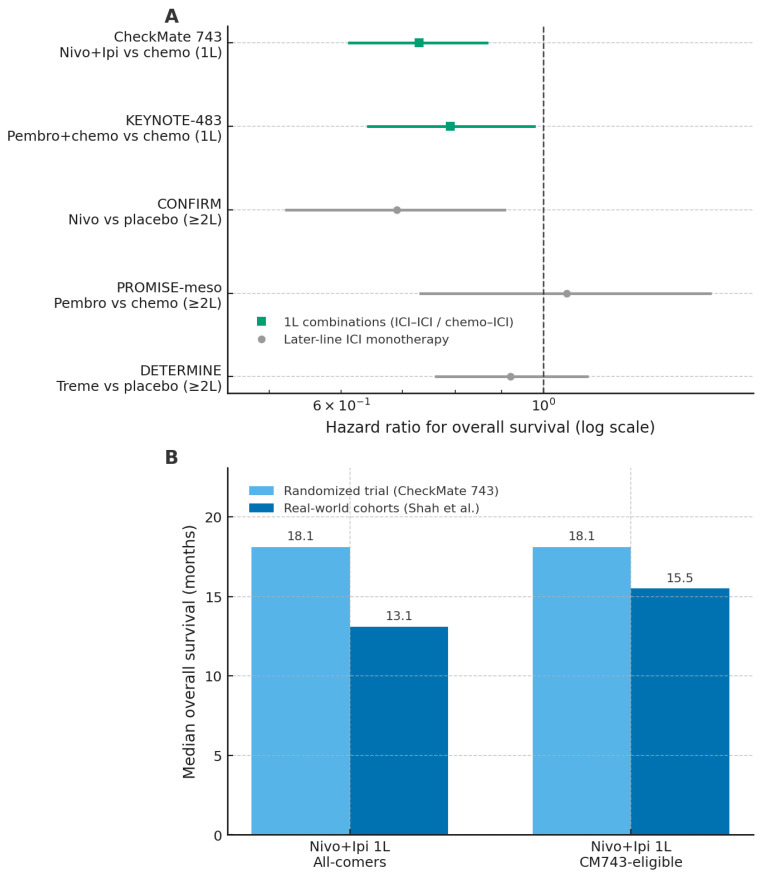 Figure 2
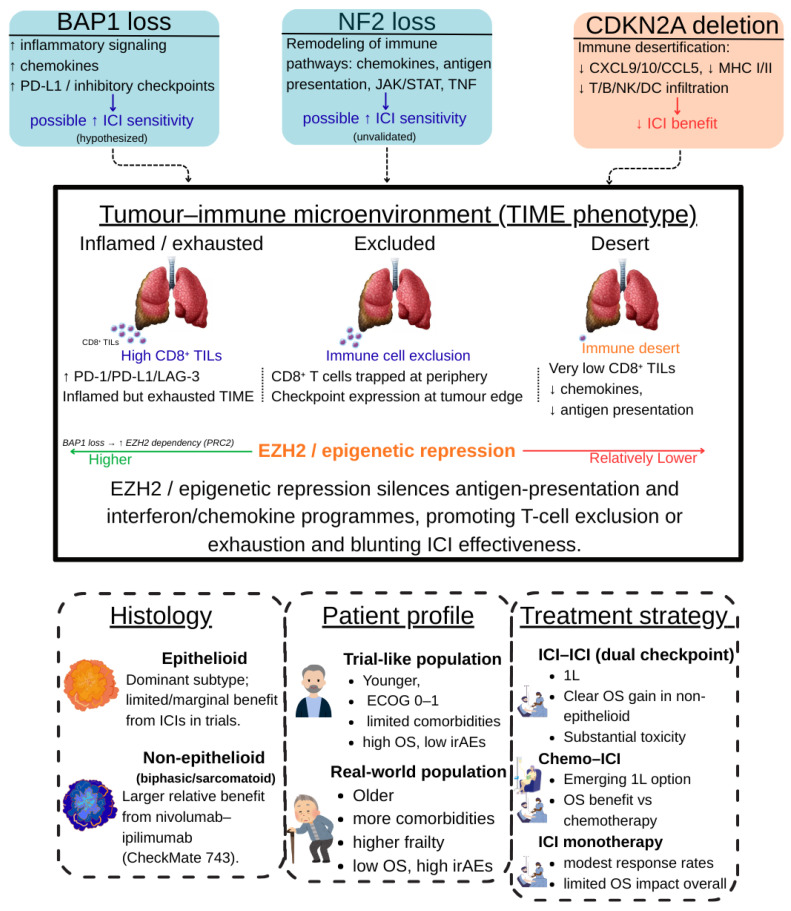 Figure 3
Peer Reviews
No public reviews on file for this paper yet. If you reviewed it on a platform where reviews are public (OpenReview, ICLR, NeurIPS, ICML), you can paste yours below so the community can read it here.
Videos
No videos yet. Explain this paper in a talk, walkthrough, or lecture? Add one.
Taxonomy
TopicsOccupational and environmental lung diseases · Cancer Immunotherapy and Biomarkers · Myasthenia Gravis and Thymoma