Preoperative Soluble AXL in Plasma Predicts Futility of Resecting Pancreatic Ductal Adenocarcinoma
Thomas Samson, Maral Aali, Darien McBride, Thomas Arnason, Sharon E. Clarke, Ravi Ramjeesingh, Lisette Gonzalez-Chavez, Yara Azizieh, Mark J. Walsh, Scott M. Livingstone, Stephanie E. Hiebert, Jeanette E. Boudreau, Boris L. Gala-Lopez

TL;DR
High levels of a blood protein called sAXL before surgery may predict which pancreatic cancer patients are unlikely to benefit from surgery.
Contribution
sAXL is shown to be a better predictor of early mortality after surgery than the current standard biomarker CA19-9.
Findings
Patients with high preoperative sAXL levels had 2-3 times higher risk of death within six months after surgery.
sAXL outperformed CA19-9 in predicting early mortality with a cut-off of 40.26 ng/mL.
sAXL remained a significant predictor of mortality even when accounting for tumor grade and surgical margin status.
Abstract
Pancreatic ductal adenocarcinoma (PDAC) is the third leading cause of cancer mortality in Canada. Radical surgery combined with chemotherapy is the only hope for a cure, but many of those undergoing surgery will still recur and die within 6–24 months. We examined soluble AXL (sAXL), a protein shed into the blood from PDAC tumours, for its ability to distinguish risk for death within the first six months post-surgery. Six-month mortality was 2 to 3 times more likely if they had high levels of sAXL in their blood before surgery. This study supports further research into more complex models to predict early mortality after surgery, to guide pre-operative conversations and identify those who should undergo more intensive follow-up after resection or those who would not benefit at all from surgery. Surgical resection combined with chemotherapy offers the best chance of survival in…
Genes, proteins, chemicals, diseases, species, mutations and cell lines named across the full text — each resolved to its canonical identifier and authoritative record.
Click any figure to enlarge with its caption.
 Figure 1
 Figure 2
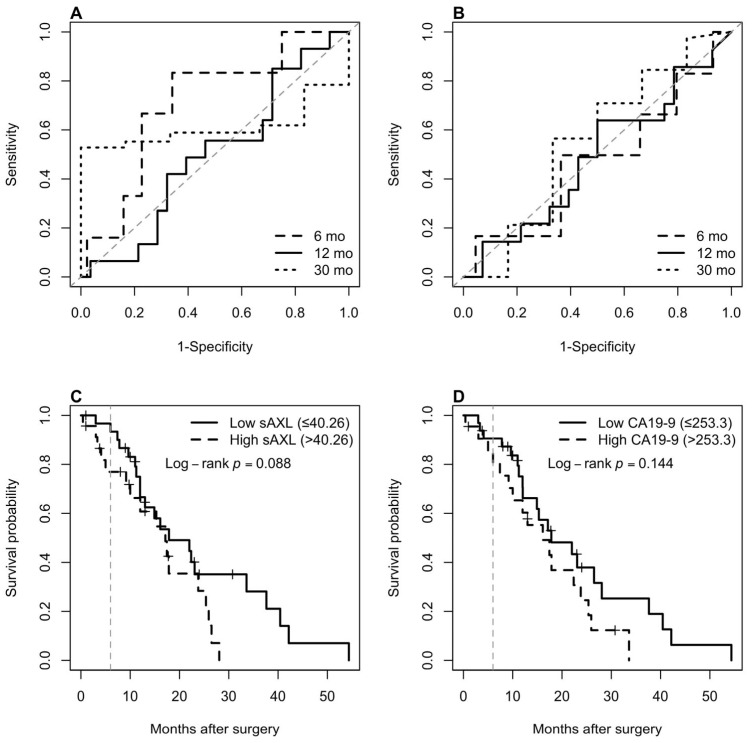 Figure 3
 Figure 4
Peer Reviews
No public reviews on file for this paper yet. If you reviewed it on a platform where reviews are public (OpenReview, ICLR, NeurIPS, ICML), you can paste yours below so the community can read it here.
Videos
No videos yet. Explain this paper in a talk, walkthrough, or lecture? Add one.
Taxonomy
TopicsPhagocytosis and Immune Regulation · Pancreatic and Hepatic Oncology Research · Cancer Research and Treatments