Host Serum Biomarker Signatures in Mycobacteriologically Cured Pulmonary Tuberculosis Patients with Persistent Lung Inflammation on 18F-FDG PET/CT
Bongani Motaung, Solima Sabeel, Mumin Ozturk, Trevor S. Mafu, Muki Shey, Sandra L. Mukasa, Karen Wolmarans, Fareda Jakoet-Bassier, Ashleigh Taylor, Antoneta Mashinyira, Tessa Kotze, Friedrich Thienemann, Reto Guler

TL;DR
This study identifies serum biomarkers linked to persistent lung inflammation in TB patients who have completed treatment, which could help diagnose lingering inflammation and prevent long-term lung damage.
Contribution
The study identifies serum biomarkers associated with persistent lung inflammation in TB patients post-treatment, offering potential diagnostic tools.
Findings
15 serum biomarkers were significantly elevated in patients with extensive lung inflammation.
14 biomarkers showed potential as diagnostic markers with AUC values between 0.707 and 0.806.
13 biomarkers correlated with total lung glycolysis (TLG) values, supporting their clinical utility.
Abstract
Background: Pulmonary inflammation is a widely recognized characteristic of active tuberculosis (TB). Although standard TB treatment is effective, a substantial proportion of mycobacteriologically cured TB patients experience persistent pulmonary inflammation, which can lead to long-term lung impairment, post-tuberculosis lung disease (PTLD) and potentially TB recurrence. Methods: We conducted a case–control study to compare host serum biomarker profiles in individuals with minimal (TLG < 50 SUVbw*mL, n = 37) versus extensive (TLG ≥ 50 SUVbw*mL, n = 34) persistent lung inflammation following completion of standard drug-sensitive TB treatment. Lung inflammation was measured by 18F-FDG PET/CT scan using total lung glycolysis (TLG) as a surrogate marker. All participants had negative sputum cultures at four months of TB treatment, and blood samples were collected at treatment completion…
Genes, proteins, chemicals, diseases, species, mutations and cell lines named across the full text — each resolved to its canonical identifier and authoritative record.
Click any figure to enlarge with its caption.
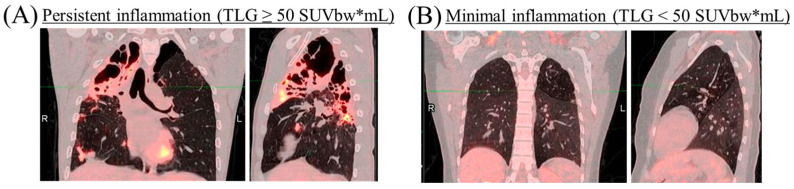 Figure 1
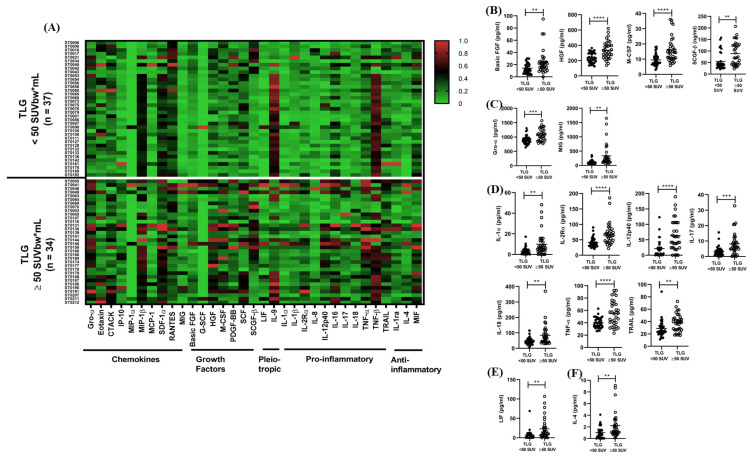 Figure 2
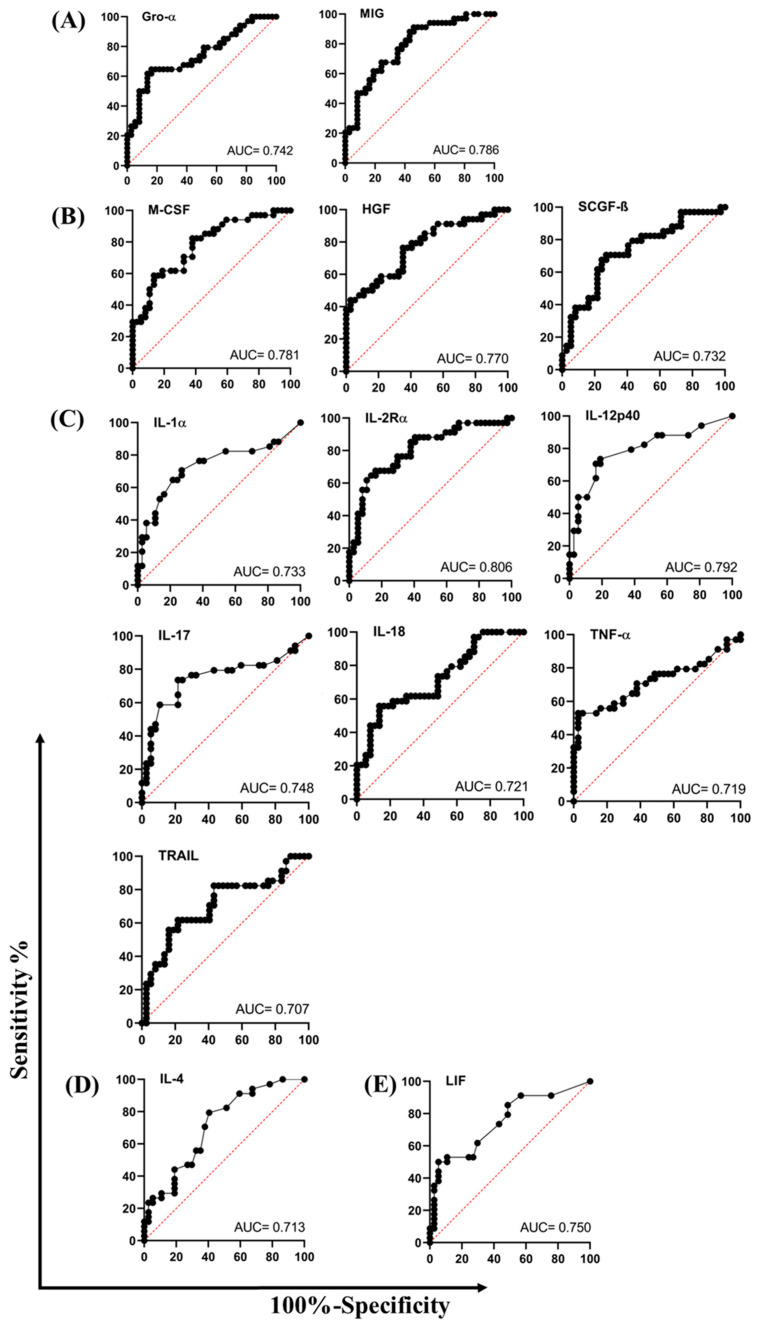 Figure 3
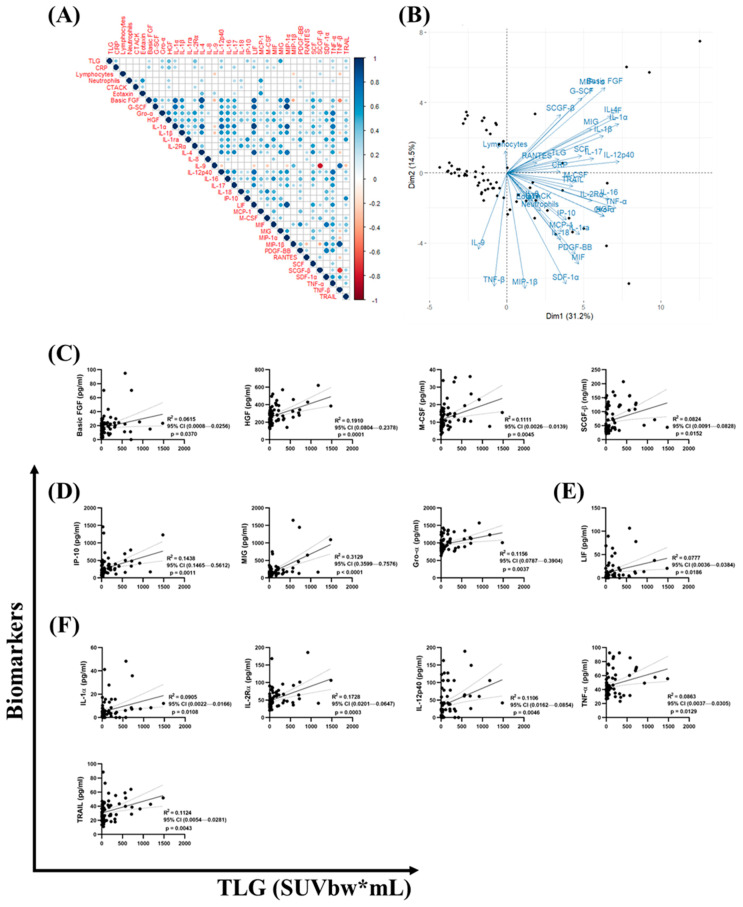 Figure 4
Peer Reviews
No public reviews on file for this paper yet. If you reviewed it on a platform where reviews are public (OpenReview, ICLR, NeurIPS, ICML), you can paste yours below so the community can read it here.
Videos
No videos yet. Explain this paper in a talk, walkthrough, or lecture? Add one.
Taxonomy
TopicsTuberculosis Research and Epidemiology · Sarcoidosis and Beryllium Toxicity Research · Inflammation biomarkers and pathways