Epigenetic, Genetic, and Functional Germline Alterations of PAX Genes in Human Pathology: A Comprehensive Update
Valentina Lopez Gomez, Samantha Wegner, Stephanie Ocejo, Dezaray Perez, Diana Jabbour, Virginia Fernandez, Amr Abulaban, Marwan Bahmad, Tarec K. Elajami, Wassim Abou-Kheir, Hisham F. Bahmad

TL;DR
This paper reviews how mutations in PAX genes lead to various human diseases, emphasizing their role in development and disease mechanisms.
Contribution
The paper offers a comprehensive overview of germline PAX gene mutations and their clinical implications across multiple organ systems.
Findings
Germline mutations in PAX genes are linked to a range of congenital disorders with variable expressivity and overlapping symptoms.
PAX proteins play roles in postnatal tissue maintenance and immune function, expanding their clinical relevance beyond embryonic development.
The paper integrates molecular genetics with human pathology to clarify genotype–phenotype correlations and disease classification.
Abstract
Paired box (PAX) genes encode a family of nine transcription factors that function as master regulators of embryogenesis, organogenesis, and lineage specification. Their tightly regulated spatial and temporal expression is essential for the development of multiple organ systems, including the central nervous system, eyes, kidneys, immune system, musculoskeletal system, and endocrine organs. Germline mutations of PAX genes result in a broad and often pleiotropic spectrum of human disease, reflecting the developmental programs governed by each family member. Pathogenic variants in PAX genes underlie diverse congenital disorders such as aniridia (PAX6), renal coloboma syndrome (PAX2), otofaciocervical syndrome with immunodeficiency (PAX1), Waardenburg syndrome (PAX3), maturity-onset diabetes of the young (PAX4), and tooth agenesis (PAX9). These conditions frequently demonstrate variable…
Genes, proteins, chemicals, diseases, species, mutations and cell lines named across the full text — each resolved to its canonical identifier and authoritative record.
Click any figure to enlarge with its caption.
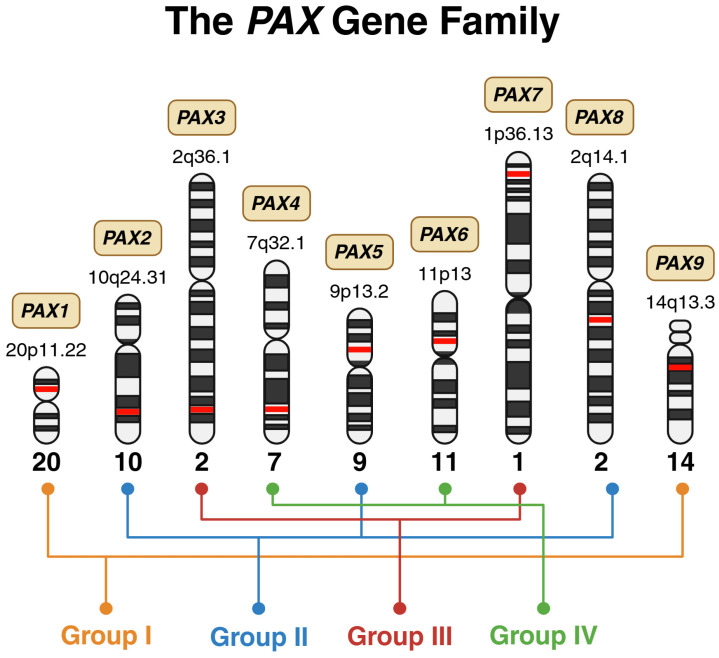 Figure 1
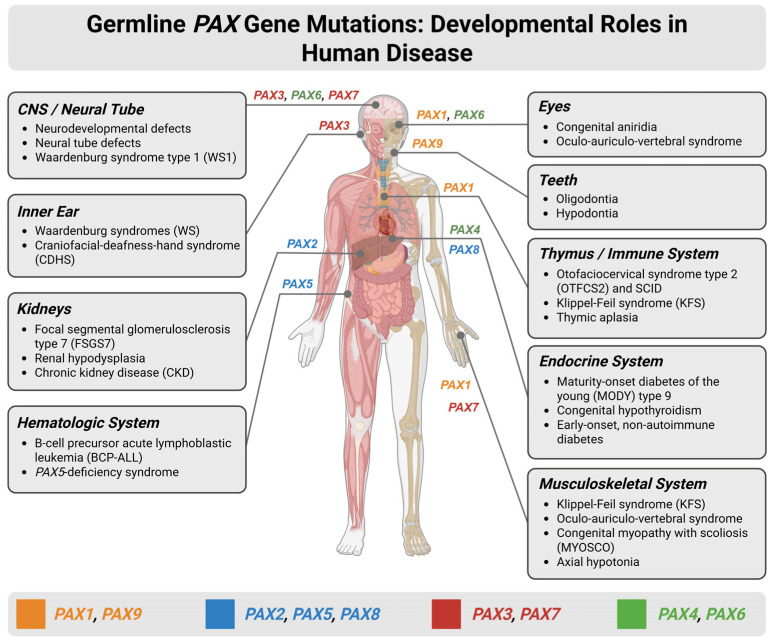 Figure 2
Peer Reviews
No public reviews on file for this paper yet. If you reviewed it on a platform where reviews are public (OpenReview, ICLR, NeurIPS, ICML), you can paste yours below so the community can read it here.
Videos
No videos yet. Explain this paper in a talk, walkthrough, or lecture? Add one.
Taxonomy
TopicsDevelopmental Biology and Gene Regulation · Congenital heart defects research · Pancreatic function and diabetes