The Value of Stereotactic Radiotherapy After FOLFIRINOX in Patients with Pancreatic Cancer with Vascular Contact—A Nationwide, Retrospective Cohort Study
Freek R. van ‘t Land, Leonard W. F. Seelen, Maaike Verheij, Thomas F. Stoop, Olivier R. Busch, Marc G. H. Besselink, Lois A. Daamen, Marcel den Dulk, Sebastiaan Festen, Ignace H. J. T. de Hingh, Marjolein Y. V. Homs, Martijn P. W. Intven, Daan J. Lips, Maartje Los

TL;DR
This study found that adding stereotactic radiotherapy after chemotherapy did not improve survival in pancreatic cancer patients, but it showed better tumor characteristics in those who had surgery.
Contribution
The study is the first nationwide retrospective analysis showing no OS benefit from SBRT after FOLFIRINOX, but improved histopathological outcomes in resected cases.
Findings
Stereotactic radiotherapy did not improve overall survival in patients with pancreatic cancer after chemotherapy.
In resected patients, SBRT was linked to better histopathological outcomes like ypT0-2 and ypN0.
Landmark analysis showed no OS difference between SBRT and no SBRT groups after 12 months.
Abstract
Pancreatic cancer with vascular contact without distant metastasis is treated with chemotherapy. In addition, stereotactic radiotherapy has been used following chemotherapy in an attempt to increase progression-free and overall survival. However, the benefit of radiotherapy in improving local disease control or overall survival is not known. In the current study, in patients who did not develop progressive disease after at least four cycles of (modified)FOLFIRINOX, stereotactic radiotherapy was not associated with improved overall survival compared to chemotherapy-only treatment. In the subgroup of patients who underwent resection, stereotactic radiotherapy was associated with favorable histopathological characteristics. Background/Objectives: Stereotactic body radiotherapy (SBRT) aims to prolong overall survival (OS) in patients with pancreatic ductal adenocarcinoma (PDAC) with…
Genes, proteins, chemicals, diseases, species, mutations and cell lines named across the full text — each resolved to its canonical identifier and authoritative record.
Click any figure to enlarge with its caption.
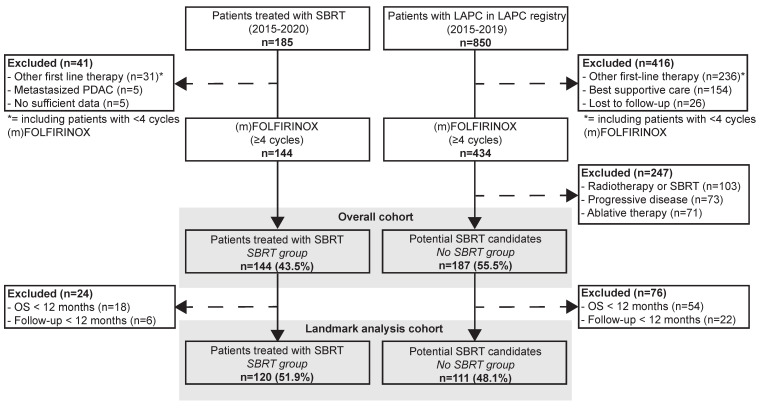 Figure 1
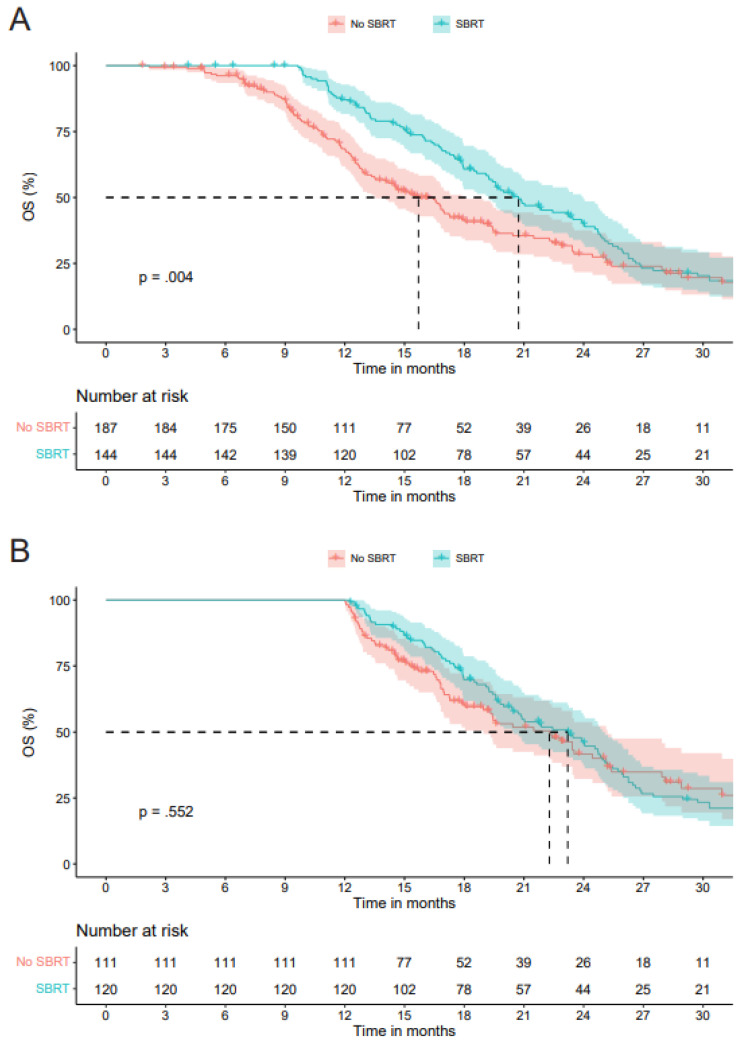 Figure 2
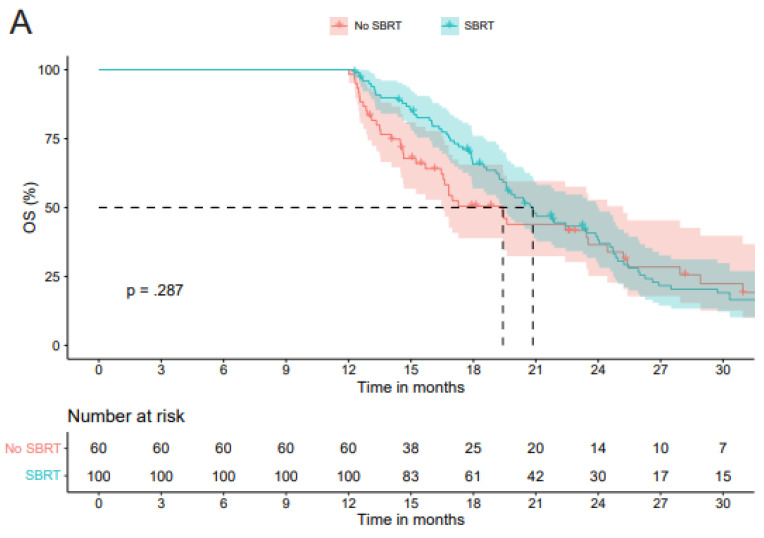 Figure 3
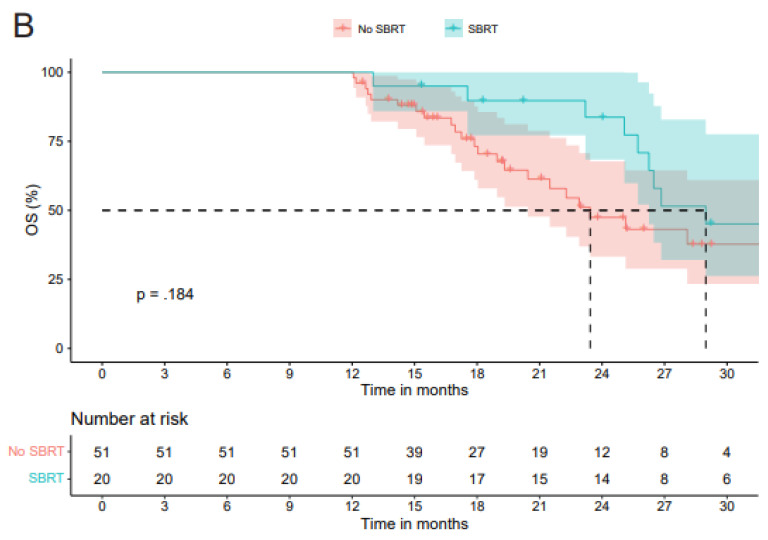 Figure 4
Peer Reviews
No public reviews on file for this paper yet. If you reviewed it on a platform where reviews are public (OpenReview, ICLR, NeurIPS, ICML), you can paste yours below so the community can read it here.
Videos
No videos yet. Explain this paper in a talk, walkthrough, or lecture? Add one.
Taxonomy
TopicsPancreatic and Hepatic Oncology Research · Hepatocellular Carcinoma Treatment and Prognosis · Cholangiocarcinoma and Gallbladder Cancer Studies