Qudit-Native Simulation of the Potts Model
Maksim A. Gavreev, Evgeniy O. Kiktenko, Aleksey K. Fedorov, Anastasiia S. Nikolaeva

TL;DR
This paper introduces a new method for simulating the Potts model using qudit systems, enabling efficient quantum simulations on trapped-ion platforms.
Contribution
The paper presents two novel qudit-native decomposition schemes for simulating the Potts model using trapped-ion platforms.
Findings
Two qudit-native decomposition schemes are introduced for encoding Potts interactions using trapped-ion gates.
A Suzuki–Trotter approximation is demonstrated for detecting dynamical quantum phase transitions.
The approach provides a pathway for qudit-based digital simulation of many-body quantum models.
Abstract
Simulating entangled, many-body quantum systems is notoriously hard, especially in the case of the high-dimensional nature of the underlying physical objects. In this work, we propose an approach for simulating the Potts model based on the Suzuki–Trotter decomposition that we construct for qudit systems. Specifically, we introduce two qudit-native decomposition schemes: (i) the first utilizes the Mølmer–Sørensen gate and additional local levels to encode the Potts interactions, while (ii) the second employs a light-shift gate that naturally fits qudit architectures. These decompositions enable a direct and efficient mapping of the Potts model dynamics into hardware-efficient qudit gate sequences for a trapped-ion platform. Furthermore, we demonstrate the use of a Suzuki–Trotter approximation with our evolution-into-gates framework for detecting the dynamical quantum phase transition.…
Genes, proteins, chemicals, diseases, species, mutations and cell lines named across the full text — each resolved to its canonical identifier and authoritative record.
Click any figure to enlarge with its caption.
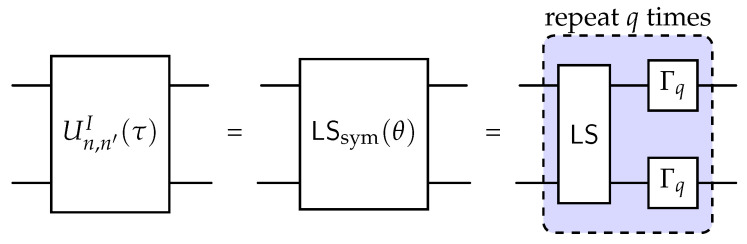 Figure 1
 Figure 2
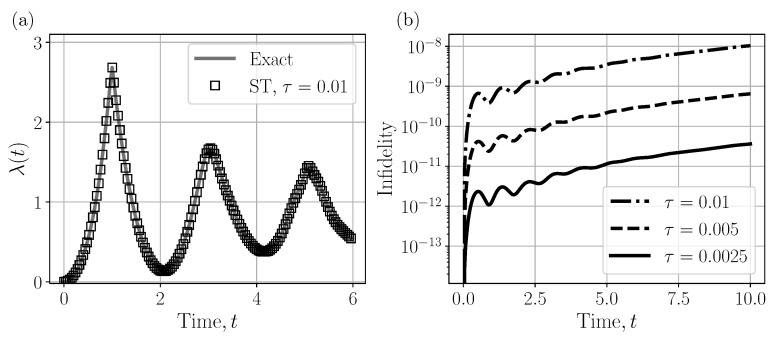 Figure 3
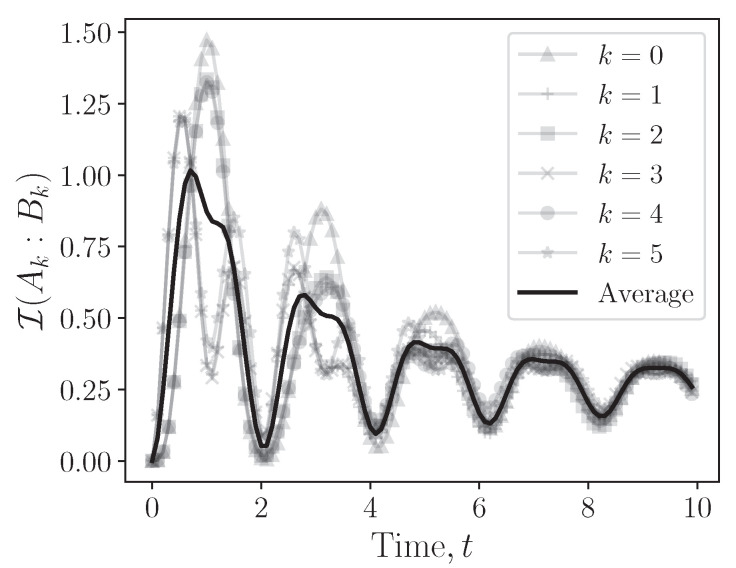 Figure 4
- —Priority 2030 program at the National University of Science and Technology “MISIS”
- —RSF
Peer Reviews
No public reviews on file for this paper yet. If you reviewed it on a platform where reviews are public (OpenReview, ICLR, NeurIPS, ICML), you can paste yours below so the community can read it here.
Videos
No videos yet. Explain this paper in a talk, walkthrough, or lecture? Add one.
Taxonomy
TopicsQuantum many-body systems · Quantum Computing Algorithms and Architecture · Quantum Information and Cryptography
1. Introduction
Quantum computational devices enable the exploration of entangled many-body quantum states that are believed to be difficult to analyze classically in a controllable manner [1]. The most well-developed digital model of quantum computing follows along the lines of classical information theory [2], so that the information units in the quantum domain are qubits that are quantum counterparts of classical information bits. However, underlying physical objects in physical systems that are used for quantum computing [3,4,5] are essentially multilevel [6], e.g., neutral atoms and trapped ions with a rich structure of energy levels (so that their use as qubits requires idealization). Since one of the key applications of quantum computing is the simulation of complex entangled many-body systems, the ability to manipulate multilevel states can be exploited to efficiently simulate quantum models consisting of high-dimensional objects, such as high-order spins [7].
We note that the use of multilevel systems, also known as qudits, in quantum computing is also of general interest in the context of a more efficient implementation of quantum algorithms (for a review, see Refs. [8,9]) Moreover, one can note significant progress in the realization of qudit-based processors with trapped ions [10,11], superconducting systems [12,13], and quantum light [14]. Several experiments have been performed using qudit processors for quantum simulations [15,16,17,18,19], for example, in the case of high-energy physics models [20].
A prominent example of a quantum many-body model with a wide range of applications is the Potts model [21,22,23], which is a generalization of the famous quantum Ising model (the Potts model is also related to the so-called chiral clock model [24,25,26]). The key feature of the Potts model is the ability to capture richer structures in quantum phase transitions [24,27,28], critical phenomena [28], exotic quasiparticle excitations (e.g., mesonic and baryonic) [29], properties of integrable lattice models [30], and entanglement structures [31]. However, as in the case of the Ising model beyond a certain number of spins, the Potts model becomes intractable with classical computational devices (we note that various approximate approaches such as Monte Carlo [32,33] and projected entangled-pair state (PEPS) [34] simulations have been demonstrated). We also note that transitions into complex -ordered phases, where excitations are evenly separated by sites, have been explored in experiments with programmable Rydberg quantum simulator [28]; the possibility to explore the critical properties of the three-state Potts model with fine-tuned pulses has been also mentioned.
In this work, we propose a way to study the Potts model using the Suzuki–Trotter (ST) decomposition that we construct for qudit systems. For this purpose, we introduce two new qudit-native decomposition schemes. The first scheme is based on the light-shift (LS) gate that is well suited to qudit architectures [35]. The second approach utilizes additional local levels to encode the Potts interactions. These decompositions allow one to map the Potts model dynamics into hardware-efficient gate sequences. As a target qudit hardware platform, we consider a trapped-ion platform, which is widely used for qudit-based simulations [15,16,36] and algorithm realizations [10,37,38]. We also conduct numerical experiments to demonstrate how gate decompositions can be used within the Suzuki–Trotter framework for dynamics simulation. We demonstrate how the presented decompositions can be used to observe a dynamical quantum phase transition in the Potts model.
The paper is organized as follows. In Section 2, we introduce the Potts model in its canonical formulation. Section 3 discusses the Suzuki–Trotter (ST) decomposition scheme. In Section 4, we present the qudit-native decompositions of the single- and two-qudit gates arising within the ST framework. Section 5 presents the numerical simulation results demonstrating a dynamical quantum phase transition (DQPT) in the Potts model. In Section 6, we compare qubit- and qudit-based quantum simulations from an information-theoretic perspective. We summarize our findings in Section 7.
2. Quantum Potts Model
The quantum Potts model generalizes the well-known transverse-field Ising model by extending the local Hilbert space from two to q internal states. Each site of the system is thus described by a q-dimensional qudit, and the model captures a wider range of symmetry-breaking and critical phenomena arising from the discrete symmetry group. The Hamiltonian of the 1D quantum Potts chain can be written as
where and are clock and shift operators respectively.
where is the qth root of unity, and is the identity matrix of dimension .
Clock and shift operators can be considered as high-dimensional generalizations of qubit operators. In the special case , and reduce to the standard Pauli matrices and , respectively, and the Hamiltonian becomes equivalent to the transverse-field Ising model.
The interplay between the interaction term, which energetically favors alignment of neighboring qudits, and the transverse mixing term, which induces transitions between local states, gives rise to a rich dynamical and equilibrium phase structure. For , the system exhibits a ferromagnetic phase characterized by ordered configurations with all qudits occupying the same internal state. In the opposite limit , the eigenstates become delocalized superpositions of all local levels, forming a disordered, quantum-paramagnetic phase.
From the perspective of quantum simulation, the Potts model represents an ideal benchmark for studying the effect of dimensionality in local Hilbert spaces and for exploring critical dynamics in multilevel quantum systems. The presence of non-commuting interaction and mixing terms makes the model analytically intractable in most regimes, especially out of equilibrium.
3. Suzuki–Trotter Decomposition
Digital quantum simulation provides a framework for approximating the continuous-time dynamics of quantum many-body systems by a discrete sequence of unitary gates that act on local subsystems [39]. The goal is to express the total time-evolution operator generated by a Hamiltonian H as a product of unitary operators that each act on a small subset of degrees of freedom.
Consider a general Hamiltonian Equation (1) written as a sum of interaction and local mixing terms where operators typically do not commute with one another . The first-order Lie–Trotter approximation replaces the global exponential with a product of local exponentials evaluated over a small time step :
Higher-order Suzuki–Trotter formulas symmetrize exponentials to suppress this error to higher powers of at the expense of additional gate operations. This trade-off between accuracy and circuit depth plays a central role in practical implementations of digital quantum simulation. For the q-state Potts Hamiltonian, applying the second-order Suzuki–Trotter formula to this Hamiltonian gives
where
Since each Hermitian operator under the exponential is a sum of commuting terms, we can expand each unitary into product
where each exponential factor can be identified as an elementary evolution gate acting either on a pair of qudits or on a single qudit.
The total Trotterized evolution therefore consists of m sequential layers, each composed of parallel applications of followed by . In qudit-based architectures such as trapped-ion or Rydberg-atom platforms, these gates correspond to experimentally realizable multilevel interactions and local drives. The Suzuki–Trotter decomposition thus bridges the gap between the continuous-time dynamics of the Potts Hamiltonian and a discrete gate-based realization, providing a mathematically controlled approximation whose fidelity can be systematically improved by increasing the approximation order or decreasing the step size .
4. Gate Decompositions
4.1. Single-Qudit Gate Decomposition
Within the Suzuki–Trotter framework, the non-diagonal part of the Potts Hamiltonian, , generates local single-qudit transitions between internal qudit levels. The generalized shift operator acts as and satisfies the commutation relation with .
The operator is diagonal in the Fourier basis:
where is the discrete Fourier transform in a q-dimensional basis. Summing over k yields
with . Substituting this diagonalization into the mixer evolution operator gives
We note that the diagonal phase gate can be implemented virtually [40]. Thus, the entire cost of realizing is determined by the cost of implementing two discrete Fourier transforms.
A q-dimensional qudit Fourier transform can be decomposed into a sequence of native two-level rotations of the form acting on pairs of basis levels, as shown in [41]. A standard construction requires at most two-level rotations. Since the mixer gate requires two Fourier transforms, the total decomposition cost is . Because the diagonal phase shift is virtual, this bound is tight, and the mixer gate requires exactly the same cost as two Fourier transforms.
4.2. Two-Qudit Gate Decompositions
4.2.1. LS-Gate-Based Decomposition
We now focus on the decomposition of the two-qudit interaction term arising in the Potts Hamiltonian. The central object of interest is the interaction operator . This operator describes the coupling between two qudits mediated through their “clock” operators, and it plays the role of an interaction term. To understand its structure, let us evaluate the matrix elements of in the product basis , for for fixed . We find
The summation above is a discrete Fourier sum over the phase difference between the two levels s and . It evaluates to q when and to zero otherwise, since
Hence, the operator acts as a projector onto the subspace where both qudits occupy the same level. Explicitly, we can write
where is the projector onto the symmetric subspace of equal-level states. The constant shift by contributes only a global phase in the time evolution and can therefore be neglected. The two-qudit time-evolution operator generated by during a time interval t reads
where J is the interaction strength. The exponential form shows that acts trivially on all states with , while states with acquire a phase shift proportional to . The gate therefore applies a conditional phase depending on whether the two qudits are in the same state.
Such a phase pattern corresponds exactly to the experimentally realized symmetric light-shift (LS) gate introduced for a trapped-ion qudit platform in [35] and obtained by symmetrizing its non-symmetric version (Figure 1). This gate acts as
and can equivalently be written as
Comparing this with the expression for above, we immediately identify the correspondence (for LS gate parameter tuning, see [35]’s supplementary materials). Hence, the LS gate provides a native realization of the two-qudit evolution operator required by the Potts model requiring single-qudit gates and two-qudit gates. Its diagonal structure ensures that the interaction is purely phase-based and does not mix different computational basis states, making it particularly suitable for Trotterized simulation schemes where diagonal and off-diagonal terms alternate.
4.2.2. Decomposition Based on an Additional Level
In some architectures, direct implementation of the LS-type interaction may not be available. An alternative route is to exploit an extended Hilbert space containing an additional, auxiliary level. This additional level enables the realization of the projector using pairwise interactions between effective two-level systems.
Let each physical qudit possess one ancilla level, denoted , in addition to levels . The full local Hilbert space is therefore . Within each two-level subspace spanned by we define Pauli operators
These operators satisfy the same algebra as standard Pauli matrices in their respective subspaces. Using these definitions, we introduce the operator
which acts jointly on two qudits n and . Let us consider its action on the product basis states within the logical subspace for fixed . For each pair ,
since and in the logical subspace. Summing over k gives . Therefore, within the logical subspace, the operator acts identically to the projector . This observation allows us to replace by in the desired evolution operator. The corresponding two-qudit unitary is then
for . The factorization in Equation (22) follows from the commutativity of the individual terms acting on distinct subspaces. Each term represents a two-level conditional phase gate between the pair of subspaces . To express these interactions in a more experimentally accessible form, it is convenient to rotate each subspace so that the coupling appears in the -basis. Defining
which maps , we can rewrite the evolution as
where
denotes the Mølmer–Sørensen (MS) gate acting within the two-level subspace ; see Figure 2. The decomposition above shows that the entire two-qudit evolution can be realized as a sequence of independent MS gates and single qudit gates, each acting on a distinct two-level manifold and conjugated by local rotations. In this way, the presence of a single auxiliary level per qudit suffices to emulate the multilevel interaction structure of the Potts Hamiltonian using only single-qudit rotations and widely used Mølmer–Sørensen two-qudit gates [10,11].
Conceptually, this construction demonstrates that even complex multiqudit projectors such as can be synthesized from simple pairwise couplings when an extended Hilbert space is available. It also highlights the modular nature of qudit control: by combining local subspace rotations and entangling gates, one can reproduce higher-dimensional interactions without requiring direct multilevel entanglement. This decomposition is therefore particularly suitable for scalable simulation architectures, as it enables implementation of the Potts-type two-qudit interactions entirely within the standard MS gate framework.
5. Qudit Simulation of the Potts Model: Dynamical Quantum Phase Transition
To assess the physical relevance of the presented decompositions, we performed a numerical simulation of the nonequilibrium dynamics governed by the qutrit ( ) Potts Hamiltonian in a finite chain of qudits. The evolution was initialized in the ferromagnetic ground state of the interaction Hamiltonian, , and the subsequent unitary dynamics was driven by a sudden quench of the transverse parameter g, which activated the non-diagonal mixing term. The resulting evolution operator was applied iteratively for time steps, corresponding to total evolution time t. The system parameters were .
A key observable characterizing the dynamical behavior is the return probability, or Loschmidt echo, defined as
which quantifies the overlap between the initial and time-evolved states. To make the analysis analogous to thermodynamic phase transitions, one introduces the rate function,
which plays the role of a dynamical free-energy density. Nonanalytic behavior or sharp peaks in are interpreted as signatures of a dynamical quantum phase transition, reflecting critical changes in the temporal structure of the wave function under unitary evolution.
Simulation results are summarized in Figure 3a, where the normalized logarithm of the return probability is plotted as a function of evolution time. In our simulations, we computed using both the exact diagonalization of the full Hamiltonian and the Suzuki–Trotter decomposition with time step . The comparison demonstrated that even for moderate Trotter step sizes, the numerical approximation captured the essential dynamical features of the system. Figure 3b shows the infidelity plot between exact output state and approximate one. The characteristic cusps in the rate function appear at the same critical times as in the exact solution, indicating that the second-order Trotterized dynamics reproduced the DQPT signatures with high fidelity.
Physically, the appearance of nonanalyticities in corresponds to critical points in the quantum state’s evolution, where the system undergoes coherent population transfer among macroscopically distinct configurations. In the Potts chain, this behavior reflects oscillatory competition between ordered domains and disordered superpositions induced by the transverse mixing. The observation of DQPTs in the simulated dynamics demonstrates that the qudit-based Suzuki–Trotter approach provides an efficient and accurate tool for studying nonequilibrium quantum phenomena beyond the qubit limit.
The simulation results remain valid for any two-qudit gate decomposition scheme, since both schemes are exact and do not introduce errors other than Trotterization. However, these two different schemes have different gate complexity. A comparison of the gate complexity of both schemes is given in Table 1. The gate counts are presented without transpilation. However, no straightforward gate simplifications are expected in the considered circuit’s construction.
These results validate the applicability of the Trotterized framework for future digital emulations of higher-dimensional Potts models and for benchmarking near-term qudit-based quantum processors. We also note that the simulation presented here with the specified parameters is available for existing trapped-ion quantum processors [10,11]. The numerical agreement with exact diagonalization establishes a quantitative foundation for scaling such simulations to larger systems where exact methods become intractable.
6. Qubits and Qudits
A fundamental question in digital quantum simulation is how the choice of local physical building blocks—qubits versus native qudits—affects the structure of quantum information generated during the simulation. Even when the target logical dynamics is identical, different physical representations may lead to qualitatively different patterns of correlations and entanglement, purely as a consequence of how local degrees of freedom are encoded.
In this section, we analyze these representation-dependent effects from an information-theoretic perspective. We focus on correlations that are not generated by the physical dynamics itself but are instead induced by the embedding of a higher-dimensional local Hilbert space into multiple lower-dimensional subsystems. To make this distinction explicit, we proceed in two steps. First, we study a concrete qubit encoding of a single qutrit and demonstrate that local logical operations inevitably generate intra-site correlations between the physical qubits. We then complement this microscopic picture with a general entropy-based argument, showing that such representation-induced entanglement is a generic feature of qubit encodings of qudits and scales with the local Hilbert-space dimension.
6.1. Representation-Induced Correlations in a Two-Qubit Encoding
To assess the intrinsic resource cost of encoding higher-dimensional local degrees of freedom into qubits, we compare a native qutrit realization of the quantum Potts model with a qubit-based encoding that reproduces the same logical dynamics. We employ the standard isometric embedding [42] of a single qutrit Hilbert space spanned by into a two-qubit space , defined as
while the remaining computational basis state spans an orthogonal leakage subspace. This mapping preserves the logical state of each kth qutrit,
but replaces each local physical degree of freedom by a composite subsystem. This change in physical representation has a direct operational consequence: generic single-qutrit unitaries are mapped to entangling two-qubit operations. As a result, correlations between the two qubits encoding a single site are inevitably generated, even when the underlying Hamiltonian acts locally on a single site.
We interpret each logical site as a bipartite subsystem and quantify the resulting representation-induced correlations using the quantum mutual information,
where and are the reduced states of the kth encoded site, and denotes von Neumann’s entropy. By construction, and vanishes if and only if , so it captures the total amount of classical and quantum correlations within the encoded site.
As shown in Figure 4, the intra-site mutual information exhibits temporal oscillations, and its extrema closely track the oscillatory structure of the rate function . This synchronization indicates that the entanglement cost of the qubit encoding is dynamically activated by the same nonequilibrium processes that govern the global evolution. From a resource-theoretic perspective, quantifies the inevitable overhead that arises when simulating qudit dynamics with qubits: additional correlations need to be generated and maintained to reproduce the correct logical evolution. In a genuinely qudit-based architecture, this cost vanishes, as each site corresponds to a single physical system.
6.2. Representation-Induced Entropy Estimates
Understanding how representation change affects entanglement is essential for correctly interpreting entropy production, correlation growth, and resource costs in quantum simulations. In the following, we examine this issue in a single-qudit setting and show that qubit encodings generically induce entanglement that has no counterpart in the native qudit description.
Consider a single logical qudit with Hilbert space prepared in a pure state . At the logical level, this system has no internal tensor-product structure and therefore carries no entanglement. We encode the qudit into physical qubits , obtaining the encoded pure state. Fix a bipartition where A consists of a single physical qubit and B contains the remaining qubits, with dimensions and . Consider the initial state of a logical qudit as a state obtained by Haar-random unitary from the reference state. Then, following Page’s theorem [43] and using the asymptotics of the harmonic number, the mean entanglement entropy across the single-qubit cut is given by
i.e., the reduced state of a single physical qubit is asymptotically maximally mixed. Thus, even though the logical qudit is in a pure state, its qubit encoding necessarily exhibits nearly one bit of entanglement across every single-qubit bipartition.
This entropy is not generated by dynamics or interactions but arises purely from the qubit encoding of a high-dimensional logical degree of freedom, highlighting a fundamental distinction between native qudit descriptions and qubit-based representations.
7. Conclusions
In this work, we developed and analyzed a framework for simulating the dynamics of the q-state Potts model on qudit-based quantum architectures using the Suzuki–Trotter decomposition. The central idea is to map the continuous-time evolution under the many-body Hamiltonian onto a sequence of experimentally realizable qudit-native gates. We provided explicit decompositions for both single- and two-qudit unitaries, including a formulation based on the light-shift (LS) interaction and an alternative construction employing Mølmer–Sørensen gates and an auxiliary level to emulate projectors onto the logical subspace.
The numerical simulations for a three-level Potts chain demonstrated that the second-order Suzuki–Trotter approximation accurately reproduced the dynamical quantum phase transition observed in the exact unitary dynamics. The characteristic nonanalyticities in the rate function of the Loschmidt echo were clearly resolved, confirming that the qudit-based decomposition retained the essential nonequilibrium physics of the model.
These results establish a practical route for implementing multilevel quantum spin models on near-term qudit platforms, such as trapped ions or neutral atoms, where natural access to high-dimensional Hilbert spaces enables compact and hardware-efficient circuit realizations. The presented decompositions and their validation through exact numerical benchmarks form a foundation for extending digital simulation schemes to larger systems and higher-dimensional Potts models, bridging theoretical quantum many-body physics and experimental realizations of multilevel quantum dynamics.
The reference list from the paper itself. Each links out to its DOI / PubMed record.
- 1Preskill J. Quantum computing and the entanglement frontierar Xiv 20121203.581310.48550/ar Xiv.1203.5813 · doi ↗
- 2Brassard G. Chuang I. Lloyd S. Monroe C. Quantum computing Proc. Natl. Acad. Sci. USA 199895110321103310.1073/pnas.95.19.110329736681 PMC 33891 · doi ↗ · pubmed ↗
- 3Devoret M.H. Schoelkopf R.J. Superconducting circuits for quantum information: An outlook Science 20133391169117410.1126/science.123193023471399 · doi ↗ · pubmed ↗
- 4Temme K. Bravyi S. Gambetta J.M. Error Mitigation for short-depth quantum circuits Phys. Rev. Lett.201711918050910.1103/Phys Rev Lett.119.18050929219599 · doi ↗ · pubmed ↗
- 5Neill C. Roushan P. Kechedzhi K. Boixo S. Isakov S.V. Smelyanskiy V. Megrant A. Chiaro B. Dunsworth A. Arya K. A blueprint for demonstrating quantum supremacy with superconducting qubits Science 201836019519910.1126/science.aao 430929650670 · doi ↗ · pubmed ↗
- 6Kiktenko E.O. Pozhar N.O. Anufriev M.N. Trushechkin A.S. Yunusov R.R. Kurochkin Y.V. Lvovsky A.I. Fedorov A.K. Quantum-secured blockchain Quantum Sci. Technol.2018303500410.1088/2058-9565/aabc 6b · doi ↗
- 7Rico E. Dalmonte M. Zoller P. Banerjee D. Bögli M. Stebler P. Wiese U.J. SO(3) “nuclear physics” with ultracold gases Ann. Phys.201839346648310.1016/j.aop.2018.03.020 · doi ↗
- 8Kiktenko E.O. Nikolaeva A.S. Fedorov A.K. Colloquium: Qudits for decomposing multiqubit gates and realizing quantum algorithms Rev. Mod. Phys.20259702100310.1103/Rev Mod Phys.97.021003 · doi ↗