Associations Between Parental Alcohol Use and Parenting Practices: A Systematic Review
Barbara Oliveira Carvalho, Tonje Holte Stea, Lindsey Coombes, Siri Håvås Haugland

TL;DR
This review finds that parental alcohol use is linked to poorer parenting practices, with gaps in understanding non-dependent drinking and gender differences.
Contribution
The study systematically examines how parental alcohol use relates to specific parenting practices, highlighting understudied areas like non-dependent drinking.
Findings
64 studies found significant associations between parental drinking and poorer parenting practices.
Non-dependent drinking and alcohol-specific parenting showed mixed results.
Gaps exist in understanding maternal AUD, non-dependent drinking, and contextual factors like gender and socioeconomic status.
Abstract
Parental practices strongly influence offspring development, and parental alcohol use may affect parenting behavior. However, most studies have focused on child-related outcomes. This review instead examined associations between parental drinking and parenting practices. Following PRISMA guidelines, a systematic search in MEDLINE, PsycINFO, Embase, and Scopus identified 9053 articles. Of these, 222 full texts were screened by two reviewers, and 77 were included for critical appraisal. After quality assessment, 68 studies published between 1991 and 2026 were reviewed. Studies were included if they (i) measured parental alcohol use as a predictor and parenting practices as an outcome, (ii) involved offspring under 20 years, (iii) had a quantitative design, (iv) were peer-reviewed and published in English, and (v) excluded pregnancy measures and alcohol/parenting treatment interventions.…
Genes, proteins, chemicals, diseases, species, mutations and cell lines named across the full text — each resolved to its canonical identifier and authoritative record.
Click any figure to enlarge with its caption.
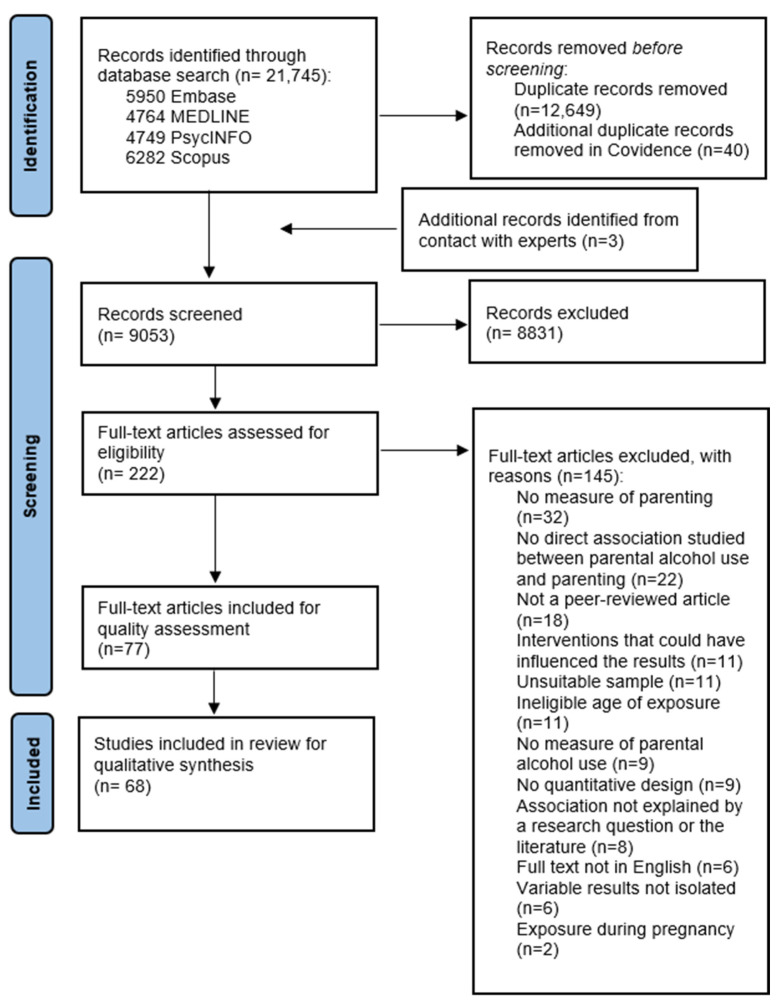 Figure 1
Peer Reviews
No public reviews on file for this paper yet. If you reviewed it on a platform where reviews are public (OpenReview, ICLR, NeurIPS, ICML), you can paste yours below so the community can read it here.
Videos
No videos yet. Explain this paper in a talk, walkthrough, or lecture? Add one.
Taxonomy
TopicsPrenatal Substance Exposure Effects · Substance Abuse Treatment and Outcomes · Child Abuse and Trauma
1. Introduction
The World Health Organization recently called for accelerated action to implement a global strategy to reduce the harmful use of alcohol as a public health priority and to improve the health and social outcomes of individuals, families, and communities. This call reinforces earlier concerns about alcohol’s harm to others (World Health Organization, 2022). As alcohol consumption often occurs in the family context, it has the potential to inflict collateral damage beyond the drinker (Haverfield & Theiss, 2014). Indeed, in high-income countries, between 5% and 30% of children are estimated to live in the same household as parents with problematic alcohol use (McGovern et al., 2020). Multiple negative outcomes are related to alcohol’s harm to others, such as adverse experiences, violence, injury, mental health problems, the increased risk of substance use, and disease (Laslett et al., 2019; World Health Organization, 2022). Studies have found positive associations between parents’ drinking behavior and parenting practices, on the one hand, and the development of similar alcohol patterns in their offspring, on the other (Latendresse et al., 2008; Yap et al., 2017). Moreover, children who have two parents with alcohol use disorder (AUD) are at a higher risk of abuse, violence, neglect, and externalizing behaviors than those with one alcoholic parent (Anda et al., 2002; Dube et al., 2001). Additionally, parental AUD may represent a burden to the family in periods with less drinking or alcohol withdrawal due to the consequences associated with AUD (e.g., health loss and behavioral and emotional problems), which demands attention throughout the drinking cycle (Griswold et al., 2018; National Institute on Alcohol Abuse and Alcoholism, 2021).
Parents have a crucial influence on the development of their offspring, and their parenting practices are highly relevant to the well-being of their children (Latendresse et al., 2008; Yap et al., 2017). Parenting has previously been categorized into four broad styles: authoritative, authoritarian, permissive, and neglectful (Maccoby & Martin, 1983). However, the rising sensitivity to cultural and contextual variations has led to a shift toward research examining parenting in terms of dimensions instead of these broad styles (Smetana, 2017).
While classical categorizations are still used, researchers also report on parenting dimensions, such as warmth, emotional support, control, and monitoring (Maccoby & Martin, 1983). However, the lack of a generally acknowledged standard method of conceptualizing and defining parenting practices or styles may limit the comparability of the results between studies. Further, the definitions of parenting factors in the literature lack consistency and frequently overlap conceptually, lowering our understanding of which specific parenting practices can be protective and beneficial for the child (Ryan et al., 2010).
Beyond general parenting, research has focused on alcohol-specific parenting, which covers parenting behaviors that discourage their children from consuming alcohol, or indeed encourage them to do so (Handley & Chassin, 2013; Mares et al., 2013). The literature has shown that strict alcohol-specific rule-setting seems to prevent adolescent alcohol use or at least reduce its frequency and intensity (Mares et al., 2012; Van der Vorst et al., 2007). By contrast, the results on the potential protective impact of parent–child alcohol-specific communication on alcohol drinking are mixed (Ennett et al., 2001; Mares et al., 2011). More frequent alcohol-specific communication has been shown to predict reduced adolescent drinking (Mares et al., 2011) as well as increase adolescent alcohol use (Ennett et al., 2001). Nevertheless, the distinction between frequency and quality in alcohol-specific communication should be made, as the quality of parental alcohol-related discussions can deter adolescent alcohol use (Mares et al., 2013).
Previous research has further indicated that parental alcohol use may negatively impact a range of parenting practices such as monitoring, control, positive parenting, support, structure, parent–child interaction, relationship quality, warmth, parental discipline, and alcohol-specific parenting behaviors (Chassin et al., 1993; Lang et al., 1999; Latendresse et al., 2008; McGovern et al., 2020; Van der Vorst et al., 2006). Chassin et al. (1993) found that maternal alcohol use disorder was associated with lower levels of both maternal and paternal monitoring of children. Alcohol-related problems can disrupt the quality of parent–child relationships, contributing to harsher parenting practices and diminished levels of supervision (McGovern et al., 2020). Similarly, Latendresse et al. (2008) further observed that parental alcohol use was negatively associated with shared activities and monitoring, while positively linked to increased relational tension and stricter disciplinary practices.
Additionally, Van der Vorst et al. (2006) noted that parental alcohol consumption was also associated with fewer and less strict rules regarding adolescent drinking, with parents who consume higher amounts of alcohol tending to be more permissive about their children’s alcohol use. Experimental research by Lang et al. (1999) indicated that intoxicated parents displayed less attention and engaged in inconsistent parenting, issuing more commands while simultaneously exhibiting more indulgent behaviors.
Although clinical diagnosed alcohol consumers have received widespread attention from previous research, they do not account for all or even most of alcohol’s collateral damage (Rossow et al., 2016). A significantly larger number of children are likely to be exposed to parental alcohol use that falls below clinical criteria for dependence (McGovern et al., 2020). However, less is known about how non-dependent parental alcohol use patterns, such as drinking at lower levels and heavy episodic drinking, relate to parenting and affect the children exposed to them (Rossow et al., 2016). Moreover, non-dependent consumption patterns are much harder to identify, which can jeopardize the potential of early intervention and prevention (McGovern et al., 2020).
This systematic review studies the relationship between parental alcohol use (AUD and non-dependent drinking) and parenting practices (general and alcohol-specific). The specific objectives are to (1) identify and provide an overview of studies that investigate the associations between parental alcohol use and parenting practices, (2) summarize the evidence obtained from the identified studies and synthesize the relevant findings, and (3) identify the limitations and gaps in the literature as a basis for further studies. A review of the available research can contribute important knowledge to understand why adverse consequences follow parental alcohol use.
2. Materials and Methods
The systematic review followed Preferred Reporting Items for Systematic Reviews and Meta-Analyses guidelines (PRISMA) and the protocol was registered on PROSPERO (registration number: CRD42020153650). PRISMA checklists in the Supplementary Materials (Tables S1 and S2).
2.1. Search Strategy
The most recent systematic literature search was conducted on 6 January 2026. The initial search was carried out on 12 April 2019 across four online databases (MEDLINE, PsycINFO, Embase via Ovid, and Scopus) and subsequently updated on 6 December 2021 using the same strategy for all searches. The database search strategy combined terms across parental alcohol drinking as well as parenting practices and factors. Index terms such as MeSH and Thesaurus and text words were applied. No restrictions on publication date or language were imposed. Appendix A presents the search strategy used for Ovid databases. Further searches of studies were performed by checking the reference lists of the included papers and forward searching using Google Scholar and the Science Citation Index. We contacted experts to identify additional studies that we might have missed.
The main search was conducted by the leading reviewer (BOC), assisted by an experienced academic librarian, and all the studies were imported into EndNote and Covidence software for systematic review management. After removing duplicates, all the titles and abstracts were screened, and eligible studies that met the inclusion and exclusion criteria were included. A full-text assessment was performed for each eligible study identified as potentially relevant for the review. To prevent bias, two reviewers performed the title and abstract screening and full-text assessments independently (BOC, SHH and THS). Discrepancies were discussed, and any disagreements on selection, quality assessment, and data collection were resolved by other reviewers.
2.2. Selection Criteria
Studies were included in the review if they used a quantitative study design, had a population of parents with offspring aged 0 to 19 when exposed, measured parental alcohol consumption (AUD and non-dependent drinking patterns) as a predictor variable, and parenting practices (general and alcohol-specific) as an outcome. Appendix B presents the definitions of parenting variables. Data on parental alcohol consumption and parenting practices could be obtained from either parents, children, or official records. Parental data could include information on both parents or either parent, including biological and non-biological parents. Searches were not restricted to English-language papers, though studies were only eligible if they were published in a peer-reviewed journal with a full-text in English. Neither geographic limitations nor date restrictions were applied.
We excluded all studies that did not meet any of the above criteria. Furthermore, studies were excluded if parental alcohol use was measured during pregnancy, if the independent and dependent variables were not related to the same individual/parent, and if participants were receiving interventions that might influence the results, such as treatment for alcoholism or addiction and participation in parent training programs.
Only studies reporting the direct associations or effects between parental alcohol use and parenting factors (general and alcohol-specific) were included in the final review. Studies combining distinct constructs, as either predictor or outcome variables, were also excluded (e.g., studies in which parental alcohol use was combined into a composite measure with other substance use).
2.3. Quality Assessment
The methodological quality of the included studies was assessed to establish their internal validity and risk of bias. This assessment was conducted independently by two reviewers (BOC and SHH) using guidance from the Critical Appraisal Skills Programme (CASP). A template was created in the Covidence software based on CASP checklists suitable for the study design. Considering the importance of both the quality and the reliability of the findings of the included studies on the systematic review’s internal validity (Carroll et al., 2012), the authors excluded nine studies following the quality assessment due to high risk of bias (see Tables S3 and S4 in Supplementary Material for more information and the main reasons). Studies with an overall low or moderate risk of bias were included.
2.4. Data Synthesis
The expected and noticeable heterogeneity of the studies (different samples, measures, and designs) prevented us from conducting a meta-analysis; therefore, a narrative synthesis was carried out by the main reviewer (BOC) and revisited by SHH. We explored the relationships and findings both within and between the included studies. Tables were used to present the findings of the included studies and identify patterns across the studies to facilitate the narrative synthesis.
The following categories of information were extracted for the data synthesis: publication details (author(s), reference, publication date, and country), study characteristics (study design, methodology, sample, exposure and outcome variables, measures, and confounders), participant characteristics, and results (findings, parental gender, offspring age, and statistical method).
3. Results
The PRISMA flowchart (Figure 1) illustrates the systematic literature search process. After removing duplicates, 9053 titles and abstracts were screened, of which 222 papers were assessed based on the full texts. Of these, 77 studies met the inclusion criteria. As noted above, critical appraisal led to the exclusion of nine studies, leaving 68 studies included in the narrative synthesis (List S1, and Table S4 in Supplementary Material).
Table 1A,B describe the characteristics (e.g., author(s), date, study design, sample, and exposure and outcome variables) and main findings of these 68 studies divided by alcohol exposure: alcohol use disorder (AUD) and non-dependent alcohol use. The sample size ranged from 161 mothers to 10,210 families. A total of 36 of the included studies involved children (0–12 years), whereas 13 studies studied adolescents (13–19 years), and 12 studies included both age groups. One study did not specify the age of the offspring and reported only the fathers’ ages, despite referring to the offspring as children (Laslett et al., 2022). Furthermore, the results of six studies were reported retrospectively by the adult children of parents with alcohol problems. The studies were conducted on general population samples, without specifically targeting groups characterized by behavioral problems, medical conditions, or other special attributes. Clinical or special needs populations were excluded, with the exception of the study by Lang et al. (1999), which compared parents of children with externalizing behavior problems to a control group. The included studies were published between 1991 and 2026 and conducted in fourteen countries. The majority was conducted in the United States (n = 53), with nine studies in Europe (Netherlands n = 3, United Kingdom n = 2, Belgium n = 1, Czech Republic n = 1, Ireland n = 1, Norway n = 1), two each in Australia and China, and one in South Africa. One study gathered participants from five Asia-Pacific region countries: Cambodia, China, Indonesia, Papua New Guinea, and Sri Lanka (Laslett et al., 2022).
The comparison of results from included studies revealed that some were based on samples obtained from the same record or project. A larger group of papers used data from New York State birth records for Erie County (Edwards et al., 2004, 2009; Eiden et al., 1999, 2009a, 2002, 2004a, 2007; Eiden & Leonard, 2000; Eiden et al., 2004b, 2009b; Finger et al., 2010; Kachadourian et al., 2009). An earlier project (Jacob et al., 1989) on drinking and family interaction served as a reference for other studies (Jacob et al., 1991, 2001; Moser & Jacob, 1997). Data collected from the Dutch Family and Health longitudinal survey, which examines the socialization processes underlying adolescents’ health behaviors, were also applied (Mares et al., 2011; Van der Vorst et al., 2006; Van der Zwaluw et al., 2008). Participants were further sampled from a general population study of parents in middle-sized cities in California (Freisthler et al., 2014, 2015; Freisthler & Wolf, 2016; Lloyd & Kepple, 2017).
More studies (n = 40) focused on dependent drinking patterns (i.e., meeting the diagnostic criteria for AUD), while the remaining 28 measured non-dependent drinking patterns (e.g., frequency, binge drinking, and heavy episodic drinking).
In 57 of the 68 studies, the outcomes were related to general parenting practices. Nine studies examined alcohol-specific parenting practices only, and two others included both general and alcohol-specific parenting outcomes. Of the eleven studies addressing alcohol-specific parenting, three focused on AUD (including the two that examined both parenting categories), while the remaining eight investigated non-dependent alcohol drinking patterns.
Overall, most studies (64 of the 68) reported at least one direct and significant association between parental alcohol use and impaired parenting practices. Of the four studies that found no statistically significant direct association, one investigated parental supply of alcohol (Ward & Snow, 2011) and another was an experimental study of alcohol intake observed during family interactions (Jacob et al., 1991). The remaining two studies examined general parenting practices such as harsh parenting and supervisory neglect. Although they found no direct effect when combined with drinking, the effect was significant when such variables as marital aggression and depressive symptoms or decreased social support were introduced (Bijttebier & Goethals, 2006; Lloyd & Kepple, 2017).
4. Discussion
To the best of our knowledge, this is the first systematic review to examine the associations between parental alcohol use and parenting practices. Overall, we found consistent evidence across 64 of the 68 included studies, supporting the finding that increased parental alcohol use (AUD and non-dependent drinking patterns) was associated with impaired or reduced quality parenting practices (general and alcohol-specific parenting behaviors). Some of these associations varied with parental gender. More of the studies investigated the extent to which parental AUD was associated with general parenting practices than non-dependent drinking patterns and general parenting practices. However, regarding alcohol-specific parenting, most of the studies investigated non-dependent consumption.
4.1. Parental AUD and Parenting Practices
4.1.1. General Parenting
Six studies showed that parents with AUD have an increased risk of displaying abusive or harsh parenting behavior (Anda et al., 2002; Eiden et al., 2009b; Famularo et al., 1992; Finger et al., 2010; Jacques et al., 2020; Keller et al., 2021). It is well established that alcohol use may increase aggression, conflict, and domestic violence (Dube et al., 2001; Laslett et al., 2012; Schacht et al., 2009; Seay, 2026; Senchak et al., 1995; Tweed & Ryff, 1996), and Finger et al. (2010) also suggested that the pathway from paternal AUD to harsh parenting goes through marital aggression. Several mechanisms of why parental AUD may increase the risk of violence toward offspring have been suggested (Miller et al., 1997). First, intoxication may affect and restrict the perception and capability of dealing with information. Social cues and communication with family members may be disturbed if only parts of the social interaction are caught by the drinker. Second, alcohol use can “allow” the drinker to commit offences and attribute the behavior to the alcohol use and, in this way, avoid being accountable for their actions. Third, alcohol is proposed to affect parts of the brain that regulate unacceptable behaviors, such as various forms of abuse.
A substantial number of studies (n = 24) showed that parents with AUD exhibited some form of reduced quality in the parent–child relationship compared with parents without AUD, such as less warmth, impaired attachment, and less positive interactions (Bijttebier & Goethals, 2006; Edwards et al., 2004; Eiden et al., 1999, 2009a, 2002, 2004a, 2007, 2004b; Eiden & Leonard, 2000; Jacob et al., 1991, 2001; Jacques et al., 2025, 2021; Kachadourian et al., 2009; Keller et al., 2024, 2021; Kelley et al., 2011; Moser & Jacob, 1997; Rangarajan, 2008; Rochat et al., 2019; Rutherford et al., 1998; Schacht et al., 2009; Senchak et al., 1995; Su et al., 2018; Tweed & Ryff, 1996).
During interactions with their children, parents with AUD also demonstrated less open communication (Keller et al., 2021; Ohannessian, 2012), lower positive engagement and sensitivity (Eiden et al., 1999, 2009a, 2002; Jacques et al., 2025, 2021), more negative attitudes, greater alienation, poorer communication, and greater mistrust (Finan et al., 2015; Keller et al., 2024; Kelley et al., 2011). Diminished parental monitoring was also related to parental AUD (Chassin et al., 1996, 1993; Elam et al., 2020; Taber-Thomas & Knutson, 2021; Van der Zwaluw et al., 2008), while the provision of less social support and inconsistent discipline was associated with maternal (Handley & Chassin, 2013; Jacques et al., 2025, 2020; Taber-Thomas & Knutson, 2021), but not paternal drinking (Handley & Chassin, 2013). In a study with both mothers and fathers, the relationship between AUD and supportive parenting was entirely indirect, mediated through parent depression (Keller et al., 2024).
AUD may hamper parenting practices due to periods of uncontrolled drinking, black-outs, alcohol craving, and embracing negative emotional states when not drinking (National Institute on Alcohol Abuse and Alcoholism, 2021). Intoxication and alcohol withdrawal symptoms can also cause anxiety, irritability, dysphoria, and a lack of motivation (McCrady & Flanagan, 2021; National Institute on Alcohol Abuse and Alcoholism, 2021). These problems typically hinder the performance of other responsibilities, decision-making abilities, and personal relationships, including parenting.
The findings of some of the included studies were less consistent on the associations between parental AUD and impaired general parenting (Finger et al., 2010; Jacob et al., 1991; Van der Zwaluw et al., 2008); some researchers only found associations for either mothers (Elam et al., 2020; Handley & Chassin, 2013; Van der Zwaluw et al., 2008) or fathers (Chassin et al., 1996; Rangarajan, 2008; Su et al., 2018). Additionally, the finding by Seay (2026) that problematic alcohol use was associated with increased parental monitoring was unexpected. Although compensatory parenting behaviors or parents’ own history of trauma could help explain this result, it is important to note that this specific finding was not confirmed in the second half of the dataset. The author acknowledges that the study may have had limited statistical power to detect the true effect size or that the relationship may be specific to this unique subset of families.
A small subset studies included in this review employed experimental or quasi-experimental designs to examine the short-term effects of parental alcohol consumption on observed parenting behaviors. Notably, three laboratory-based observational studies conducted by Jacob and colleagues (Jacob et al., 1991, 2001; Moser & Jacob, 1997) experimentally manipulated acute alcohol intoxication under controlled conditions and assessed parent–child and marital interactions during structured problem-solving tasks. These studies are exceptional within the broader literature and likely reflect an era of alcohol research in which controlled laboratory paradigms were used to isolate immediate behavioral effects of intoxication. Although these designs offered rare insights into mechanisms linking alcohol use to parenting behaviors, through direct observation and standardized coding of interaction patterns, they also raise important ethical concerns. In these studies, parents were administered alcohol in the presence of their children, and family conflicts were deliberately elicited using personally relevant topics, potentially exposing children to distressing interactions involving intoxicated caregivers. Despite implementation of safety procedures and strict time limits, such paradigms pose ethical challenges related to child welfare, psychological risk, and ecological validity. These concerns likely contribute to the scarcity and historical concentration of experimental studies in this area, as contemporary research ethics standards have increasingly constrained the feasibility of experimentally manipulating parental alcohol use in family contexts. Consequently, more recent research has relied predominantly on observational, longitudinal, and registry-based designs, which, while less able to establish short-term causal effects, better align with current ethical frameworks.
However, findings from one of these studies, (Jacob et al., 1991) provided only limited evidence that alcohol consumption alters parent–child interactions in families with a parent diagnosed with AUD, as the observed effects were not clearly distinguishable from those observed in control groups. The authors partly attributed this result to sample characteristics, noting that participating families were intact and relatively stable. Additionally, methodological factors, such as the small sample size, the laboratory setting, and participants’ awareness of being observed, may have further attenuated observed effects.
Seventeen studies considered the impact of both maternal and paternal AUD, whereas another 17 focused on the impact of paternal AUD. The five studies exclusively investigating maternal AUD with general parenting (Jacques et al., 2020, 2021, 2025; Rochat et al., 2019; Taber-Thomas & Knutson, 2021) are recent, suggesting a shift in the focus of the topic. Additionally, it is worth noting that the most recent study included in the present review (Seay, 2026), although including parents of both genders, was predominantly female, with mothers comprising 90.6% of the sample. As men usually have higher rates of AUD (Nolen-Hoeksema & Hilt, 2006), they are more easily recruited in research on AUD than women with AUD. By contrast, mothers traditionally assume the primary caregiver’s role in many societies and play an important role for children. This review, therefore, identifies a gap in the knowledge for the possible effects of maternal AUD and parenting practices.
4.1.2. Alcohol-Specific Parenting
Only three studies focused on the associations between parental AUD and alcohol-specific parenting practices (Handley & Chassin, 2013; Van der Zwaluw et al., 2008; Ward & Snow, 2011) providing weak and inconsistent evidence for such an association. Indeed, no significant associations between parental AUD and parents’ alcohol supply to offspring were found (Ward & Snow, 2011). However, one study found that parents with AUD were more permissive toward offspring alcohol use and showed diminished alcohol-specific behavioral control, such as a lack of rules and monitoring (Van der Zwaluw et al., 2008). In particular, paternal (maternal) AUD was associated with less alcohol-specific behavioral control toward all (younger) adolescents (Van der Zwaluw et al., 2008). One study (Handley & Chassin, 2013) showed that mothers with high alcohol consumption and fathers with AUD more frequently disclosed negative experiences with alcohol, but only maternal AUD was associated with mothers having less legitimacy to regulate adolescent drinking.
Most of the literature on AUD and alcohol-specific parenting has studied offspring drinking as an outcome, which may have contributed to some of the inconsistent results. While employing strict rules on alcohol use and parents having alcohol-related communication with their children would likely reduce the risk of offspring drinking, one should consider the quality and frequency of these conversations and whether parental alcohol use might disrupt this path (Mares et al., 2011). The limited research considering AUD as an alcohol pattern, mostly studied with general parenting, might also help explain the inconsistent results.
4.2. Non-Dependent Parental Alcohol Use and Parenting
4.2.1. General Parenting
Bryant et al. (2020) recently examined the impact of non-dependent parental drinking and found a significant positive association between parental alcohol consumption and children reporting experiencing negative outcomes. These adverse outcomes following their parents’ drinking reflected lower parent–child relationship quality and quantity, less attention, higher conflict, and more unpredictability.
Ten studies showed that non-dependent drinking, such as heavy drinking episodes, was associated with physical abuse, corporal punishment, and harsher or more demanding parenting, but the strength of the relationship varied by parental gender and drinking pattern (Edwards et al., 2009; Freisthler et al., 2023, 2020; Freisthler & Wolf, 2016; Keller et al., 2023; Kim et al., 2010; Lee et al., 2011; Spieker et al., 2001; Wolf & Freisthler, 2025; Wolf et al., 2021). Although such parental drinking patterns do not fulfill the diagnostic criteria for AUD, the acute effect of alcohol could affect parenting by, for example, reducing parental cognitive functioning (Weissenborn & Duka, 2003) and impairing parental supervision (Freisthler et al., 2014, 2020; Miller et al., 1997).
One study identified only an indirect effect of parental heavy drinking frequency on supervisory neglect, where the risk of negligent behaviors was higher, via increased depressive symptoms and low social support among heavy drinkers (Lloyd & Kepple, 2017). The lack of significance of this effect could be driven by their sample being derived from survey data on the general population, which is mostly characterized by light to moderate drinkers.
Although we cannot establish in all studies if the impaired parenting happened while parents were affected by alcohol, one experimental study (Lang et al., 1999) showed that compared with sober parents, acute alcohol intoxication caused parents to pay less attention to their children, provide inappropriate responses, and use more commands and off-task talk in adult–child interactions, threatening parental quality and efficacy. It is noteworthy that while the experiment compared the effects of intoxication between parents of children with and without behavioral problems, the results suggested that alcohol’s impact on parenting behavior was similar across both groups (Lang et al., 1999). Maternal care activities and mother–child relationship quality were also found to be higher among abstinent mothers than among mothers with moderate alcohol consumption (Tyrlík & Konecný, 2011).
The only experimental study involving non-dependent drinking (Lang et al., 1999) differed markedly from the AUD-focused studies. In this study, parents were randomly assigned to beverage conditions and child-behavior scripts, and interacted with trained child confederates rather than their own children. These confederates were scripted to display specific deviant or normative behaviors in order to examine parents’ reactions. While this design is not without ethical concern in line with the AUD-focused experimental studies, we consider the associated risks to be comparatively lower due to the role-play nature of the parent–child interactions.
Research seems to indicate that non-dependent alcohol use is generally associated with a reduction in positive parenting behaviors and quality, particularly when consumption reaches hazardous or higher levels (Amundsen et al., 2025; Freisthler & Wolf, 2023; Laslett et al., 2022). Higher alcohol consumption was linked to decreased supportive behaviors, such as comfort and encouragement (Amundsen et al., 2025), or praising and giving attention to their children (Freisthler & Wolf, 2023). A meta-analysis by Laslett et al. (2022) across five Asia-Pacific countries found that fathers’ heavy episodic drinking (HED) was associated with reduced positive parenting involvement, such as playing with their children, discussing personal matters, or assisting with homework. However, this association was strong and statistically significant only in Cambodia and Papua New Guinea, whereas it was not statistically significant in Indonesia and no evidence of an association was observed in China or Sri Lanka (Laslett et al., 2022). These cross-country differences may reflect samples with limited statistical power, cultural variation or differing HED prevalence rates.
A study highlighted that the impact of alcohol on parenting can be context-specific (Freisthler et al., 2023). Parents who drank on Super Bowl were significantly more likely to use aggressive discipline and punitive parenting, whereas parents drinking on Valentine’s Day were less likely to use aggressive discipline. These results suggest that the association between alcohol use and parenting can be influenced by the cultural norms of the occasion. In the same study, alcohol use was not significantly related to positive or nonpunitive parenting behaviors on either occasion.
The association between parental non-dependent alcohol use and the closeness of child–parent relationships varied by parental gender. In one study, maternal drinking had no significant effect on parent–child relationships, whereas paternal drinking significantly and negatively affected paternal closeness in another (Zhang et al., 1999). In general, men are considered to drink more alcohol, more often, and more problematically than women (Erol & Karpyak, 2015). Hence, gender differences in alcohol drinking patterns might partly explain gender differences in the impact of non-dependent parental alcohol use on parenting practices. However, these gender differences in drinking behaviors are gradually dissipating following social and cultural changes, and some studies found that women can be at an even higher risk of developing health and behavior problems when they drink than men (Erol & Karpyak, 2015).
Overall, some of the studies failed to find a strong association between light or moderate non-dependent parental alcohol use and parenting behaviors such as physical abuse and supervisory neglect. However, few studies examined the possible effects of light and moderate parental alcohol use on general parenting practices. Moreover, the concept of moderate drinking can be ambiguously defined and less concrete, making it harder to identify and establish effective measurement tools. Understanding this concept may also be limited for ethical reasons. Furthermore, moderate drinking episodes are usually situational and time-specific events during which parenting practices are rarely measured and studied. However, studying the effects of alcohol use on parenting behavior by parents affected by alcohol could help explain the extent to which such drinking patterns impair the ability to fulfill parental responsibilities.
4.2.2. Alcohol-Specific Parenting
Parental practices promoting alcohol consumption such as children seeing their parents drinking, parents helping them buy alcohol, hearing positive arguments promoting alcohol use, and being permitted or encouraged to drink, increased as the frequency of both paternal and maternal drinking rose (Au et al., 2014, 2015; Maggs & Staff, 2018; Roberts et al., 2010; Smyth et al., 2010). However, some of these practices varied with parental gender. Two studies indicated that parental alcohol use was associated with more parental communication about alcohol (Mares et al., 2011) and less strict alcohol-specific rules (Van der Vorst et al., 2006). The results of another study showed that regular drinkers were significantly more tolerant toward introducing alcohol to adolescents at home than infrequent and non-drinking parents (Smyth et al., 2010).
While abstainers were less likely than heavy drinkers to allow their children to drink, few differences were identified between moderate/more infrequent drinkers and more frequent/heavier drinking parents (Maggs & Staff, 2018). Moreover, while mothers who consumed alcohol more often introduced their children to alcohol use, their initiation intentions were similar regardless of their level of alcohol use (Roberts et al., 2010), indicating that mothers’ norms regarding their drinking patterns minimally affect how they plan to transmit alcohol norms to their children.
Maggs et al. (2021) related research conducted during the recent COVID-19 stay-at-home pandemic period with parents that started to allow adolescent drinking with the family when it was not permitted previously. They found that having light and heavy-drinking parents increased the likelihood that children were newly permitted to drink. Fathers were also more likely to give permission. The authors noted that during the pandemic period, nearly one in six US parents allowed younger adolescents to drink at home for the first time (Maggs et al., 2021), which illustrates how the context can influence parenting behaviors. Given the lack of clear guidelines and inconsistent research results, it is understandable that even well-informed and -intentioned parents, as surely most are, may have difficulty in deciding the most beneficial approach. Additional knowledge-based information with useful implications for practice is thus necessary for parents.
Globally, alcohol is the most consumed drug. While most excessive drinkers in the population are not alcohol dependent (Bryant et al., 2020; Danielsson et al., 2012; O’Dwyer et al., 2019), there is no safe level of alcohol drinking according to recent breakthrough studies (Topiwala et al., 2022), with health risks increasing with consumption. Moderate drinking is more associated with adverse outcomes to vital organs (e.g., brain, heart) than abstinence. Indeed, low and moderate drinkers, who are more numerous than dependent drinkers, account for most alcohol-related harm, which seems to happen mostly in periods of acute intoxication (Danielsson et al., 2012; O’Dwyer et al., 2019). Research has shown that not only AUD but also non-dependent drinking patterns can impair cognitive function and the performance of everyday tasks (Gunn et al., 2018; Weissenborn & Duka, 2003). Hence, even low quantities of alcohol consumption can confer risks to parenting behaviors.
Although the consequences remain understudied, it is plausible to assume that the intoxicating effect of alcohol may reduce parental capacity independent of whether parents have AUD or are drinking non-dependently or heavily episodically.
4.3. Strengths and Limitations
This review identified 68 studies, published from 1991 to 2026, which constituted a solid base of relevant research on the associations between parental alcohol use and parenting practices. We conducted a clear and rigorous systematic review process, following the PRISMA methodology, with Prospero registration and a comprehensive search strategy. Different alcohol use patterns and a wide range of parenting factors were included using a previously studied categorization of variables.
There are, however, some limitations. Many of the included studies had cross-sectional designs, which limited their ability to draw causal inferences from their observational data. Further, 18 of the 28 studies examining the associations between non-dependent parental alcohol use and parenting practices were cross-sectional. In a cross-sectional design, the directionality of the relationship between a parenting practice and alcohol consumed by that parent remains uncertain and should be studied using a prospective design. On the contrary, 22 of the 40 studies examining the associations between parental AUD and parenting practices had a longitudinal design, which may allow insights into the causal relationships.
Further limitations are that the strength of the reported relationships could not be determined and that some included papers were based on the same sample, perhaps reducing the empirical base for the studies. Inconsistency in the use of concepts as well as in the definitions of parental alcohol use and parenting practices were also identified in the review. The terminology used in the literature frequently overlaps, standardized measures across studies are lacking, and the analysis approaches vary. Comparisons between studies are therefore limited and hindered by data heterogeneity. This review also found that more moderate drinking patterns and parenting relations remained understudied and therefore less understood. Most of the results related to non-dependent alcohol patterns were reported as binge drinking, heavy drinking, and intoxication. Evidence regarding the statistical significance of this pattern remains unclear, possibly due to the small number of studies and the reliance on cross-sectional designs.
Research on alcohol-specific parenting practices is relatively limited and largely based on a small cluster of studies from the Netherlands, primarily from the same research group, highlighting the need for broader empirical contributions across contexts.
Whether parenting behavior was measured while parents were intoxicated by alcohol is not known in most of the studies, making it impossible to say that the chemical effect causes impaired parenting, although the results of experimental studies seem to support this. Other underlying factors related to lifestyle, mental health, sociodemographic factors (e.g., age, gender, family, and social context), and socioeconomic status may impact both parental alcohol use and parenting. Disregarding the broader environment around the parenting context could thus lead to inconsistent or flawed results (Koning et al., 2012).
Important limitations should be acknowledged when interpreting the findings of this review. First, publication bias cannot be ruled out, as studies reporting significant or adverse associations between parental alcohol use and parenting practices may be more likely to be published than studies with null or inconclusive findings. Although a formal assessment of publication bias was not feasible given the heterogeneity of study designs, outcomes, and measures, this bias may have contributed to an overrepresentation of negative associations in the synthesized evidence.
Second, and more critically, the evidence base is characterized by a pronounced geographical bias. The vast majority of included studies were conducted in the United States (53 of 68), with comparatively few from Europe, Australia, Asia, and only one from Africa. This strong concentration in Western countries reflects a broader tendency in psychological and public health research to rely on samples from Western, Educated, Industrialized, Rich, and Democratic (WEIRD) societies (Henrich et al., 2010). Such sampling substantially limits the generalizability of the findings, particularly for alcohol-specific parenting practices (e.g., rule-setting, communication about alcohol, monitoring of drinking), which are highly sensitive to cultural norms, drinking contexts, family structures, and social expectations. Parenting norms, meanings attached to alcohol use, and the acceptability of drinking within family life vary across cultural settings, as do the measurement tools used to assess both alcohol consumption and parenting behaviors. Consequently, findings derived largely from WEIRD contexts may fail to capture the full variability of how parental drinking relates to parenting in non-Western or Global South settings and risk ethnocentric interpretations of these associations. Future research would benefit from more geographically and culturally diverse study designs to strengthen external validity and provide a more globally representative understanding of the relationship between parental alcohol use and parenting practices. In addition, we only included English-language studies, which may have excluded relevant papers and contributed to the biased findings.
4.4. Key Contributions and Implications
The impact of parental alcohol use on parenting quality has been researched over several decades. However, the majority of studies have focused on clinical populations of parents with AUD. This review expands the existing body of knowledge by providing a critical synthesis of research on an understudied subtopic within this broader field: the influence of non-dependent parental alcohol use on parenting behaviors and outcomes. It moves beyond the conventional clinical view of AUD, to shed some light on the often-overlooked consequences of moderate drinking patterns, revealing a more nuanced and, probably, concerning reality for many families.
One of the review’s most significant contributions is shifting the focus beyond AUD toward a spectrum of drinking behaviors, extending the lens from clinical populations to everyday life and the often-overlooked consequences of moderate drinking. This shift is crucial, as non-dependent drinking is more prevalent than AUD and affects a substantially larger number of families, constituting an important public health concern. By broadening the population of interest, the review expands understanding of the potential risks associated with parental alcohol use and highlights the need for preventive measures beyond clinical settings. It also exposes hidden risks, as the normalization of moderate drinking, particularly in social contexts, can mask its potential consequences. The effects of non-dependent drinking on parenting may be subtle and gradual, making them harder to detect than the more visible consequences of AUD. This challenges assumptions that only clinical drinking problems harm parenting and child well-being, with important implications for public health messaging and prevailing notions of “safe” drinking levels for parents. Overall, the shift underscores a critical gap in knowledge regarding how moderate drinking patterns affect parenting, calling for new theoretical frameworks and robust research designs to clarify these relationships in family life.
An additional contribution from this review is the potential insight into the complex factors that may influence the relationship between parental alcohol use and parenting practices. Although the review was not explicitly focused on these factors, the included studies suggest possible nuances that can shape this relationship outcome. Some results appear to indicate that gender could play a differentiating role, with mothers’ and fathers’ drinking behaviors possibly affecting parenting in distinct ways. This interpretation raises questions about the assumption of a uniform impact and points to the need for further investigation into gender-specific interventions and support systems. Furthermore, the review hints that parenting may be influenced by external contextual factors, such as financial strain, unemployment, or even global crises like pandemics, which might exacerbate the effects of parental alcohol use. The review suggests that a more holistic approach, addressing the wider social and economic context, could be beneficial in developing effective interventions.
Importantly, this review highlights that, despite the high prevalence of non-dependent parental drinking, the current evidence base does not yet support a single, clear conclusion regarding its impact on parenting practices. Making this gap visible constitutes a key contribution from the review and underscores the need for further research in this area.
5. Conclusions
The findings of this systematic review indicate that parental alcohol use is frequently associated with poorer quality parenting practices. However, the strength, direction, and consistency of these associations vary across drinking patterns, parenting domains, and study contexts. In particular, while alcohol use disorders (AUD) have been more consistently linked to impairments in general parenting practices, findings related to non-dependent alcohol use and alcohol-specific parenting remain more mixed and less conclusive. This variability highlights the need for caution in drawing overarching conclusions and underscores important gaps in the current evidence base.
Several limitations in the literature were identified. Few studies examine alcohol-specific parenting practices in the context of AUD, despite AUD being the most extensively studied drinking pattern in relation to general parenting. Conversely, alcohol-specific practices are more often examined in studies of non-dependent drinking, although this body of evidence remains limited in scope and methodological consistency. In addition, maternal AUD and gender-specific associations between parental drinking and parenting practices remain underrepresented, despite indications that associations may differ between mothers and fathers. Light to moderate drinking patterns, the most prevalent forms of alcohol consumption in the general population, also remain ambiguously defined and comparatively understudied, limiting understanding of their potential implications for parenting.
Parenting is a complex, multidimensional, and dynamic construct shaped by reciprocal psychological, biological, social, and cultural processes, as well as by broader contextual influences such as socioeconomic conditions and gender norms. Consequently, parental alcohol use should not be examined in isolation but rather situated within the wider ecological context in which parenting occurs. The predominance of studies conducted in Western countries further constrains the generalizability of current findings and highlights the need for more geographically and sociocultural diverse research.
Overall, this review underscores critical gaps in knowledge regarding how different patterns of parental alcohol use relate to parenting practices, particularly in everyday, non-clinical contexts. Addressing these gaps through robust longitudinal designs and more diverse samples is essential for clarifying pathways of influence and informing prevention efforts and parenting interventions. Improved understanding of modifiable risk and protective factors may ultimately support more effective alcohol-related and parenting-focused public health strategies.
The reference list from the paper itself. Each links out to its DOI / PubMed record.
- 1Amundsen V. R. Gjesmoe A. Andreassen E. Bølstad E. Severinsen Y. Viana K. Bjørk R. F. Nygaard E. Bekkhus M. Tsotsi S. Alcohol use and parental socialization of emotion in a population-based sample Parenting 202525113810.1080/15295192.2025.2465988 · doi ↗
- 2Anda R. F. Whitfield C. L. Felitti V. J. Chapman D. Edwards V. J. Dube S. R. Williamson D. F. Adverse childhood experiences, alcoholic parents, and later risk of alcoholism and depression Psychiatric Services 2002531001100910.1176/appi.ps.53.8.100112161676 · doi ↗ · pubmed ↗
- 3Au W. M. Ho S. Y. Wang M. P. Lo W. S. Tin S. P. P. Huang R. Lam T. H. Alcohol drinking and pro-drinking practices in parents of Hong Kong adolescents Alcohol and Alcoholism 201449666867410.1093/alcalc/agu 06325288615 · doi ↗ · pubmed ↗
- 4Au W. M. Ho S. Y. Wang M. P. Lo W. S. Tin S. P. P. Huang R. Lam T. H. Correlates of pro-drinking practices in drinking parents of adolescents in Hong Kong P Lo S ONE 2015104 e 011955410.1371/journal.pone.011955425786105 PMC 4364750 · doi ↗ · pubmed ↗
- 5Bijttebier P. Goethals E. Parental drinking as a risk factor for children’s maladjustment: The mediating role of family environment Psychology of Addictive Behaviors 200620212613010.1037/0893-164X.20.2.12616784354 · doi ↗ · pubmed ↗
- 6Bryant L. Mac Kintosh A. M. Bauld L. An exploration of the impact of non-dependent parental drinking on children Alcohol and Alcoholism 202055112112710.1093/alcalc/agz 08631683312 · doi ↗ · pubmed ↗
- 7Carroll C. Booth A. Lloyd-Jones M. Should we exclude inadequately reported studies from qualitative systematic reviews? An evaluation of sensitivity analyses in two case study reviews Qualitative Health Research 201222101425143410.1177/104973231245293722865107 · doi ↗ · pubmed ↗
- 8Chassin L. Curran P. J. Hussong A. M. Colder C. R. The relation of parent alcoholism to adolescent substance use: A longitudinal follow-up study Journal of Abnormal Psychology 19961051708010.1037/0021-843X.105.1.708666713 · doi ↗ · pubmed ↗