Tyrosine–Peptide Analog Modulates Extracellular Vesicles miRNAs Cargo from Mesenchymal Stem/Stromal and Cancer Cells to Drive Immunoregeneration and Tumor Suppression
Michelle B. R. G. Ley, Karina Galoian, Daniel A. Martinez, Arianna Patel, Reanna Thomas, Tressa R. Parker, Lee Friedman, Allie L. Andryski, Francis J. Hornicek, Thomas M. Best, Dimitrios Kouroupis

TL;DR
A synthetic tyrosine peptide analog alters miRNA content in extracellular vesicles from stem and cancer cells, potentially boosting immune responses and suppressing tumor growth.
Contribution
The study reveals how a tyrosine peptide analog modulates EV miRNA cargo in a cell-type-specific manner to influence tumor and immune signaling.
Findings
TPA treatment significantly altered miRNA profiles in EVs from both MSCs and sarcoma cells.
TPA reduced tumor-associated miRNAs like miR-1246 and enriched immune and cancer-related pathways.
VEGFA was identified as a key predicted target of EV miRNA–gene interactions.
Abstract
Soft tissue sarcoma remains challenging to treat due to its heterogeneity, stemness-associated survival programs, and resistance to conventional therapies. Extracellular vesicles (EVs) mediate tumor–stroma communication, yet how stemness-targeted therapies reshape EVs-associated miRNAs networks remains unclear. This study profiled EVs miRNAs cargo from infrapatellar fat pad mesenchymal stem/stromal cells (IFP-MSCs) and sarcoma cells (SCs) under basal conditions and following treatment with a synthetic tyrosine peptide analog (TPA). EVs were isolated, characterized, and subjected to miRNAs profiling and pathway enrichment analyses. TPA induced ≥2-fold regulation of 182 miRNAs, including 49 upregulated and 24 downregulated in IFP-MSC-EVs and 86 upregulated and 23 downregulated in SC-EVs. A conserved core of 149 miRNAs (67.1%) was shared across all EVs groups. Abundant species included…
Genes, proteins, chemicals, diseases, species, mutations and cell lines named across the full text — each resolved to its canonical identifier and authoritative record.
Click any figure to enlarge with its caption.
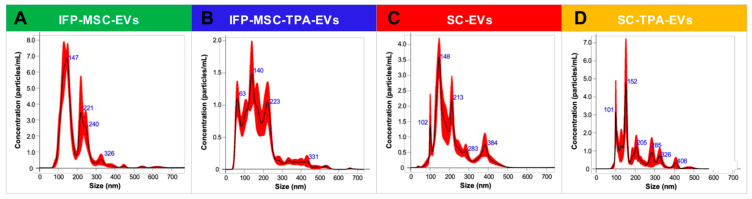 Figure 1
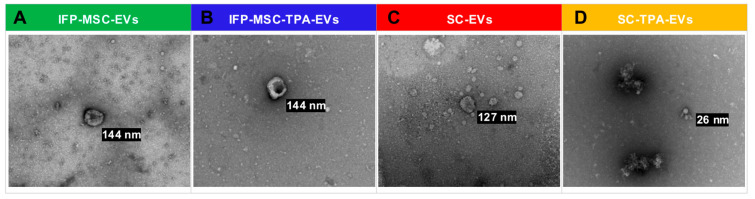 Figure 2
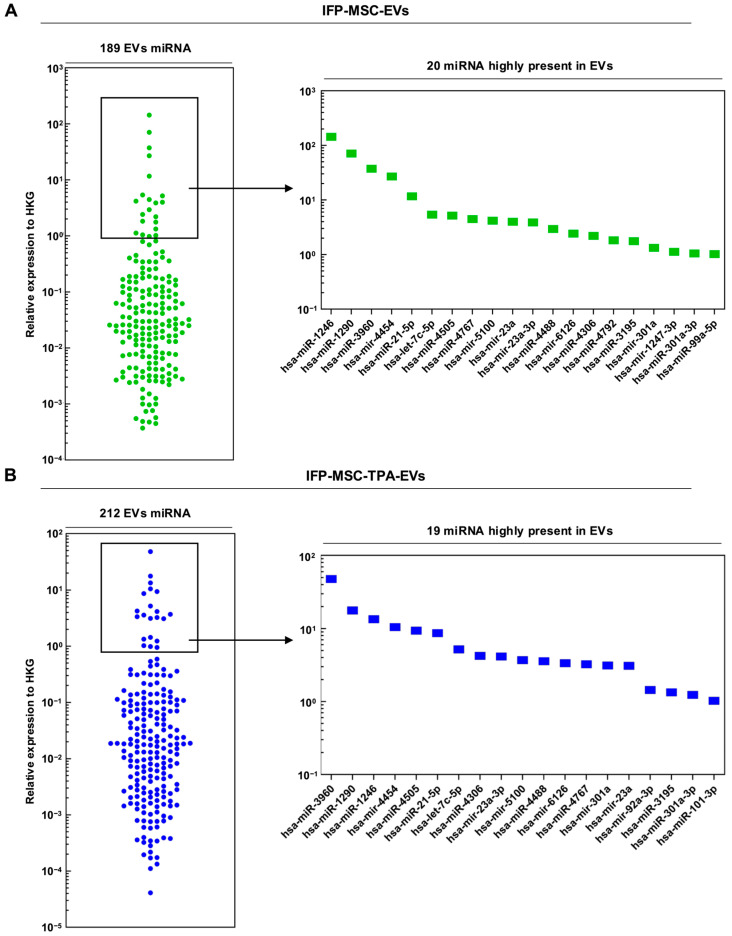 Figure 3
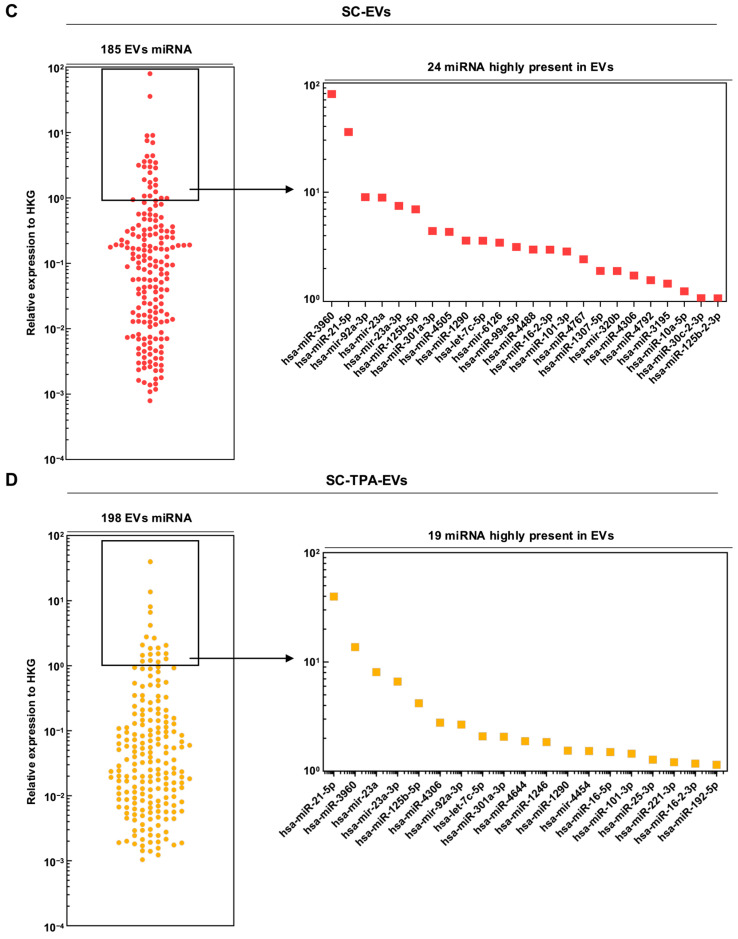 Figure 4
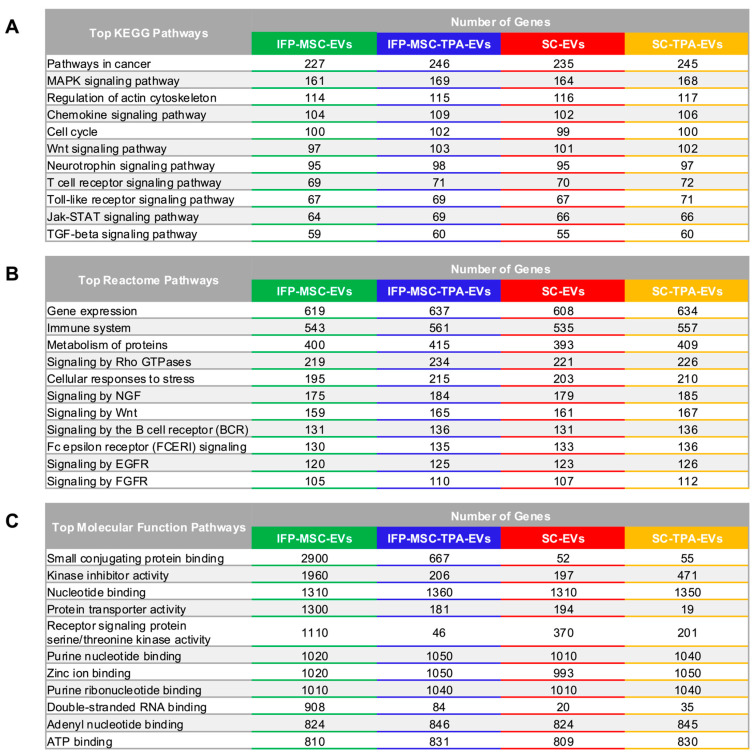 Figure 5
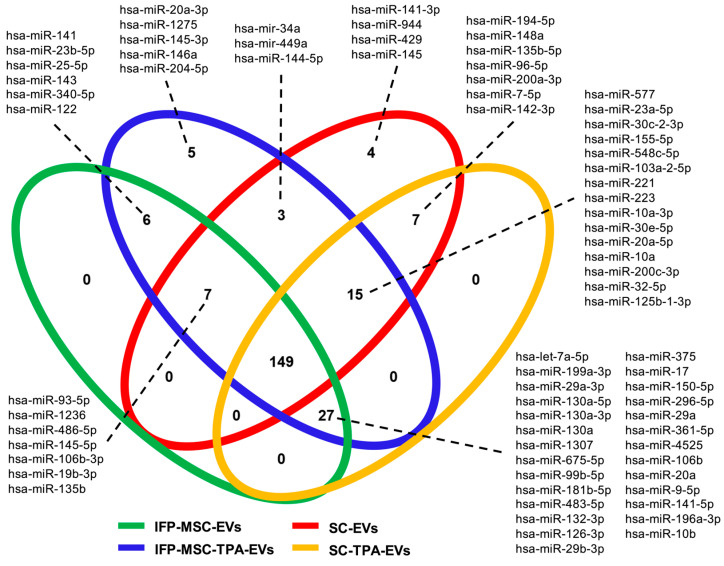 Figure 6
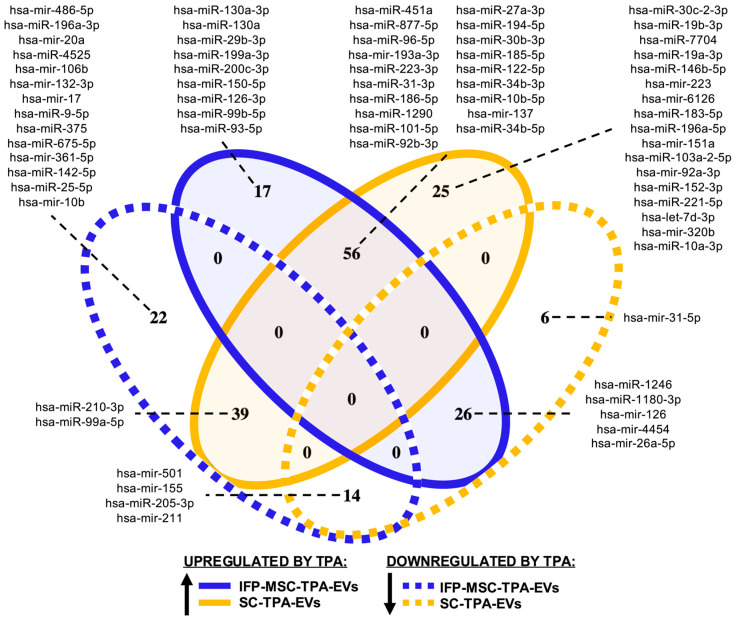 Figure 7
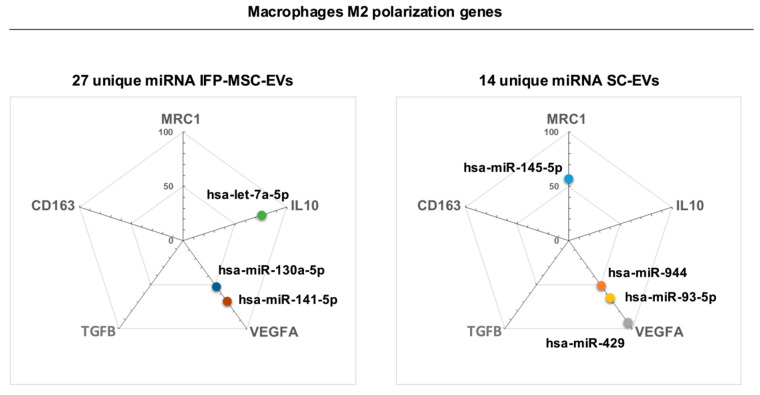 Figure 8
- —National Institutes of Health/National Institute of Arthritis and Musculoskeletal and Skin Diseases (NIH/NIAMS)
- —Miami Center of Orthopedic Research and Education (Department of Orthopedics, Miller School of Medicine, University of Miam)
Peer Reviews
No public reviews on file for this paper yet. If you reviewed it on a platform where reviews are public (OpenReview, ICLR, NeurIPS, ICML), you can paste yours below so the community can read it here.
Videos
No videos yet. Explain this paper in a talk, walkthrough, or lecture? Add one.
Taxonomy
TopicsExtracellular vesicles in disease · MicroRNA in disease regulation · Nanoplatforms for cancer theranostics
1. Introduction
Sarcomas are highly heterogeneous mesenchymal malignancies with poor clinical outcomes and limited responsiveness to conventional therapies [1]. Increasing molecular evidence suggests that several sarcoma subtypes may arise from mesenchymal stem/stromal cells (MSCs), multipotent non-hematopoietic cells capable of differentiating into adipogenic, chondrogenic, and osteogenic lineages [2,3,4]. Both MSC and tumor cell subpopulations with stem-like properties secrete diverse extracellular vesicles (EVs) enriched in proteins, lipids, and microRNAs (miRNAs) that influence tumor progression and stromal remodeling [5,6]. As a result, disruption of EVs biogenesis, release, or uptake is emerging as a promising strategy to disrupt communication networks that sustain sarcoma aggressiveness.
Stem-like tumor cells are increasingly recognized as key drivers of relapse, metastasis, immune evasion, and resistance to cytotoxic therapies in aggressive soft tissue sarcomas. Hypothalamic neuropeptide proline-rich polypeptide-1 (PRP-1) has previously been characterized as a regulator of mesenchymal cell behavior with context-dependent antiproliferative and epigenetic activity in malignant tumors [7]. Building on these findings, a synthetic tyrosine peptide analog (TPA) developed in this laboratory was shown to significantly suppress tumor growth, inhibit refractory sarcoma progression, and extend overall survival in both primary and metastatic patient-derived xenograft models [8]. Mechanistically, TPA selectively targets cancer stem cell-like populations by downregulating EZH2 and its downstream regulators, including ALDH1A1 and NANOG. Consistent with direct impairment of self-renewal programs, TPA prevents spheroid formation in self-renewal assays, underscoring its capacity to disrupt stemness maintenance pathways central to sarcoma recurrence and treatment resistance. In vivo, TPA-mediated stemness inhibition was associated with reduced sarcoma recurrence and improved overall survival, including in combination with doxorubicin, supporting the therapeutic relevance of targeting EZH2-driven stemness programs [8].
The rationale for selecting TPA as a targeted intervention is further supported by prior studies of its parent peptide, PRP-1, which demonstrated antiproliferative and epigenetic regulatory activity in sarcoma cells while exerting beneficial effects on MSC and giant cell tumor stromal cells. Interestingly, PRP-1 has also been reported to exhibit neuroprotective and anti-neurodegenerative properties in non-malignant systems, suggesting a degree of biological selectivity that distinguishes this peptide class from broadly cytotoxic or non-specific epigenetic inhibitors. Collectively, these observations highlight TPA as a mechanistically defined and translationally relevant modulator of stemness-associated pathways in sarcoma [9,10,11,12,13,14,15,16,17].
Despite growing evidence that stemness-targeted therapies can suppress tumor progression, how such interventions reshape intercellular signaling within the sarcoma microenvironment remains poorly understood. EVs are central mediators of cell–cell communication, transporting bioactive cargo that regulates self-renewal, survival signaling, immune modulation, and drug resistance [18]. Among EVs constituents, miRNAs are of particular interest due to their ability to coordinate gene networks governing stromal–tumor crosstalk, inflammation, and tissue remodeling, while also reflecting cellular state and therapeutic modulation. In mesenchymal systems, MSC-derived EVs miRNAs have been linked to wound healing and immunomodulation, underscoring the functional relevance of miRNAs cargo composition in both regenerative and pathological contexts [19,20,21].
MSCs are relevant to this biological context because they share partial phenotypic and functional features with stem-like tumor cells, have been proposed as cells of origin for select sarcoma subtypes, and contribute to the stromal niche that supports malignant growth. Their EVs, extensively investigated in regenerative medicine, provide a valuable comparator for discerning how benign and malignant stem-like mesenchymal populations encode extracellular signaling cues without implying ontological equivalence [22,23,24,25,26,27].
To investigate how TPA-driven stemness inhibition influences EVs-mediated communication, the miRNAs cargo of EVs derived from infrapatellar fat pad-derived MSCs (IFP-MSC) and from three-dimensional spheroids generated from HT1080 soft tissue sarcoma cells (SCs) was profiled under untreated and TPA-treated conditions. Spheroid culture enriches tumor cells with enhanced self-renewal capacity, survival signaling, and therapy resistance, providing a robust model to interrogate stemness-associated signaling in sarcoma [28,29]. This comparative framework enables characterization of EVs-mediated signaling across regenerative and malignant mesenchymal populations, identification of therapy-induced alterations in stemness-linked EVs cargo, and mapping of miRNAs networks associated with chemoresistance and recurrence. By integrating stemness modulation with EVs profiling, this study provides mechanistic insight into how TPA reshapes extracellular communication circuits that contribute to sarcoma progression and treatment resistance.
2. Materials and Methods
2.1. Isolation, Culture, and Expansion of IFP-MSCs and IFP-MSC-EVs
The infrapatellar fat pad (IFP) is an adipose structure located within the knee joint, situated between the patellar tendon and the anterior tibial plateau, and serves as a rich source of multipotent mesenchymal progenitors [30]. All experiments involving human cells were conducted in accordance with relevant guidelines and regulations. Human infrapatellar fat pad-derived mesenchymal stem/stromal cells (IFP-MSC) were isolated from IFP tissue obtained from de-identified, non-arthritic patients (n = 2; male 46 years old and female 44 years old) undergoing elective knee arthroscopy at the Lennar Foundation Medical Center, University of Miami. All procedures were performed under University of Miami IRB exemption as non-human research, based on the classification of the samples as discarded tissue.
Following standardized protocols [31,32,33], IFP tissue (5–10 cc) was mechanically dissected and repeatedly washed with Dulbecco’s phosphate-buffered saline (DPBS; Sigma-Aldrich, St. Louis, MO, USA), then enzymatically digested with 235 U/mL collagenase I (Worthington Industries, Columbus, OH, USA) diluted in DPBS containing 1% bovine serum albumin (Sigma) for 2 h at 37 °C with agitation. Digestion was halted by adding complete medium consisting of Dulbecco’s modified Eagle’s medium (DMEM) low glucose (1 g/L) GlutaMAX (Thermo Fisher Scientific, Waltham, MA, USA) supplemented with 10% fetal bovine serum (FBS; VWR). The resulting cell suspension was washed and seeded at a density of 1 × 10^6^ cells per 175 cm^2^ flask in Mesenchymal Stem Cell Growth Medium 2 (PromoCell), supplemented according to the manufacturer’s instructions (MSC medium). At 48 hours post-seeding, non-adherent cells were removed by rinsing with DPBS, and fresh medium was added. All MSC cultures were maintained at 37 °C in 5% (v/v) CO_2_ until reaching 80% confluence at passage 0 (P0), then subcultured at a 1:5 ratio until passage 2 (P2). Cells were detached with TrypLE™ Select enzyme 1× (Gibco, Waltham, MA, USA) and viability was assessed using 0.4% (w/v) trypan blue (Invitrogen, Carlsbad, CA, USA). At passage 3 (P3), cells from each line were seeded into six 175 cm^2^ flasks and cultured until 60% confluence, which was designated as day 1.
On day 1, flasks were washed twice with DPBS to eliminate residual serum-derived vesicles, and fresh MSC-EVs-depleted medium was added. MSC-EVs-depleted medium was prepared by ultracentrifugation of the supplement at 120,000× g for 4 h at 4 °C in a Beckman Coulter Optima XPN ultracentrifuge equipped with an SW 40 Ti swinging-bucket rotor, following established protocol [34].
To evaluate the effects of TPA, two groups were established: an untreated control and a TPA-treated group. Accordingly, from days 1–3, half of the flasks received daily TPA supplementation (40 μg/mL). On day 4, conditioned medium (secretome) was collected, and cells were harvested as previously described. Secretome from all flasks was pooled and supplemented with protease inhibitor (Thermo Fisher Scientific; 4 µL per 10 mL of secretome) and immediately centrifuged at 910× g for 10 min at 4 °C to remove cellular debris and large vesicles. The resulting supernatant was subjected to ultracentrifugation under established conditions, and the EVs-containing pellet was resuspended in DPBS and passed through a 0.22 µm filter to ensure sterility. The final preparations were designated as IFP-MSC-EVs (untreated) and IFP-MSC-TPA-EVs (TPA-treated).
2.2. Isolation, Culture, and Expansion of SCs and SC-EVs
Human soft tissue sarcoma HT1080 cells (SC; ATCC^®^ CCL-121™) were cultured in fetal bovine serum (FBS), depleted Eagle’s minimum essential medium (EMEM; ATCC) supplemented with 10 ng/mL basic fibroblast growth factor (bFGF; Peprotech, Cranbury, NJ, USA), 10 ng/mL epidermal growth factor (EGF; Peprotech), and 10 μL/mL N-2 supplement (Gibco). This formulation is referred to as SC medium throughout the manuscript.
SCs were cultured in T-175 flasks (Falcon) at 37 °C in a humidified atmosphere with 5% (v/v) CO_2_ until reaching ~80% confluence. Cells were then detached with 0.25% trypsin (Gibco) and counted using a hemocytometer. Two 6-well plates (Falcon), pretreated with anti-adherence rinsing solution (StemCell Technologies, Vancouver, BC, Canada), were seeded with 2 × 10^6^ cells per well in 3 mL of SC medium. To assess the effects of TPA, cultures were divided into untreated control and TPA-treated groups, with the treated group receiving 40 μg/mL TPA on day 1. On day 2, both groups were supplemented with bFGF, EGF, and N-2 at the concentrations specified in the SC medium formulation. After four days in culture, conditioned medium (secretome) was collected, and cells were harvested and counted as described above.
Under these conditions, SCs consistently formed three-dimensional spheroids with a mean diameter of ~500 µm at the time of secretome collection. Spheroid size was maintained within this range to minimize variability in hypoxic state prior to EVs isolation.
Secretome was centrifuged at 2000× g for 40 min at 4 °C to remove cells and debris, and the clarified supernatant was mixed with 0.5 volumes of Total Exosome Isolation Reagent (Invitrogen) according to the manufacturer’s instructions. Following overnight incubation at 4 °C, samples were centrifuged at 10,000× g for 1 h at 4 °C, and the resulting pellets were resuspended in 300 μL of exosome resuspension buffer (Invitrogen). Final preparations were designated as SC-EVs (untreated) and SC-TPA-EVs (TPA-treated).
2.3. Nanoparticle Tracking Analysis
EVs size distribution and concentration were determined using a NanoSight NS300 system (Malvern Panalytical, Worcestershire, UK) with nanoparticle tracking analysis (NTA) software v3.4. EVs suspensions were diluted 1:10 in DPBS to achieve particle concentrations within the optimal measurement range specified by the manufacturer and analyzed at room temperature. For each sample, five 15 s videos were acquired under constant flow (approximately 50 µL/min) with fixed camera settings. Data were processed using the manufacturer’s software with a detection threshold of 5, and results are reported as particle concentration (particles/mL) and size distribution metrics (mean, D10, D50, D90).
2.4. Electron Microscopy Imaging
EVs morphology was assessed by transmission electron microscopy (TEM). Samples were adsorbed on carbon-coated copper grids, fixed with 2% glutaraldehyde, and stained with 2% uranyl acetate. Imaging was carried out at 80 kV using a JEOL JEM-1400 microscope, and representative micrographs were acquired with an AMT BioSprint 12 digital camera (JEOL USA, INC., MA, USA).
2.5. miRNAs Profile of EVs
The molecular cargo of the four EVs groups (IFP-MSC-EVs, IFP-MSC-TPA-EVs, SC-EVs, and SC-TPA-EVs) was analyzed using a curated miRNAs quantitative PCR (qPCR) array (GeneCopoeia, Rockville, MD, USA). Total miRNAs was extracted from EVs preparations using the Total Exosome RNA and Protein Isolation Kit (Thermo Fisher Scientific) according to the manufacturer’s instructions. miRNAs concentration and purity were assessed on a NanoDrop ND-1000 spectrophotometer (Thermo Fisher Scientific) using 2 µL per measurement.
Complementary DNA (cDNA) synthesis was performed by reverse-transcribing 100 ng of total EVs miRNAs with the All-in-One miRNAs First-Strand cDNA Synthesis Kit (GeneCopoeia), following the miProfile™ miRNAs PCR Arrays user manual. qPCR was carried out using pre-designed 228-miProfile human cancer exosome miRNAs qPCR arrays (QM050, GeneCopoeia, Appendix A Table A1), with 1000 ng of cDNA per sample. Reactions were run on a StepOnePlus Real-Time PCR System (Applied Biosystems) using SYBR Green detection chemistry and the manufacturer-recommended cycling parameters. Each plate included technical controls and housekeeping genes (HKGs).
Ct values were exported and processed using the GeneCopoeia online qPCR Data Analysis System (https://www.genecopoeia.com/product/qpcr/analyse/, accessed on 10 September 2025), which incorporates internal technical controls and replicates handling according to the manufacturer’s pipeline. Ct values ≥ 34 or undetermined were excluded prior to analysis, corresponding to low-abundance miRNAs near the detection limit of the assay.
Relative miRNA expression was calculated using the 2^−ΔCt^ method, with normalization to the most stable HKG across all EVs samples. SNORD48 was selected based on minimal Ct variability across experimental groups and conditions. All analyses were performed using biological duplicates.
2.6. Network and Pathway Analysis of EVs
The functional relevance of most abundant miRNAs was explored using the miRNet 2.0 platform (https://www.mirnet.ca, accessed on 10 October 2025), configured for ‘homo sapiens’ and ‘exosomes’ as the tissue source to reflect the biological context of EVs-mediated delivery. Experimentally validated miRNAs target interactions were obtained from miRTarBase v9.0. Interaction networks were subsequently refined by applying a betweenness centrality threshold (≥2.0) to highlight key regulatory hubs with high connectivity, following established network analysis principles [35].
Functional enrichment of target genes was assessed across multiple databases, including the Kyoto Encyclopedia of Genes and Genomes (KEGG), Reactome, and the Gene Ontology: Biological Process (Molecular Functions). KEGG and Reactome were used to map signaling, metabolic, and survival pathways, while Molecular Functions annotations provided insights into enriched cellular processes. Significance testing was performed using a hypergeometric test, and p-values were adjusted for multiple comparisons via the Benjamini–Hochberg false discovery rate (FDR) method. All analyses were conducted using the miRNet version current as of 15 August 2025 (maintained by the Xia Lab, McGill University).
2.7. In Silico Analysis of EVs Effects on Macrophages Polarization
Macrophages can differentiate into distinct activation states, including pro-inflammatory M1 and anti-inflammatory M2. The functional association between IFP-MSC-EVs and SC-EVs-derived miRNAs and M2 macrophage-related genes was assessed using the miRDB database (http://miRdb.org; accessed on 21 August 2025). Predicted interactions were based on MiRTarget scores, which range from 0 to 100. For this study, genes with prediction scores ≥ 50 were considered potential miRNAs targets [36].
2.8. Statistical Analysis
Statistical comparisons were performed using t-tests, where indicated, with significance defined as p < 0.05. In the presence of a non-normal distribution of the data, a one-way ANOVA was used for multiple comparisons. All results are presented as mean ± standard deviation and are based on independent biological samples derived from a minimum of two biological donors. All tests were performed with GraphPad Prism v10.4.2 (GraphPad Software, San Diego, CA, USA).
Given the limited number of biological replicates, statistical analyses were used to support descriptive comparisons rather than population-level inference, and results are interpreted at the pattern, fold-change, and pathway-enrichment level. Accordingly, findings are presented as exploratory and hypothesis-generating.
3. Results
3.1. Size Distributions and Particle Concentrations of IFP-MSC-EVs and SC-EVs with and Without TPA Treatment
Nanoparticle tracking analysis (NTA) verified the presence of EVs in all four experimental groups, revealing distinct size distributions and particle concentrations (Figure 1). IFP-MSC-EVs displayed a mean size of 184.5 ± 8.5 nm with D10, D50, and D90 values of 115.8 ± 4.3 nm, 165.4 ± 11.9 nm, and 285.9 ± 24.9 nm, respectively, and an average particle concentration of 6.11 × 10^9^ particles/mL. IFP-MSC-TPA-EVs showed a mean size of 177.9 ± 3.4 nm (D10 = 74.6 ± 5.4 nm; D50 = 156.9 ± 4.5 nm; D90 = 303.2 ± 22.9 nm) with a concentration of 2.15 × 10^10^ particles/mL. SC-EVs exhibited a mean size of 209.7 ± 6.7 nm (D10 = 123.1 ± 5.7 nm; D50 = 189.2 ± 8.3 nm; D90 = 349.0 ± 23.5 nm) and a concentration of 3.23 × 10^9^ particles/mL. SC-TPA-EVs presented a mean size of 207.5 ± 18.3 nm (D10 = 107.4 ± 3.9 nm; D50 = 174.1 ± 14.8 nm; D90 = 359.1 ± 85.8 nm) with a concentration of 2.65 × 10^9^ particles/mL.
Across all conditions, the D10–D90 span indicates heterogeneous populations encompassing small-to-medium-sized EVs. Interestingly, TPA treatment of IFP-MSCs was associated with a marked increase in EVs particle yield without substantially altering the median or upper-range particle sizes, suggesting that TPA primarily enhances vesicle release rather than shifting vesicle biogenesis toward a distinct subpopulation. Conversely, SCs produced EVs of consistently larger diameter, reflecting intrinsic differences in parental cell type and tumor origin. These findings confirm successful isolation of well-defined EVs preparations with characteristic size distributions and highlight the impact of both cell source and TPA priming on vesicle production.
3.2. Morphological Characterization of IFP-MSC- and SC-EVs with and Without TPA Treatment
Transmission electron microscopy (TEM) confirmed the characteristic morphology of EVs preparations (Figure 2). IFP-MSC-EVs and IFP-MSC-TPA-EVs appeared as round to slightly ovoid particles with intact lipid bilayers, with no evidence of cellular debris or protein aggregates. SC-EVs exhibited a similar morphology, displaying well-preserved, membrane-bound vesicles consistent with small-to-medium-sized EVs. As a limitation of the present study, protein EVs marker analysis (e.g., CD9, CD63, TSG101) and negative markers assessment (e.g., calnexin) were not performed to further confirm EVs identity.
In contrast, SC-TPA–EVs displayed pronounced morphological alterations, with many vesicles appearing irregular or deformed. This phenotype is consistent with the known biological activity of TPA, which disrupts stemness-associated programs in sarcoma cells. EVs derived from stem-like tumor populations typically carry oncogenic proteins, miRNAs, and other bioactive factors that promote drug resistance, angiogenesis, and tumor progression. By impairing these stemness pathways, TPA may alter vesicle biogenesis, leading to structural changes that reflect shifts in cargo loading, membrane organization, or release dynamics.
The altered morphology observed in SC-TPA-EVs therefore suggests that TPA exerts cell-type-specific effects on EVs production, influencing both structural and potentially functional properties. Interestingly, such morphological changes were not observed in IFP-MSC-TPA-EVs, which retained the characteristic spherical morphology. These findings underscore the importance of considering both cell origin and pharmacological modulation in EVs research and highlight the utility of morphological assessment as a complementary measure of EVs identity and quality.
3.3. miRNAs Profiling of IFP-MSC- and SC-EVs with and Without TPA Treatment
qPCR profiling of IFP-MSC-EVs identified 189 miRNAs, of which 20 were classified as highly expressed (Figure 3A). The top five, based on a more than 10-fold expression threshold, were miR-1246 (142.99), miR-1290 (70.72), miR-3960 (37.35), miR-4454 (26.86), and miR-21-5p (11.65). In IFP-MSC-TPA-EVs, 212 miRNAs were detected, with 19 highly expressed (Figure 3B). The top four—miR-3960 (47.79), miR-1290 (17.71), miR-1246 (13.43), and miR-4454 (10.49)—were also among the most abundant in IFP-MSC-EVs controls. Interestingly, miR-1246 showed an approximately 10-fold reduction in the TPA-treated group, whereas miR-3960 was moderately increased. For SC-EVs, 185 miRNAs were identified, with 24 highly expressed (Figure 3C). The two most abundant were miR-3960 (79.16) and miR-21-5p (35.59), both also highly expressed in IFP-MSC-EVs controls. In SC-TPA-EVs, 198 miRNAs were detected, with 19 highly expressed (Figure 3D). The top two—miR-21-5p (39.76) and miR-3960 (13.70)—were shared across all control groups. Comparative analysis revealed that miR-3960 was consistently among the most abundant across all four EVs samples, although its expression varied significantly between conditions. Raw Ct values for selected miRNAs are provided in Appendix A Table A2 and Table A3.
Among the top-expressed miRNAs in each EVs group, several were detected at moderate levels, including let-7c-5p, miR-4505, miR-4306, and miR-23a-3p, which were recurrently present in both IFP-MSC- and SC-EVs. Several low-abundance miRNAs, such as miR-4488, miR-4767, and miR-3195, were also consistently detected across multiple EVs groups. TPA treatment of SCs reduced the diversity of moderately expressed miRNAs, retaining only miR-23a, miR-23a-3p, and miR-125b-5p in this range, while shifting species that were highly abundant in SC controls, such as miR-1246 and miR-1290, into the low-expression range, indicating a redistribution in EVs miRNAs abundance. miR-23a and miR-23a-3p were detected in nearly all groups, regardless of abundance category.
The collective miRNAs expression profiles observed across IFP-MSC- and SC-derived EVs, with and without TPA treatment, demonstrate distinct yet partially overlapping repertoires, characterized by consistent representation of selective miRNAs alongside condition-specific shifts in abundance. The recurrence of certain species across all groups, together with treatment-induced redistribution of others, supports the presence of a selective miRNAs loading process that is modulated by both cell origin and external stimulation. These expression patterns form the basis for the subsequent network and pathway analyses, aimed at elucidating the broader functional implications of the identified miRNAs cargo.
3.4. Network and Pathway Analysis of EVs-Associated miRNAs from IFP-MSCs and SCs with and Without TPA Treatment
To explore the functional relevance of the cargo, the highly present miRNAs were analyzed in miRNet 2.0 using validated target gene interactions from miRTarBase v9.0. The resulting interaction map revealed a compact, hub-dense network rather than a set of isolated miRNAs target pairs, indicating that multiple miRNAs converge on common target nodes and that a limited subset of genes occupies key regulatory positions within the network. Enrichment analysis showed that the most significantly represented pathways were consistent across all four EVs groups in the KEGG, Reactome, and Molecular Function datasets. The complete lists of enriched pathways, including the number of mapped genes and corresponding p-values, are presented in Figure 4.
Across all four EVs groups, KEGG enrichment revealed a consistent set of core pathways. These included pathways in cancer, MAPK signaling, regulation of actin cytoskeleton, cell cycle, Wnt signaling, neurotrophin signaling, T-cell receptor signaling, toll-like receptor signaling, Jak–STAT signaling, and TGF-β signaling. Each pathway was represented by a high number of mapped target genes, indicating broad regulatory coverage. Immune-related pathways (T-cell receptor, toll-like receptor, chemokine signaling) were enriched alongside modules linked to proliferation and structural remodeling, such as regulation of actin cytoskeleton and neurotrophin signaling. While the pathway composition was qualitatively similar across all groups, TPA-treated EVs showed modest increases in mapped gene numbers in most categories, including pathways in cancer (IFP-MSC-EVs: 227 vs. IFP-MSC-TPA-EVs: 246; SC-EVs: 235 vs. SC-TPA-EVs: 245), MAPK (161 vs. 169; 164 vs. 168), and Wnt signaling (97 vs. 103; 101 vs. 102), as well as immune-related pathways such as T-cell receptor and toll-like receptor signaling. MSC-derived EVs consistently displayed slightly lower mapped gene counts compared to SC-EVs across these pathways; however, both retained strong representation across proliferation, survival, cytoskeletal, and immune signaling networks.
The Reactome outputs uncovered a consistent set of high-level functional categories across all EVs types. The largest mapped gene sets were associated with gene expression and immune system pathways, followed by metabolism of proteins and cytoskeletal control via signaling by Rho GTPases. Stress-related modules, including cellular responses to stress and signaling by NGF, were prominent in all groups, along with developmental and growth factor signaling such as Wnt, EGFR, and FGFR pathways. Immune receptor-mediated modules, including B cell receptor and Fc epsilon receptor signaling, were consistently enriched. TPA-treated EVs from both IFP-MSC and SC sources displayed modest increases in mapped gene numbers across most categories, particularly in cellular responses to stress (IFP-MSC-EVs: 195 vs. IFP-MSC-TPA-EVs: 215; SC-EVs: 203 vs. SC-TPA-EVs: 210), immune system pathways (543 vs. 561; 535 vs. 557), and receptor-mediated signaling pathways, including NGF, Wnt, and EGFR. Although MSC-derived EVs generally exhibited slightly fewer mapped gene counts than SC-derived EVs across these pathways, the overall composition remained qualitatively conserved across conditions, indicating a shared core set of functional programs.
Molecular Function enrichment exhibited consistent representation of enzymatic and cofactor-related activities across all EVs groups. Nucleotide-associated functions were among the most represented categories in every condition, including nucleotide binding (∼1310–1360 genes), purine nucleotide and ribonucleotide binding (∼1010–1050 genes), adenyl nucleotide binding (∼824–846 genes), and ATP binding (∼809–831 genes), indicating broad potential to modulate nucleotide-dependent enzymatic processes. Zinc ion binding was also highly represented across all groups (∼993–1050 genes), suggesting targeting of zinc-dependent enzymes and transcription factors. Catalytic regulation was reflected in the enrichment of kinase inhibitor activity, which increased following TPA treatment in SC-derived EVs (197 to 471 genes), and receptor signaling protein serine/threonine kinase activity, consistent with a potential capacity to influence phosphorylation-dependent signaling cascades. Small conjugating protein binding, associated with ubiquitin and SUMO pathways, was strongly enriched in MSC-derived EVs and markedly reduced following TPA treatment (2900 to 667 genes). Double-stranded RNA binding showed strong source- and treatment-dependence, being highly enriched in IFP-MSC-EVs (908 genes) but markedly reduced in IFP-MSC-TPA-EVs (84 genes) and remaining low in SC-EVs (20 genes) and SC-TPA-EVs (35 genes). Despite these quantitative shifts in rank and magnitude, the overall Molecular Function composition remained conserved across cell sources and treatments.
The conservation of pathway composition across EVs origins indicates that a common regulatory framework underlies vesicle-mediated communication, with KEGG, Reactome, and Molecular Function analyses collectively depicting a coherent network in which EVs miRNAs converge on receptor-mediated inputs, kinase cascades, cytoskeletal regulation, transcriptional control, and stress response systems. While the overall functional pathways are preserved across cell types and treatment conditions, quantitative differences in miRNAs target coverage (particularly in stress response and immune receptor signaling) were observed, including measurable shifts following TPA treatment. Such variations may be sufficient to produce distinct phenotypic outcomes in recipient cells, underscoring the importance of integrating pathway-level findings with functional assays and network-level evaluations to determine whether these EVs cargos primarily promote repair, immune modulation, or pathological signaling in specific contexts.
3.5. Overlap and Specificity of EVs-miRNAs Cargo with and Without TPA Treatment
To evaluate the degree of conservation and divergence among IFP-MSC-EVs, IFP-MSC-TPA-EVs, SC-EVs, and SC-TPA-EVs, the top-expressed miRNAs were compared across groups using a Venn diagram (Figure 5). A total of 149 miRNAs (67.1%) were shared by all four EVs groups, representing a common core set of EVs-associated regulatory molecules. Group-specific subsets included five miRNAs (2.2%) unique to IFP-MSC-TPA-EVs and four miRNAs (1.8%) unique to SC-EVs, while no exclusive miRNAs were detected in IFP-MSC-EVs or SC-TPA-EVs.
Pairwise overlaps included six miRNAs (2.7%) shared between IFP-MSC- and IFP-MSC-TPA-EVs, seven (3.1%) between SC- and SC-TPA-EVs, and three (1.3%) between IFP-MSC-TPA-EVs and SC-EVs. No overlap was observed between IFP-MSC-EVs and SC-derived groups. Triple overlaps identified 7 miRNAs (3.1%) shared by IFP-MSC-, IFP-MSC-TPA-, and SC-EVs, 15 (6.7%) shared by IFP-MSC-TPA-, SC-, and SC-TPA-EVs, and 27 (12.1%) shared by IFP-MSC-, SC-, and SC-TPA-EVs. These results indicate the presence of a broadly conserved miRNAs core across EVs sources, with additional subsets defined by cell origin and TPA treatment.
3.6. TPA-Induced miRNAs Regulation
To evaluate the effect of TPA on miRNAs regulation across cell types, up- and downregulated miRNAs were compared between IFP-MSC-TPA-EVs and SC-TPA-EVs using a Venn diagram (Figure 6). A total of 17 miRNAs (8.3%) were exclusively upregulated in IFP-MSC-TPA-EVs, while 25 miRNAs (12.2%) were uniquely upregulated in SC-TPA-EVs. In addition to these upregulated subsets, 14 miRNAs (6.8%) were downregulated in both EVs groups, whereas 22 (10.7%) and 6 (2.9%) miRNAs were exclusively downregulated in IFP-MSC-TPA-EVs and SC-TPA-EVs, respectively. The largest overlap comprised 56 miRNAs (27.3%) commonly upregulated in both groups, indicating a shared TPA-responsive miRNAs signature. Cross-directional comparisons revealed 26 miRNAs (12.7%) upregulated in IFP-MSC-TPA-EVs but downregulated in SC-TPA-EVs, and 39 miRNAs (19.0%) downregulated in IFP-MSC-TPA-EVs but upregulated in SC-TPA-EVs, highlighting divergent regulatory responses between cell types. The complete list of differentially expressed miRNAs is provided in Appendix A Table A1.
In total, 182 miRNAs displayed a fold change ≥2 in response to TPA treatment across both EVs sources; 49 miRNAs were upregulated and 24 were downregulated in IFP-MSC-TPA-EVs, whereas 86 miRNAs were upregulated and 23 were downregulated in SC-TPA-EVs. Comparative analysis revealed 19 miRNAs commonly upregulated in both groups, suggesting a partially conserved TPA-responsive signature. Cell-specific modulation was evident, with 25 miRNAs uniquely upregulated in IFP-MSC-TPA-EVs and 65 miRNAs uniquely upregulated in SC-TPA-EVs. Conversely, 18 and 14 miRNAs were exclusively downregulated in IFP-MSC- and SC-derived EVs, respectively. A smaller subset of cross-directional changes was also detected, including five miRNAs upregulated in IFP-MSC-TPA-EVs but downregulated in SC-TPA-EVs, two miRNAs showing the opposite trend, and four miRNAs commonly downregulated in both. These results highlight that while TPA induces overlapping miRNAs responses between the two EVs types, substantial cell-specific differences in magnitude and directionality underscore the distinct regulatory effects on each cell line’s secreted vesicular miRNAs content.
For clarity of visualization, Figure 6 displays only the miRNAs that were common between the full dataset of TPA-regulated miRNAs and those showing a high fold change (≥2). Instead of listing all detected elements, only representative subsets from each category are shown. These include 9 miRNAs common to all upregulated IFP-MSC miRNA, 17 shared in all upregulated SC miRNA, and 19 common upregulated miRNAs in both EVs types. Downregulated subsets comprised 14 miRNAs in IFP-MSCs, 1 in SCs, 4 shared between both, 5 upregulated in IFP-MSCs but downregulated in SCs, and 2 showing the opposite trend.
Overall, these patterns reveal both conserved and cell-specific regulatory responses to TPA treatment, indicating that protein kinase C (PKC) activation modulates EVs-associated miRNAs cargo through distinct signaling pathways in IFP-MSCs and SCs. While a partially shared set of miRNAs was upregulated in both EVs types, several subsets exhibited divergent or opposite regulatory trends, reflecting cell-type-dependent mechanisms of transcriptional and post-transcriptional control. Collectively, these findings underscore the selective and directional influence of TPA on vesicular miRNAs composition and establish the basis for subsequent analyses exploring the biological relevance and pathway associations of the most strongly modulated miRNA.
3.7. In Silico Prediction of EVs-Associated miRNAs–Genes Interactions in IFP-MSC-EVs and SC-EVs Linked to M2 Macrophage Polarization
Target prediction analysis using miRDB revealed distinct sets of miRNAs uniquely enriched in IFP-MSC-EVs (27 miRNA) and SC-EVs (14 miRNA), with functional links to canonical M2 macrophage associated genes (MRC1, CD163, IL10, TGFB, VEGFA) (Figure 7).
Within the IFP-MSC-EVs specific set, three miRNA–gene pairs met reporting criteria and mapped to the M2 gene panel: let-7a-5p is predicted to target IL10 (75%), miR-130a-5p to VEGFA (50%), and miR-141-5p to VEGFA (60%). These interactions imply potential post-transcriptional repression of VEGFA and fine-tuning of IL10, suggesting roles in anti-inflammatory signaling and angiogenesis [37,38,39]. In the SC-EVs-specific set, four pairs mapped to the same M2 panel: miR-145-5p is predicted to target MRC1 (55%), miR-944 to VEGFA (50%), miR-93-5p to VEGFA (60%), and miR-429 to VEGFA (100%). All four miRNAs have been associated with cancer across multiple tumor types and exhibit context-dependent roles in tumor progression and therapy response [40,41,42,43,44,45]. Therefore, the SC-set indicates a tumor-related regulatory signature distinguished from the IFP-MSC profile.
VEGFA emerged as a recurrent predicted node (five unique miRNAs total: two from IFP-MSC-EVs, three from SC-EVs). In contrast, IL10 (let-7a-5p) appeared among IFP-MSC-EVs predictions, and MRC1 (miR-145-5p) among SC-EVs predictions; no unique-set predictions passed the threshold for CD163 or TGFB. Only miRNA–gene pairs with MiRTarget scores ≥ 50% are reported here. Reported percentages are miRDB probabilities (not effect sizes) and imply putative inhibitory interactions pending experimental validation.
4. Discussion
TPA is a synthetic analog of PRP-1. Prior studies demonstrated that PRP-1 exerts strong antiproliferative effects in chondrosarcoma through activation of tumor-suppressive programs, including modulation of tumor-suppressive miRNAs and attenuation of oncogenic regulators [9,10,11]. Mechanistically, PRP-1 functions as an inhibitor of mTOR complex 1 (mTORC1), thereby suppressing mTOR-driven proliferative signaling in mesenchymal tumor cells and contributing to its tumor-suppressive activity [12]. Consistent with this mechanism, PRP-1 displays context-dependent effects on cell proliferation, promoting expansion of bone marrow-derived MSCs while inhibiting growth of neoplastic mesenchymal cells, including giant cell tumor (GCT). This dual phenotype—supporting stromal regeneration while suppressing malignant expansion—provided the mechanistic rationale for the development of TPA as a therapeutic analog [13,14,15,16].
The antidegenerative and protective properties of TPA closely recapitulate those of PRP-1, including inhibition and disintegration of sarcoma cells and significant extension of overall survival in refractory models. The present work extends these observations by demonstrating that TPA also modulates EVs-mediated communication: TPA-induced suppression of SCs coincides with beneficial alterations in EVs miRNAs cargo, offering a mechanistic link between therapeutic stemness targeting, regenerative signaling, and intercellular transmission of anti-tumor effects [8,17].
Beyond these established intracellular mechanisms, our findings extend TPA’s dualistic biology to the EVs compartment. In MSCs, TPA did not alter the classical size distribution of secreted EVs but markedly increased vesicle yield, a pattern consistent with enhanced vesicle biogenesis. This observation is clinically meaningful: MSC-EVs are well recognized for their anti-inflammatory and pro-regenerative properties, and a pharmacologic agent that safely amplifies EVs release—without perturbing vesicle identity—could substantially strengthen cell-free regenerative therapies.
In contrast, TPA induced qualitative rather than quantitative alterations in EVs released by SCs. Particle counts and size profiles remained unchanged, yet EVs exhibited pronounced morphological remodeling, indicating a shift in vesicle composition rather than a simple suppression of vesiculation. This decoupling between EVs abundance and structure suggests that TPA reprograms SC communication by reshaping the molecular content of secreted vesicles. This reprogramming is reflected in the miRNAs landscape.
miRNAs are key post-transcriptional regulators that fine-tune gene expression by degrading target mRNA or inhibiting translation. Variations in their expression, either upregulation or downregulation, reflect adaptive cellular responses to specific stimuli and can reshape signaling networks that influence cell behavior and phenotype. Assessing miRNAs expression changes following TPA exposure offers insight into the molecular pathways modulated by this stimulus and enables the identification of miRNAs signatures linked to cellular activation, stress adaptation, and oncogenic transformation.
EVs from TPA-treated SCs were enriched for tumor-suppressive miRNAs, supporting a model in which TPA not only inhibits oncogenic signaling within SCs but redirects their paracrine outputs toward anti-tumor phenotypes. Conversely, in MSC-EVs, TPA triggered a robust upregulation of miR-451a—an 83-fold increase—consistent with its known roles in immunomodulation, inflammatory homeostasis, and lineage regulation [46]. The simultaneous induction of regenerative, anti-inflammatory EVs cargo in MSCs and tumor-suppressive cargo in SCs underscores a unifying mechanism: TPA normalizes mesenchymal communication by enhancing protective signaling while curtailing malignant messaging [47,48].
Elucidating the molecular and genetic determinants of this bifunctional response will be essential for advancing TPA toward translational applications. Our findings demonstrate that EVs-associated miRNAs represent a previously underappreciated effector arm of TPA activity, extending stemness-targeting strategies to the level of extracellular communication. These insights position EVs profiling as a powerful approach for dissecting mechanisms of drug resistance, identifying predictive biomarkers, and guiding the development of next-generation cell-free therapeutics.
For downstream interpretation, only miRNAs exhibiting >10-fold change were considered (Table 1), yielding 29 species: miR-1224-5p, miR-1246, miR-1247-3p, miR-1307-5p, miR-130b-3p, miR-1468-5p, miR-149-3p, miR-150-3p, miR-15b-5p, miR-17-3p, miR-181a-3p, miR-196a-3p, miR-19a-3p, miR-19b-3p, miR-20a, miR-23a-5p, miR-26a-5p, miR-27a-5p, miR-30c-2-3p, miR-4257, miR-451a, miR-4767, miR-486-5p, miR-574-3p, miR-675-3p, miR-7704, miR-877-5p, miR-93, and miR-96-5p. The complete dataset is provided in Appendix A Table A4.
Building on the differentially regulated species identified in Table 1, TPA selectively downregulates oncogenic miRNAs enriched in SC-EVs, including miR-26a-5p (103-fold) and miR-17-3p (39-fold)—key mediators of proliferation, survival, stemness, and metastatic signaling. Their reduced levels indicates that TPA not only inhibits SC growth but also disrupts the vesicle-mediated export of malignant cues that condition the surrounding stroma and promote immune evasion [49,50,51].
In parallel, TPA markedly upregulates tumor-suppressive miR-30c-2-3p (111-fold) and miR-181a-3p (77-fold) in SC-EVs. Both target regulatory hubs governing epithelial–mesenchymal transition (EMT), angiogenesis, and immune signaling, indicating that TPA reprograms SC-EVs toward exporting anti-tumor cues that suppress invasion and remodel the microenvironment [63,64,65,66,67].
A similar pattern emerges in the regenerative compartment. TPA downregulates miR-486-5p and miR-196a-3p (~13-fold) in IFP-MSC–EVs—changes that may appear modest numerically but are strategically consequential. These miRNAs converge on pathways governing stemness, EMT, and cancer–stroma crosstalk, meaning their reduction lowers the risk that MSC-EVs inadvertently reinforce tumor-promoting programs cancers [84,85,86,87,88,89].
Conversely, TPA strongly upregulates miR-451a (83-fold) and miR-1247-3p (11-fold) in IFP-MSC–EVs. miR-451a, in particular, occupies a central regulatory position in MSC immunomodulation, macrophage polarization, metabolic homeostasis, and inflammatory resolution. Its induction predicts enhanced regenerative and anti-inflammatory EVs outputs capable of stabilizing tissue environments and counteracting tumor-driven remodeling [91,92,93,94,95,96,97].
Together, these patterns reveal that the therapeutic impact of TPA is not determined by fold-change magnitude but by selective rewiring of miRNAs regulatory hubs across tumor and stromal EVs populations. By suppressing EVs-associated oncogenic nodes while amplifying anti-tumor and pro-regenerative mediators, TPA shifts vesicle-mediated communication toward outcomes that collectively weaken tumor-supportive pathways, limit invasive potential, and enhance reparative signaling.
To determine how these coordinated miRNAs shifts manifest at the signaling level, we next examined pathway enrichment across KEGG, Reactome, and Molecular Function analyses. EVs-associated miRNAs displayed a conserved regulatory architecture: across cell types and TPA conditions, EVs converged on receptor-driven pathways (EGFR, FGFR, T-cell, toll-like) and core intracellular cascades (MAPK, Wnt, TGF-β, Jak–STAT), extending to downstream regulators of transcription, cytoskeletal remodeling, proliferation, and stress adaptation. This consistent convergence indicates that EVs miRNAs function through an integrated regulatory scaffold rather than isolated pathways.
Although the number of enriched genes across eleven canonical KEGG/Reactome pathways remained stable between MSC- and SC-EVs, Molecular Function analysis exposed selective quantitative shifts driven by cell origin and TPA treatment. These changes involved small-conjugating protein binding, kinase inhibitor activity, protein transporter activity, serine/threonine kinase regulation, and double-stranded RNA binding—features that suggest miRNAs modulate biochemical amplitude at key molecular nodes without altering the overall signaling framework.
Enrichment of ubiquitin-like modifier binding implicates modulation of proteostasis and post-translational control, while shifts in kinase inhibitor and serine/threonine kinase regulation point to fine-tuning of MAPK and Jak–STAT activity. Changes in transporter activity indicate effects on intracellular trafficking and metabolic adaptation, and variation in double-stranded RNA (dsRNA) binding suggests potential influence on innate immune sensing. Together, these findings support a model in which EVs maintain a stable signaling core but adjust regulatory intensity to shape growth, immune, and stress-response programs in recipient cells.
Convergence on VEGFA across EVs groups underscores its role as a central regulatory hub linking angiogenesis, inflammation, and macrophage biology. In the sarcoma tumor microenvironment, tumor-associated macrophages (TAMs) frequently adopt an M2-like polarization state and contribute to immune suppression and tumor progression through mediators that include VEGF/VEGFA, IL-10, and TGF-β, alongside pro-remodeling programs that facilitate invasion and vascularization [103]. The presence of multiple miRNAs predicted to target VEGFA therefore supports the possibility of coordinated post-transcriptional buffering capable of modulating vascular and inflammatory dynamics, particularly within macrophage–EVs interactions.
By contrast, divergence among M2-associated genes indicates source-dependent biases in EVs signaling. IFP-MSC-EVs-specific predictions centered on IL10 and VEGFA, consistent with an immunoregulatory and regenerative axis characteristic of MSC-derived EVs and their capacity to modulate macrophage polarization and inflammatory tone [104]. In contrast, SC-EVs-specific predictions included MRC1 (CD206)—a hallmark of M2-like tumor-associated macrophages—indicating reprogramming toward phenotypes that sustain immune evasion and oncogenic progression.
These patterns mirror established distinctions: tumor-derived EVs drive pro-tumor macrophage polarization, whereas mesenchymal-derived EVs support controlled inflammation and tissue repair [105]. Collectively, the shared focus on VEGFA and source-specific targeting of distinct M2-associated nodes illustrates how EVs origin can impose different regulatory pressures—either constraining angiogenic and inflammatory outputs in a repair-oriented context (IFP-MSC-EVs) or favoring macrophage remodeling programs that reinforce tumor progression (SC-EVs).
Despite growing clinical interest, the translation of EVs-based therapies remains limited by unresolved regulatory and technical challenges. Inconsistent nomenclature and incomplete methodological reporting persist across studies, despite ISEV recommendations favoring classification based on measurable physical or molecular properties rather than presumed biogenesis [106,107,108,109]. At the technical level, no universally accepted isolation and characterization strategy simultaneously ensures high purity, integrity, and scalability, complicating reproducibility and clinical manufacturing [110,111]. Regulatory uncertainties are further driven by limited understanding of long-term safety, optimal dosing, biodistribution, immunogenicity, and off-target effects in humans. Although early dose-escalation clinical studies using MSC-derived EVs represent important progress, therapeutic windows remain incompletely defined [112,113]. Finally, emerging alternative administration routes introduce additional complexity due to variable EVs trafficking, cellular uptake, and intracellular retention, underscoring the need for harmonized standards and mechanistic insight to enable reliable clinical translation [114].
5. Conclusions
This work defines the miRNAs architecture of EVs from regenerative IFP-MSCs and malignant SCs, revealing how cell origin and TPA intervention rewire vesicle-mediated communication.
By identifying EVs-associated miRNAs that govern key oncogenic and regenerative pathways, these findings highlight actionable regulatory nodes that may be leveraged to counter refractory, treatment-resistant cancers. However, pathway analysis suggests that potential mechanisms and functional validation (e.g., macrophage polarization assays, angiogenesis assays, tumor cell proliferation/migration assays with EV treatments) are required. Together, this study establishes EVs-miRNAs profiling as a strategic framework for developing next-generation therapies for aggressive malignancies lacking effective clinical options.
The reference list from the paper itself. Each links out to its DOI / PubMed record.
- 1Damerell V. Pepper M.S. Prince S. Molecular mechanisms underpinning sarcomas and implications for current and future therapy Signal Transduct. Target. Ther.2021624610.1038/s 41392-021-00647-834188019 PMC 8241855 · doi ↗ · pubmed ↗
- 2Kouroupis D. Sanjurjo-Rodriguez C. Jones E. Correa D. Mesenchymal Stem Cell Functionalization for Enhanced Therapeutic Applications Tissue Eng. Part B Rev.201925557710.1089/ten.teb.2018.011830165783 · doi ↗ · pubmed ↗
- 3Jones E.A. Giannoudis P.V. Kouroupis D. Bone repair with skeletal stem cells: Rationale, progress to date and clinical application Ther. Adv. Musculoskelet. Dis.20168577110.1177/1759720 X 1664237227247633 PMC 4872172 · doi ↗ · pubmed ↗
- 4Caplan A.I. Correa D. The MSC: An injury drugstore Cell Stem Cell 20119111510.1016/j.stem.2011.06.00821726829 PMC 3144500 · doi ↗ · pubmed ↗
- 5Scioli M.G. Terriaca S. Fiorelli E. Storti G. Fabbri G. Cervelli V. Orlandi A. Extracellular Vesicles and Cancer Stem Cells in Tumor Progression: New Therapeutic Perspectives Int. J. Mol. Sci.20212257210.3390/ijms 22191057234638913 PMC 8508599 · doi ↗ · pubmed ↗
- 6Nikfarjam S. Rezaie J. Zolbanin N.M. Jafari R. Mesenchymal stem cell derived-exosomes: A modern approach in translational medicine J. Transl. Med.20201844910.1186/s 12967-020-02622-333246476 PMC 7691969 · doi ↗ · pubmed ↗
- 7Galoian K. Temple T.H. Galoyan A. Cytostatic effect of the hypothalamic cytokine PRP-1 is mediated by m TOR and c Myc inhibition in high grade chondrosarcoma Neurochem. Res.20113681281810.1007/s 11064-011-0406-521243426 · doi ↗ · pubmed ↗
- 8Galoian K. Bilbao D. Denny C. Campos Gallego N. Roberts E. Martinez D. Temple H.T. Targeting cancer stem cells by TPA leads to inhibition of refractory sarcoma and extended overall survival Mol. Ther. Oncol.20243220090510.1016/j.omton.2024.20090539640862 PMC 11617462 · doi ↗ · pubmed ↗