Correction: PDLIM4 drives gastric cancer malignant progression and cisplatin resistance by inhibiting HSP70 ubiquitination and degradation via competitive interaction with STUB1
Chao Zhu, Meng Chen, Linwei Fan, Yu Wang, Mengwei Liu, Guiyu Kang, Fang Yin, Hong Tang, Yun He, Sifan Zhang, Linda Zeng, Wei Liu, Kuai Yu, Aiping Le

Abstract
Genes, proteins, chemicals, diseases, species, mutations and cell lines named across the full text — each resolved to its canonical identifier and authoritative record.
Click any figure to enlarge with its caption.
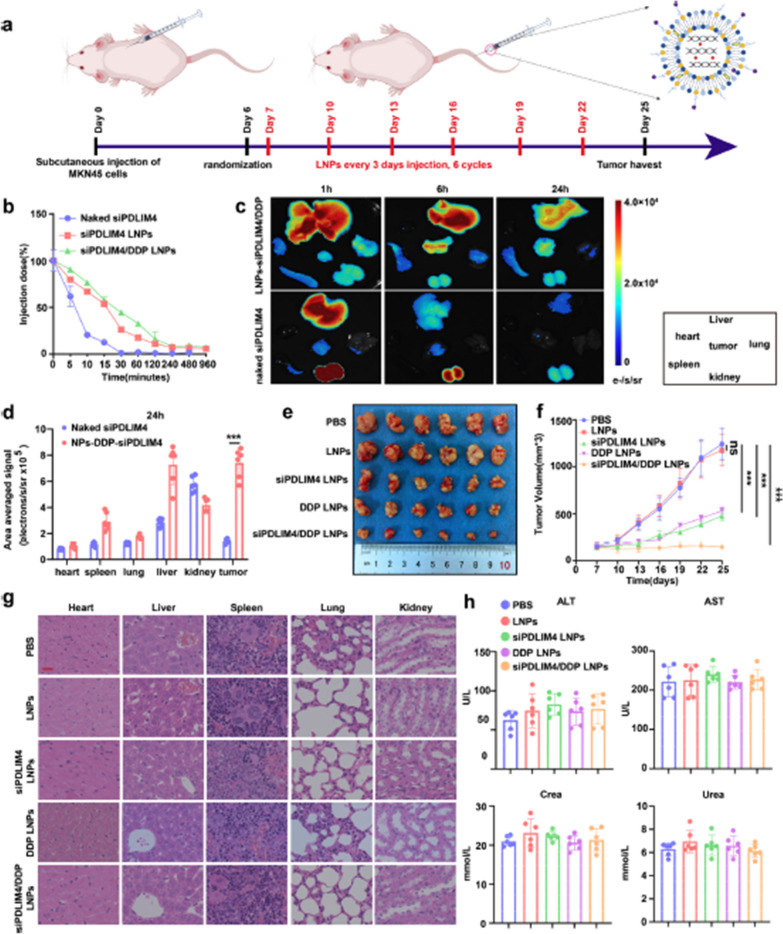 Figure 1
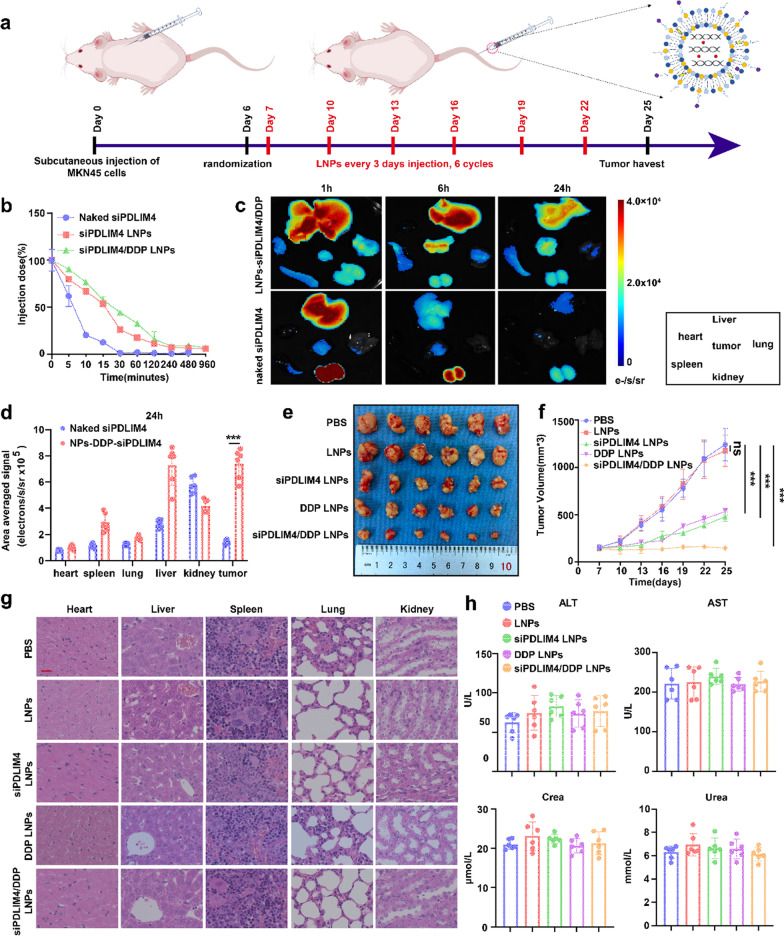 Figure 2
Peer Reviews
No public reviews on file for this paper yet. If you reviewed it on a platform where reviews are public (OpenReview, ICLR, NeurIPS, ICML), you can paste yours below so the community can read it here.
Videos
No videos yet. Explain this paper in a talk, walkthrough, or lecture? Add one.
Taxonomy
TopicsHeat shock proteins research · Ubiquitin and proteasome pathways · Endoplasmic Reticulum Stress and Disease
Correction: Journal of Nanobiotechnology (2025) 23:661
10.1186/s12951-025-03720-4
Unfortunately, in Fig. 10h, the unit for Crea was erroneously indicated as "mmol/L" instead of the correct unit, "μmol/L."
For completeness and transparency, the correct and incorrect versions of Fig. 10 is displayed below.
Incorrect Fig. 10
Fig. 10. In vivo evaluation of the therapeutic efficacy and toxicity of siPDLIM4/DDP LNPs. a A schematic diagram illustrates the timeline for tumor implantationand the administration of PBS, LNPs, siPDLIM4 LNPs, DDP LNPs, and siPDLIM4/DDP LNPs in mice bearing MKN45 tumors. The mice receivedLNPs injections at three-day intervals for a total of six cycles. b The pharmacokinetics of naked siPDLIM4, siPDLIM4 LNPs and siPDLIM4/DDP LNPs wereevaluated in vivo. c Naked CY5-siPDLIM4 and CY5-siPDLIM4/DDP LNPs were administered intravenously and 1, 6, 24 hours post-injection, tumors andmajor organs were harvested for biodistribution analysis using small animal CT/live imaging all-in-one machine (Milabs B.V.). d Quantitative data revealedthe distribution of naked siPDLIM4 and siPDLIM4/DDP LNPs across various organs, including tumors, in MKN45 tumor bearing mice after 24 hours postinjection. **e **Representative images of tumors (n = 6) are provided. f The progression of tumor volume in vivo is depicted. g Hematoxylin and eosin (H&E)stained images of key organs are presented following treatment with PBS, LNPs, siPDLIM4 LNPs, DDP LNPs, and siPDLIM4/DDP LNPs, scale bar: 20 μm. h Serum levels of ALT, AST, creatinine, and urea were measured following treatment with PBS, LNPs, siPDLIM4 LNPs, DDP LNPs, and siPDLIM4/DDP LNPs. Datawere presented as means ± SD. ***P<0.001; ns, no statistical difference
Correct Fig. 10
Fig. 10. In vivo evaluation of the therapeutic efficacy and toxicity of siPDLIM4/DDP LNPs. a A schematic diagram illustrates the timeline for tumor implantation and the administration of PBS, LNPs, siPDLIM4 LNPs, DDP LNPs, and siPDLIM4/DDP LNPs in mice bearing MKN45 tumors. The mice received LNPs injections at three-day intervals for a total of six cycles. b The pharmacokinetics of naked siPDLIM4, siPDLIM4 LNPs and siPDLIM4/DDP LNPs were evaluated in vivo. c Naked CY5-siPDLIM4 and CY5-siPDLIM4/DDP LNPs were administered intravenously and 1, 6, 24 hours post-injection, tumors and major organs were harvested for biodistribution analysis using small animal CT/live imaging all-in-one machine (Milabs B.V.). d Quantitative data revealed the distribution of naked siPDLIM4 and siPDLIM4/DDP LNPs across various organs, including tumors, in MKN45 tumor bearing mice after 24 hours postinjection. e Representative images of tumors (n = 6) are provided. f The progression of tumor volume in vivo is depicted. g Hematoxylin and eosin (H&E) stained images of key organs are presented following treatment with PBS, LNPs, siPDLIM4 LNPs, DDP LNPs, and siPDLIM4/DDP LNPs, scale bar: 20 μm. h Serum levels of ALT, AST, creatinine, and urea were measured following treatment with PBS, LNPs, siPDLIM4 LNPs, DDP LNPs, and siPDLIM4/DDP LNPs. Datawere presented as means ± SD. ***P<0.001; ns, no statistical difference