People living with HIV co-infected with HBV at the Nkembo Outpatient Treatment Center, Gabon: prevalence and associated factors
Rolf Moukanda-Ifoundou, Rachyda Massolou-Outata, Christian Mangala, Christian Mombo-Maganga, Gwladys Esmeralda Matsomo-Kombet, Josiane Alda Boukandou-Bina, Darly Yenze-Mouelé, Alain Moutsinga, Serge Christian Okolongo-Mayani, Denis Maulot-Bangola, Hervé Ouambo, Joseph Fokam

TL;DR
This study found that 10.5% of people living with HIV in Gabon are co-infected with hepatitis B virus, highlighting the need for HBV screening.
Contribution
The study identifies key risk factors for HBV co-infection among PLHIV in Gabon, including low CD4 count and high HIV viral load.
Findings
The prevalence of HBV among PLHIV was 10.5%.
Risk factors include alcohol intake, elevated transaminases, low CD4 count, high HIV viral load, and lack of vaccination.
Abstract
Hepatitis B virus (HBV) is a global public health problem that affects many people, including people living with HIV (PLHIV). In Gabon, HBV infection remains a concern among PLHIV. This study aimed to determine the prevalence of HBV and its associated risk factors among PLHIV at the Nkembo Outpatient Treatment Center in Gabon. This was a cross-sectional study conducted at the Nkembo Outpatient Treatment Center in Gabon from 25 March to 31 May 2024, involving 410 PLHIV. Blood samples (plasma) were collected for analysis. The OnSite HBV-5 Rapid Test was used to detect the HBs antigen and HBe antigen. CD4 + counting was performed using the BD FACSPresto™ system. The measurement of HBV and HIV viral loads was carried out using the QuantStudio™5 device, after performing extraction using GenoXtract® (version 1.0). Statistical analysis of the data was conducted using SPSS (version 21.0).…
Genes, proteins, chemicals, diseases, species, mutations and cell lines named across the full text — each resolved to its canonical identifier and authoritative record.
Click any figure to enlarge with its caption.
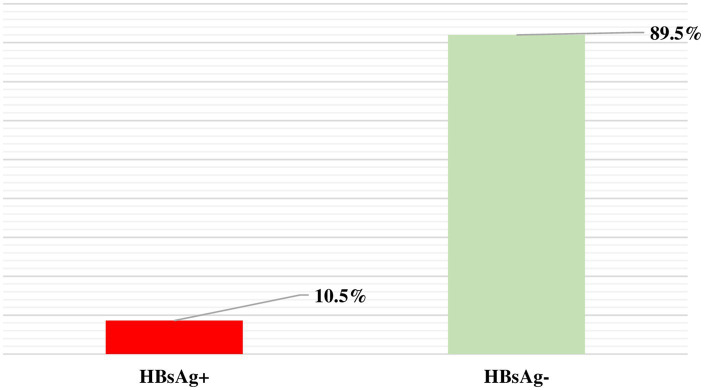 Figure 1
| Variables |
| % |
|---|---|---|
| Sex | ||
| Male individuals | 121 | 29.5 |
| Female individuals | 289 | 70.5 |
| Age | ||
| 18–24 | 4 | 1 |
| 25–34 | 55 | 13.4 |
| 35–44 | 82 | 20 |
| ≥ 45 | 269 | 65.6 |
| Marital Status | ||
| Married | 123 | 30 |
| Single | 287 | 70 |
| Occupation | ||
| Employed | 55 | 13.4 |
| Unemployed | 355 | 86.6 |
| Alcohol | ||
| Yes | 68 | 16.6 |
| No | 342 | 83.4 |
| CD4 | ||
| ≥ 200 cells/mm3 | 342 | 83.4 |
| < 200 cells/mm3 | 68 | 16.6 |
| HIV viral load | ||
| Undetectable | 217 | 52.9 |
| Suppressed | 168 | 41 |
| ˃1000 copies/ml | 25 | 6.1 |
| Under ART | ||
| Yes | 410 | 100 |
| No | 0 | 0 |
| Transfused | ||
| Yes | 72 | 17.6 |
| No | 338 | 82.4 |
| Unprotected sex | ||
| Yes | 70 | 17.1 |
| No | 340 | 82.9 |
| Vaccinated | ||
| Yes | 107 | 26.1 |
| No | 303 | 73.9 |
| Taking drugs | ||
| Yes | 72 | 17.6 |
| No | 338 | 82.4 |
| Transaminases | ||
| High | 47 | 11.5 |
| Normal | 363 | 88.5 |
| Multiple sexual partners | ||
| Yes | 12 | 2.9 |
| No | 398 | 97.1 |
| Tattoo | ||
| Yes | 66 | 16.1 |
| No | 344 | 83.9 |
| Smoker | ||
| Yes | 64 | 15.6 |
| No | 346 | 84.4 |
| Scarring | ||
| Yes | 25 | 6.1 |
| No | 385 | 93.9 |
| WHO stage | ||
| I | 153 | 37.3 |
| II | 175 | 42.7 |
| III | 80 | 19.5 |
| IV | 2 | 0.5 |
| Variables | HIV+ | HBsAg-positive | HBsAg-negative | |
|---|---|---|---|---|
|
| ||||
| Sex | ||||
| Male individuals | 121 | 19 (15.7) | 102 (84.3) | 0.05 |
| Female individuals | 289 | 24 (8.3) | 265 (91.7) | |
| Age | ||||
| 18–24 | 4 | 0 | 4 (100) | 0.20 |
| 25–34 | 55 | 3 (5.5) | 52 (94.5) | |
| 35–44 | 82 | 14 (17.1) | 68 (82.9) | |
| ≥ 45 | 269 | 26 (9.7) | 243 (90.3) | |
| Marital status | ||||
| Married | 123 | 17 (13.8) | 106 (86.2) | 0.10 |
| Single | 287 | 26 (9.1) | 261 (90.9) | |
| Occupation | ||||
| Employed | 55 | 0 | 55 (100) | 0.01 |
| Unemployed | 355 | 43 (12.1) | 312 (87.9) | |
| Alcohol | ||||
| Yes | 68 | 15 (22.1) | 53 (77.9) | 0.001 |
| No | 342 | 28 (8.2) | 314 (91.8) | |
| CD4+ | ||||
| ≥ 200 cells/mm3 | 342 | 16 (4.7) | 326 (95.3) | 0.001 |
| < 200 cells/mm3 | 68 | 27 (39.7) | 41 (60.3) | |
| HIV viral load | ||||
| Undetectable | 217 | 14 (6.5) | 203 (93.5) | 0.001 |
| Suppressed | 168 | 20 (11.9) | 148 (88.1) | |
| ˃1000 copies/ml | 25 | 9 (36) | 16 (64) | |
| Transfused | ||||
| Yes | 72 | 10 (13.8) | 62 (86.2) | 0.30 |
| No | 338 | 33 (9.8) | 305 (90.2) | |
| Unprotected sex | ||||
| Yes | 70 | 13 (18.6) | 57 (81.4) | 0.02 |
| No | 340 | 30 (8.8) | 310 (91.2) | |
| Vaccinated | ||||
| Yes | 107 | 8 (7.5) | 99 (92.5) | 0.30 |
| No | 303 | 35 (11.6) | 268 (88.4) | |
| Taking drugs | ||||
| Yes | 72 | 10 (13.9) | 62 (86.1) | 0.30 |
| No | 338 | 33 (9.8) | 305 (90.2) | |
| Transaminases | ||||
| High | 47 | 18 (38.3) | 29 (61.7) | 0.0001 |
| Normal | 363 | 25 (6.9) | 338 (93.1) | |
| Multiple sexual partners | ||||
| Yes | 12 | 4 (33.3) | 8 (66.7) | 0.01 |
| No | 398 | 39 (9.8) | 359 (90.2) | |
| Tattoo | ||||
| Yes | 66 | 9 (13.6) | 57 (86.4) | 0.50 |
| No | 344 | 34 (9.9) | 310 (90.1) | |
| Smoker | ||||
| Yes | 64 | 10 (15.6) | 54 (84.4) | 0.20 |
| No | 346 | 33 (9.5) | 313 (90.5) | |
| Scarring | ||||
| Yes | 25 | 6 (24) | 19 (76) | 0.05 |
| No | 385 | 37 (9.6) | 348 (90.4) | |
| WHO stage | ||||
| I | 153 | 16 (10.4) | 137 (89.6) | 0.20 |
| II | 175 | 20 (11.4) | 155 (88.6) | |
| III | 80 | 6 (7.5) | 74 (92.5) | |
| IV | 2 | 1 (50) | 1 (50) | |
| Variables | Univariate analysis | Multivariate analysis | ||
|---|---|---|---|---|
| OR (95% CI) | aOR (95% CI) | |||
| Sex | ||||
| Male individuals | 1.8 (0.9–3.6) | 0.046 | 1.8 (1.1–3.0) | 0.020 |
| Female individuals | – | – | ||
| Age | ||||
| 18–24 | – | – | – | – |
| 25–34 | – | – | – | – |
| 35–44 | 4 (0.9–18.7) | 0.048 | 2.2 (1.2–4) | 0.019 |
| ≥ 45 | 2.4 (0.5–10) | 0.190 | 1.9 (1–3.6) | 0.052 |
| Marital status | ||||
| Married | 1.4 (0.7–2.9) | 0.208 | 1.6 (0.9–2.6) | 0.072 |
| Single | – | – | ||
| Alcohol | ||||
| Yes | 2.4 (1.2–5) | 0.019 | 2.1 (1.2–3.4) | 0.006 |
| No | – | – | ||
| CD4 + | ||||
| ≥ 200 cells/mm3 | – | – | – | |
| < 200 cells/mm3 | 8.3 (4–16.9) | 0.0001 | 3.6 (2.2–5.8) | 0.0001 |
| HIV viral load | ||||
| Undetectable | – | – | – | – |
| Suppressed | 1.8 (0.9–4) | 0.085 | 1.8 (1–3) | 0.058 |
| ˃1000 copies/ml | 5.8 (2.2–16) | 0.001 | 2.5 (1.4–4.4) | 0.001 |
| Transfused | ||||
| Yes | 1.3 (0.6–2.9) | 0.335 | 1.6 (0.9–2.7) | 0.113 |
| No | – | – | ||
| Unprotected sex | ||||
| Yes | 1.8 (0.8–3.9) | 0.102 | 1.8 (1.1–3) | 0.031 |
| No | – | – | ||
| Vaccinated | ||||
| Yes | – | 0.025 | 2.2 (1.2–3.8) | 0.011 |
| No | 2.9 (1.1–8.4) | |||
| Taking drugs | ||||
| Yes | 1.3 (0.6–3) | 0.335 | 1.6 (0.9–2.8) | 0.113 |
| No | – | – | ||
| Transaminases | ||||
| High | 5.9 (2.9–12.1) | 0.0001 | 3.1 (1.8–4.8) | 0.0001 |
| Normal | – | – | ||
| Multiple sexual partners | ||||
| Yes | 1.9 (0.4–8.9) | 0.325 | 1.8 (1–3.4) | 0.081 |
| No | – | – | ||
| Tattoo | ||||
| Yes | 1.1 (0.4–2.5) | 0.567 | 1.5 (0.9–2.5) | 0.222 |
| No | – | – | ||
| Smoker | ||||
| Yes | 1.1 (0.4–2.6) | 0.537 | 1.5 (0.9–2.5) | 0.202 |
| No | – | – | ||
| Scarring | ||||
| Yes | 1.9 (0.6–5.7) | 0.211 | 1.8 (1–3.3) | 0.059 |
| No | – | – | ||
Peer Reviews
No public reviews on file for this paper yet. If you reviewed it on a platform where reviews are public (OpenReview, ICLR, NeurIPS, ICML), you can paste yours below so the community can read it here.
Videos
No videos yet. Explain this paper in a talk, walkthrough, or lecture? Add one.
Taxonomy
TopicsHepatitis B Virus Studies · HIV, Drug Use, Sexual Risk · Hepatitis C virus research
Introduction
Hepatitis B virus (HBV) poses a significant threat to global public health. This viral infection affects the liver and can lead to serious complications in those infected, including cirrhosis and hepatocellular carcinoma (primary liver cancer) (1–3). In 2022, it was estimated that nearly 254 million people were living with hepatitis B, with 1.2 million new infections. In the same year, the World Health Organization estimated that nearly 1.1 million deaths were due to hepatitis B virus infection, mainly from cirrhosis or hepatocellular carcinoma (4).
Sub-Saharan Africa is one of the regions in the world with the highest burden of HBV infection, with 65 million people chronically infected (4). Among the African countries most affected by hepatitis B, Senegal has a prevalence rate of 9.2% (5) and South Africa has a prevalence rate of 8.09% (6). In Cameroon, HBV circulates in the population with a prevalence of 8.4% (7). In Gabon, hepatitis B is endemic and affects 7.4% of the general population (8).
The population of people living with HIV (PLHIV) is among those most exposed to HBV. HIV-HBV co-infection is not only a significant burden for people living with HIV but also a deadly combination that affects countries worldwide (9). Indeed, the global prevalence of HIV-HBV co-infection is estimated to be 7.4% (4). HIV infection causes progressive immune dysfunction, increasing the susceptibility to HBV infection and accelerating the progression of HBV to its active and chronic phases. HIV-HBV co-infection increases mortality and morbidity rates in PLHIV (10). Viral co-infection in PLHIV accelerates viral replication, thereby promoting the progression of chronic liver infection and complicating the therapeutic management of PLHIV (11, 12). Co-infection significantly affects the quality of life for PLHIV. Similarly, each comorbidity serves as a potential factor that worsens the progression of HIV infection by weakening the immune system (13, 14).
In Gabon, mortality and morbidity among PLHIV remain concerning (15). However, HIV-HBV co-infection could be one of the causes of deaths observed in individuals living with HIV in Gabon. Repeated shortages of antivirals in the country lead to serious complications, contributing to the rapid progression of the disease from one stage to another (8). It is necessary to improve the medical monitoring of people living with HIV to ensure better care, particularly by initiating systematic screening for hepatitis B virus in PLHIV. However, viral co-infection complicates therapeutic care for PLHIV. This situation is observed nationwide, particularly at the Nkembo Outpatient Treatment Center, where routine HBV screening is not systematically conducted among PLHIV to improve their care. It is essential to raise awareness among medical officials responsible for the care of HIV-positive individuals in the country, as this could help reduce mortality within this population. In Gabon, the current treatment regimen for HIV-positive individuals is based on triple therapy, which consists of two nucleotide reverse transcriptase inhibitors (tenofovir and lamivudine, preferably) and an integrase inhibitor (preferably dolutegravir). Tenofovir, used in HIV treatment, also acts against the hepatitis B virus. The objective of this study was to determine the prevalence of HBV and its associated risk factors among PLHIV at the Nkembo Outpatient Treatment Center in Gabon.
Methods
Study design and setting
This study was cross-sectional and involved 410 PLHIV at the Nkembo Outpatient Treatment Center in Gabon, conducted from 25 March to 31 May 2024. A random sampling method was used to select participants. Blood samples (plasma) were collected for analysis. The OnSite HBV-5 Rapid Test (CTK Biotech, Inc., USA) detects several hepatitis B markers but was primarily used for the detection of HBsAg. The real-time PCR technique (QuantStudio™5, Applied BioSystems, USA) was used for the detection and quantification of HBV DNA in HBsAg-positive patients, as well as for the quantification of HIV RNA in all PLHIV, after performing extraction using GenoXtract® version 1.0 (Bruker Life Science, Germany). CD4 + counting was performed using the BD FACSPresto™ system (BD Bioscience, USA). All people living with HIV aged 18 years and older who were followed at the Nkembo Outpatient Treatment Center were included in the study. All methods were performed in accordance with the relevant guidelines and regulations.
Sample size and sampling
The minimum sample size (N) was determined using the following standard formula: N = 𝑍^2^ 𝑥 𝑃 𝑥 𝑄/𝑑^2^. This formula includes the prevalence (P) of HBV in Gabon, the normal distribution value (Z = 1.96) corresponding to the 95% precision threshold, the precision error (d = 5%), and the constant (Q = 1−P). The final size was adjusted by 3.15x N for better representativeness. Random sampling was used in this study. Sample collection was carried out as follows: participants were approached by members of the research team and informed about the purpose of the study and the importance of their participation in the study. PLHIV who consented to participate were given a questionnaire to complete. Then we establish a list of numbers from 1 to N (N represents the highest number in the list). And each day of sample collection, ten numbers are randomly drawn corresponding to the numbers assigned to each sample collected that day.
Detection of serological markers
Detection of markers (HBsAg, HBeAg, HBsAb, HBeAb, and HBcAb) was performed using the OnSite HBV-5 Rapid Test (CTK Biotech, Inc., USA). This test was used to identify the HBsAg+/DNA- profile, especially among PLHIV on antiretroviral treatment (ART) because some ART drugs can act effectively on HBV. The sample was collected using a dropper, and 2–3 drops (approximately 60-90 μL) of the sample were dispensed into each sample well specific to each marker to be tested. A drop of saline buffer may be added in the case of slow migration within 30 s. The reading should be completed within 15 min, according to the manufacturer’s instructions.
CD4 + count
CD4 + counting was performed using the BD FACS™ Cartridge Kit (BD Bioscience, USA) containing reaction cassettes. After homogenizing the blood tube, two drops of blood were added using a pipette into the reaction cassette, then the cassette was closed. The cassette was incubated for 18 min. Finally, the reaction cassette was inserted into the BD FACS Presto machine according to the manufacturer’s instructions. The reading was completed after 4 min.
Extraction and amplification of HBV DNA and HIV RNA
Extraction was performed using GenoXtract® version 1.0 (Bruker Life Science, Germany). HBV DNA and HIV RNA were extracted using the QIAamp DNA Kit (Qiagen Ltd., Maryland, USA) and the QIAamp viral RNA Kit (Qiagen Ltd., Maryland, USA), respectively, according to the manufacturer’s instructions. The extracts (DNA and RNA) were processed the same day and stored at −20 °C for 48 h according to the manufacturer’s instructions for amplification.
HBV DNA amplification was performed using the Artus HBV PCR Kit (Qiagen®). Then, the plate was hermetically sealed with adhesive film paper and centrifuged for 10 seconds at 5000 rpm. DNA quantification was performed using real-time PCR (QuantStudio5, Applied BioSystems, USA) according to the manufacturer’s instructions. RNA quantification was performed using the Generic HIV Viral Load Kit (Biocentric) on real-time PCR. A total of 50uL of the eluate was added to each well of the 96-well reaction plate, which already contained the amplification reaction mixture. The reaction plate was then sealed with adhesive film and placed on QuantStudio™5 for viral load quantification, according to the manufacturer’s instructions.
Statistical analysis of data
Statistical analysis was performed using SPSS version 21.0. Descriptive statistics were expressed as percentages and frequencies for categorical data. A p-value of ≤ 0.05 was considered a threshold of statistical significance in the final model. Data were summarized using the adjusted odds ratio (aOR) and 95% confidence interval. The aOR and its 95% confidence interval were used to estimate the association between the reported sociodemographic data and active HBV infection.
Results
Sociodemographic data of people living with HIV
The study included 410 PLHIV. Women were more represented than men, comprising 70.5% (289/410) and 29.5% (121/410), respectively. The most represented age groups were 25–34 years (13.4%), 35–44 years (20%), and ≥45 years (65.6%). Unemployed and single people were predominant, accounting for 86.6 and 70%, respectively. PLHIV with a viral load greater than 1,000 copies/ml and a CD4 count less than 200 cells/mm^3^ were 6.1 and 16.6%, respectively. PLHIV with a history of blood transfusion accounted for 17.6%, and PLHIV who reported alcohol consumption were 16.6%. Smokers and vaccinated individuals accounted for 15.6 and 26.1%, respectively. PLHIV taking drugs and PLHIV having unprotected sex accounted for 17.6 and 17.1%, respectively. Transaminases were elevated in 11.5% of PLHIV and 16.1% who had tattoos. Stages I and II were the most represented, with 37.3 and 42.7%, respectively (Table 1).
HBsAg positivity rates based on sociodemographic data
The positivity rate was significantly high in men and unemployed individuals, accounting for 15.7% (p = 0.05) and 12.1% (p = 0.01), respectively. Alcohol users and individuals with elevated transaminases had significantly high positivity, accounting for 22.1% (p = 0.001) and 38.3% (p = 0.0001), respectively. The positivity rate was significantly high in individuals with CD4 + counts less than 200 cells/mm^3^ and those with an HIV viral load greater than 1,000 copies/mL, accounting for 39.7% (p = 0.001) and 36% (p = 0.001), respectively. Individuals having unprotected sex and those with multiple sexual partners had a significantly high positivity rate, accounting for 18.6% (p = 0.02) and 33.3% (p = 0.01), respectively. Individuals who had undergone scarification had a significantly high positivity rate of 24% (p = 0.05) (Table 2).
Prevalence of HBV among PLHIV
Of the 410 PLHIV, 43 were HBsAg-positive. The seroprevalence was 10.5% (43/410) (Figure 1). Other positive serological markers were HBeAg (11/410), HBcAb (47/410), and HBsAb (111/410), with 107 vaccinated and 4 cured individuals. Among the 43 PLHIV who tested positive for HBsAg, 37 were also positive for HBV DNA (86.05%; 37/43). Of these 37 DNA-positive samples, 11 had a high HBV viral load.
Prevalence of HBV among PLHIV.
Risk factors associated with HBV infection in PLHIV
Statistical analysis of sociodemographic data identified risk factors associated with HBV infection among the 410 PLHIV. Alcohol consumption and elevated transaminases were significant risk factors associated with HBV infection (aOR = 2.1, 95% CI: 1.2–3.4, p = 0.006 and aOR = 3.1, 95% CI: 1.8–4.8, p = 0.0001, respectively). A CD4 + count less than 200 cells/mm^3^ and an HIV viral load greater than 1,000 copies/mL were also risk factors associated with HBV infection (aOR = 3.6, 95% CI: 2.2–5.8, p = 0.0001 and aOR = 2.5, 95% CI: 1.4–4.4, p = 0.001, respectively). Furthermore, being unvaccinated (aOR = 2.2, 95% CI: 1.2–3.8 p = 0.011), male sex (aOR = 1.8, 95% CI: 1.1–3 p = 0.020), and age between 35 and 44 years (aOR = 2.2, 95% CI: 1.2–4 p = 0.019) were significant risk factors associated with HBV infection (Table 3).
Discussion
Hepatitis B virus remains a major public health problem in Africa in general and in Gabon in particular. HBV also affects high-risk populations, including PLHIV (16). The World Health Organization recommends early detection of HBV in PLHIV to improve their care (4). The objective of the study was to determine the prevalence of HBV and its associated risk factors among PLHIV at the Nkembo Outpatient Treatment Center in Gabon.
The study population was predominantly women, accounting for70.5%. The most represented age groups among PLHIV were 35–44 years (20%) and ≥45 years (65.6%). This observation could be justified by the fact that the population of PLHIV in Gabon is mainly composed of women and those over the age of 35 years. These PLHIV are increasingly attending healthcare facilities, particularly the Nkembo Outpatient Treatment Center, with the aim to improve their health through optimal care. Studies conducted in several countries, including Nepal (17), Ethiopia (18), Cameroon (19), Ghana (20), and Uganda (21), have reported similar results.
The HBV positivity rate was assessed among all participants based on sociodemographic data. Indeed, the positivity rate was significantly high in male individuals and unemployed individuals (15.7%, p = 0.05 and 12.1%, p = 0.01, respectively). PLHIV with CD4 + counts below 200 cells/mm^3^ and a HIV viral load above 1,000 copies/mL had a significantly high positivity rate (39.7%, p = 0.001 and 36%, p = 0.001, respectively). Alcohol users and individuals with elevated transaminases showed significantly high positivity (22.1%, p = 0.001 and 38.3%, p = 0.0001, respectively). Individuals having unprotected sex and those with multiple sexual partners had a significantly high positivity rate (18.6%, p = 0.02 and 33.3%, p = 0.01, respectively). Individuals who had undergone scarification had a significantly high positivity rate (24%, p = 0.05). These observations could be explained by the inefficiency of the immune system, which thereby exposes people infected with HIV to other viral infections such as hepatitis B. These data show that infected male individuals with a lower CD4 + count and a high HIV viral load have a higher positivity rate for hepatitis B. This observation could be explained by immunological and virological failure, as well as risky behaviors. Liver damage could also lead to an increase in transaminases in PLHIV. Several studies conducted worldwide have shown that PLHIV are at a higher risk of contracting HBV infection (21–25).
The prevalence of HBV among PLHIV followed at the Nkembo Outpatient Treatment Center was high (10.5%) compared to the rates reported in studies conducted in Gabon by Bivigou-Mboumba et al., which was 6.2% (26), and by Mangala et al., which was 6% (27). The disparities observed across these studies conducted in Gabon may be attributed to differences in the sample size, study location, and population type, such as blood donors and PLHIV. Overall, these findings indicate that HBV infection remains prevalent among the PLHIV population in Gabon. Studies conducted in sub-Saharan Africa have shown a high prevalence of HBV among PLHIV, particularly in Cameroon (13.5%) (28), Nigeria (17.7%) (29), and the Republic of the Congo (11.5%) (30). This shows that, despite the varying geographical locations of these studies conducted in sub-Saharan Africa, the hepatitis B virus continues to circulate among PLHIV.
The sociodemographic data of PLHIV were evaluated using the statistical test. Alcohol intake and elevated transaminases were considered risk factors and significantly associated with HBV infection (aOR = 2.1, 95% CI: 1.2–3.4, p = 0.006 and aOR = 3.1, 95% CI: 1.8–4.8, p = 0.0001, respectively). A CD4 + count below 200 cells/mm^3^ and an HIV viral load above 1,000 copies/mL were also identified as significant risk factors associated with HBV infection (aOR = 3.6, 95% CI: 2.2–5.8, p = 0.0001 and aOR = 2.5, 95% CI: 1.4–4.4, p = 0.001, respectively). Being unvaccinated (aOR = 2.2, 95% CI: 1.2–3.8 p = 0.011) was also a risk factor significantly associated with HBV infection. These results could be explained by the inefficiency of the immune system, which, in turn, would promote the transmission of HBV in PLHIV. This situation is most often due to the active replication of HIV, which leads to a drop in CD4 + cells, thereby exposing HIV-positive people to other infections. Excessive alcohol consumption is not recommended for HIV-positive individuals because alcohol is toxic to liver cells and thus promotes the development of liver infections, particularly hepatitis B. This could justify its identification in the study as a risk factor significantly associated with HBV infection (aOR = 2.1, 95% CI: 1.2–3.4, p = 0.006). Other studies have also shown the involvement of these risk factors in the transmission of HBV infection in PLHIV (12, 31–36).
Limitations
Only people living with HIV who tested positive for HBsAg were tested for HBV DNA. Data collection was carried out at only one of the two existing outpatient treatment centers in the capital city.
Conclusion
The prevalence of HBV among people living with HIV remains high. This situation is reflected in the significant circulation of HBV in the PLHIV population. It is necessary to pay particular attention to the prevention and care of PLHIV. This highlights the need for early HBV screening in PLHIV, especially before the start of the first antiretroviral therapy and also during each viral load assessment, according to national guidelines (every 3 to 6 months). This early screening should primarily target PLHIV who have not been vaccinated against HBV, consume alcohol, have a CD4 + count less than or equal to 200 cells/mm^3^, exhibit an HIV viral load greater than 1,000 copies/ml, or have high transaminase levels. This approach will help reduce the burden of co-infection.
The reference list from the paper itself. Each links out to its DOI / PubMed record.
- 1Raslan E Abd Allah M Soliman S. The prevalence and determinants of hepatitis B among Egyptian adults: a further analysis of a country-representative survey. Egypt Liver J. (2022) 12:46. doi: 10.1186/s 43066-022-00207-x · doi ↗
- 2Salia E Nartey YA Djankpa FT Pappoe F Nuvor SV Obiri-Yeboah D. Prevalence of occult hepatitis B infection among treatment-naive persons living with HIV in Ghana. P Lo S One. (2024) 19:e 0305862. doi: 10.1371/journal.pone.0305862, 38924017 PMC 11207135 · doi ↗ · pubmed ↗
- 3Singh KP Lewin SR. Hepatitis B infection in people living with human immunodeficiency virus: a global challenge needing more research. Clin Infect Dis. (2019) 71:2807–9. doi: 10.1093/cid/ciz 1175, 31813998 · doi ↗ · pubmed ↗
- 4World Health Organization. Hepatitis B. Available online at: https://www.who.int/news-room/fact-sheets/detail/hepatitis-b (2024)
- 5Abdou D Babacar N Abdoulaye DT Chantal M Omar G Philippe D . Hepatitis B virus (HBV) infection in patients at Pasteur Institute of Dakar in Senegal from 2016 to 2020: prevalence and seroprotection level. Open J Med Microbiol. (2023) 13:68–77. doi: 10.4236/ojmm.2023.131006 · doi ↗
- 6Moonsamy S Suchard M Pillay P Prabdial-Sing N. Prevalence and incidence rates of laboratory-confirmed hepatitis B infection in South Africa, 2015 to 2019. BMC Public Health. (2022) 22:29. doi: 10.1186/s 12889-021-12391-3, 34991533 PMC 8739689 · doi ↗ · pubmed ↗
- 7Nzechieu Evenge CN Zeuko’o Menkem E Ngounou E Watching D Nembu EN Luma WS . Prevalence of hepatitis B and associated factors in the Buea regional hospital, Cameroon. Heliyon. (2023) 9:e 17745. doi: 10.1016/j.heliyon.2023.e 17745, 37483703 PMC 10359809 · doi ↗ · pubmed ↗
- 8Groc S Abbate JL Le Gal F Gerber A Tuaillon E Albert J . High prevalence and diversity of hepatitis B and hepatitis delta virus in Gabon. J Viral Hepat. (2019) 26:170–82. doi: 10.1111/jvh.12991, 30141209 · doi ↗ · pubmed ↗