Axillary water hammer pulse in severe aortic regurgitation
Minel Soroa, José Rozado

Abstract
Genes, proteins, chemicals, diseases, species, mutations and cell lines named across the full text — each resolved to its canonical identifier and authoritative record.
Click any figure to enlarge with its caption.
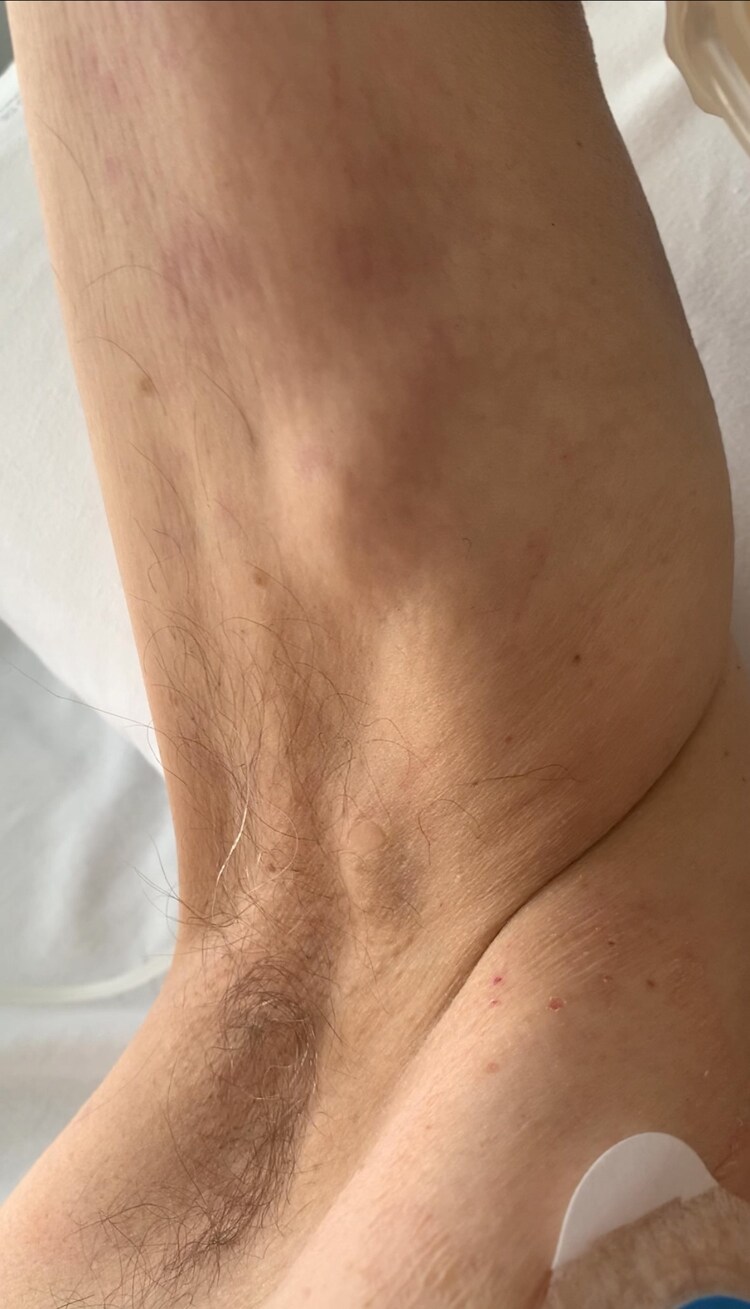 Figure 1
- —Alfonso Martín Escudero Foundation (Madrid, Spain)
Peer Reviews
No public reviews on file for this paper yet. If you reviewed it on a platform where reviews are public (OpenReview, ICLR, NeurIPS, ICML), you can paste yours below so the community can read it here.
Videos
No videos yet. Explain this paper in a talk, walkthrough, or lecture? Add one.
Taxonomy
TopicsAortic Disease and Treatment Approaches · Cardiac Valve Diseases and Treatments · Aortic aneurysm repair treatments
Case report
A 78-year-old man presented to the Emergency Department with orthopnea and dyspnoea at rest, following a long-standing history of progressive shortness of breath. On physical examination, he had signs of congestive heart failure, a wide pulse pressure (144/43 mmHg), lateral displacement of the apical impulse, and a high-pitched decrescendo early-diastolic murmur suggestive of significant aortic regurgitation. A striking, regular peripheral arterial pulse was noted, particularly in the axillary arteries (Supplementary material online, Video SA), demonstrating a rapid upstroke and sudden collapse. This visible water hammer pulse (also known as Watson’s pulse) is characteristic of significant aortic regurgitation.^1,2^ It occurs due to an increased stroke volume with abrupt distension of large arteries, followed by exaggerated diastolic collapse as blood regurgitates from the aorta into the left ventricle. Echocardiography confirmed severe aortic regurgitation, along with significant left ventricular dilation and systolic dysfunction.
**
Supplementary Material
ytag074_Supplementary_Data
The reference list from the paper itself. Each links out to its DOI / PubMed record.