Revisiting the cognitive advantages of professional soccer players
Jack Fitzgerald, Niklas Jakobsson, Abel Brodeur

Abstract
Genes, proteins, chemicals, diseases, species, mutations and cell lines named across the full text — each resolved to its canonical identifier and authoritative record.
Click any figure to enlarge with its caption.
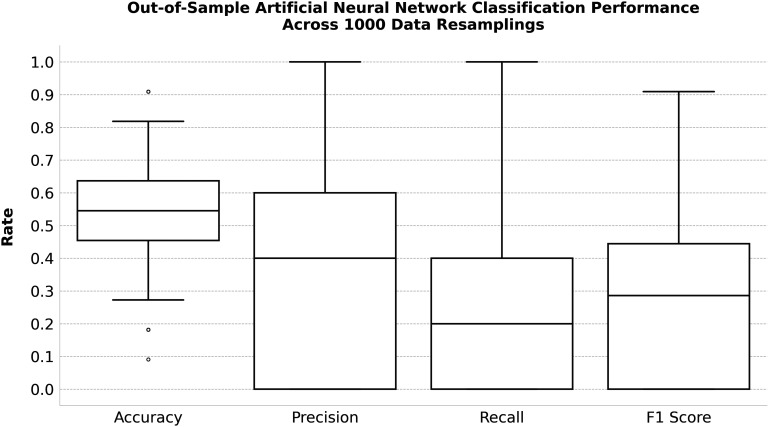 Figure 1
Peer Reviews
No public reviews on file for this paper yet. If you reviewed it on a platform where reviews are public (OpenReview, ICLR, NeurIPS, ICML), you can paste yours below so the community can read it here.
Videos
No videos yet. Explain this paper in a talk, walkthrough, or lecture? Add one.
Taxonomy
TopicsSports Analytics and Performance · Sport Psychology and Performance · Sports Performance and Training
Bonetti et al. (1) analyzes cognitive data on 204 professional soccer players from Brazil and Sweden and 124 nonelite Brazilian controls, reporting that elite players score detectably higher than controls on several cognitive measures. We document two issues.
First, these results are potentially driven by poor sample selection. The average Brazilian control participant in this study is 27.38 y old and has 8.01 y of formal education (pgs. 7–8). This is over 2 y less than the 10.1 y of education attained by the average Brazilian aged ≥ 25 y (2). These controls are selected to “match” professional players’ average of 8.74 y in formal education (pg. 7). However, elite players likely exit education early not because of academic difficulty, but rather due to conflicts with training in football academies. In contrast, though not the only reason why, one reason why the study’s controls may have exited formal schooling early is due to experiencing more difficulty with school. This confounding could induce differences in cognitive scores between the professional athletes and controls in the study’s sample that are unrelated to soccer skill.
The Swedish subset of the paper’s replication data (3) permits better comparisons. All 51 Swedish players are professional, but some are of such high quality that they were selected for national teams. These players’ scores on the Trail Making Test, Design Fluency Test, and Color-Word Interference Test enable cognitive comparisons between national and just-professional players. Some of the paper’s authors make similar comparisons in prior work, from which the Swedish data is copied (4).
The paper’s results do not replicate in the Swedish data. Our Table 1 shows that most differences in cognitive scores between national and just-professional players are not robustly statistically significantly different from zero. Though the lack of statistically significant differences can be partly explained by a loss of power, our Fig. 1 additionally shows that cognitive scores offer no predictive power. The same artificial neural networks reported to distinguish Brazilian professional players from poorly matched controls with 96.9% average accuracy could only distinguish Swedish national players from just-professional players with 53% average accuracy, near the no-information rate of 54.9%.
Second, some of the paper’s statistical evidence is mischaracterized. Table 1 is introduced as presenting two-sample t-tests between professional players and comparison groups (pg. 3). However, the replication repository’s R code (5) calls t.test() with a single score vector and argument mu = 10. This syntax executes one-sample t tests against a fixed mean of 10, not two-sample tests of differences between groups. Additionally, there is no documentation justifying that this mean of 10 is a representative average of cognitive scores for the specific countries and demographic profiles represented in the paper’s data. A correction to the original article has since been posted concerning this matter (6), which was originally identified by our author team.
Taken together, these issues suggest that one of the paper’s central claims—that elite soccer players exhibit detectable cognitive advantages—is not reliably demonstrated. Replication data and code for this paper is available at ref. 7.
The reference list from the paper itself. Each links out to its DOI / PubMed record.
- 1L. Bonetti , Decoding the elite soccer player’s psychological profile. Proc. Natl. Acad. Sci. U.S.A. 122, e 2415126122 (2025).39808661 10.1073/pnas.2415126122 PMC 11760505 · doi ↗ · pubmed ↗
- 2L. Bello, Education indicators advance in 2024, but school failure increases. Instituto Brasileiro de Geografia e Estatística, Social Statistics. https://agenciadenoticias.ibge.gov.br/en/agencia-news/2184-news-agency/news/43730-education-indicators-advance-in-2024-but-school-failure-increases. Accessed 31 January 2026.
- 3L. Bonetti , Soccer_Psychological Profile. Git Hub. https://github.com/leonardob 92/Soccer_Psychological Profile.git. Accessed 31 January 2026.
- 4T. Vestberg , Level of play and coach-rated game intelligence are related to performance on design fluency in elite soccer players. Sci. Rep. 10, 9852 (2020).32587269 10.1038/s 41598-020-66180-w PMC 7316809 · doi ↗ · pubmed ↗
- 5J. S. Long, L. H. Ervin, Using heteroscedasticity consistent standard errors in the linear regression model. Am. Stat. 54, 217–224 (2000).
- 6L. Bonetti , Decoding the elite soccer player’s psychological profile. Proc. Natl. Acad. Sci. U.S.A. 122, e 2526834122 (2025).41091772 10.1073/pnas.2526834122 PMC 12557813 · doi ↗ · pubmed ↗
- 7J. Fitzgerald, A. Brodeur, N. Jakobsson, Revisiting the cognitive advantages of professional soccer players (2025). 10.17605/OSF.IO/SC 7NT. Accessed 31 January 2026.41706893 · doi ↗ · pubmed ↗