A mirage under the water: underwater detection of an obscure anastomotic leakage
Kengo Kasuga, Hiroomi Ogawa, Ayaki Isshiki, Shingo Ishihara, Takashige Masuo, Yoji Takeuchi, Toshio Uraoka

Abstract
Genes, proteins, chemicals, diseases, species, mutations and cell lines named across the full text — each resolved to its canonical identifier and authoritative record.
Click any figure to enlarge with its caption.
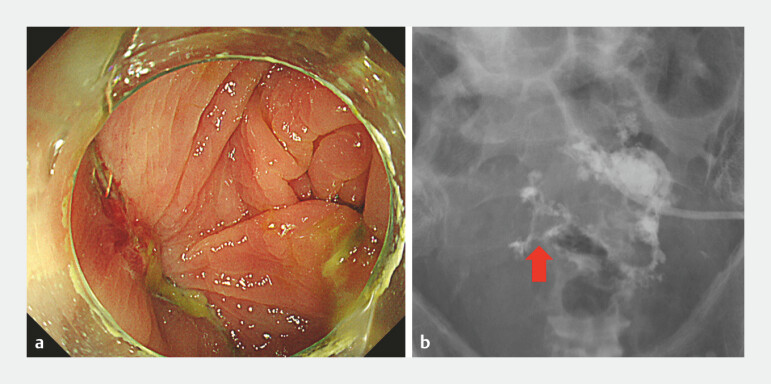 Fig. 1
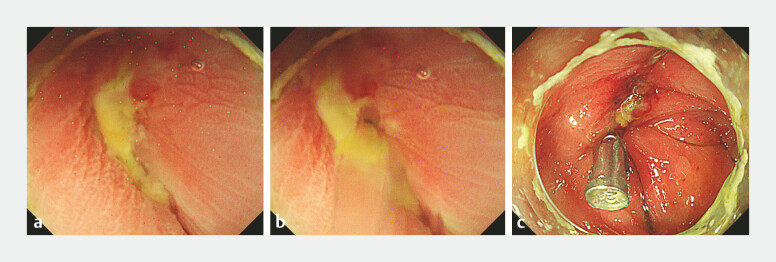 Fig. 2
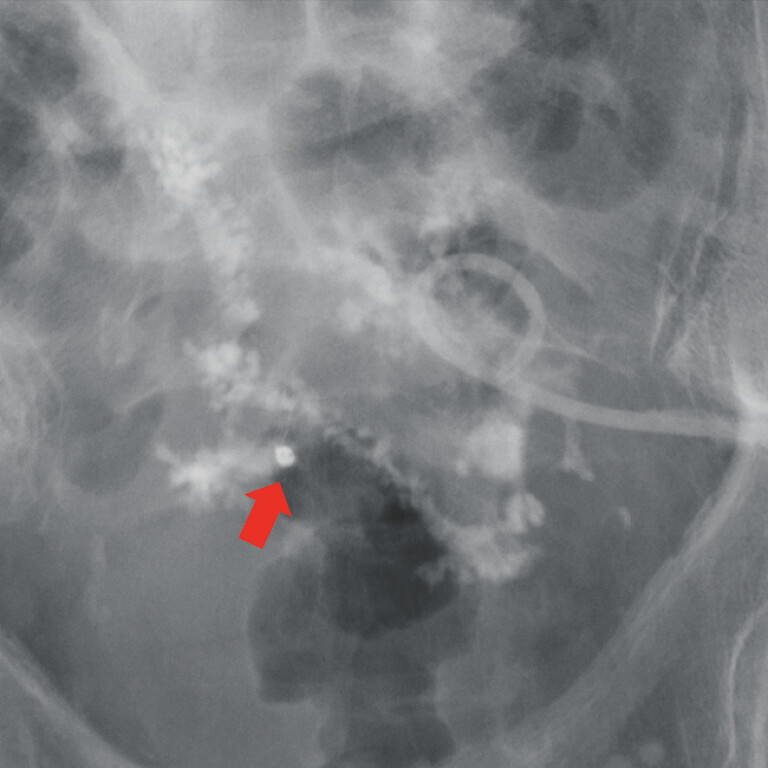 Fig. 3
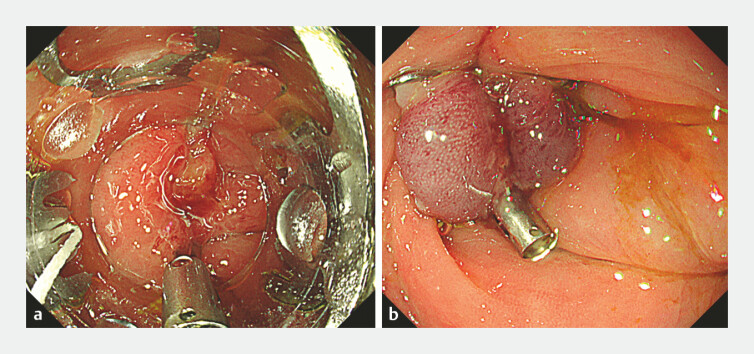 Fig. 4
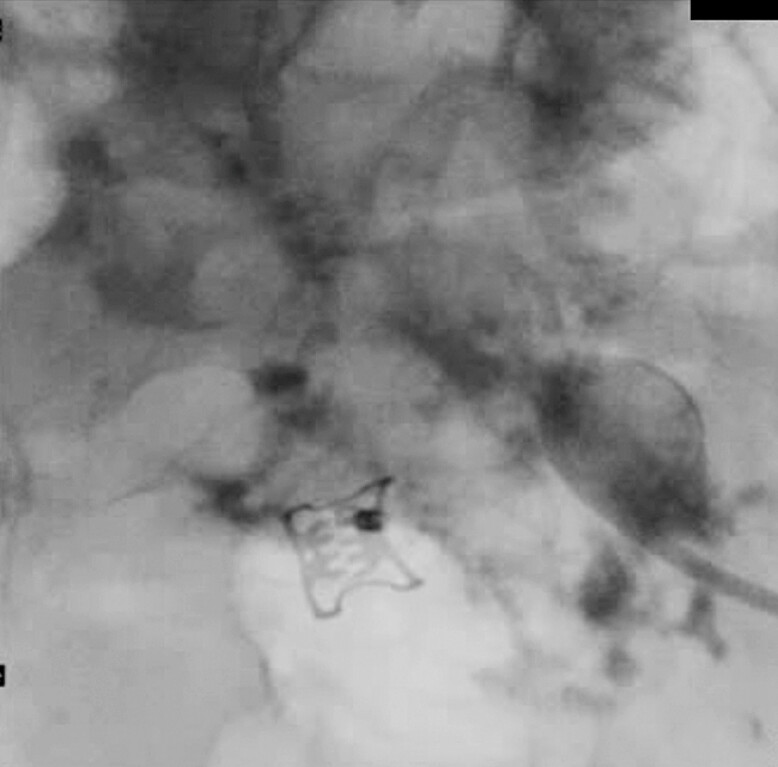 Fig. 5
Peer Reviews
No public reviews on file for this paper yet. If you reviewed it on a platform where reviews are public (OpenReview, ICLR, NeurIPS, ICML), you can paste yours below so the community can read it here.
Videos
No videos yet. Explain this paper in a talk, walkthrough, or lecture? Add one.
Taxonomy
TopicsTraumatic Ocular and Foreign Body Injuries · Head and Neck Surgical Oncology · Esophageal and GI Pathology
The placement of an over-the-scope (OTS) clip is a useful treatment option for anastomotic leakage following gastrointestinal surgery 1 2 . Although OTS clips are effective in closing leaks smaller than 10 mm in diameter after colorectal surgery 3 , endoscopic identification of such small leaks can be challenging ( Video 1 ).
Underwater detection and endoscopic closure of an anastomotic leak following sigmoidectomy for colorectal cancer.Video 1
An 86-year-old man underwent sigmoidectomy for colon cancer. On postoperative day 2 (POD2), the anastomotic leakage was detected based on drainage fluid contamination. A drainage tube was placed under the computed tomographic guidance for an intra-abdominal abscess. On POD 16, the anastomotic site was examined via fluoroscopic colonoscopy. No leakage site was detected endoscopically; however, the contrast medium injected through the abdominal drain flowed into the colon ( Fig. 1 ). Under CO₂ insufflation, the exact entry point of the contrast medium could not be determined. However, underwater observation clearly visualized turbid contrast medium flow like a mirage under the water, allowing the precise localization of the leakage site. Subsequently, a through-the-scope (TTS) clip was applied ( Fig. 2 ). After clip placement, contrast medium flow ceased ( Fig. 3 ). Four days later, repeat fluoroscopy via an abdominal drain revealed residual leakage beside the clip. Consequently, a 9-mm OTS clip was placed ( Fig. 4 ). The procedure was completed using simple suction, and the previously placed clip did not interfere with the OTS clip placement. After the OTS clip placement, the contrast medium flow ceased ( Fig. 5 ). Fifteen days later, the patient was discharged without leakage recurrence.
a No visible leakage site under CO₂ insufflation. b Contrast medium entering the colon from the intra-abdominal drain on fluoroscopy.
Endoscopic findings around the leakage site. a Before contrast injection via the abdominal drain. b Underwater view clearly showing turbid contrast entering the lumen. c Leak site closed using a through-the-scope (TTS) clip.
A fluoroscopic image after TTS clip placement; no further contrast inflow into the colon. TTS, through-the-scope.
a Over-the-scope(OTS) clip just before deployment. b Complete closure of the leakage site after OTS clip placement.
A fluoroscopic image after OTS clip placement; no further contrast inflow into the colon.
Underwater endoscopy is a well-established technique that facilitates insertion and endoscopic resection during colonoscopy 4 5 . In the present case, underwater observation was valuable in detecting a small colonic anastomotic leak. Moreover, prior marking of the TTS clip did not interfere with OTS clip application. Our experience highlights the advantages of underwater endoscopy for identifying subtle anastomotic leaks.
Endoscopy_UCTN_Code_CCL_1AD_2AG Endoscopy_UCTN_Code_CPL_1AH_2AG Endoscopy_UCTN_Code_TTT_1AO_2AI
The reference list from the paper itself. Each links out to its DOI / PubMed record.
- 1Mennigen R Colombo-Benkmann M Senninger N Endoscopic closure of postoperative gastrointestinal leakages and fistulas with the over-the-scope clip (OTSC)J Gastrointest Surg 2013171058106523400507 10.1007/s 11605-013-2156-y · doi ↗ · pubmed ↗
- 2Kobara H Mori H Nishiyama N Over-the-scope clip system: A review of 1517 cases over 9 years J Gastroenterol Hepatol 201934223010.1111/jgh.1440230069935 · doi ↗ · pubmed ↗
- 3Negm S Farag A Shafiq A Endoscopic management of low output recurrent colonic fistula or leak after anterior resection for rectal cancer: A randomized controlled trial Surg Endosc 2023376145615210.1007/s 00464-023-10092-z 37145174 PMC 10338381 · doi ↗ · pubmed ↗
- 4Leung FW Correction: Deep dive into water-aided colonoscopy – Underwater techniques without a splash. Erratum for Endoscopy 20255749249310.1055/a-2515-634939778592 · doi ↗ · pubmed ↗
- 5Takeuchi Y Shichijo S Uedo N Underwater endoscopic mucosal resection for colorectal lesions: Can it be an “Underwater” revolution?DEN Open 20222 e 8410.1002/deo 2.8435310727 PMC 8828230 · doi ↗ · pubmed ↗