First record of the complete mitochondrial genome of Streblote castanea (Swinhoe, 1892) (Lepidoptera: Lasiocampidae)
He-Wang Wang, Xing Wang, Fu-Ying Guo, Hui-Ting Zhu, Shi-Yuan Li, Xuan Zhou

TL;DR
This paper presents the first complete mitochondrial genome of Streblote castanea, a key pest in tropical mangroves, offering insights for ecological and pest management studies.
Contribution
The first complete mitogenome of Streblote castanea is sequenced, filling a critical genomic data gap for Lasiocampidae moths.
Findings
The mitogenome is 15,400 bp long with 13 PCGs, 22 tRNA genes, 2 rRNA genes, and an A + T-rich control region.
The total AT content is 78.6%, providing a baseline for future taxonomic and population studies.
The data supports targeted biocontrol strategies in mangrove ecosystems.
Abstract
This study reports the first complete mitochondrial genome (mitogenome) of Streblote castanea (Lepidoptera: Lasiocampidae), a keystone pest of tropical mangrove ecosystems. The mitogenome, spanning 15,400 bp, comprises 13 protein-coding genes (PCGs), 22 transfer RNA (tRNA) genes, two rRNA genes, and an A + T-rich control region, with a total AT content of 78.6%. This assembly addresses the critical genomic data gap for Streblote (Hübner, 1820) and Lasiocampidae, providing foundational insights for taxonomic revision, population dynamics tracing, and targeted biocontrol strategies in ecologically fragile mangrove habitats.
Genes, proteins, chemicals, diseases, species, mutations and cell lines named across the full text — each resolved to its canonical identifier and authoritative record.
Click any figure to enlarge with its caption.
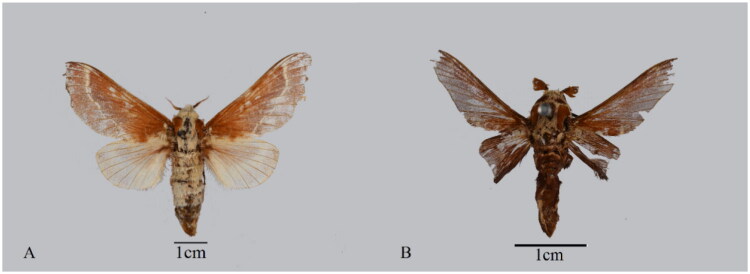 Figure 1
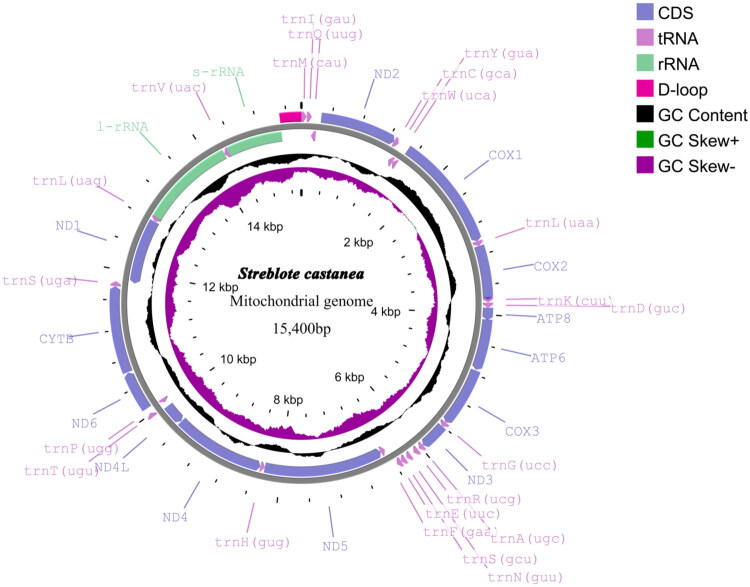 Figure 2
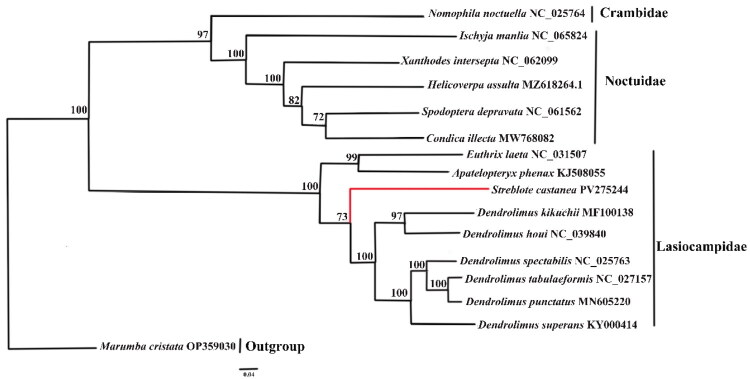 Figure 3
- —National Natural Science Foundation of China10.13039/501100001809
- —Key Project of Qiongtai Normal University
Peer Reviews
No public reviews on file for this paper yet. If you reviewed it on a platform where reviews are public (OpenReview, ICLR, NeurIPS, ICML), you can paste yours below so the community can read it here.
Videos
No videos yet. Explain this paper in a talk, walkthrough, or lecture? Add one.
Taxonomy
TopicsLepidoptera: Biology and Taxonomy · Genomics and Phylogenetic Studies · Coastal wetland ecosystem dynamics
Introduction
The past decade has witnessed an exponential increase in insect genomic data availability, with mitochondrial (mt) genomes emerging as the most widely utilized molecular markers in systematic entomology due to their maternal inheritance, compact structure, and moderate evolutionary rates. Currently, publicly available insect mt genomes outnumber nuclear genomes by more than 10-fold, and they cover the majority of insect orders (Cameron 2014). Against this backdrop, recent breakthroughs have been made in understanding the phylogenetic relationships among superfamilies of Lepidoptera: a study (Chen et al. 2025) based on large-scale genomic data strongly supports several new sister-group relationships. These findings provide a new phylogenetic framework for understanding the adaptive evolution of key lepidopteran lineages. However, the uniparental inheritance mode and limited genetic information of mt genomes may introduce biases in phylogenetic reconstruction (Bernt et al. 2013). Consequently, integrating mt and nuclear genomic data has become a critical approach for unraveling insect evolutionary mechanisms (Kawahara et al. 2019), as this multi-omics strategy not only mitigates phylogenetic artifacts from single-marker analyses but also elucidates nuclear-mt coevolution during adaptive evolution (Hill 2016; Sloan et al. 2018). Streblote castanea (Swinhoe, 1892) is a keystone pest in tropical mangrove ecosystems. It is distributed in India, Sri Lanka, the Philippines, and Hainan (China) (Holloway 1987; Liu and Wu 2006; Prozorov et al. 2022). The larvae are leaf-feeders that engage in binge-feeding, displaying a body coloration that closely resembles that of the surrounding branches and trunks. They exhibit high levels of concealment, robust activity, and considerable migration capacity, and they have a prolonged larval stage (≥40 days). The mature larvae of this species form cocoons on the trunks of trees and undergo a brief pupal period. Adults exhibit high fertility levels and produce a substantial number of eggs (Ong et al. 2010). It causes severe ecological disruption by defoliating seedlings of the dominant mangrove species Lumnitzera racemosa (Willd). Despite its ecological significance, research has predominantly focused on morphological descriptions and taxonomic revisions of geographic populations (Prozorov et al. 2022), with molecular investigations remaining critically underdeveloped. As of 2024, neither mt nor nuclear genome sequences of this species are available in the NCBI database, and the molecular data void for the genus Streblote has hindered cross-generic comparative evolutionary analyses. This genomic gap is particularly pronounced within the family Lasiocampidae. This study presents the first complete mt genome assembly and annotation of S. castanea, accompanied by molecular phylogenetic reconstruction. Our findings advance the understanding of mitogenomic architecture in this ecologically destructive species, providing a foundation for taxonomic refinement, population dispersal tracing, and targeted biocontrol strategies. Additionally, this work clarifies the phylogenetic position of Streblote castanea within Lasiocampidae and contributes a pivotal case study for investigating nuclear-mt coevolutionary dynamics.
Materials and methods
On 26 September 2023, Xing Wang collected S. castanea (Figure 1) cocoons through field collection at the Sanya Tiefang Mangrove Nature Reserve (18°15 – 18°17′N, 109°42′ – 109°44′E, Linwang, Linwang Town, Sanya City, China). Meanwhile, the specimens and genomic DNA were deposited in the Insect Herbarium of Qiongtai Normal University (contact person: Xing Wang, email: [email protected]), Haikou City, Hainan Province, China under the voucher number S-c01. Genomic DNA was extracted from larval body tissue using the SteadyPure Universal Genomic DNA Extraction Kit Ver.1.0 protocol and sequenced on the Illumina NovaSeq 6000 platform (2 × 150 bp) at Berry Genomics (Beijing, China). Raw reads were filtered with FASTP v0.23.2 (Chen et al. 2018), and de novo mt genome assembly was subsequently performed using NOVOPlasty v4.3.1 (Dierckxsens et al. 2017) and GetOrganelle v1.7.6 (Jin et al. 2020). The mitogenome was annotated via the MITOS web server (Bernt et al. 2013), and annotation results were subsequently validated by NCBI BLAST to confirm gene boundaries and identities, with transfer RNA (tRNA) genes verified by tRNAscan-SE (Lowe and Chan 2016) and manually refined in Geneious Prime v10.1.4 (Kearse et al. 2012). Protein-coding genes (PCGs) and rRNAs were identified through comparative alignment with reference mitogenomes. A circular genome map was generated using Proksee (Grant et al. 2023). For phylogenetic reconstruction, 13 PCGs and two rRNAs from 16 mitogenomes (nine Lasiocampidae, five Noctuidae, one Crambidae, and one Sphingidae) were analyzed. The GenBank accession numbers are listed as follows: Nomophila noctuella (Denis and Schiffermüller, 1775) NC_025764 (Tang et al. 2014a, 2014b), Ischyja manlia (Cramer, 1766) NC_065824 (Riyaz et al. 2022), Xanthodes intersepta Guenée, 1852 NC_062099 (Liang et al. 2022a, 2022b), Helicoverpa assulta (Guenée, 1852) MZ618264.1 (Liang et al. 2021), Spodoptera depravata (Butler, 1879) NC_061562 (Liang et al. 2022a, 2022b), Condica illecta (Walker, 1865) MW768082 (Li et al. 2021), Euthrix laeta (Walker, 1855) NC_031507 (Wu et al. 2016), Apatelopteryx phenax de Joannis, 1912 KJ508055 (Timmermans et al. 2014), Streblote castanea PV275244 (present study), Dendrolimus kikuchii Matsumura, 1927 MF100138 (Chen et al. 2017), Dendrolimus houi Lajonquière, 1973 NC_039840 (Qin and Zhang 2018), Dendrolimus spectabilis (Butler, 1877) NC_025763 (Tang et al. 2014a, 2014b), Dendrolimus tabulaeformis Tsai et Liu, 1962 NC_027157 (Qin and Zhang 2015), Dendrolimus punctatus (Walker, 1855) MN605220 (Du 2019), Dendrolimus superans (Butler, 1877) KY000414 (Qin and Zhang 2016), Marumba cristata (Butler, 1875) OP359030 (Zheng 2022). Amino acid sequences were aligned with MAFFT v7.149 (Katoh and Standley 2013), concatenated using FASConCAT-g v1.05.1 (Kück and Longo 2014), and partitioned under optimal models selected by ModelFinder v2.1.1 (Lanfear et al. 2017). Maximum-likelihood (ML) analysis was performed using IQ-TREE v2 (Minh et al. 2020) with 1000 bootstrap replications, and Sphingidae as an outgroup. Phylogenetic analysis was conducted under the best-fit model GTR + F + I + G4, which was selected via the ModelFinder program integrated in IQ-TREE. Bayesian inference (BI) was completed using PhyloSuite v1.2.2. The final phylogenetic tree was visualized using FigTree v1.4.4, which is distributed under the GNU General Public License v2 (GPLv2).
Streblote castanea (Swinhoe, 1892) adults: (A) female; (B) male. Photo taken by the first author (study used larval samples).
Results
The full mitogenome of S. castanea (GenBank accession number: PV275244) is 15,400 bp in size, with an average coverage depth of 227.2× (Figure S1). The mitogenome has a non-coding control region (A + T rich region, D-loop), along with 13 PCGs, 22 tRNA genes, and two ribosomal RNA (rRNA) genes. The nucleotides consist of A, C, G, and T, accounting for 39.5%, 13.5%, 7.9%, and 39.1%, respectively. The AT nucleotide content is 78.6% (Figure 2). Out of the 37 genes, 23 are located on the J-strand, including nine PCGs (ND2, ND3, ND6, COX1, COX2, COX3, ATP6, ATP8, CYTB) and 14 tRNAs (trnM, trnI, trnW, trnL^UAA^, trnK, trnD, trnG, trnA, trnR, trnN, trnS^GCU^, trnE, trnT, trnS^UGA^). The N-strand harbors the remaining four PCGs (ND1, ND4, ND4L, ND5), eight tRNAs, and both rRNA genes (rrnS and rrnL), alongside the AT-rich control region. The 12 PCGs start with typical ATN initiation codons (three with ATT, two with ATA, one with ATC, and six with ATG), except for COX1 which begins with CGA. All of the PCGs end with the typical stop codons except for COX1 and ND4 which use T as an incomplete termination codon. The mt genome annotation revealed 22 tRNA genes exhibiting a size range of 65 bp (trnP) to 71 bp (trnK). The small ribosomal RNA (rrnS) and large ribosomal RNA (rrnL) subunits were as 815 bp and 1377 bp in length, respectively. In our study, 13 PCGs of 16 species were used in phylogenetic analysis.
Diagram of the mitotic genome pattern of Streblote castanea. Pink arrows indicate the direction of gene transcription. Genes outside the circle are encoded by the majority strand (J-strand); genes inside the circle are encoded by the minority strand (N-strand).
Discussion and conclusions
Here, we report the assembly and annotation of the complete mt genome for S. castanea, adding a new genomic resource for the family Lasiocampidae. The genome (15,400 bp) is within the expected 15–16 kb range for Lepidoptera and shows high structural similarity to related species like Dendrolimus punctatus and Euthrix laeta (Wu et al. 2016; Du 2019). Both gene order and orientation match the ancestral arrangement found across the superfamily Lasiocampoidea. This supports the view that insect mt architectures remain evolutionarily conserved (Qin and Zhang 2015; Chen et al. 2017). Additionally, the high A + T bias (78.6%) in S. castanea aligns with typical lepidopteran patterns, likely resulting from the bias of mt DNA polymerase during replication (Cameron 2014).
In our phylogenetic analysis of 13 PCGs, S. castanea appears as a sister group to the genus Dendrolimus (Figure 3). This molecular evidence corroborates traditional morphological classifications that place these genera together in the subfamily Lasiocampinae (Holloway 1987; Prozorov et al. 2022). However, nodal support varied between methods. While BI strongly supported this sister-group relationship, the bootstrap support in ML analysis was moderate. Such incongruence is not rare in studies of rapidly radiating lineages and may stem from saturation of substitution sites or long-branch attraction (Cameron 2014). Given the high posterior probability in BI (Figure S3) and the morphological context, we consider the Streblote–Dendrolimus relationship to be robust.
The maximum-likelihood (ML) phylogenetic tree of Lepidoptera species based on complete mitochondrial genomes. All species involved in the tree have scientific names with accession numbers on the right side. GenBank accession numbers are shown in Table S1. The tree was inferred using IQ-TREE under the GTR + F + I + G4 model. Nodal support was evaluated from 1000 bootstrap replications, with values shown at the nodes. Marumba cristata (Sphingidae) was designated as the outgroup. The tree topology was visualized using FigTree v1.4.4.
Overall, this study establishes the first mitogenome for S. castanea, confirming its typical genomic features and clarifying its taxonomy. These results contribute to our understanding of Lasiocampidae evolution. While mt data provide key insights, the variation in branch support suggests that future research should include nuclear markers or transcriptomic data (Chen et al. 2025). This approach will be essential to fully resolve complex species-level relationships and overcome the limits of single-locus phylogenies.
Supplementary Material
Revised manuscript.docx
The reference list from the paper itself. Each links out to its DOI / PubMed record.
- 1Bernt M et al. 2013. MITOS: improved de novo metazoan mitochondrial genome annotation. Mol Phylogenet Evol. 69(2):313–319. 10.1016/j.ympev.2012.08.02322982435 · doi ↗ · pubmed ↗
- 2Cameron SL. 2014. Insect mitochondrial genomics: implications for evolution and phylogeny. Annu Rev Entomol. 59(1):95–117. 10.1146/annurev-ento-011613-16200724160435 · doi ↗ · pubmed ↗
- 3Chen Q et al. 2025. Phylogenomic data exploration with increased sampling provides new insights into the higher-level relationships of butterflies and moths (Lepidoptera). J Syst Evol. 63(5):1133–1153. 10.1111/jse.1318038796071 · doi ↗ · pubmed ↗
- 4Chen S, Zhou Y, Chen Y, Gu J. 2018. Fastp: an ultra-fast all-in-one FASTQ preprocessor. Bioinformatics. 34(17):i 884–i 890. 10.1093/bioinformatics/bty 56030423086 PMC 6129281 · doi ↗ · pubmed ↗
- 5Chen Z, Xu C, Ouyang Y. 2017. NCBI Gen Bank. https://www.ncbi.nlm.nih.gov/nuccore/MF 100138
- 6Dierckxsens N, Mardulyn P, Smits G. 2017. NOVO Plasty: de novo assembly of organelle genomes from whole genome data. Nucleic Acids Res. 45(4):e 18. 10.1093/nar/gkw 95528204566 PMC 5389512 · doi ↗ · pubmed ↗
- 7Du H. 2019. NCBI Gen Bank. https://www.ncbi.nlm.nih.gov/nuccore/MN 605220
- 8Grant JR et al. 2023. Proksee: in-depth characterization and visualization of bacterial genomes. Nucleic Acids Res. 51(W 1):W 484–W 492. 10.1093/nar/gkad 32637140037 PMC 10320063 · doi ↗ · pubmed ↗