Experimental Joint Estimation of Phase and Phase Diffusion Via Deterministic Bell Measurements
Ben Wang, Minghao Mi, Huangqiuchen Wang, Qian Xie, Lijian Zhang

TL;DR
This paper shows how using entangled measurements can improve the precision of estimating phase and its fluctuations in quantum metrology.
Contribution
The novel contribution is the experimental demonstration of joint phase and phase-diffusion estimation using deterministic Bell measurements.
Findings
Deterministic Bell measurements outperform separable strategies in joint phase and phase-diffusion estimation.
Entangling measurements enable reaching the ultimate precision limit in multi-parameter quantum metrology.
A linear optical network was used to implement parameter encoding and Bell measurements.
Abstract
Accurate phase estimation plays a pivotal role in quantum metrology, yet its precision is significantly affected by noise, particularly phase‐diffusive noise caused by phase drift. To address this challenge, the joint estimation of phase and phase diffusion has emerged as an effective approach, transforming the problem into a multi‐parameter estimation task. However, the incompatibility between optimal measurements for different parameters prevents single‐copy measurements from reaching the fundamental precision limits defined by the quantum Cramér–Rao bound. Meanwhile, collective measurements performed on multiple identical copies can mitigate this incompatibility and thus enhance the precision of joint parameter estimation. This work experimentally demonstrates joint phase and phase‐diffusion estimation using deterministic Bell measurements on a two‐qubit system. A linear optical…
Genes, proteins, chemicals, diseases, species, mutations and cell lines named across the full text — each resolved to its canonical identifier and authoritative record.
Click any figure to enlarge with its caption.
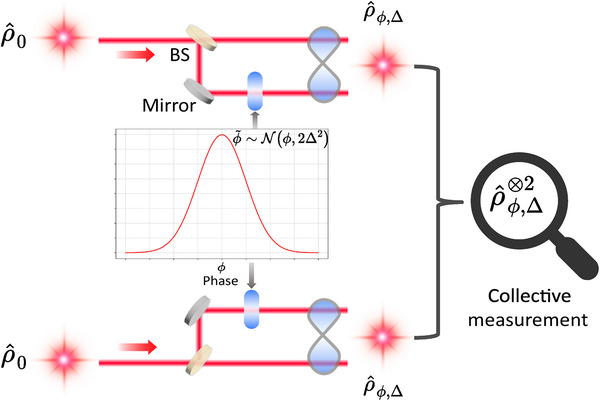 Figure 1
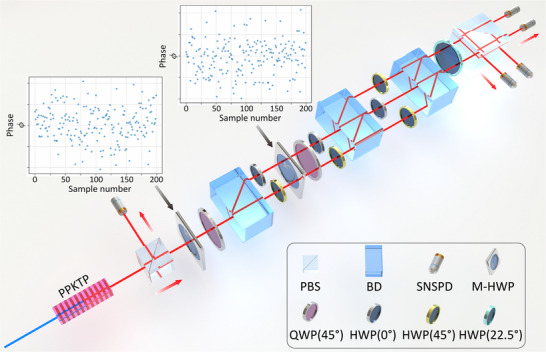 Figure 2
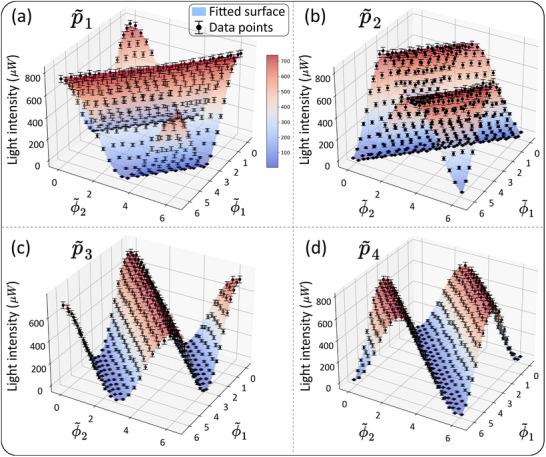 Figure 3
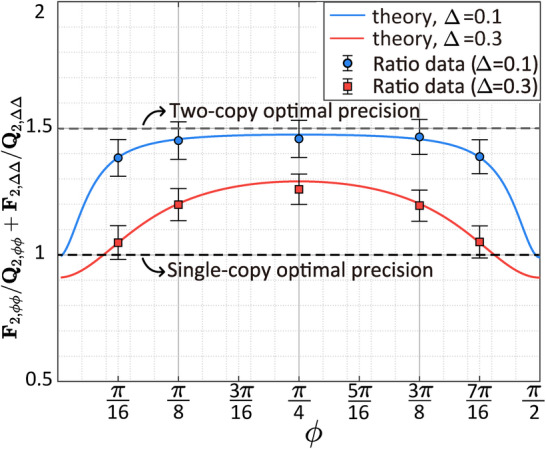 Figure 4
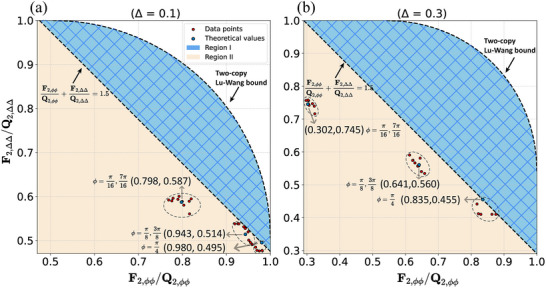 Figure 5
- —Quantum Science and Technology‐National Science and Technology Major Project
- —National Natural Science Foundation of China10.13039/501100001809
- —National Key Research and Development Program of China10.13039/501100012166
- —Natural Science Foundation of Jiangsu Province10.13039/501100004608
Peer Reviews
No public reviews on file for this paper yet. If you reviewed it on a platform where reviews are public (OpenReview, ICLR, NeurIPS, ICML), you can paste yours below so the community can read it here.
Videos
No videos yet. Explain this paper in a talk, walkthrough, or lecture? Add one.
Taxonomy
TopicsQuantum Information and Cryptography · Quantum Computing Algorithms and Architecture · Advanced NMR Techniques and Applications
Introduction
1
Quantum metrology leverages quantum resources, such as entanglement and squeezing, to surpass the precision limits inherent in classical measurement techniques.^[^ 1, 2, 3, 4, 5, 6, 7 ^]^ Within this framework, accurate phase estimation is pivotal, as many physical observables can be mapped into phase shifts. For instance, applications such as gravitational wave detection,^[^ 8, 9, 10 ^]^ high‐resolution lithography^[^ 11, 12, 13 ^]^ and quantum imaging^[^ 14, 15, 16 ^]^ depend critically on the detection of subtle phase variations. Consequently, precise phase estimation serves as a central aspect for advanced metrological protocols.
In realistic scenarios, the inevitable noise in the interferometer will adversely impacts the estimation precision. Many types of noise can be pre‐calibrated. However, noise arising from the estimated phase itself, such as random phase drift, is difficult to calibrate. This type of noise, known as phase‐diffusive noise, causes decoherence, which may reduce or even completely eliminate the quantum advantages that enable enhanced measurement precision.^[^ 17, 18, 19, 20, 21 ^]^ Although numerous studies have investigated the fundamental precision of phase estimation with known magnitude of phase diffusion,^[^ 22, 23, 24, 25, 26 ^]^ many physical processes involve entirely unknown phase diffusion. Treating the phase and amplitude of phase diffusion as estimable parameters offers a novel and robust solution to this challenge, and related studies have attracted significant attention.^[^ 27, 28, 29 ^]^ Vidrighin et al. first proposed the a quantum model of this question, and experimentally demonstrated the fundamental precision of joint estimation of phase and phase diffusion at single‐copy state level.^[^ 27 ^]^
Moreover, in multi‐parameter estimation scenarios, the optimal measurements for different parameters are often incompatible, resulting in inevitable trade‐offs in precision.^[^ 30, 31, 32 ^]^ These trade‐offs establish fundamental limitations on the overall precision achievable in multi‐parameter estimation and have motivated the formulation of various precision bounds. ^[^ 7, 33, 34, 35, 36, 37, 38 ^]^ Such trade‐offs limit the overall precision in the joint estimation of phase and phase diffusion. To address this limitation, various studies have utilized collective measurements on multiple copies of quantum states to enhance estimation precision. ^[^ 39, 40 ^]^ Notably, theoretical studies have demonstrated that performing Bell measurements—a type of collective measurement—on two copies of quantum states can improve the accuracy of simultaneous estimation of phase and phase diffusion amplitude.^[^ 27 ^]^ However, the experimental implementation of Bell measurements remains technically challenging, as existing approaches either depend on probabilistic protocols or require the use of hyper‐entangled photon sources combined with complex optical configurations.^[^ 41, 42, 43 ^]^ For example, Roccia et al. implemented incomplete and non‐deterministic Bell measurements using two‐photon interference and subsequently performed quantum tomography to characterize the resulting measurements, thereby inferring the quantum metrological advantage, which is a proof‐of‐principle demonstration and does not accomplish the practical estimation task.^[^ 44 ^]^ The scheme based on a 1D quantum random walks is a promising method to realize the general positive operator‐valued measure (POVM) on photonics system.^[^ 39, 45, 46 ^]^ Developing a practical optical network capable of performing deterministic Bell measurements via photonic quantum walks on two‐copy quantum states that encode phase information under phase‐diffusive noise remains an unresolved challenge in the field.
In this work, we experimentally demonstrate that collective measurements on multi‐copy systems can enhance the precision of multi‐parameter estimation for mixed states. Specifically, we utilize a linear‐optical network to prepare two‐copy quantum states that encode phase information under phase‐diffusive noise and implement deterministic Bell measurements. Our collective measurement scheme achieves approximately an approximate 50% improvement in estimation precision compared to separable measurements, approaching the ultimate theoretical limit for the two‐copy system. Moreover, by adopting the Lu–Wang multi‐parameter quantum estimation bound as a benchmark ^[^ 35 ^]^, we rigorously validate the superiority of our measurement strategy. These results effectively connect theoretical performance bounds with experimental realizations, offering insights for developing more robust quantum metrology protocols in noisy environments.
Theoretical Framework
2
In practical interferometric setups, phase‐diffusive noise arises as a nondissipative dephasing process in the interferometer arms. This noise can be modeled by applying random phase shifts drawn from a Gaussian distribution with mean ϕ and variance 2Δ^2^, effectively encoding the phase ϕ and the phase diffusion Δ into the quantum state (as illustrated in Figure 1). Specifically, for an initial state ρ^(0), the evolved state under Gaussian phase noise is given by
where U^ϕ∼=exp(−iϕ∼a^†a^) implements the phase shift, with a^(a^†) denoting the annihilation (creation) operator.^[^ 22, 27 ^]^ In the Fock basis, the initial quantum state can be written by ρ^(0)=∑mnρnm|n⟩⟨m|, and the integral yields
revealing that the diagonal elements remain invariant, thus conserving energy, whereas the off‐diagonal elements acquire exponential damping factor e−Δ2(n−m)2 and phase factor e ^ iϕ(n − m)^. This encoding process is equivalent to solving the corresponding quantum master equation for phase diffusion.^[^ 22, 23, 24 ^]^ For an initial pure qubit state |ψ_0_〉 = cos (θ/2)|0〉 + sin (θ/2)|1〉, in which case the phase‐shift operator can be simplified as U^ϕ∼=exp(iϕ∼σ^z/2) with Pauli operator σ^z=diag[1,−1], the density matrix with phase and phase diffusion is
Schematic of simultaneous estimation for phase ϕ and phase diffusion amplitude Δ by collective measurements. A random phase shift ϕ∼∼N(ϕ,2Δ2) is applied to one arm of the interferometer to encode both the parameter ϕ and Δ. The final quantum state, ρ^ϕ,Δ, is generated, and collective measurements are performed on two copies of this state, ρ^ϕ,Δ⊗2, to jointly estimate the parameters.
To extract information about the parameters x=(ϕ,Δ)⊤∈R2, we perform measurements described by the positive operator‐valued measure (POVM) {E^k|E^k≥0,∑kE^k=I}. The probability of obtaining the outcome k is then given by p(k|x)=Tr(ρ^xE^k). The outcomes of such a measurement can be used in a function called the estimator xˇ(k), which provides an unbiased estimate of x. Its precision is quantified by the covariance matrix Vx=∑k(xˇ(k)−x)(xˇ(k)−x)⊤P(k|x). The Fisher information matrix (FIM),^[^ 47 ^]^ a central concept in parameter estimation, quantifies the amount of information that the measurement outcomes provide about the parameters. Its elements are defined as Fij=∑k∂xiP(k|x)∂xjP(k|x)/P(k|x). The precision of any unbiased estimator is limited by the Cramér‐Rao bound, Vx≥(νF)−1, where ν denotes the number of experimental runs. Since the FIM is derived from the probability distributions associated with a specific POVM, this bound is inherently dependent on the measurement scheme. To establish the fundamental precision limit, independent of any particular measurement, the quantum Cramér‐Rao bound (QCRB) based on the quantum Fisher information matrix (QFIM) is widely utilized.^[^ 33, 48 ^]^ The elements of the QFIM are defined as Qij=Tr[ρ^x(L^iL^j+L^jL^i)/2], where the symmetric logarithmic derivative (SLD) L^i is defined via ∂xiρ^x=(ρ^xL^i+L^iρ^x)/2. Thus, the QCRB can be expressed by the inequality
Notably, equality in the second inequality is attainable if and only if the mean Uhlmann curvature matrix U vanishes. Its elements are given by Uij=iTr(ρ^x[L^i,L^j])/4. This condition, namely the weak commutativity condition,^[^ 27, 31, 49, 50 ^]^ is generally challenging to satisfy in multi‐parameter estimation scenarios.
It is important to emphasize that the SLD operators corresponding to the phase parameter ϕ and the phase diffusion amplitude Δ generally do not satisfy the weak commutativity condition. For equatorial states (i.e., when θ = π/2), one obtains Tr(ρ^ϕ,Δ[L^ϕ,L^Δ])=0, indicating that the QCRB for these parameters can, in principle, be asymptotically achieved. In this case, the QFIM is
and the derivation is provided in Appendix A. In the case of mixed states, achieving the QCRB typically necessitates the implementation of collective measurements across multiple copies, as opposed to relying solely on measurements performed on individual copies.^[^ 31, 49, 51 ^]^ Consequently, separable measurements are unable to saturate the QCRB, and an increased number of copies undergoing collective measurements results in enhanced precision of parameter estimation.^[^ 27, 44 ^]^
To quantitatively assess the precision trade‐off in the joint estimation of ϕ and Δ, we employ a figure of merit defined as Tr(Q−1F). Since the QFIM is diagonal, this figure of merit can be written in the form F ϕϕ/Q ϕϕ + F ΔΔ/Q ΔΔ. In the single‐copy scenario, this figure of merit satisfies TrQ−1F≤1. By extending this analysis to two‐copy states, ρ^ϕ,Δ⊗2, we arrive at the following precision trade‐off relation,
where Q 2 = 2Q denotes the QFIM of ρ^ϕ,Δ⊗2, and F 2 represents the FIM derived from the POVM applied to the two‐copy quantum state. The details can be found in Appendix A and B. Furthermore, we demonstrate that employing Bell measurements enable the figure of merit to saturate this bound in the limit as Δ → 0. Specifically, by projecting the two‐copy state ρ^ϕ,Δ⊗2 onto the four Bell bases (|00⟩+|11⟩)/2,(|00⟩−|11⟩)/2,(|01⟩+|10⟩)/2,(|01⟩+|10⟩)/2, the corresponding probabilities at the four output ports are given by,
Therefore, for ρ^ϕ,Δ⊗2 under Bell measurements, the figure of merit becomes,
It follows that, in the limit Δ → 0, the precision bound given by Equation (6) is saturated.
Experiment Setup and Results
3
The experimental setup depicted in Figure 2 is utilized to jointly estimate the parameters ϕ and Δ via deterministic Bell measurements. This setup involves preparing the parameterized two‐copy state ρ^ϕ,Δ⊗2, followed by the deterministic Bell measurements.
Experimental setup for the joint estimation of phase ϕ and phase diffusion Δ via Bell measurements. The setup utilizes a four‐step quantum walk to prepare a two‐copy parameterized quantum state and perform deterministic Bell measurements.
A pair of 1560 nm photons is produced through type‐II spontaneous parametric down‐conversion in a periodically poled potassium titanyl phosphate (PPKTP) crystal. These photons are separated into distinct paths by a polarizing beam splitter (PBS). The vertically polarized (V) photon is detected by a superconducting nanowire single‐photon detector (SNSPD) and serves as a heralding signal. Meanwhile, the horizontally polarized (H) photon is used to generate the parameterized two‐copy state with parameters ϕ and Δ.
In our approach, a four‐step quantum walk is employed to implement both parameter encoding and Bell measurements. The first qubit is encoded in the photon's path degree of freedom (DOF), with the logical states defined as |up〉 ≡ |0〉 and |down〉 ≡ |1〉. The second qubit is encoded in the polarization DOF with |H〉 ≡ |0〉 and |V〉 ≡ |1〉. To encode the parameters ϕ and Δ into the polarization DOF, the horizontally polarized photon |H〉 is first passed through a combination of a motorized half‐wave plate (M‐HWP) and a quarter‐wave plate (QWP) fixed at a rotation angle of π/4. The M‐HWP applies a sequence of discrete phase shifts (ϕ_1_, ϕ_2_, …, ϕ_200_) drawn from a Gaussian distribution N(ϕ,2Δ2), thereby encoding both ϕ and Δ into the polarization DOF. Subsequently, a beam displacer (BD) deflects the horizontal polarization |H〉 into the up path |up〉, creating a 4 mm spatial separation from the vertical polarization |V〉 in the down path |down〉. This operation effectively maps the polarization qubit onto a path qubit. Thereafter, half‐wave plates (HWPs), set to 0 and π/4 in the |up〉 and |down〉 paths, respectively, are inserted to prepare the photon in the state ρ^ϕ,Δ⊗|H⟩⟨H|. This state is subsequently processed through an M‐HWP and a QWP, analogous to those used for encoding the first qubit, to encode the second polarization qubit. The complete procedure ultimately yields the parameterized two‐copy quantum state ρ^ϕ,Δ⊗2. A deterministic Bell measurement is then performed on this two‐copy quantum state by constructing three specific coin operators and executing a three‐step quantum walk (Appendix D). Finally, photon counts are recorded at four output ports using SNSPDs. Each output port corresponds to a projection onto one of the four Bell states, thereby enabling deterministic Bell state measurements.
In our experimental setup, both the phase and phase diffusion amplitude are simultaneously encoded by applying a large number of discrete phase values via the M‐HWPs. This method requires stringent control over the phase implementation process. To ensure the precision of the apparatus, we perform a calibration and validation procedure using 1560 nm classical light. In this calibration, we use 100 uniformly discretized phase points spanning the entire interval [0, 2π] to prepare the quantum state ρ^(ϕ∼1)⊗ρ^(ϕ∼2). A set of Bell measurements is then carried out on this state, with the light intensities detected at the four output ports. The corresponding probability distributions are
For each output port, we record 10,000 intensity data points while varying ϕ∼1 and ϕ∼2 sequentially. The fitted surface curves representing the intensity distributions (as shown in Figure 3) agree well with the theoretical probability distributions in Equation (9), and the interference visibility at all four ports exceeds 99.7%, thereby verifying the feasibility of the experimental apparatus.
Distribution of the intensities at four output ports as functions of ϕ∼1,ϕ∼2∈[0,2π). Different colors indicate varying intensity values. Each surface in the plots is generated by fitting over a grid of 100 × 100 sampled data points within this interval.
Thereafter, a 1560 nm single‐photon source is coupled into the calibrated experimental setup. Two independent sets of discrete phases, each drawn from the same Gaussian distribution, are simultaneously applied to the two M‐HWPs. In the experiment, 200 discrete phase points are implemented to encode the parameters and thereby prepare the two‐copy quantum state ρ^ϕ,Δ⊗2. Photon counts are recorded at the four output ports using SNSPDs, yielding total photon counts N 1, N 2, N 3, and N 4 during the entire phase‐loading process, with ν = N 1 + N 2 + N 3 + N 4 ≈ 10^4^. Based on the four probability distributions given in Equation (7), we employ maximum likelihood estimation to obtain the estimators for the parameters ϕ and Δ. The likelihood function is defined as L=p1N1·p2N2·p3N3·p4N4. The values of ϕ and Δ that maximize L are taken as the estimates, yielding one set of joint estimates for phase and phase diffusion. By repeating the above experimental procedure, we acquire 400 sets of joint estimates, from which the estimation variances and the covariance of the two parameters are determined to explore the ultimate precision limits achievable by this scheme.
Since the precision of the joint estimation of phase and phase diffusion amplitude via Bell measurements depend on the parameters themselves, as shown in Equation (8), we experimentally demonstrate the joint estimation results for Δ ∈ {0.1, 0.3} and ϕ ∈ {π/16, π/8, π/4, 3π/8, 7π/16}. These results are presented in Figure 4. In this figure, the curves correspond to the theoretical prediction of the figure of merit Tr(F2Q2−1) as a function of ϕ. We estimate the Fisher information matrix from the covariance matrix acquired from the experiment results. The error bars on the experimental data points are determined via Monte Carlo simulations using 100 independent samples drawn from the corresponding Poisson distributions.^[^ 27, 52 ^]^ For Δ = 0.1, the precision reaches its optimum at ϕ = π/4, where the figure of merit saturates at 1.475. This verifies that the joint estimation of phase and phase diffusion via Bell measurements can achieve the optimal precision for two‐copy quantum states. As the five blue data points show little variation, we further measure the variation of the figure of merit with ϕ for Δ = 0.3. The experimental data agrees well with theoretical predictions, thereby validating our theoretical framework.
The experimental results of joint estimation of phase ϕ and phase diffusion amplitude Δ via Bell measurements. The joint estimation precision is evaluated across ten data sets with Δ ∈ {0.1, 0.3}, ϕ ∈ {π/16, π/8, π/4, 3π/8, 7π/16} and ν ≈ 104.
Lu and Wang extended Heisenberg's uncertainty principle to quantum multi‐parameter estimation, arriving at a metrological bound on the simultaneous estimation of two parameters.^[^ 35 ^]^ This result, known as the Lu–Wang uncertainty relation, establishes a strict precision limit for the joint estimation of phase and phase diffusion amplitude when using a single‐copy state ρ^ϕ,Δ. However, when this bound is extended to the case of two‐copy states, ρ^ϕ,Δ⊗2, we obtain the generalized inequality
Notably, in this context the bound is not tight. The precision trade‐off between phase and phase diffusion, as imposed by the Lu–Wang uncertainty relation for Δ = 0.1 and Δ = 0.3, is illustrated in Figure 5. The plots display the ratio F 2, ϕϕ/Q 2, ϕϕ versus F 2, ΔΔ/Q 2, ΔΔ according to the Equation (8). In each subplot, the blue hatched area (Region I) and the yellow area (Region II) together represent the theoretically allowed region dictated by the Lu–Wang uncertainty relation. The upper bound of Region I is given by Equation. (10). However, the practically achievable precision is confined to Region II, in which the boundary is limited by Equation. (6), and the range indicated by Region I remains unattainable in practice. In the figure, blue dots represent the theoretical predictions for ϕ∈π16,π8,π4,3π8,7π8 (which appear as three distinct points due to degenerate values), while red dots indicate the experimental data, with each subfigure containing 25 data points. The fact that all experimental data points fall within Region II demonstrates that the experimental outcomes are consistent with the theoretical predictions. This analysis confirms that, although the Lu–Wang uncertainty relation provides a corrected precision limit for mixed states, its application to the joint estimation of phase and phase diffusion in two‐copy quantum states ultimately yields a bound that is not tight in practice.
Comparison of the theoretical two‐copy Lu–Wang bound in Equation (10) with achievable precision limits in Equation (6) for a two‐qubit system. a) Δ = 0.1. b) Δ = 0.3. The plots depict the trade‐off between phase and diffusion precision. Although the Lu–Wang uncertainty relation allows for both Regions I and II, only Region II is practically attainable. The 25 experimental data points in each plot confirm this, all lying within Region II.
Conclusion and Discussion
4
In summary, we have experimentally demonstrated that deterministic Bell measurements on a two‐copy quantum system enable joint estimation of phase and phase diffusion with enhanced precision. By implementing quantum walks in a linear‐optical network, we encode both parameters into a two‐copy state and perform deterministic Bell measurements, achieving an approximate 50 % improvement over separable measurement strategies. These results validate our theoretical framework and establish deterministic Bell measurements as a powerful tool for multi‐parameter estimation. Our work provides a robust foundation for advancing precision measurement techniques in noisy quantum systems.
The fundamental precision limit of parameter estimation is governed by the Holevo‐Cramér‐Rao bound, which typically requires collective measurements on multiple identical copies of quantum states.^[^ 53, 54, 55, 56 ^]^ In the phase and phase diffusion estimation problem, the Holevo‐Cramér‐Rao bound coincides with the quantum Cramér‐Rao bound due to the satisfaction of the weak commutativity condition. In principle, the figure of merit used can reach a value of two, which requires collective measurements on more copies of quantum states. Therefore, exploiting collective measurements across more copies can further enhance precision in phase and phase diffusion estimation and deserves further investigation.
Conflict of Interest
The authors declare no conflict of interest.
The reference list from the paper itself. Each links out to its DOI / PubMed record.
- 1C. M. Caves , Phys. Rev. D 1981, 23, 1693.
- 2M. Xiao , L.‐A. Wu , H. J. Kimble , Phys. Rev. Lett. 1987, 59, 278.10035719 10.1103/Phys Rev Lett.59.278 · doi ↗ · pubmed ↗
- 3P. Grangier , R. E. Slusher , B. Yurke , A. La Porta , Phys. Rev. Lett. 1987, 59, 2153.10035438 10.1103/Phys Rev Lett.59.2153 · doi ↗ · pubmed ↗
- 4V. Giovannetti , S. Lloyd , L. Maccone , Science 2004, 306, 1330.15550661 10.1126/science.1104149 · doi ↗ · pubmed ↗
- 5B. L. Higgins , D. W. Berry , S. D. Bartlett , H. M. Wiseman , G. J. Pryde , Nature 2007, 450, 393.18004379 10.1038/nature 06257 · doi ↗ · pubmed ↗
- 6B. L. Higgins , D. W. Berry , S. D. Bartlett , M. W. Mitchell , H. M. Wiseman , G. J. Pryde , New J. Phys. 2009, 11, 073023.
- 7S. Daryanoosh , S. Slussarenko , D. W. Berry , H. M. Wiseman , G. J. Pryde , Nat. Commun. 2018, 9, 4606.30389924 10.1038/s 41467-018-06601-7PMC 6214903 · doi ↗ · pubmed ↗
- 8K. Goda , O. Miyakawa , E. E. Mikhailov , S. Saraf , R. Adhikari , K. Mc Kenzie , R. Ward , S. Vass , A. J. Weinstein , N. Mavalvala , Nat. Phys. 2008, 4, 472.