Commodity risk assessment of Hamamelis mollis plants from the UK
Antonio Vicent Civera, Paula Baptista, Anna Berlin, Elisavet Chatzivassiliou, Jaime Cubero, Nik Cunniffe, Eduardo de la Peña, Nicolas Desneux, Francesco Di Serio, Anna Filipiak, Paolo Gonthier, Beata Hasiów‐Jaroszewska, Hervé Jactel, Blanca B. Landa, Lara Maistrello

TL;DR
This paper assesses the risk of importing Hamamelis mollis plants from the UK into the EU for potential plant health threats.
Contribution
The study identifies two EU-regulated pests associated with Hamamelis mollis plants from the UK.
Findings
Phytophthora ramorum non-EU isolates and Scirtothrips dorsalis are considered relevant pests for this commodity.
No non-regulated pests were identified as requiring further evaluation.
The assessment is based on available scientific and technical information from the UK.
Abstract
The European Commission requested the EFSA Panel on Plant Health to prepare and deliver risk assessments for commodities listed in Commission Implementing Regulation (EU) 2018/2019 as ‘High risk plants, plant products and other objects’. This Scientific Opinion covers plant health risks posed by rooted plants in pots of Hamamelis mollis imported from the United Kingdom (UK). The assessment was performed considering the available scientific information, including the technical information provided by the UK. All pests associated with the commodities were evaluated against specific criteria. Two EU regulated pests (Phytophthora ramorum non‐EU isolates and Scirtothrips dorsalis), present in the UK and potentially associated with the commodity, were considered as relevant for this Opinion. No pests non‐regulated in the EU were identified to be selected for further evaluation.
Genes, proteins, chemicals, diseases, species, mutations and cell lines named across the full text — each resolved to its canonical identifier and authoritative record.
Click any figure to enlarge with its caption.
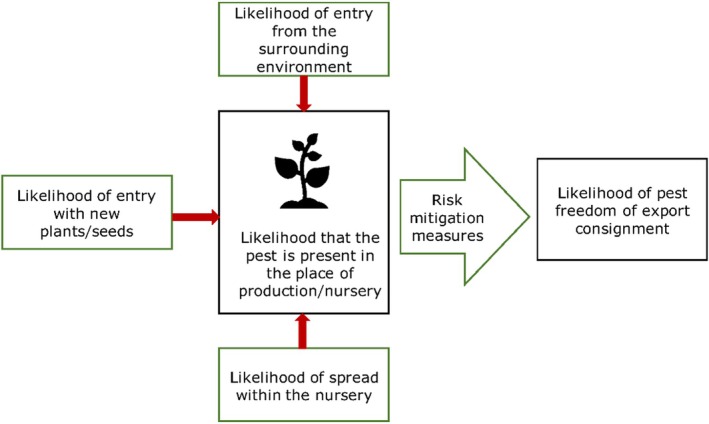 FIGURE 1
| Dossier section | Overview of contents | Filename |
|---|---|---|
| 1 | Technical dossiers | Hamamelis mollis commodity information final.pdf |
| 2 | Pest list | Hamamelis mollis pest list – Final.xlsx |
| 3 | List of plants produced in | Hamamelis producers sample product list.xlsx |
| 4 | Additional information: answers on dossier information and pest status | Hamamelis mollis additional information 7 January 2026.pdf |
| Database | Platform/link |
|---|---|
| Aphids on World Plants |
|
| Beetles of Britain and Ireland |
|
| Biological Records Centre |
|
| British Bugs |
|
| Butterflies and Moths of North America |
|
| CABI Crop Protection Compendium |
|
| CABI Plantwise Knowledge Bank |
|
| CABI Publishing |
|
| Checklist of Aphids of Britain |
|
| Encyclopedia of Life |
|
| EPPO Global Database |
|
| Fauna Europaea |
|
| Forest research |
|
| Fungi of Great Britain and Ireland |
|
| Global Biodiversity Information Facility |
|
| Global Taxonomic Database of Gracillariidae (Lepidoptera) |
|
| National Collection of Plant Pathogenic Bacteria (NCPPB) |
|
| Nature Spot |
|
| Natural History Museum (NHM) |
|
| NBN Atlas |
|
| NEMAPLEX |
|
| Plant Parasites of Europe – leafminers, galls and fungi |
|
| Pyrenomycetes from southwestern France |
|
| Scalenet |
|
| Spider Mites Web |
|
| The Sawflies (Symphyta) of Britain and Ireland |
|
| Thrips‐iD |
|
| UK Beetles |
|
| UK Moths |
|
| UK Plant Health Information Portal |
|
| Database | Platform/link | Database use |
|---|---|---|
|
|
| Host plant records |
|
|
| Host plant records |
|
|
| Pest distribution and host plant records |
|
|
| Host plant records |
|
|
| Host plant records |
|
|
| Regulated status, pest status, pest distribution and host plant records |
|
|
| Pest interceptions and outbreak reports |
|
|
| Host plant records |
|
|
| Host plant records |
|
|
| Arthropods distribution in EU (‘human observation’ category) only for validated records |
|
|
| Pest distribution |
|
|
| Pest distribution |
|
|
| Pest distribution |
|
|
| Host plant records |
|
|
| Host plant records |
|
|
| Pest distribution and host plant records |
|
|
| Host plant records and pest distribution |
|
|
| Host plant records |
|
|
| Pest distribution and host plant records |
|
| Web of Science | Host plant records and evidence of impact (for actionable pests) |
|
|
| Host plant records |
| Type of plant | Age | Min–max diameter | Min–max |
|---|---|---|---|
| Height/length | |||
|
| 2–8 years | Not applicable | 60–250 cm |
| No. | Pest name according to EU legislation | EPPO code | Group | Pest present in UK |
| Pest can be associated with the commodity (rooted plants in pot) | Regulatory status | Pest relevance for the Opinion | Selected for the EKE |
|---|---|---|---|---|---|---|---|---|---|
| 1 |
| PHYTRA | Oomycetes | Yes |
| Yes | Union Quarantine pest | Yes | No |
| 2 |
| PSDPMI | Insects | No |
| Yes | Union Quarantine pest | No | No |
| 3 |
| SCITDO | Insects | Yes |
| Yes | Union Quarantine pest | Yes | No |
| No. | Current scientific name | EPPO code | Group | Pest present in the UK | Present in the EU |
| Pest can be associated with the commodity | Impact | Justification for inclusion in this list |
|---|---|---|---|---|---|---|---|---|---|
| 1 |
| PHYTPP | Oomycetes | Yes | Limited |
| Yes | Uncertain | Recently described |
| No. | Current scientific name | EPPO code | Name used in the EU legislation | Taxonomic information | Group | Regulatory status |
|---|---|---|---|---|---|---|
| 1 |
| PHYTRA |
| Order: Peronosporales | Oomycetes | EU quarantine pest according to Commission Implementing Regulation (EU) 2019/2072 |
| Family: Peronosporaceae | ||||||
| 2 |
| SCITDO |
| Order: Thysanoptera | Insects | EU quarantine pest according to Commission Implementing Regulation (EU) 2019/2072 |
| Family: Thripidae |
| Risk mitigation measure | Implementation in the UK |
|---|---|
| Registration of production sites | All nurseries are registered as professional operator with the UK NPPO, by the APHA for England and Wales, or with SASA for Scotland, and is authorised to issue UK plant passports (Dossier Section 1) |
| Physical separation from the soil | Potted plants are grown in trays on top of protective plastic membranes to prevent contact with soil. Membranes are regularly refreshed when needed. Alternatively, plants may be grown on raised galvanised steel benches stood on gravel as a barrier between the soil and bench feet and/or concreted surfaces. |
| Certification of plant material | All plants are sourced from EU suppliers (usually Netherlands, Belgium or Germany) in EU‐compliant growing medium. All plants sourced from EU countries are certified with phytosanitary certificates |
| Origin and treatment of growing media | Potted plants are imported from the EU in EU‐compliant growing media. The plants are not re‐potted |
| Surveillance, monitoring and sampling | During production, inspection is carried out at least once a year as part of the Quarantine Surveillance programme (Great Britain uses the same framework for its surveillance programme as the EU). Surveillance is based on visual inspection with samples taken from symptomatic material, and where appropriate, samples are also taken from asymptomatic material (e.g. plants, tubers, soil, watercourses) (Dossier Section 1). For |
| As the plants spend a very short period of time in the UK, it is unlikely that they would be present on a nursery when the UK Competent Authority conducts their annual inspection (Dossier Section 1) | |
| Hygiene measures | According to the Dossier Section 1, all the nurseries have plant hygiene and housekeeping rules and practices in place, which are communicated to all relevant employees. These practices cover growing media, weed management, water usage, cleaning and sterilisation, waste treatment and disposal and the management of visitors |
| Irrigation water quality and/or treatments | Growers are required to assess water sources, irrigation and drainage systems used in the plant production for the potential to harbour and transmit plant pests. Rainwater that is collected is sand filtrated. Water is routinely sampled and sent for analysis. No quarantine pests have been found (Dossier Section 1) |
| Application of pest control products | Crop protection is achieved using a combination of measures including approved plant protection products, biological control or physical measures. Plant protection products are only used when necessary and records of all plant protection treatments are kept (Dossier Section 1). |
| Inspections and management of plants before export | Pre‐export inspections are undertaken as part of the process of issuing a phytosanitary certificate. There inspections are generally undertaken as near to the time of export as possible, usually within 1–2 days, and not more than 2 weeks before export. Separate to any official inspection, plant material is checked by growers for plant health issues before dispatch |
Peer Reviews
No public reviews on file for this paper yet. If you reviewed it on a platform where reviews are public (OpenReview, ICLR, NeurIPS, ICML), you can paste yours below so the community can read it here.
Videos
No videos yet. Explain this paper in a talk, walkthrough, or lecture? Add one.
Taxonomy
TopicsResearch on scale insects · Insects and Parasite Interactions · Forest Insect Ecology and Management
INTRODUCTION
1
Background and Terms of Reference as provided by European Commission
1.1
Background
1.1.1
The new Plant Health Regulation (EU) 2016/2031,1 on the protective measures against pests of plants, has been applied from 14 December 2019. Provisions within the above Regulation are in place for the listing of ‘high risk plants, plant products and other objects’ (Article 42) on the basis of a preliminary assessment, and to be followed by a commodity risk assessment. A list of ‘high risk plants, plant products and other objects’ has been published in Regulation (EU) 2018/2019.2 Scientific Opinions are therefore needed to support the European Commission and the Member States (MSs) in the work connected to Article 42 of Regulation (EU) 2016/2031, as stipulated in the terms of reference.
Terms of Reference
1.1.2
In view of the above and in accordance with Article 29 of Regulation (EC) No. 178/2002,3 the Commission asks EFSA to provide Scientific Opinions in the field of plant health. In particular, EFSA is expected to prepare and deliver risk assessments for commodities listed in the relevant Implementing Act as ‘High risk plants, plant products and other objects’. Article 42, paragraphs 4 and 5, establishes that a risk assessment is needed as a follow‐up to evaluate whether the commodities will remain prohibited, removed from the list and additional measures will be applied or removed from the list without any additional measures. This task is expected to be on‐going, with a regular flow of dossiers being sent by the applicant required for the risk assessment.
Therefore, to facilitate the correct handling of the dossiers and the acquisition of the required data for the commodity risk assessment, a format for the submission of the required data for each dossier is needed.
Furthermore, a standard methodology for the performance of ‘commodity risk assessment’ based on the work already done by MSs and other international organizations needs to be set.
In view of the above and in accordance with Article 29 of Regulation (EC) No. 178/2002, the Commission asks EFSA to provide a Scientific Opinion in the field of plant health for Hamamelis mollis from the United Kingdom (UK) taking into account the available scientific information, including the technical dossier provided by the UK.
Interpretation of the Terms of Reference
1.2
The EFSA Panel on Plant Health (hereafter referred to as ‘the Panel’) was requested to conduct a commodity risk assessment of H. mollis Oliv. from the UK following the Guidance on commodity risk assessment for the evaluation of high‐risk plant dossiers (EFSA PLH Panel, 2019), taking into account the available scientific information, including the technical information provided by the UK.
In accordance with the Agreement on the withdrawal of the UK of Great Britain and Northern Ireland from the European Union and the European Atomic Energy Community, and in particular Article 5(4) of the Windsor Framework in conjunction with Annex 2 to that Framework, for the purposes of this Opinion, references to the UK do not include Northern Ireland.
The EU quarantine pests that are regulated as a group in the Commission Implementing Regulation (EU) 2019/20724 were considered and evaluated separately at species level.
Annex II of Implementing Regulation (EU) 2019/2072 lists certain pests as non‐European populations or isolates or species. These pests are considered regulated quarantine pests. Consequently, the respective European populations, or isolates, or species are non‐regulated pests.
Annex VII of the same Regulation, in certain cases (e.g. point 32) makes reference to the following countries that are excluded from the obligation to comply with specific import requirements for those non‐European populations, or isolates, or species referred to Annex II of Implementing Regulation (EU) 2019/2072: Albania, Andorra, Armenia, Azerbaijan, Belarus, Bosnia and Herzegovina, Canary Islands, Faeroe Islands, Georgia, Iceland, Liechtenstein, Moldova, Monaco, Montenegro, North Macedonia, Norway, Russia (only the following parts: Central Federal District (Tsentralny federalny okrug), Northwestern Federal District (SeveroZapadny federalny okrug), Southern Federal District (Yuzhny federalny okrug), North Caucasian Federal District (Severo‐Kavkazsky federalny okrug) and Volga Federal District (Privolzhsky federalny okrug), San Marino, Serbia, Switzerland, Türkiye, Ukraine and the United Kingdom (except Northern Ireland5)). Those countries are historically linked to the reference to ‘non‐European countries’ existing in the previous legal framework, Directive 2000/29/EC.
Consequently, for those countries,
- any pests identified, which are listed as non‐European species in Annex II of Implementing Regulation (EU) 2019/2072 should be investigated;
- any pest found in a European country that belongs to the same denomination as the pests listed as non‐European populations or isolates in Annex II of Implementing Regulation (EU) 2019/2072 should be considered as European populations or isolates and should not be considered in the assessment of those countries.
Pests listed as ‘Regulated Non‐Quarantine Pest’ (RNQP) in Annex IV of the Commission Implementing Regulation (EU) 2019/2072 and deregulated pests (i.e. pests which were listed as quarantine pests in the Council Directive 2000/29/EC and were deregulated by Commission Implementing Regulation (EU) 2019/2072) were not considered for further evaluation.
Any pests regulated both as RNQP and as a protected zone quarantine pest (Annex III), or regulated as a protected zone quarantine pest, will be treated as an EU quarantine pest in this Opinion.
In its evaluation, the Panel:
- checked whether the information in the technical dossier (hereafter referred to as ‘the Dossier’) provided by the UK was sufficient to conduct a commodity risk assessment. When necessary, additional information was requested from the applicant;
- selected the relevant EU regulated pests (excluding RNQP and including pests regulated under Article 30 of Regulation (EU) 2016/2031) and other relevant non‐regulated pests in EU present in the UK and potentially associated with the commodity;
- assessed the effectiveness of measures for pests non‐regulated in the EU;
- did not assess the effectiveness of measures with Expert Knowledge Elicitation for the following EU regulated pests: (1) Union Quarantine Pests, (2) Protected Zone Quarantine Pests, (3) Emergency measures pests listed in (EU) 2022/1941.
Risk management decisions are not within EFSA's remit. Therefore, the Panel provided a rating based on expert judgement regarding the likelihood of pest freedom for each relevant pest given the risk mitigation measures implemented by the applicant (see Section 2.3).
The Plant Health Commodity Risk Assessment Opinions are prepared following the EFSA Standard Protocol for Commodity Risk Assessment (Gardi et al., 2025).
DATA AND METHODOLOGIES
2
Data provided by DEFRA
2.1
The Panel considered all the data and information provided by the Department for Environment, Food and Rural Affairs (DEFRA) of the UK in June 2025, including the additional information provided on 7 January 2026, after EFSA's request. The Dossier is managed by EFSA.
The structure and overview of the Dossier is shown in Table 1. The number of the relevant section is indicated in the Opinion when referring to a specific part of the Dossier.
The data and supporting information provided by DEFRA of the UK formed the basis of the commodity risk assessment.
Table 2 shows the main data sources used by DEFRA of the UK to compile the Dossier (details on literature searches can be found in the Dossier Section 1).
Literature searches performed by EFSA
2.2
Literature searches in different databases were undertaken by EFSA to complete a list of pests potentially associated with H. mollis. The following searches were combined: (i) a general search to identify pests reported on H. mollis in the databases, (ii) a search to identify any EU quarantine pest reported on Hamamelis as a genus and subsequently (iii) a tailored search to identify whether the above pests are present or not in the UK. The databases used for each of the above searches are specified in Table 3. The searches were run between 9 July 2025 and 16 September 2025. No language, date or document type restrictions were applied in the search strategy.
The search strategy and search syntax were adapted to each of the databases listed in Table 3, according to the options and functionalities of the different databases and the CABI keyword thesaurus.
As for Web of Science, the literature search was performed using a specific, ad hoc established search string (Supporting Information: Annex A). The string was run in ‘All Databases’ with no range limits for time or language filters. The methodology is further explained in Section 2.3.2.
Additional documents were retrieved when developing the Opinion. The available scientific information, including previous EFSA opinions on the relevant pests and diseases (Appendix) and the relevant literature and legislation (e.g. Regulation (EU) 2016/2031; Commission Implementing Regulations (EU) 2018/2019; (EU) 2018/2018 and (EU) 2019/2072), were taken into account.
Methodology
2.3
When developing the Opinion, the Panel followed the EFSA Guidance on commodity risk assessment for the evaluation of high‐risk plant dossiers (EFSA PLH Panel, 2019) and the EFSA Standard Protocol for Commodity Risk Assessment (Gardi et al., 2025).
Pests potentially associated with the commodity in the country of origin and fulfilling the selection criteria (see Section 2.3.2) are identified as relevant pests.
For pests non‐regulated in the EU selected for further evaluation (see Section 2.3.2), all relevant risk information are summarised in a pest data sheet (Appendix), a conclusion on the likelihood of the commodity being free from each of the relevant pests are determined and uncertainties identified using Expert Knowledge Elicitation (see Section 2.3.4).
Relevant pests with a quarantine status in the EU are prohibited from being introduced to the EU according to Article 5(1) of Regulation (EU) 2016/2031 and therefore should not be present on imported plant commodities. Consequently, no specific measures are defined in the Annex to Implementing Regulation (EU) 2020/1213. For these pests, a general evaluation but no Expert Knowledge Elicitation of likelihood of pest freedom on the exported commodity is performed, unless the Panel considers it appropriate to conduct such an evaluation or if it is specifically requested by the European Commission.
Commodity information
2.3.1
Based on the information provided by DEFRA from the UK, the characteristics of the commodity were summarised in Section 3 of this Opinion.
Identification of pests potentially associated with the commodity
2.3.2
To evaluate the pest risk associated with the importation of H. mollis from the UK, a pest list was compiled. The pest list is a compilation of all identified plant pests associated with plants of the genus Hamamelis based on information provided in the Dossier Section 2 and on further literature searches performed by the Panel.
The scientific names of the host plants (i.e. H. mollis) were used when searching in the EPPO Global database, CABI Crop Protection Compendium and other databases (Table 3), with the exception of EUROPHYT/TRACES‐NT and Web of Science for which the search procedure is described below in the text. EUROPHYT (2025) was consulted by searching for the interceptions associated with commodities imported from the UK, at species and genus level, from 1995 to May 2020 and TRACES‐NT (2025) for interceptions from May 2020 to present. For the pests selected for further evaluation, a search in the EUROPHYT and/or TRACES‐NT was performed for the interceptions from the whole world at species level.
The search strategy used for Web of Science Databases was designed combining common names for pests and diseases, terms describing symptoms of plant diseases and the scientific and common names of the commodity. All the pests already retrieved using the other databases were removed from the search terms in order to be able to reduce the number of records to be screened. The established search string is detailed in Supporting Information (Annex A) and was run on 20 September 2025.
The titles and abstracts of the scientific papers retrieved were screened and the pests associated with the H. mollis were included in the pest list. The pest list was eventually further compiled with other relevant information (e.g. EPPO code per pest, taxonomic information, categorisation, distribution) useful for the selection of the pests relevant for the purposes of this Opinion.
The compiled pest list (Supporting Information: Annex B) includes all pests and other entities reported as associated with plants of the genus Hamamelis.
The evaluation of the compiled pest list was done in two steps: first, the relevance of the EU regulated pests was evaluated (Section 4.1); second, the relevance of any other plant pests was evaluated (Section 4.2).
The relevance of an EU regulated pest for this Opinion was based on evidence that:
- H. mollis is a host of the pest;
- the pest is present in the UK;
- one or more life stages of the pest can be associated with the specified commodity.
Pests that fulfilled all criteria were selected as relevant.
The relevance of an EU non‐regulated pest for this Opinion was based on the same criteria used for EU regulated pests. In addition, further criteria were considered: if the pest is (i) absent or (ii) has a limited distribution in the EU and if the pest (iii) might have an impact in the EU. Pests that fulfilled all criteria were selected for further evaluation. Pests for which limited information was available on one or more criteria used to identify them as relevant for this Opinion, e.g. on potential impact, are listed in Section 4.3, Table 6.
Listing and evaluation of risk mitigation measures
2.3.3
All implemented risk mitigation measures were listed. When evaluating the likelihood of pest freedom at origin, the following types of potential pathways by which the pest may be introduced to the H. mollis plants in nurseries were considered (Figure 1):
- pest entry from surrounding areas,
- pest entry with new plants/seeds,
- pest spread within the nursery.
Conceptual framework to assess likelihood that plants are exported free from relevant pests. Source: EFSA PLH Panel (2019).
The risk mitigation measures adopted in the plant nurseries (as communicated by DEFRA from the UK) were described in Section 5.2 for each relevant pest.
Expert knowledge elicitation
2.3.4
As only EU regulated pests were selected as relevant for this Opinion (see Section 4), according to Section 2.3, no EKE was performed.
COMMODITY INFORMATION
3
All the information presented in this Section has been retrieved from the Dossier submitted by the UK. The Panel assumes that the information retrieved from the Dossier submitted by the UK is applicable to all nurseries seeking authorisation to export the commodity to the EU in the future.
Description of the commodity
3.1
The commodity to be imported is Hamamelis mollis, Oliver (EPPO code: HAMMO; common name: Chinese witch hazel; family: Hamamelidaceae) in the form of rooted plants in pots. According to ISPM 36 (FAO, 2019), the commodity can be classified as ‘rooted plants in pots’. Plants may be exported with leaves, depending on the timing of the export and the life cycle of the species.
Details on plant commodity characteristics (size, age and diameter) are presented in Table 4.
According to the Dossier, a total of 2500 rooted plants in pots per year are planned to be exported to the EU. Rooted plants in pots can be moved at any point in the year to fulfil customer demand, but more usually with a seasonal timing from September to May. Plants will be destined for amenity or garden centre trade rather than nurseries. The trade of plants is mainly intended to be to Northern Ireland and the Republic of Ireland.
Description of the production areas
3.2
All nurseries/producers are registered as professional operators with the UK NPPO, either by the Animal and Plant Health Agency (APHA) in England and Wales, or by the Scottish Government, and are authorised to issue UK plant passports.
The exporting nurseries grow a range of other plant species. Examples of the most likely species are provided in Dossier Section 3. The nursery also sells plants within the UK to final users as ornamental plants, e.g. to the Local Authorities/Landscape Architects.
Hedges surrounding the nursery are made up of a range of species including hazel (Corylus avellana), yew (Taxus baccata), holly (Ilex spp.), ivy (Hedera spp.), alder (Alnus glutinosa), laurel (Prunus laurocerasus), hawthorn (Crataegus spp.), blackthorn (Prunus spinosa) and leylandii (Cupressus × leylandii).
There is no H. mollis growing in the local surroundings of the exporting nursery.
The minimum distance between greenhouses and outdoor areas where plants may be stored is 30 m. The minimum distance to the nearest greenhouses in the surrounding environment (i.e. not on the grower's premises) is 500 m.
Exporting nurseries are predominantly situated in rural areas. The surrounding land tends to be arable farmland with some pasture for animals and small areas of woodland. Hedges are often used to define field boundaries and grown along roadsides.
Arable crops are rotated in line with good farming practice and could include oilseed rape (Brassica napus), wheat (Triticum), barley (Hordeum vulgare), turnips (Brassica rapa subsp. rapa), potatoes (Solanum tuberosum) and maize (Zea mays).
Pasture is predominantly ryegrass (Lolium).
Woodlands tend to be a standard UK mixed woodland, with a range of UK native trees such as oak (Quercus robur), pine (Pinus spp.), poplar (Populus spp.), ash (Fraxinus spp.), sycamore (Acer pseudoplatanus), holly (Ilex spp.), Norway maple (Acer platanoides) and field maple (Acer campestre).
Hedges in the surrounding environment are made up of a range of species including hazel (Corylus avellana), yew (Taxus baccata), holly (Ilex spp.), ivy (Hedera spp.), alder (Alnus glutinosa), laurel (Prunus laurocerasus), hawthorn (Crataegus spp.), blackthorn (Prunus spinosa) and leylandii (Cupressus × leylandii).
It is not possible to identify which plant species are growing within the gardens of private dwellings.
Production and handling processes
3.3
Growing conditions
3.3.1
The Hamamelis mollis plants are not cultivated in the nursery. Potted plants of H. mollis are always imported from the EU and stored outdoors, in trays on top of protective plastic membranes to prevent contact with soil, on site for only short periods (not more than 3 months) prior to dispatch.
Source of planting material
3.3.2
Hamamelis mollis potted plants are sourced from EU suppliers (usually the Netherlands, Belgium or Germany). All plants are certified with phytosanitary certificates.
Production cycle
Potted plants of H. mollis are imported to fulfil specific commercial orders, stored for as short a period as possible and then dispatched (re‐exported to the EU). The imported plants are not re‐potted. The plants could be imported at any time of year and therefore in any phenological stage. The plants could be in the nursery for as little as 1 week. The maximum time they would be on site is 3 months.
Pest monitoring during production
The crops are inspected visually on a regular basis by competent nursery staff as part of the growing process. All plants are also carefully inspected by nurseries on arrival and dispatch for any plant health issues.
Pest management during production
3.3.3
All plants within UK nurseries are grown under the same phytosanitary measures, meeting the requirements of the UK Plant Passporting regime (Dossier Section 1).
All nurseries and producers are registered as professional operators with the UK NPPO, either by the Animal and Plant Health Agency (APHA) in England and Wales, or with SASA by the Scottish Government, and are authorised to issue UK plant passports and phytosanitary certificates for export, verifying they meet the required national sanitary standards (Dossier Section 1).
Post‐harvest processes and export procedure
3.3.4
For export procedures, the UK NPPO carries out inspections and testing (where required by the country of destination's plant health legislation) to ensure all requirements are fulfilled and a valid phytosanitary certificate with the correct additional declarations is issued (Dossier Section 1).
The preparation of the commodities for export is carried out inside the nurseries in a closed environment, e.g. a packing shed (Dossier Section 1).
Rooted plants in pots are transported on Danish trolleys for smaller containers, or ISPM 15 certified pallets, or individually in pots for larger containers. Plants are transported by lorry (size dependent on load quantity). Sensitive plants will occasionally be transported by temperature‐controlled lorry if weather conditions during transit are likely to be very cold (Dossier Section 1).
IDENTIFICATION OF PESTS POTENTIALLY ASSOCIATED WITH THE COMMODITY
4
The search for potential pests associated with H. mollis species and Hamamelis genus (as described in Section 2.3.2) rendered a total of 221 species (for search string and pest list, see Supporting Information: Annexes A and B).
EU regulated pests associated with the commodity
4.1
Three EU regulated species (excluding RNQPs' pests) are reported to use Hamamelis genus as host plants and Phytophthora ramorum (non‐EU isolates) and Scirtothrips dorsalis were listed as relevant since they are present in the UK and can be associated with the commodities (Table 5).
Other relevant pests associated with the commodity
4.2
The information provided by the UK, integrated with the search EFSA performed, was evaluated to assess whether there are other potentially relevant pests of H. mollis present in the country of export. For these potential non‐regulated pests, pest risk assessment information on the probability of entry, establishment, spread and impact is usually lacking. Therefore, these pests were also evaluated based on the methodology described in Section 2.3.2.
No other relevant pests were selected for further evaluation as none met all the relevant criteria.
List of potential pests not further assessed
4.3
From the pests for which there was uncertainty at least in one of the selection criteria, the Panel identified Phytophthora pachypleura that could be of potential concern for this Opinion. A specific justification for its selection is provided in Table 6. This pest will be proposed for inclusion for the Horizon scanning workflow (Horizon scanning for plant pests|EFSA).
Summary of pests selected for further evaluation
4.4
The two pests satisfying all the relevant criteria listed above in Section 4.1 are included in Table 7. Both pests have a quarantine status in the EU; therefore, according to the interpretation of the Terms of Reference, the Panel did not assess the effectiveness of the measures for these pests with Expert Knowledge Elicitation.
RISK MITIGATION MEASURES
5
For each selected pest (Table 7), the Panel assessed the possibility that it could be present in H. mollis nurseries by evaluating the possibility that the commodity in the export nurseries is infested either by:
- introduction of the pest from the environment surrounding the nursery;
- introduction of the pest with new plants/seeds;
- spread of the pest within the nursery.
Risk mitigation measures applied in the UK
5.1
With the information provided by the UK (Dossier Sections 1–4), the Panel summarised the risk mitigation measures (Table 8) that are implemented in the production nurseries.
Overview of the selected pests
5.2
For EU regulated pests, the relevant risk mitigation measures acting on the selected pests were identified. No quantitative expert judgement (EKE) has been performed for those pests. An overview of the evaluation of the selected pests (P. ramorum and S. dorsalis) is summarised in the sections below (Sections 5.2.1, 5.2.2).
Reasoning for the relevance of Phytophthora ramorum for this commodity
5.2.1
The Oomycete Phytophthora ramorum (non‐EU isolates) (Order: Peronosporales; Family: Peronosporaceae; EPPO code: PHYTRA) is listed in Annex IIA of Commission Implementing Regulation (EU) 2019/2072. Phytophthora ramorum has a broad host range, including Hamamelis mollis (EPPO, online). Phytophthora ramorum is present in most regions of the UK, but it is more often reported in wetter, western regions. Phytophthora ramorum was considered as a relevant pest for Acer, Alnus, Berberis thunbergii, Betula spp., Cornus spp., Corylus spp., Fagus spp., Lonicera spp. Quercus spp., Salix spp., Sorbus spp. and Taxus spp. plants originating in the UK (EFSA PLH Panel, 2023a, 2023b, 2023c, 2023d, 2023e, 2023f, 2024a, 2024b, 2024c, 2024d, 2025a, 2025b, 2025c, 2025d, 2025e, 2026).The potential entry of propagules of P. ramorum from the surrounding environment may occur via wind, water and soil carried on shoes or feet of animals entering the nursery (if any). Additionally, the pathogen can enter the nursery with other plant species used for plant production. For potted plants of H. mollis, where the pots are physically separated from the soil, P. ramorum is not expected to be present on their roots¸ but can be present on the leaves of the exported commodity.
Reasoning for the relevance of Scirtothrips dorsalis for this commodity
5.2.2
The flower thrips Scirtothrips dorsalis (Order: Thysanoptera; Family: Thripidae; EPPO code: SCITDO) is regulated in the EU as a Union Quarantine pest in Annex IIA of Commission Implementing Regulation (EU) 2019/2072. Scirtothrips dorsalis is extremely polyphagous and Hamamelis spp. is reported as a host (Ohkubo, 1995). Scirtothrips dorsalis was already considered as a relevant pest for Acer, Ligustrum, Prunus and Lonicera plants originating in the UK (EFSA PLH Panel, 2022, 2023a, 2023b, 2023c, 2023d, 2024d, 2024e, 2024f, 2024g, 2026). Scirtothrips dorsalis is reported to be present in a greenhouse (Palm House) at Royal Botanic Garden Kew in South England (Scott‐Brown et al., 2018). The presence of the pest in other parts of the UK is doubtful.
Outcome of the assessment of selected pests
5.2.3
The two selected relevant pests have a quarantine status in the EU and, according to Article 5(1) of Regulation (EU) 2016/2031, these pests are prohibited from being introduced in the EU. Therefore, P. ramorum and S. dorsalis are not allowed to be present on imported H. mollis plants. The level of freedom for these EU Regulated pests on exported H. mollis plants from the UK was not quantitatively assessed.
CONCLUSIONS
6
Two EU regulated pests, P. ramorum and S. dorsalis, were identified to be present in the UK and considered to be potentially associated with potted plants of H. mollis imported from the UK and relevant to the EU. No non‐regulated pests were selected as relevant for this Opinion.
ABBREVIATIONSCABICentre for Agriculture and Bioscience InternationalEKEExpert Knowledge ElicitationEPPOEuropean and Mediterranean Plant Protection OrganizationFAOFood and Agriculture OrganizationISPMInternational Standards for Phytosanitary MeasuresNPPONational Plant Protection OrganisationPLHPlant HealthPRAPest Risk AssessmentRNQPsRegulated Non‐Quarantine Pests
GLOSSARYControl (of a pest)Suppression, containment or eradication of a pest population (FAO, 2024a, 2024b)Entry (of a pest)Movement of a pest into an area where it is not yet present, or present but not widely distributed and being officially controlled (FAO, 2024b)Establishment (of a pest)Perpetuation, for the foreseeable future, of a pest within an area after entry (FAO, 2024b)Impact (of a pest)The impact of the pest on the crop output and quality and on the environment in the occupied spatial unitsIntroduction (of a pest)The entry of a pest resulting in its establishment (FAO, 2024b)MeasuresControl (of a pest) is defined in ISPM 5 (FAO, 2024b) as ‘Suppression, containment or eradication of a pest population’ (FAO, 2024a). Control measures are measures that have a direct effect on pest abundance. Supporting measures are organisational measures or procedures supporting the choice of appropriate risk mitigation measures that do not directly affect pest abundanceNon‐regulated pestPest that is not regulated in the EU Legislation Implementing Regulation (EU) 2019/2072PathwayAny means that allows the entry or spread of a pest (FAO, 2024b)Phytosanitary measuresAny legislation, regulation or official procedure having the purpose to prevent the introduction or spread of quarantine pests, or to limit the economic impact of regulated non‐quarantine pests (FAO, 2024b)Protected zoneA Protected zone is an area recognised at EU level to be free from a harmful organism, which is established in one or more other parts of the UnionQuarantine pestA pest of potential economic importance to the area endangered thereby and not yet present there, or present but not widely distributed and being officially controlled (FAO, 2024b)Regulated non‐quarantine pestA non‐quarantine pest whose presence in plants for planting affects the intended use of those plants with an economically unacceptable impact and which is therefore regulated within the territory of the importing contracting party (FAO, 2024b)Risk mitigation measureA measure acting on pest introduction and/or pest spread and/or the magnitude of the biological impact of the pest should the pest be present. A risk mitigation measure may become a phytosanitary measure, action or procedure according to the decision of the risk managerSpread (of a pest)Expansion of the geographical distribution of a pest within an area (FAO, 2024b)
REQUESTOR
European Commission
QUESTION NUMBER
EFSA‐Q‐2025‐00412
COPYRIGHT FOR NON‐EFSA CONTENT
EFSA may include images or other content for which it does not hold copyright. In such cases, EFSA indicates the copyright holder and users should seek permission to reproduce the content from the original source.
PANEL MEMBERS
Antonio Vicenti Civera, Paula Baptista, Anna Berlin, Elisavet Chatzivassiliou, Jaime Cubero, Nik Cunniffe, Eduardo de la Peña, Nicolas Desneux, Francesco Di Serio, Anna Filipiak, Paolo Gonthier, Beata Hasiów‐Jaroszewska, Hervé Jactel, Blanca B. Landa, Lara Maistrello, David Makowski, Panagiotis Milonas, Nikos T. Papadopoulos, Roel Potting, Hanna Susi and Dirk Jan van der Gaag.
Supporting information
Annex A: Web of Science All Databases Search String
Annex B: Pest list of Hamamelis mollis
The reference list from the paper itself. Each links out to its DOI / PubMed record.
- 1Atkinson, T. H. (online). Bark and ambrosia beetles . http://www.barkbeetles.info/index.php
- 2Cave, G. L. , Randall‐Schadel, B. , & Redlin, S. C. (2008). Risk analysis for Phytophthora ramorum Werres, de Cock & Man in't Veld, causal agent of sudden oak death, ramorum leaf blight, and ramorum dieback. US Department of Agriculture, Animal and Plant Health Inspection Service.
- 3EFSA PLH Panel (EFSA Panel on Plant Health) . (2019). Guidance on commodity risk assessment for the evaluation of high risk plants dossiers. EFSA Journal, 17(4), 5668. 10.2903/j.efsa.2019.5668 PMC 700911532626289 · doi ↗ · pubmed ↗
- 4EFSA PLH Panel (EFSA Panel on Plant Health) , Bragard, C. , Baptista, P. , Chatzivassiliou, E. , Di Serio, F. , Jaques Miret, J. A. , Justesen, A. F. , Mac Leod, A. , Magnusson, C. S. , Milonas, P. , Navas‐Cortes, J. A. , Parnell, S. , Potting, R. , Reignault, P. L. , Stefani, E. , Thulke, H.‐H. , der Van Werf, W. , Vicent Civera, A. , Yuen, J. , … Gonthier, P. (2022). Commodity risk assessment of Ligustrum delavayanum topiary plants grafted on Ligustrumjaponicum from the UK. · doi ↗
- 5EFSA PLH Panel (EFSA Panel on Plant Health) , Bragard, C. , Baptista, P. , Chatzivassiliou, E. , Di Serio, F. , Jaques Miret, J. A. , Justesen, A. F. , Mac Leod, A. , Magnusson, C. S. , Milonas, P. , Navas‐Cortes, J. A. , Parnell, S. , Potting, R. , Reignault, P. L. , Stefani, E. , Thulke, H.‐H. , Van der Werf, W. , Vicent Civera, A. , Yuen, J. , … Gonthier, P. (2023 a). Commodity risk assessment of Acercampestre plants from the UK. EFSA Journal, 21(7), 8071. 10.2903/j.efsa.202 · doi ↗
- 6EFSA PLH Panel (EFSA Panel on Plant Health) , Bragard, C. , Baptista, P. , Chatzivassiliou, E. , Di Serio, F. , Jaques Miret, J. A. , Justesen, A. F. , Mac Leod, A. , Magnusson, C. S. , Milonas, P. , Navas‐Cortes, J. A. , Parnell, S. , Potting, R. , Reignault, P. L. , Stefani, E. , Thulke, H.‐H. , Van der Werf, W. , Vicent Civera, A. , Yuen, J. , … Gonthier, P. (2023 b). Commodity risk assessment of Acer palmatum plants from the UK. EFSA Journal, 21(7), 8075. 10.2903/j.efsa.202 · doi ↗ · pubmed ↗
- 7EFSA PLH Panel (EFSA Panel on Plant Health) , Bragard, C. , Baptista, P. , Chatzivassiliou, E. , Di Serio, F. , Jaques Miret, J. A. , Justesen, A. F. , Mac Leod, A. , Magnusson, C. S. , Milonas, P. , Navas‐Cortes, J. A. , Parnell, S. , Potting, R. , Reignault, P. L. , Stefani, E. , Thulke, H.‐H. , Van der Werf, W. , Vicent Civera, A. , Yuen, J. , … Gonthier, P. (2023 c). Commodity risk assessment of Acerplatanoides plants from the UK. EFSA Journal, 21(7), 8073. 10.2903/j.efsa.2 · doi ↗
- 8EFSA PLH Panel (EFSA Panel on Plant Health) , Bragard, C. , Baptista, P. , Chatzivassiliou, E. , Di Serio, F. , Jaques Miret, J. A. , Justesen, A. F. , Mac Leod, A. , Magnusson, C. S. , Milonas, P. , Navas‐Cortes, J. A. , Parnell, S. , Potting, R. , Reignault, P. L. , Stefani, E. , Thulke, H.‐H. , Van der Werf, W. , Vicent Civera, A. , Yuen, J. , … Gonthier, P. (2023 d). Commodity risk assessment of Acerpseudoplatanus plants from the UK. EFSA Journal, 21(7), 8074. 10.2903/j.efs · doi ↗