A bibliometric analysis of the research landscape of vulvar cancer
Gilbert Georg Klamminger, Meletios P. Nigdelis, Mathias Wagner, Annette Hasenburg, Yaman Degirmenci

TL;DR
This paper uses bibliometric analysis to map the research landscape of vulvar cancer, highlighting trends, key journals, and influential studies.
Contribution
The study provides a comprehensive bibliometric overview of vulvar cancer research, identifying trends and key works to guide future efforts.
Findings
3702 publications on vulvar cancer were identified, with a steady increase in recent decades.
Gynecologic Oncology and the International Journal of Gynecological Cancer are the leading journals in the field.
Key research themes include lymph node assessment and HPV genotype distribution.
Abstract
We present a comprehensive bibliometric analysis to characterize the contemporary research landscape of vulvar cancer (VC). To identify publications relevant to VC research, a systematic search of the Web of Science (WoS) database was conducted. Key bibliographic information was extracted, and quantitative analyses and network mapping (VOSviewer) were performed. A total of 3702 publications were identified, with the earliest record dating back to 1946 and a steadily increasing publication volume over recent decades. Most of the literature has been published in English. The leading journals publishing VC research were Gynecologic Oncology (Elsevier) and the International Journal of Gynecological Cancer (Elsevier). A subsequent keyword analysis revealed distinct conceptual domains within the field, and an examination of the ten most frequently cited articles highlighted recurrent…
Genes, proteins, chemicals, diseases, species, mutations and cell lines named across the full text — each resolved to its canonical identifier and authoritative record.
Click any figure to enlarge with its caption.
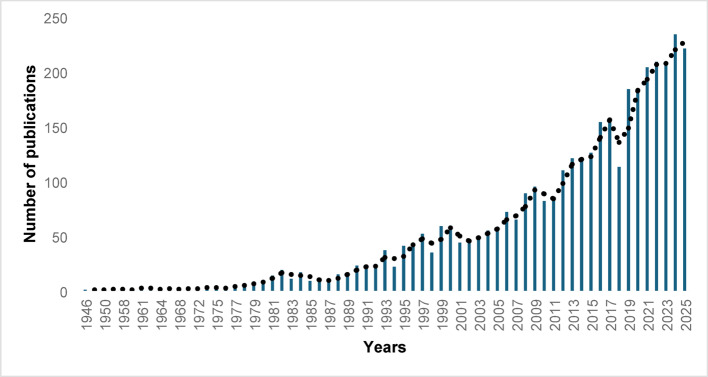 Figure 1
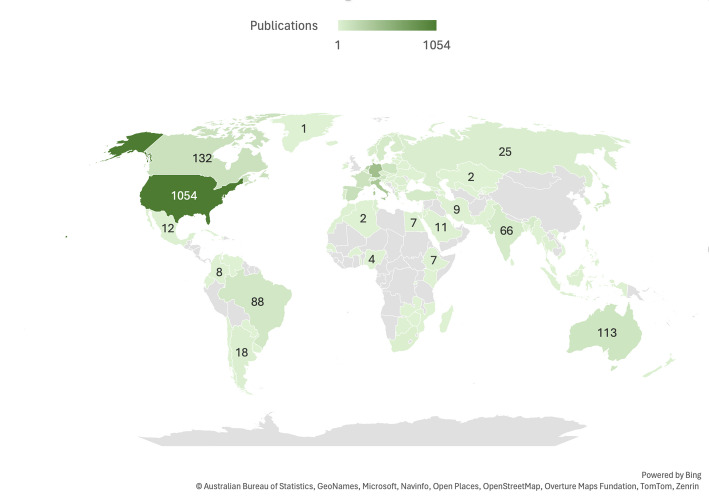 Figure 2
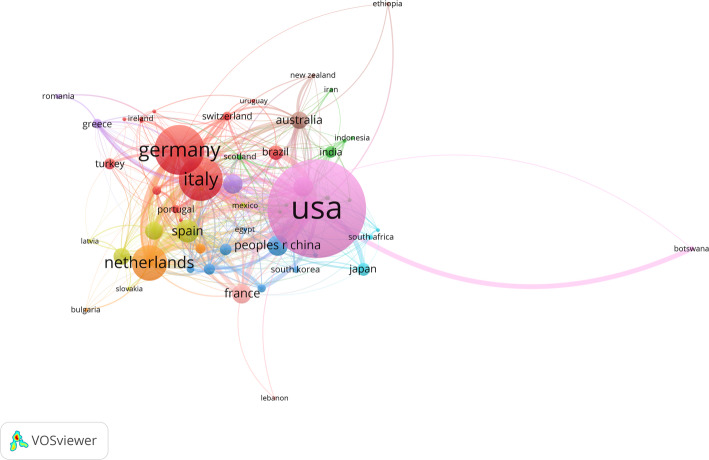 Figure 3
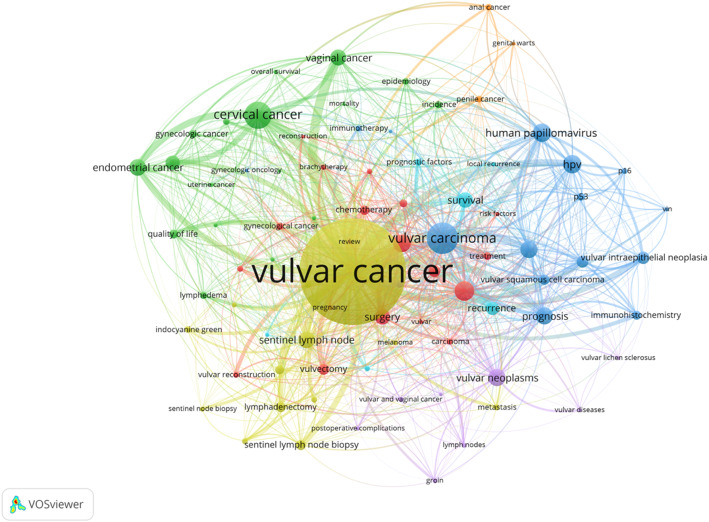 Figure 4
- —Universitätsmedizin der Johannes Gutenberg-Universität Mainz (8974)
Peer Reviews
No public reviews on file for this paper yet. If you reviewed it on a platform where reviews are public (OpenReview, ICLR, NeurIPS, ICML), you can paste yours below so the community can read it here.
Videos
No videos yet. Explain this paper in a talk, walkthrough, or lecture? Add one.
Taxonomy
TopicsEndometrial and Cervical Cancer Treatments · Sex and Gender in Healthcare · Cervical Cancer and HPV Research
Introduction
Despite a pronounced regional variation in the incidence of vulvar cancer (VC), with particularly high age-standardized incidence rates reported in Germany (4.2 per 10,000) and South Africa (7.2 per 10,000), the global incidence is increasing [1]. Research efforts and the standardization of clinical workflows remain underdeveloped, which is reflected in the marked heterogeneity observed across diagnostic and therapeutic recommendations in international guidelines [2] – a limitation that can be partly attributed to factors such as the predominance of studies with small sample sizes and the scarcity of data on precision medicine approaches [3, 4]. Moving forward, these challenges highlight the necessity of internationally coordinated initiatives and the critical need for expanded translational research and a systematic and structural assessment of the current research landscape. Owing to its diverse pathobiology (HPV-associated and HPV-independent carcinogenesis), high morbidity, substantial impact on quality of life [5, 6], and the need for interdisciplinary treatment approaches, VC intersects with key themes in modern cancer research and should be regarded as highly relevant in contemporary oncology.
By analyzing citation-based publication patterns, bibliometric methods offer a valuable approach for elucidating key trends in clinical practice and understanding the evolution of research behavior over time [7–10]. To the best of our knowledge, no dedicated bibliometric analysis has been performed in the field of VC research. Consequently, comprehensive insights into publication output, contributing countries, journals, and frequently used keywords are lacking. In this brief report, we aim to address this specific gap in the literature by (a) quantifying the volume of VC research, (b) characterizing the types of publications produced, and (c) assessing the contributions of individual countries and their collaborative networks to VC research. Overall, this short summary may help support and optimize future strategic research planning.
Materials and methods
Data and corresponding metrics were retrieved from the Web of Science (WoS) database on 7. November 2025, employing a set of predefined search terms and Boolean operators (TS=(“vulvar cancer” OR “vulvar carcinoma” OR “vulva neoplasm” OR “vulva neoplasms”)). The WoS database was employed in this study because it offers extensive multidisciplinary coverage, integrates well-established citation tracking functionalities, and applies rigorous inclusion standards for indexed journals. The search applied no restrictions on publication date, language, journal, or country of origin. Information on authors’ full names, article titles, source titles, languages, document types, keywords, addresses, affiliations, citation counts, cited reference counts, publisher details, publication year, DOI/ISSN/eISSN/PubMed ID, and WoS categories was extracted both into Microsoft Excel (Version 16.78, 2023) (allowing for initial quantitative data analysis after detection of duplicates via conditional formatting and manual deletion of duplicate titles) and to the advanced bibliometric analysis platform VOSviewer (version 1.6.20, Ⓒ Nees Jan van Eck and Ludo Waltman). The latter allows for a comprehensive, multidimensional examination of the extracted articles by creating and displaying network structures within the bibliographic data (keyword co-occurrence analysis, mapping of research collaborations across geographical areas and institutions, and identification of leading journals). Here, nodes are scaled according to publication volume/keyword impact, and the connecting lines visualize relationships that structure the network [11–13]. For the keyword analysis, threshold selection was guided by the overall number of publications. Accordingly, the minimum keyword occurrence threshold was manually set at 15 to reduce noise while maintaining an adequate coverage of niche themes. The study protocol was performed in alignment with the protocol (STAR Protocols) for conducting bibliometric analysis in biomedicine previously published by Qiang Du et al. [14]. All analyses were conducted in an exploratory manner. For a visual overview of the workflow, see Supp. Figure 1.
In the final step, the articles were sorted in descending order according to the individual citation count and assessed according to their title, keywords, and document type. Using abstract and full-text screening (if needed), the authors identified the 10 most highly cited and impactful clinical studies/research articles on vulvar neoplasms. Narrative literature reviews, statements, congress articles, and original articles not directly relevant to VC (e.g., basic science articles) were excluded from this sub-analysis, and citation densities for each article were calculated (number of citations/publication age in years).
Results
In total, 3702 documents were extracted from the WoS core collection. Following the removal of explicit duplicates, particularly those arising from congress-related publications, 3673 articles remained eligible for quantitative analysis, spanning 1946 to 2025. The earliest identified publication on this topic, authored by Watson et al., was published in 1946 in the American Journal of Obstetrics and Gynecology (Elsevier) and delineated the symptoms and treatment of 30 patients with VC [15].
Figure 1 presents the annual distribution of publications (publication volume), illustrating a steady rise in the number of published documents, accompanied by a parallel increase in the number of original articles (Supp. Figure 2). Correspondingly, the number of total citations per year (citation trends) is visualized in Supp. Figure 3.
Fig. 1. Annual scholarly VC research output from 1946 to 2025. X-axis: years; Y-axis: number of publications
With a total number of 2218 documents, the original article is the most common type of published document, followed by meeting abstracts (672 documents) and reviews (451 documents); see Supp. Table 1. Most publications were written in English (3469 documents), with 133 publications in German and 32 in French. Of the total publications, 503 documents were published in the journals Gynecologic Oncology (Elsevier) and International Journal of Gynecological Cancer (IJGC, Elsevier). With a total of 15,064 citations (average citations per article: 29.9), Gynecologic Oncology had the most citations, followed by Obstetrics and Gynecology (4477 citations; average citations per article: 56.0) and IJGC (3944 citations; average citations per article: 7.8) (Table 1).
Examining the geographical distributions as well as the individual impact of single institutions within the domain of VC research, the United States leads the field by means of total publication volume (1054 documents) but also citations (in total: 31901; average citations per article: 30.3), followed by Germany (440 documents) and the Netherlands (10348 citations; average citations per article: 36.6), see Table 2; Fig. 2. The institutional analysis demonstrates Università Cattolica Del Sacro Cuore (Italy) as the leading most-publishing institution with 85 documents (1156 citations; average citations per article: 13.6) (Supp. Table 2). The relatedness of countries regarding the number of their co-authored documents (co-authorship analysis) is depicted as network visualization (Fig. 3)
Table 1. The ten most influential journals in VC research ranked by total publication outputJournal (Publisher)PublicationCitationsAverage citations per articleGynecologic Oncology (Elsevier)50315,06429.9International Journal Of Gynecological Cancer (Elsevier)50339447.8European Journal Of Gynaecological Oncology (MRE Press)834946.0Obstetrics And Gynecology (Lippincott Williams & Wilkins)80447756.0International Journal Of Radiation Oncology Biology Physics (Elsevier)74125216.9Cancers (MDPI)6875311.1Geburtshilfe Und Frauenheilkunde (Thieme Medical Publishers)601151.9Cancer (Wiley)48385980.4Archives Of Gynecology And Obstetrics (Springer Nature)4748710.4American Journal Of Obstetrics And Gynecology (Elsevier)44160836.5
Table 2. The ten most productive countries in VC research, ranked by overall publication productivityCountryPublicationsCitationsAverage citations per articleUSA105431,90130.3Germany440731316.6Italy370816222.1Netherlands28310,34836.6Spain158541434.3Peoples R China14013379.6Canada132527840.0England131679051.8France128536341.9Austria117294125.1
Fig. 2A filled map chart (constructed using Microsoft Excel, Version 16.78, 2023) illustrates the geographic distribution of VC research output; the numbers shown represent the total number of publications per country
Fig. 3. Collaborative network visualization of countries with display of their relations (co-authored documents) using VOSviewer software. The minimum number of documents per country is five; only countries connected via co-authorship are displayed
The most common keyword employed was “Vulvar Cancer” (1141 hits), followed by “Vulvar Carcinoma” (234 hits), and “Cervical Cancer” (194 hits) (Fig. 4, Supp Table 3). The keyword analysis further delineated seven distinct sub-clusters (Table 3).
Table 3A detailed presentation of the keyword analysis, organized into seven clusters along with the respective keywords within each cluster and the overall cluster topicKeyword–number of clustersIndividual keywordsThematic grouping/cluster topicCluster 1brachytherapy, cancer, carcinoma, chemoradiation, chemotherapy, gynecological cancer, pregnancy, radiation therapy, radical vulvectomy, radiotherapy, reconstruction, review, risk factors, surgery, treatment, vulva, vulvar, vulvar reconstruction, vulvectomyTherapy and treatmentCluster 2cervical cancer, complications, endometrial cancer, epidemiology, gynecological cancer, gynecologic malignancy, incidence, lymphedema, meta-analysis, morbidity, mortality, ovarian cancer, overall survival, pelvic exenteration, quality of life, uterine cancer, vaginal cancerEpidemiologyCluster 3cervical carcinoma, gynecologic oncology, HPV, human papillomavirus, immunohistochemistry, immunotherapy, lichen sclerosus, p16, p53, prognosis, squamous cell carcinoma, VIN, vulvar carcinoma, vulvar intraepithelial neoplasia, vulvar squamous cell carcinomaTumor biology, pathology, and diagnosisCluster 4indocyanine green, inguinal lymphadenectomy, inguinofemoral lymphadenectomy, lymphadenectomy, lymphoscintigraphy, melanoma, metastasis, sentinel lymph node, sentinel lymph node biopsy, sentinel node, sentinel node biopsy, vulva cancer, vulvar cancer, breast cancerDifferent technical surgical approaches of groin lymph nodesCluster 5groin, lymph node, postoperative complications, radiation, vulvar and vaginal carcinoma, vulvar diseases, vulvar lichen sclerosus, vulvar neoplasm, vulvar neoplasmsRadiation and complication of groin lymph node managementCluster 6local recurrence, lymph node metastasis, prognostic factors, recurrence, staging, survivalEvaluation of prognosis (recurrence, survival)Cluster 7anal cancer, genital warts, penile cancerBiologically similar tumors/diseases
Fig. 4. Network visualization of the most frequently used keywords in VC research using the VOSviewer software. Minimum keyword count: 15
The list of the ten most highly cited manuscripts on VC (see Table 4) is headed by a meta-analysis by De Vuyst et al., published in 2009 in the International Journal of Cancer (Wiley). To date, it has accrued 819 citations.
Table 4. The ten most cited articles relevant to VC research (sorted in descending order)AuthorsTitleSource title (publisher)CitationsYearCitation densityDe Vuyst et al. [16]Prevalence and type distribution of human papillomavirus in carcinoma and intraepithelial neoplasia of the vulva, vagina and anus: A meta-analysisInternational Journal of Cancer (Wiley)819200951.2Van der Zee et al. [17]Sentinel node dissection is safe in the treatment of early-stage vulvar cancerJournal of Clinical Oncology (American Society of Clinical Oncology )636200837.4Huh et al. [18]Final efficacy, immunogenicity, and safety analyses of a nine-valent human papillomavirus vaccine in women aged 16–26 years: a randomised, double-blind trialLancet (Elsevier)405201750.6Naumann et al. [19]Safety and Efficacy of Nivolumab Monotherapy in Recurrent or Metastatic Cervical, Vaginal, or Vulvar Carcinoma: Results From the Phase I/II CheckMate 358 TrialJournal of Clinical Oncology (American Society of Clinical Oncology )390201965Judson et al. [20]Trends in the incidence of invasive and in situ vulvar carcinomaObstetrics And Gynecology (Lippincott Williams & Wilkins)367200619.3Kosary et al. [21]FIGO stage, histology, histologic grade, age and race as prognostic factors in determining survival for cancers of the female gynecological system: an analysis of 1973-87 SEER cases of cancers of the endometrium, cervix, ovary, vulva, and vaginaSeminars in Surgical Oncology (Wiley-Liss)361199411.6Lee et al. [22]Long-term Management of Adult Vulvar Lichen Sclerosus A Prospective Cohort Study of 507 WomenJAMA Dermatology (American medical Association)339201533.9Beesley et al. [23]Lymphedema after gynecological cancer treatment - Prevalence, correlates, and supportive care needsCancer (Wiley)324200718Levenback et al. [24]Lymphatic Mapping and Sentinel Lymph Node Biopsy in Women With Squamous Cell Carcinoma of the Vulva: A Gynecologic Oncology Group StudyJournal of Clinical Oncology (Lippincott Williams & Wilkins)321201224.7de Sanjosé et al. [25]Worldwide human papillomavirus genotype attribution in over 2000 cases of intraepithelial and invasive lesions of the vulvaEuropean Journal of Cancer (Elsevier)318201326.5
Discussion
Spanning more than 75 years of VC research our bibliometric analysis emphasizes several major insights, including the following: (a) The observed publication trends reveal a marked acceleration in output, particularly over the past two decades, reflecting a significant shift in which VC has gained broader visibility and recognition within the academic community. (b) Gynecologic Oncology and International Journal Of Gynecological Cancer are by far the most prominent scientific journals publishing research on VC – a finding that is generally compatible with similar studies previously published [26]. (c) In terms of publication volume, the United States is by far the leading contributor; – however, such geographical differences are likely shaped by variations in research priorities, funding structures, and the strength of local research infrastructure.
Interestingly, considering only the ten most frequently used keywords as initial cluster analysis the keywords did not appear to yield meaningful thematic structures. Only after performing a subsequent and more detailed analysis comprising all seven individual sub-clusters, distinct thematic groupings (conceptual themes: therapy and treatment, epidemiology, tumor biology/pathology/diagnosis, different technical surgical approaches of groin lymph nodes, radiation and complication of groin lymph node management, evaluation of prognosis (recurrence, survival), biologically similar tumors/diseases - refer to Table 3) could be identified. Since these clusters encompass research domains ranging from tumor epidemiology and pathobiology to treatment strategies and prognostic evaluation, they reflect the thematic diversity and multiple scientific dimensions of this field. Furthermore, they also highlighted that knowledge advancement, even within this highly specialized subfield of gynecological oncology, relies on an interdisciplinary research effort encompassing clinical, translational, and basic science expertise.
The examination of the most highly cited studies provided a clearer understanding of the research landscape, in which sentinel lymph node dissection and HPV type distribution (the most cited study by De Vuyst et al. examined HPV prevalence, genotype distribution, and associated clinicopathological characteristics in precursor lesions and neoplasms of the vulva, vagina, and anus) emerged as recurrent themes [16, 17, 24, 25]. From a clinical perspective, issues related to lymph node assessment and systemic treatment of recurrent/metastatic disease are particularly relevant. Notably, several aspects identified in our most highly cited studies, such as a minimum depth of invasion of 1 mm [24] or tumor size < 4 cm [17], are now reflected in international guidelines [2, 27]. Notably, a recent phase I/II clinical trial (CheckMate 358) investigating immunotherapy with nivolumab already appears among the most cited publications [19]—reflecting the growing prominence of immune checkpoint inhibitors in recent years as an adjunct to conventional chemotherapy in VC [28–30]. That said, the NCCN CLINICAL PRACTICE GUIDELINES IN ONCOLOGY Vulvar Cancer Version 3.2024 already recommended nivolumab as one potential second-line treatment for HPV-associated recurrent/advanced VC, citing indeed the CheckMate 358 trial [31]. Equally significant is the study addressing lymphedema, which highlights a high incidence in patients with VC, a finding already well recognized by clinicians and nurses working in this field [23].
Future research in VC has the potential not only to individualize patient treatment through molecular diagnostics and the identification of optimal biomarkers but also to advance therapy by evaluating and integrating antibody‑drug conjugates (ADCs) as targeted treatments, representing a potential milestone beyond surgery and conventional chemoradiation. Ultimately, these clinical efforts should culminate in prospective, multicenter trials to support the development of evidence-based guidelines and standardized care pathways.
This report has several limitations that should be acknowledged. As with any bibliometric analysis, the findings are constrained by the characteristics and indexing practices of the underlying database. In this study, we selected WoS due to its inherent advantages, including superior citation indexing and broader coverage compared with databases such as PubMed or Scopus [14]. Moreover, recently published papers of substantial relevance may be underrepresented when assessed solely through citation counts (bias due to temporal influences); to mitigate this limitation, citation density was also reported. Although the authors sought to maintain maximal objectivity, identifying the most highly cited works on vulvar neoplasms required the exclusion of basic science articles from this sub-analysis, introducing a small but notable risk of subjective bias. Finally, citation bias, such as the preferential citation of certain journals or colleagues, cannot be entirely ruled out; however, quantification of publication volume and citation counts is not necessarily indicative of superior scientific quality or clinical relevance.
To maintain a comprehensive and unbiased bibliometric approach, our search strategy did not impose any restrictions on publication type, and the same principle was applied to the non-English literature. Although conference abstracts or non-English literature are often excluded during the search in bibliometric studies, we considered conference abstracts to represent a meaningful scientific contribution, as they provide an important platform, particularly for early career researchers, to disseminate preliminary or emerging findings, engage in scholarly exchange, and foster dialogue with peers. Such interactions may serve as catalysts for future studies and the initiation of international collaborations.
In conclusion, to our knowledge, this study presents the largest bibliometric analysis of VC to date, a topic that is gaining increasing attention in gynecological research, as reflected in the temporal trends observed in our analysis. We identified and visualized the most influential geographic regions in VC research, highlighted the leading journals, and presented the most highly cited publications, providing a comprehensive overview of research trends and hotspots. Accordingly, this study may serve as a practical resource for researchers, for instance, when selecting the most relevant journals for their VC studies.
Supplementary Information
Below is the link to the electronic supplementary material.
Supplementary Material 1.