In Vitro Acaricidal Activity of Croton macrostachyus Leaf and Ricinus communis Seed Extracts Against Cattle‐Infesting Ticks (Rhipicephalus spp. and Amblyomma spp.)
Tesfaye Fatalo, Gebeyehu Alkadir

TL;DR
This study tests plant extracts as eco-friendly alternatives to synthetic pesticides for killing cattle ticks, finding that a combination of two plant extracts works better than a common pesticide.
Contribution
The study introduces a synergistic plant-based acaricidal combination that outperforms diazinon against cattle ticks.
Findings
Ricinus communis extract showed higher mortality rates than Croton macrostachyus and diazinon against both tick species.
The combined extract of Croton macrostachyus and Ricinus communis achieved the highest mortality rate (83.3%) against ticks.
Diazinon's moderate performance suggests growing resistance in the study area.
Abstract
Ticks are major ectoparasites of cattle and vectors of zoonotic and livestock diseases. Reliance on synthetic acaricides like diazinon has led to environmental concerns and rising resistance, prompting the search for ecofriendly alternatives. This in vitro study evaluated the acaricidal activity of Croton macrostachyus, Ricinus communis, and their combined extracts against Rhipicephalus and Amblyomma ticks. Adult ticks were exposed to serially diluted concentrations (125, 250, 500, and 1000 μg/mL) of plant extracts. Dimethyl sulfoxide and 0.1% diazinon served as negative and positive controls, respectively. Triplicate independent replication sets were performed. Both plant extracts exhibited significant (p < 0.05), dose‐ and time‐dependent mortality. Croton macrostachyus showed higher activity against Amblyomma (66.7 ± 1.53%) than Rhipicephalus (63.3 ± 1.16%) at 1000 μg/mL, while…
Genes, proteins, chemicals, diseases, species, mutations and cell lines named across the full text — each resolved to its canonical identifier and authoritative record.
Click any figure to enlarge with its caption.
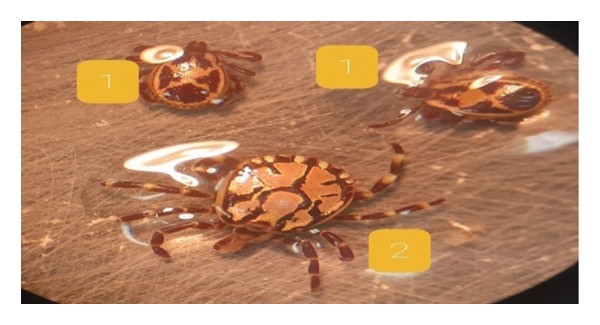 FIGURE 1
| Scientific name | Local name “Amharic” | Fine dried weight (gm) | Crude extract weight (gm) | Percentage yield (%) |
|---|---|---|---|---|
|
| Gulo | 200 | 22.8 | 11.4 |
|
| Bisana | 200 | 24.6 | 12.3 |
| Phytochemical constituents |
|
|
|---|---|---|
| Flavonoids | + | − |
| Alkaloids | − | + |
| Tannins | + | + |
| Saponins | − | + |
| Phenols | + | + |
| Conc. μg/mL | 30 min | 1 hr | 2 hr | 4 hr | 30 min | 1 hr | 2 hr | 4 hr |
|---|---|---|---|---|---|---|---|---|
|
|
| |||||||
| 1000 | 1.33 ± 0.58a | 2.67 ± 0.58a | 4.33 ± 0.58ab | 6.33 ± 1.15a | 1.67 ± 0.58a | 3.33 ± 0.58a | 4.67 ± 0.58ab | 6.67 ± 1.53ab |
| 500 | 0.67 ± 0.58ab | 1.33 ± 0.58ab | 2.67 ± 0.58bc | 3.33 ± 0.58b | 1.00 ± 0.00ab | 2.67 ± 0.58ab | 3.33 ± 0.58bc | 4.33 ± 0.58bc |
| 250 | 0.33 ± 0.58ab | 1.00 ± 0.00b | 1.67 ± 0.58cd | 2.33 ± 1.53bc | 0.67 ± 0.58ab | 1.33 ± 0.58bc | 2.00 ± 0.00cd | 2.67 ± 0.58c |
| 125 | 0.00 ± 0.00b | 0.33 ± 0.58b | 1.00 ± 1.00cd | 2.00 ± 1.00bc | 0.33 ± 0.58b | 0.67 ± 0.58c | 1.33 ± 0.58de | 2.33 ± 0.57cd |
| 2% DMSO | 0.00 ± 0.00b | 0.00 ± 0.00b | 0.00 ± 0.00d | 0.00 ± 0.00c | 0.00 ± 0.00b | 0.00 ± 0.00c | 0.00 ± 0.00e | 0.00 ± 0.00d |
| 0.1% Diazinon | 0.00 ± 0.00b | 1.00 ± 1.00b | 5.00 ± 1.00a | 7.00 ± 1.00a | 0.33 ± 0.58b | 1.33 ± 0.58bc | 5.33 ± 1.15a | 7.33 ± 1.16a |
| G.Mean | 0.39 | 1.06 | 2.44 | 3.50 | 0.67 | 1.56 | 2.78 | 3.89 |
| SEM | 0.14 | 0.24 | 0.45 | 0.63 | 0.16 | 0.29 | 0.47 | 0.64 |
| Conc. μg/mL | 30 min | 1 hr | 2 hr | 4 hr | 30 min | 1 hr | 2 hr | 4 hr |
|---|---|---|---|---|---|---|---|---|
|
|
| |||||||
| 1000 | 1.33 ± 0.58a | 2.33 ± 0.58a | 4.00 ± 1.00ab | 7.33 ± 0.58a | 1.67 ± 1.15 | 2.33 ± 0.58a | 6.33 ± 0.58a | 8.00 ± 1.00a |
| 500 | 1.00 ± 0.00ab | 2.00 ± 0.00ab | 2.67 ± 0.58b | 4.33 ± 0.58b | 1.33 ± 0.58 | 2.00 ± 0.00ab | 3.33 ± 0.58b | 5.00 ± 1.00b |
| 250 | 0.67 ± 0.58ab | 1.00 ± 0.00bcd | 2.33 ± 0.58b | 3.00 ± 0.00bc | 1.00 ± 0.00 | 1.00 ± 0.00bcd | 2.33 ± 0.58b | 3.33 ± 0.58bc |
| 125 | 0.33 ± 0.58ab | 1.33 ± 0.58abc | 2.00 ± 1.00bc | 2.33 ± 0.58c | 0.67 ± 0.58 | 1.33 ± 0.58abc | 1.67 ± 0.58bc | 2.67 ± 0.58c |
| 2% DMSO | 0.00 ± 0.00b | 0.00 ± 0.00d | 0.00 ± 0.00c | 0.00 ± 0.00d | 0.00 ± 0.00 | 0.00 ± 0.00d | 0.00 ± 0.00c | 0.00 ± 0.00d |
| 0.1% Diazinon | 0.00 ± 0.00b | 0.67 ± 0.58cd | 5.00 ± 1.00a | 7.00 ± 1.00a | 0.33 ± 0.58 | 0.67 ± 0.58cd | 5.33 ± 1.16a | 7.33 ± 1.15a |
| G.Mean | 0.56 | 1.22 | 2.67 | 4.00 | 0.83 | 1.22 | 3.17 | 4.39 |
| SEM | 0.15 | 0.21 | 0.41 | 0.63 | 0.19 | 0.21 | 0.54 | 0.69 |
| Conc. μg/mL | 30 min | 1 hr | 2 hr | 4 hr | 30 min | 1 hr | 2 hr | 4 hr |
|---|---|---|---|---|---|---|---|---|
|
|
| |||||||
| 1000 | 1.00 ± 1.00 | 2.33 ± 0.58a | 4.67 ± 2.08a | 7.67 ± 0.58a | 2.00 ± 1.00a | 4.67 ± 0.58a | 6.33 ± 0.58a | 8.33 ± 0.57a |
| 500 | 0.67 ± 0.58 | 1.67 ± 0.58ab | 3.67 ± 1.53ab | 5.00 ± 1.00bc | 1.33 ± 0.57ab | 3.33 ± 0.58ab | 4.33 ± 0.58ab | 6.67 ± 0.57a |
| 250 | 0.33 ± 0.58 | 1.33 ± 0.58abc | 2.67 ± 0.558abc | 4.00 ± 1.00cd | 0.67 ± 0.57ab | 2.00 ± 1.00bc | 3.00 ± 1.00bc | 4.67 ± 0.57b |
| 125 | 0.00 ± 0.00 | 0.33 ± 0.58bc | 1.33 ± 0.58bc | 2.33 ± 0.58d | 0.33 ± 0.58ab | 1.33 ± 0.58bc | 1.67 ± 0.58cd | 2.67 ± 0.57c |
| 2% DMSO | 0.00 ± 0.00 | 0.00 ± 0.00c | 0.00 ± 0.00c | 0.00 ± 0.00e | 0.00 ± 0.00b | 0.00 ± 0.00c | 0.00 ± 0.00d | 0.00 ± 0.00d |
| 0.1% Diazinon | 0.00 ± 0.00 | 1.33 ± 0.58abc | 5.00 ± 1.00a | 7.00 ± 1.00ab | 0.33 ± 0.58ab | 1.67 ± 1.15bc | 5.33 ± 1.16a | 7.33 ± 1.15a |
| G.Mean | 0.33 | 1.17 | 2.89 | 4.33 | 0.78 | 2.17 | 3.44 | 4.97 |
| SEM | 0.14 | 0.22 | 0.49 | 0.66 | 0.21 | 0.39 | 0.54 | 0.71 |
- —SNNP Regional State Government of Ethiopia
- —Southern Agricultural Research Institute
Peer Reviews
No public reviews on file for this paper yet. If you reviewed it on a platform where reviews are public (OpenReview, ICLR, NeurIPS, ICML), you can paste yours below so the community can read it here.
Videos
No videos yet. Explain this paper in a talk, walkthrough, or lecture? Add one.
Taxonomy
TopicsVector-borne infectious diseases · Helminth infection and control · Insect Pest Control Strategies
1. Introduction
Ticks pose a significant risk to the health of animals and have considerable economic implications globally by causing irritation, skin infections, anemia, and tick fever and acting as vectors for various pathogens causing diseases [1]. The economic losses due to tick infestations on livestock contributing to food insecurity with global control costs and productivity losses are estimated at $7 billion USD annually [2]. Conventional tick control depends excessively on acaricides, contributing to ecosystem contamination, food safety risks, and escalating resistance undermining sustainability and increasing economic burdens [3].
Ethiopia’s reliance on synthetic acaricides for tick control has resulted in widespread resistance, environmental pollution, and food contamination due to inconsistent dosing and frequent misuse [4]. This has intensified the need for alternative approaches, making herbal medications an increasingly appealing solution that has gained significant importance in tropical and subtropical regions, particularly across Africa and Asia [5].
Ricinus communis seeds are rich in macromolecular components, primarily fixed oils containing glycosides of ricinoleic, isoricinoleic, stearic, and dihydroxystearic acids, while its dried leaves contain diverse bioactive compounds including the disaccharide glycoside rutin, flavonoids, phenolic acids, and tannins [6]. Phytochemical analysis of Croton macrostachyus has isolated diverse secondary metabolites, predominantly diterpenoids, along with alkaloids, terpenoids, flavonoids, and phenolic compounds [7].
Croton macrostachyus is widely recognized in Ethiopian traditional medicine for its therapeutic and insect‐repellent effects, particularly against mosquitoes. Its efficacy is attributed to the multiple bioactive compounds found in botanical extracts, which often work synergistically against ectoparasites through diverse modes of action. These include acetylcholinesterase inhibition, disruption of the octopaminergic system, and the induction of physiological stress via hydrophobic properties that impair water balance. This multitarget approach enhances parasiticidal efficacy while potentially delaying the development of resistance [8].
Plant‐based acaricides provide a sustainable, low‐resistance alternative to synthetic chemicals, offering environmental safety, zero livestock residues, and cost‐effective ectoparasites control with minimal nontarget risks [9]. However, limited research works are conducted in Ethiopia to exploit this potential. Hence, the present study was conducted to evaluate the acaricidal activity and synergistic effect of Ricinus communis seed and Croton macrostachyus leaf extracts against *Rhipicephalus-*major cattle tick and Amblyomma‐known tick for zoonotic pathogens transmissions.
2. Materials and Methodology
2.1. Study Area and Study Plants Authentication
The herbal plant species Ricinus communis (castor bean) and Croton macrostachyus were collected from Mante Dubo (substation) in the Areka Agricultural Research Center, Wolaita Zone, South Ethiopia. Croton macrostachyus and Ricinus communis were selected based on documented traditional use against ticks [10]. The plants were taxonomically identified and authenticated at the National Herbarium, Addis Ababa University, Ethiopia.
2.2. Plant Material Preparation and Extraction
Fresh leaves of Croton macrostachyus and seed of Ricinus communis were harvested during their flowering stage. A latex glove was used to prevent contamination and washed the leaves with distilled water to remove dirt and epiphytes. After cutting them into uniform pieces, the leaves were shade‐dried at room temperature for 2 weeks, protecting them from sunlight to preserve bioactive compounds. Once fully dried, the leaves were ground into a fine powder using a sterilized electric grinder and stored in airtight containers at 4°C until extraction.
Ethanolic extracts of Croton macrostachyus leaves and Ricinus communis seeds were prepared via cold maceration. For each species, 200 g of dried powder was soaked in 1500 mL of 70% ethanol in sealed glass containers and agitated for 72 h on an orbital shaker. The resulting crude extracts were first filtered through muslin cloth and then through Whatman No. 1 filter paper. Solvent removal was achieved using a rotary evaporator followed by complete drying in a temperature‐controlled oven. The concentrated extracts were stored in sterile amber glass bottles at 4°C to preserve heat‐sensitive compounds until use in bioassays [11].
2.3. Preliminary Screening of Phytochemical Constituents
Phytochemical screening of ethanol extracts from the Ricinus communis and Croton macrostachyus was conducted to identify secondary metabolites, revealing the presence of alkaloids via Mayer’s test indicated by turbidity from a precipitate, tannins through a blackish‐blue or brownish green coloration with ferric chloride, saponins confirmed by stable foam formation after vigorous shaking with distilled water, and flavonoids detected by a yellow coloration upon treatment with lead acetate solution. Moreover, the analysis was extended to phenols, where ethanol was added to the extracts and a portion of the resulting solution was warmed before adding ferric cyanide to produce a blue‐green color indicating polyphenols, while in a separate test, the formation of yellow precipitates upon the addition of lead acetate solution further confirmed the presence of phenolic compounds [12].
2.4. Tick Collection, Handling, and Identification
A total of 1080 viable adult ticks (540 Rhipicephalus spp. and 540 Amblyomma spp.) were collected from naturally infested cattle in Ethiopia’s Wolaita Zone. To ensure minimal stress to both ticks and host animals, ticks were gently removed from common attachment sites including the ears, udder, perianal region, and underside of the body using blunt forceps. Only fully engorged adult ticks were selected, with additional care taken to exclude those from cattle treated with acaricides within the past 3 months.
Each collected tick was immediately placed in a labeled, ventilated container, recording key details such as the host animal’s sex, breed, age, collection date, location, and attachment site. The ticks were then transported to Addis Ababa University’s College of Veterinary Medicine (Department of Parasitology and Pathology) in insulated coolers to maintain optimal conditions. To ensure proper airflow while preventing escape, the containers were lined with cotton mesh. Before testing, all ticks were carefully examined under 10–40 × magnification and identified using established taxonomic keys [13]. Only active, undamaged ticks with normal behaviors—such as movement toward light and leg reflex responses—were included in the bioassays (Figure 1).
Representative adult ticks collected from the study area. (1) Rhipicephalus spp. and (2) Amblyomma spp.
2.5. Experimental Design
This study investigated the acaricidal effects of ethanolic leaf extracts from Croton macrostachyus and Ricinus communis, both alone and in combination, against adult Rhipicephalus and Amblyomma ticks using the adult immersion test (AIT). The protocol for the combination aspect of the extracts was determined by 1:1. Four concentrations of each extract were prepared (125, 250, 500, and 1000 μg/mL) through serial dilution. Each concentration was tested in triplicate independent sets, with 10 ticks per group for each species.
For comparison, a positive control (0.1% diazinon, a known acaricide) and a negative control (2% DMSO, the solvent used for dilution) were used. Following the established method, the ticks were fully immersed in the treatment solutions for 5 min before transferring them to Petri dishes kept at 25°C [14]. Mortality was assessed at 30 min, 1, 2, and 4 h postexposure, with death confirmed by cessation of movement and darkening of cuticle coloration [15].
2.6. Mortality Percentage Rate
The mortality percentage rate of ticks exposed to extracts was calculated by the formula previously used [16].
The acaricidal efficacy of herbal extracts was classified based on mortality rates as very high (> 90% mortality), high (70%–90%), moderate (50%–70%), weak (30%–50%), and no efficacy (< 15%) [17].
2.7. Statistical Analysis
Mortality data were recorded in Excel and analyzed using SPSS 20. Results are presented as mean percentages ± standard error of mean (SEM). Treatment groups were compared using one‐way ANOVA with Tukey’s post hoc test for multiple comparison of acaricidal efficacy within and between treatment groups, considering p < 0.05 statistically significant.
3. Results
3.1. Extractive Value Determination and Bioactive Compound
The ethanolic extraction of 200 g dried plant material yielded 24.6 g (12.3%) crude extract from Croton macrostachyus and 22.8 g (11.4%) from Ricinus communis (Table 1). Phytochemical analysis revealed distinct bioactive profiles between the species (Table 2). Croton macrostachyus contained flavonoids, tannins, and phenols, while Ricinus communis showed alkaloids, tannins, saponins, and phenols.
3.2. Acaricidal Efficacy of Croton macrostachyus and Ricinus communis Extracts
According to the present finding, the ethanolic extract of Croton macrostachyus demonstrated concentration‐dependent mortality against both tick species. The 1000 μg/mL concentration of Croton macrostachyus leaves extract exhibited 63.3 ± 1.16% mortality percentage rate in Rhipicephalus ticks after 4 h of exposure, which was significantly higher (p < 0.05) than lower concentrations and comparable to the positive control, diazinon (70.0 ± 1.00%). A similar trend was observed for Amblyomma ticks, where the 1000 μg/mL concentration resulted in 66.7 ± 1.53% mortality rate, which was not significantly different from diazinon (73.3 ± 1.16%) (Table 3 and Figure 2(a)).
FIGURE 2Acaricidal activity of synergism, ricinus, and croton (a, b, and c), respectively.(a)(b)(c)
Notably, the Ricinus communis extract demonstrated significant acaricidal activity, achieving 73.3 ± 0.58% mortality percentage rate in Rhipicephalus spp. and 80.0 ± 1.00% in Amblyomma spp. Ricinus communis was significantly more effective against Amblyomma spp. than the reference drug diazinon (73.3 ± 1.15% mortality rate, p < 0.05). Its activity against Rhipicephalus spp. was comparable to diazinon (70.0 ± 1.00%, p > 0.05) (Table 4 and Figure 2(b)).
3.3. Synergistic Acaricidal Activities of Combined Extracts
The combination of Croton macrostachyus and Ricinus communis extracts demonstrated significantly greater acaricidal activity against both Amblyomma and Rhipicephalus species compared with either extract used alone (p < 0.05) (Table 5). The combined extracts demonstrated enhanced acaricidal activity, particularly against Amblyomma (Figure 2(c)). The combined formulation of extract (1000 μg/mL) demonstrated significantly higher mortality rate (p < 0.05) than both individual extracts and synthetic acaricide, achieving 83.3 ± 0.58 and 76.7 ± 0.58% mortality against Amblyomma and Rhipicephalus ticks, respectively.
4. Discussion
The study revealed the crude extractive values of Croton macrostachyus (12.3%) and Ricinus communis (11.4%) that were lower than the finding reported for Croton macrostachyus (29.3%) and Ricinus communis (30.67%) by [18]. The observed difference in extraction yields may be attributed to several methodological and biological factors. Key variables likely influencing these differences include variations in plant age, agroecological conditions, solvent polarity, and extraction efficiency.
The study confirmed the presence of phenolic compounds, flavonoids, and saponins in Croton macrostachyus, contradicting the findings that showed no flavonoids in their phytochemical analysis based on [18]. In contrast, Ricinus communis contains phenolics, tannins, saponins, and alkaloids. These results are consistent with earlier reports by [18, 19]. However, this report contradicts the study finding that indicated none of these compounds detection according to [20]. These variations are likely due to variations in extraction solvents and testing protocols, as noted by highlighting the influence of methodological differences on phytochemical detection [21].
The study finding demonstrated significant acaricidal activity of both plant extracts against Amblyomma and Rhipicephalus ticks, with mortality rates exhibiting concentration‐ and time‐dependent increases. These findings align with the study result report confirming that acaricidal efficacy is dose and duration dependent [22].
The study found that Croton macrostachyus leaf extract exhibited only moderate acaricidal activity against Amblyomma (66.7 ± 1.53% mortality) and Rhipicephalus (63.3 ± 1.16% mortality) ticks, even at high concentrations (1000 μg/mL) and prolonged exposure times (4 h). These results contrast with the findings that reported very high (> 90%) acaricidal activity of Croton macrostachyus [18]. The observed difference may be attributed due to phytochemical variations and methodological factors in testing protocols.
The ethanoic extract of Ricinus communis exhibited high acaricidal activity against Amblyomma (80.0 ± 1.00% mortality) and Rhipicephalus (73.3 ± 0.58% mortality) ticks at 1000 μg/mL. These results are consistent with the finding that reported comparable acaricidal activity against Rhipicephalus [23]. However, the present finding was inconsistent with the report indicated very high activity (≥ 90% mortality) using a methanolic extract at a concentration of 200 mg/mL, suggesting that extraction solvent and dose of extract significantly influences acaricidal activity [17].
Notably, the finding demonstrated that the combined Croton macrostachyus and Ricinus communis extracts showed significantly higher mortality rate of ticks than individual extracts or diazinon, and the activity was dose and time dependent. The demonstrated synergy indicates that the combined phytochemical profile of both plants creates a more comprehensive acaricidal effect than either extract alone.
5. Conclusion and Recommendations
The extracts of Croton macrostachyus and Ricinus communis demonstrated substantial acaricidal activity, with the combined formulation showing synergistic effects. These botanical extracts showed a clear dose‐ and time‐dependent relationship in their tickicidal action. The presence of bioactive phytochemicals likely contributes to this observed activity, indicating these plant extracts as promising, environmentally sustainable alternatives to synthetic tick control methods.
Author Contributions
Tesfaye Fatalo: conceptualization, designing methodology, field data collection, supervision of field trial, data analysis, and original draft writing. Gebeyehu Alkadir: laboratory works.
Funding
This study was funded by Southern Agricultural Research Institute, Ethiopia.
Conflicts of Interest
The authors declare no conflicts of interest.
The reference list from the paper itself. Each links out to its DOI / PubMed record.
- 1Tilahun G. N. and Dessie A. S. , Prevalence of Ectoparasites on Large Ruminants in Jabitehinan Woreda West Gojjam Zone Amhara Region Northwestern, Ethiopia, Acta Scientific Veterinary Sciences. (2022) 4, no. 5, 102–113, 10.31080/asvs.2022.04.0282. · doi ↗
- 2Feyera T. and Abdisa E. , In Vitro Acaricidal Activity of Crude Extracts of Schinus molle (L.) Leaves Against Field Population of Bophilus Decoloratus and Rhipicephalus pulchellus Ticks, African Journal of Pharmacy and Pharmacology. (2016) 10, no. 36, 772–777.
- 3Espinoza J. , Flores B. , Jerez J. , and Sheleby-Elías J. , In Vitro Evaluation of Resistance of Rhipicephalus (Boophilus) Microplus Against Three Widely Used Ixoidicides, Veterinarija ir Zootechnika. (2022) 80, no. 1, 65–69.
- 4Agegnehu H. , Epidemiology and Accaricidal Efficacy Evaluation of Tick Infestation on Cattle in Selected Districts of Central Gondar Zone, 2022.
- 5Yadav D. K. , Rathee S. , Sharma V. , and Patil U. K. , A Comprehensive Review on Insect Repellent Agents: Medicinal Plants and Synthetic Compounds, Anti-Inflammatory & Anti-allergy Agents in Medicinal Chemistry. (2024) .10.2174/011871523032235524090307270439415571 · doi ↗ · pubmed ↗
- 6Talwan P. , Gautam D. , Kumar R. et al., A Review of the Chemical Composition, Modification, and Biomedical Application of Ricinus communis, Indian Journal of Natural Products and Resources (IJNPR) [Formerly Natural Product Radiance (NPR)]. (2024) 15, no. 1, 21–42.
- 7Junior J. I. G. , Ferreira M. R. A. , de Oliveira A. M. , and Soares L. A. L. , Croton Sp.: A Review About Popular Uses, Biological Activities and Chemical Composition, Research, Society and Development. (2022) 11, no. 2, 10.33448/rsd-v 11i 2.25306. · doi ↗
- 8Alnasser M. N. , Alboraiy G. M. , Alsowig E. M. , and Alqattan F. M. , Cholinesterase Inhibitors From Plants and Their Potential in Alzheimer’s Treatment: Systematic Review, Brain Sciences. (2025) 15, no. 2, 10.3390/brainsci 15020215.PMC 1185259240002547 · doi ↗ · pubmed ↗