Inducible displacement CT for implant loosening detection: a scoping review on methods, validation, and challenges
Maaike A TER WEE, Johannes G G DOBBE, Arthur J KIEVIT, Matthias U SCHAFROTH, Mario MAAS, Leendert BLANKEVOORT, Geert J STREEKSTRA

TL;DR
This scoping review examines the use of inducible displacement CT for detecting implant loosening, highlighting methodological variations and challenges in validation.
Contribution
The paper provides a comprehensive overview of ID-CT methods and challenges, emphasizing the need for standardized protocols and improved validation.
Findings
ID-CT methods vary widely in loading protocols and CT acquisition parameters.
Diagnostic validation is limited by inconsistent reference standards and incomplete reporting.
Technical validation often lacks full pipeline testing, leaving measurement variance unaddressed.
Abstract
Inducible displacement CT (ID-CT) is an emerging method for diagnosing implant loosening by (i) acquiring CT scans under different joint loading conditions, (ii) analyzing scans via segmentation and registration, and (iii) quantifying and visualizing relative implant–bone displacement. With multiple centers approaching these steps differently, this scoping review aimed to summarize current methodologies and key challenges. PubMed, Cochrane, and Embase were searched for clinical and experimental ID-CT studies on spinal and arthroplasty implants. Data was extracted using a table based on updated CT-radiostereometric analysis (RSA) guidelines, including study characteristics, CT acquisition parameters, image analysis methods, validation approaches, outcomes, and loading protocols. Diagnostic studies were assessed with QUADAS-2. 22 studies were included concerning the hip (10), knee (7),…
Genes, proteins, chemicals, diseases, species, mutations and cell lines named across the full text — each resolved to its canonical identifier and authoritative record.
Click any figure to enlarge with its caption.
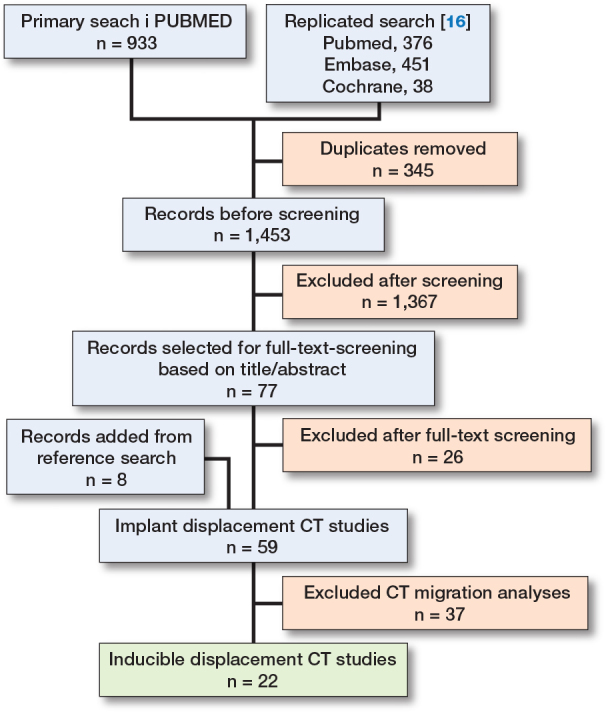 Figure 1
| Software/tool | Origin/developer | Joint(s) | Segmentation method | Registration method | Displacement calculation/metrics | Notes |
|---|---|---|---|---|---|---|
| IMA | Sectra, Linköping, Sweden. | Hip [ | Unknown | Unknown | Visual assessment (heatmaps); displacement in mm (specific metrics not disclosed) | Commercially available. Evolved from 3D Volume fusion tool |
| 3D volume fusion | Noz 2001 [ | Hip [ | Unknown | Rigid-body transformation based on anatomical landmarks | Cross-correlation on axial slices before and after transformation | |
| AtMoves | Amsterdam UMC, the Netherlands | Knee [ | Threshold-connected region growing; marching cubes for polygon mesh extraction [ | Grey-value correlation between double-contour models (cortical vs soft tissue) optimized via Nelder–Mead simplex [ | x, y, z translations/rotations, total translation, total rotation, mTRE, MTPM | Local CS at tibial plateau center; defined by eigenvector analysis |
| V3MA | RSAcore, Leiden, the Netherlands | Hip [ | 3D Slicer (v5.2.2); segmentation mask defines sampled region | Elastix toolbox [ | Translations, rotations, and MTPM (same definitions as AtMoves) | Coordinate system aligned with standard RSA; origin at implant center of mass |
| µCT-analysis | Self-developed | Hip [ | Bead centers segmented using Amira (v6.0.1, FEI company) or custom software | Generally unspecified; 1 study [ | Translation along normal (x, y) and tangential (z) axes of femoral stem surface | Used tantalum or stainless-steel beads |
| Joint First author, year, ref. | Technique | Component(s) | Reference standard(s) | Findings | ID-CT findings | Patient selection |
|---|---|---|---|---|---|---|
| Hip | ||||||
| Sandberg 2021 [ | IMA | Cup, stem, tibial comp | Intraoperative | Cups: 5 loose, 4 fixed | Cups: 5 loose, 2 fixed, | Inconclusive radiography, |
| Sandberg 2022 [ | IMA | Cup, stem | Intraoperative | 17 loose, 40 fixed (patient-level). | Sensitivity: 77%, specificity 100% (patient-level) | Inconclusive radiography |
| Listopadzki 2025 [ | IMA | Cup, stem | Intraoperative | 8 loose, 72 fixed (patient-level) | Sensitivity: 100%, | Unknown |
| Polus 2025 [ | V3MA | Stem | (ID-)RSA | MB-RSA (5-year follow-up) shows well-fixed (< 0.2 mm/year) for all patients | No difference in ID in x, z translation or x, y, z rotation between RSA and CT | Previously participation in 2-year prospective RSA study |
| Knee | ||||||
| Wretenberg 2021 [ | IMA | Tibial comp, femoral comp | Intraoperative | 8 loose, 0 fixed (patient-level) | 8 loose, 0 fixed (patient-level) | Suspected loosening, inconclusive radiography. |
| Buijs & Kievit 2025 [ | AtMoves | Tibial comp | Intraoperative | 24 loose, 10 fixed (component-level) | Sensitivity: 91% (CI 72–97), Specificity: 72% (CI 43–90), PPV: 87% (CI 68–95), | Scheduled for revision surgery based on local protocol |
| Hext 2025 [ | V3MA | Tibial comp, femoral comp | (ID-)RSA | MB-RSA (5-year follow-up, component-level). | Tibial comp: No difference in ID in x, y, z translation or y, z rotation between RSA and CT. | Previous participation in 5-year prospective RSA study |
| Svensson 2025 [ | IMA | Tibial comp, femoral comp | Intraoperative | 11 loose, 2 fixed (3 did not undergo revision surgery) | Sensitivity 100%, specificity 75%, PPV: 90%, NPV: 100%. | Suspected loosening, inconclusive radiological findings. |
| Spine | ||||||
| Skeppholm 2015 [ | 3D Volume fusion | Upper and lower comp | Intraoperative | Upper comp: 3 loose, 0 fixed. | Upper comp: 3 loose, 0 fixed. | Positive ID-CT indicated revision surgery |
| Joint Study | Technique | Subject | Variance source(s)’ | Experiment | Major findings |
|---|---|---|---|---|---|
| Hip | |||||
| Olivecrona 2008 [ | 3D Volume fusion | Patient, cup | Subject variability | No difference in ID-CT diagnosis between observers. | |
| Gortchacow 2011 [ | µCT-analysis | Cadaver, femoral stem | Scanning | 1.96*SD of relative displacement between stem beads at all loading conditions | Stem beads maximal error: x-, y-axis 5.2 μm, z-axis 9.4 μm |
| Gortchacow 2012 [ | µCT-analysis | Cadaver, femoral stem | Subject variability | 1.96*max(SDx, SDy, SDz) of relative displacement between bone beads in unloaded conditions (3rd & 4th scans) with random repositioning in the scanner ( | Bone beads maximal error: 15 μm in x, y, z directions |
| Malfroy Camine | µCT-analysis | Cadaver, femoral stem | Scanning | Absolute displacement of bone markers from unloaded (1st) to unloaded (2nd) scan ( | Bone beads absolute displacement error: 20 μm for 90% of beads. |
| Malfroy Camine | µCT-analysis | Cadaver, femoral stem | Loading | 1.96*SD of relative displacement between implant and bone beads of 3 pairs of successive unloaded scans, i.e., bias ( | Bias: max 5.1 μm |
| Malfroy Camine | µCT-analysis | Cadaver, femoral stem | Subject variability | Displacements across 12 Gruen zones (1–3, 5–10, 12–14) between loaded (2nd) and unloaded (3rd) scan ( | Compression: mean absolute displacement 19.5 (SD 5) μm (collarless), and 43.3 (SD 33.1) μm (collared) |
| Polus 2025 [ | V3MA | Patient, femoral stem | Subject variability | Bias: TT 0.055 mm, TR 0.102° | |
| Knee | |||||
| Kievit & Buijs 2023 [ | AtMoves | Cadaver, tibial comp | Subject variability | Mean (SD) of relative displacement between implant and bone of repeated (10x) unloaded scans ( | mTRE 0.07 (SD 0.03) mm; screw-axis rotation 0.13° (SD 0.04); MTPM 0.12 (SD 0.03) mm |
| ter Wee 2023 [ | AtMoves | Cadaver tibial comp | Subject variability | Mean (SD) of relative displacement between implant and bone of repeated (10x) unloaded scans using 2 image analysis protocols ( | 100% tibia protocol: mTRE 0.05 (SD 0.02) mm; screw-axis rotation 0.08° (SD 0.04); MTPM 0.07 (SD 0.04) mm |
| Buijs & Kievit 2025 [ | AtMoves | Patient tibial comp | Subject variability | Intrarater reliability (ICC): 0.74–0.96 | |
| Buijs & Ter Wee 2025 [ | AtMoves | Patient tibial comp | Subject variability | Repeated loaded scans (varus and valgus) by 2 operators | 100% tibia protocol: ICC 0.64–0.84, |
| Hext 2025 [ | V3MA | Patient femoral and tibial comp | Subject variability Scanning | Tibial comp precision: TT 0.056 mm, TR 0.118°, MTPM 0.141 mm | |
| Spine | |||||
| Svedmark 2008 [ | 3D Volume fusion | Phantom lumbar disc | Scanning | Imposed (known) displacements | Accuracy: 3D translation 0.56 mm, sagittal 0.45 mm, coronal 0.46 mm, axial 0.45 mm |
| Svedmark 2011 [ | 3D Volume fusion | Patient and phantom | Scanning | Patient: no reference ( | 7/9 patient volumes were suitable for analysis. |
| Skeppholm 2015 [ | 3D Volume fusion | Patient cervical disc | Subject variability | Rotation: ICC 0.95–0.99; SEM 0.34–0.47˚; repeatability 0.93–1.30° | |
| Svedmark 2015 [ | 3D Volume fusion | Patient lumbar disc | Image analysis | Mean landmark distance after registration (registration error) | Registration error 0.73 mm |
| Wrist | |||||
| Reiser | IMA | Patient carpal and radial comp | Subject variability | Radiography evaluation, no loosening confirmed ( | 1/3 patients signs of loosening on radiography; 3/3 movement carpal comp between 0.7–3.6 mm and 0.6–7.7° |
Peer Reviews
No public reviews on file for this paper yet. If you reviewed it on a platform where reviews are public (OpenReview, ICLR, NeurIPS, ICML), you can paste yours below so the community can read it here.
Videos
No videos yet. Explain this paper in a talk, walkthrough, or lecture? Add one.
Taxonomy
TopicsAdvanced X-ray and CT Imaging · Cardiac Imaging and Diagnostics · Orthopaedic implants and arthroplasty
Early implant migration can be detected with radiostereometric analysis (RSA) and is a predictor of later aseptic loosening [1-7]. RSA is accurate in upper and lower extremities [7,8], but clinical application is limited by invasive marker implantation, biplanar X-ray calibration cages, and long-term follow-up to detect migration. To address these limitations, CT-based RSA (CT-RSA) was introduced in the early 2000s [9], demonstrating comparable accuracy [10]. In parallel, inducible displacement RSA showed that implant displacement under induced load relates to long-term migration and can predict failure [11-14]. Inducible displacement CT (ID-CT) builds on this by using CT imaging under different loading (provocation) conditions to directly measure implant displacement, enabling immediate stability assessment and avoiding many (CT-)RSA limitations, such as marker implantation, calibration cages, and long-term follow-up. It shows promise as a diagnostic tool for loosening but presents challenges, including the need for controlled, reproducible loading, managing metal artefacts, standardized analysis, and defining clinically meaningful thresholds for loosening.
Migration-based CT-RSA and load-based ID-CT share a methodological foundation, with similar image analysis workflows and validation protocols. Evidence from CT-RSA thus contributes to ID-CT’s conceptual development, and a recent CT-RSA review [10] provides a key reference. However, that review focused on migration and did not address challenges specific to ID-CT. Our scoping review therefore addresses the following questions: what methodological approaches are used to assess implant loosening with ID-CT, and what variability is reported across studies? This review summarizes literature covering loading protocols, CT settings, image analysis, and validation approaches, and discusses key challenges in the broader CT-RSA context.
Methods
This scoping review was conducted in accordance with the PRISMA-ScR checklist [15] (see Supplementary data).
Search strategy
Due to inconsistency in terminology, making it unclear whether implant displacement reflects migration-over-time or load-induced, a broad search strategy was used. The primary search in PubMed used MeSH and free-text terms: “arthroplasty[MeSH] AND (migration OR motion OR displacement) AND CT.” As a secondary step, the PubMed, Embase, and Cochrane search from Van de Vusse et al. [10] was replicated, which used “arthroplasty, AND migration AND computed tomography” as main terms. Reference lists of included studies and relevant reviews were screened manually. The search covered English-language, peer-reviewed articles published from January 2000 to March 2025. References were managed in Endnote X9 (Clarivate Analytics, Philadelphia, PA, USA).
Eligibility criteria
Experimental and clinical studies were included if they investigated inducible displacement using CT to assess the stability of joint or spinal implants and reported either quantitative or qualitative outcomes. Exclusion criteria included use of conventional RSA without CT, studies focused solely on implant position at a single time point, absence of implants (e.g., only healthy controls), and reports or conference abstracts.
Study selection, data extraction, and synthesis
Study selection and data extraction were performed by 1 reviewer (MAtW). To ensure no studies were overlooked, both migration-over-time and load-induced displacement studies were considered during abstract screening, with the final selection at the full-text phase limited to ID-CT studies. A standardized table was developed for this review, extracting data items according to the updated (CT-)RSA guidelines [8], including: study characteristics (design, population, sample size), technical specifications (CT acquisition and reconstruction settings), image analysis approaches (software, displacement metrics, coordinate systems), reliability and validation measures (accuracy, precision, reference standards), outcomes (displacement and performance metrics), along with loading methodology (loading protocols and devices). This scoping review was not prospectively registered, as registration is not required by PRISMA-ScR guidelines.
Methodological quality
Risk of bias and applicability for diagnostic ID-CT studies were evaluated with the QUADAS-2 (Quality Assessment of Diagnostic Accuracy Studies-2) tool [16] by 1 reviewer (MAtW). Potential bias was identified across the 4 domains: patient selection, index text, reference standard, and flow & timing, when signaling questions received negative responses.
Terminology
Terminology for CT-based implant displacement analysis varies across studies, with many terms failing to distinguish migration-over-time from load-induced displacement. We find “CT-RSA” ambiguous, as CT involves no stereo acquisition. In this review, we adopt inducible displacement CT (ID-CT), in line with recent guidelines [8], and reserve CT migration-analysis for displacements measured over time.
Funding, use of AI, and disclosures
The authors did not receive funding for this study. Microsoft Copilot was used to assist with text editing and language refinement during manuscript preparation. The authors reviewed and approved all content. No content, data interpretation, or original text was generated by the tool.
Complete disclosure of interest forms according to ICMJE are available on the article page, doi: 10.2340/17453674.2026.45512
Results
Search
The initial search yielded 1,798 records (933 from the primary search and 865 from Van de Vusse et al. [10]) (Figure). After removing 345 duplicates, 1,453 unique studies remained for title and abstract screening. Based on inclusion criteria, 77 were selected for full-text evaluation, of which 26 were excluded. An additional 8 studies were identified through reference screening, resulting in 59 studies. Full-text evaluation identified 37 studies on CT migration analysis and 22 studies on ID-CT. All characteristics of the ID-CT studies are summarized in Table S1 (see Supplementary data). The studies were grouped by anatomy: hip (10), knee (7), spine (4), and wrist (1).
Flowchart of inclusion of records in the current scoping review.
Loading protocols
Hip
10 studies investigated total hip arthroplasty (THA), focusing on the acetabular cup [17], femoral stem [18-23], or both components [24-26]. 5 of these applied manual internal and external leg rotation to the limit of motion, with external stabilization using sandbags or foam pads [24-26], or without specified stabilization [17,18]. 5 cadaveric studies used compressive axial loading (stepwise max 1,400 N [20], 1,800 N [22], or 2,000 N [21]) or both compression and torsional loading (1,800 N and 17 Nm [19] or bodyweight based [23]) using custom loading devices in a µCT setup.
Knee
7 studies examined total knee arthroplasty (TKA), focusing on tibial [27-30] or both tibial and femoral components [31-33]. 4 studies applied varus–valgus loading using 4-point bending devices set to apply standardized 20 Nm moment to the knee [27-30]. 1 study used compressive loading by comparing seating and standing in a weight-bearing CT [32]. 1 study combined both torsional (internal–external rotation) and angular (varus–valgus) loading using external stabilization (foam pads, lashing straps) [31], and 1 study on megaprostheses used torsional loading only [33].
Spine
4 studies investigated disc replacements, 2 cervical [34,35] and 2 lumbar [36,37]. Cervical studies used voluntary flexion and extension with patients lying on their side with pillow support [34,35]; 1 included phantom model validation using cadaveric vertebrae [34]. 1 lumbar study used the same phantom model setup to validate the method [37], while the other patient study used provoked flexion–extension with a custom jig and blocks to reach Visual Analogue Scale (VAS) pain scores of 8/10 or maximum range within the CT gantry [36].
Wrist
1 study examined wrist arthroplasty using custom orthoses to achieve maximum flexion and extension [38].
CT settings and dose
12 of 22 studies reported CT parameters, including kVp, mAs, slice thickness, and pixel or voxel spacing. kVp ranged from 90–140, mAs from 20 (knee weightbearing CT [32]) to 180 (hip [25]). Slice thickness was reported inconsistently; many studies listed only increments or spacing [26,34,36,37], which does not reflect true reconstruction thickness. In patient studies, reported slice thickness or voxel spacing ranged from 1.25 mm (earlier study [17]) to 0.45 mm (recent study [30]). In experimental µCT setup this was 35–36 μm [19-23]. Effective dose (ED) was reported in 8 studies, ranging from 0.01 mSv in the wrist [38] to 4.50 mSv in the hip [25]. Hip scans had the highest radiation doses (1.5–4.5 mSv), followed by knee (0.04–0.5 mSv [32] and 1.2 mSv [29]), lumbar spine (0.68 mSv) [36], cervical spine (0.33 mSv) [34,35], and wrist (0.01 mSv) [33]. Reported doses are for single scans, while all inducible displacement exams required 2 scans.
Image analysis methodology and software
All software implemented a 3-step approach: segmentation (threshold-based region growing, manual delineation, or automatic detection of radiopaque beads), registration (landmark-, surface-, or intensity-based), and displacement calculation with visualization (heatmaps). Roughly, 5 techniques can be distinguished (Table 1). The underlying algorithms of the commercial IMA software are, to our knowledge, not available in the literature, limiting understanding of its methods.
Diagnostic and technical validity
Validation approaches were broadly divided into (i) diagnostic, comparing ID-CT for distinguishing loose versus fixed implants against an accepted measurement method, i.e., a reference standard (Table 2), or (ii) technical, in which the measurement accuracy, precision (i.e., repeatability), and robustness of ID-CT were assessed in clinical and experimental studies (Table 3). To clarify which image analysis methodology was used in each validation study, this is specified in the text and in Tables 2 and 3 by indicating one of the 5 techniques: IMA, 3D Volume fusion, V3MA, AtMoves, or µCT analysis (see Table 1).
Diagnostic
The endpoint of ID-CT is to assess primary implant stability or support the diagnosis of aseptic loosening. Accordingly, its performance is evaluated against a reference standard. Across studies, reference standards included intraoperative findings, patient-reported outcomes (PROMs), plain radiographs, inducible displacement RSA, or combinations thereof (see Table 2).
Methodological quality
All diagnostic performance studies showed risk of bias in the “Index test” domain due to absence of a prespecified displacement threshold, making results population-specific or unclear (Table S2, see Supplementary data). All studies using intraoperative findings as reference standard were biased because the criteria for loosening were not reported. Additional concerns in the “Flow & timing” domain arose because index test results influenced whether patients underwent revision surgery, which was used as the reference standard (intraoperative findings. These quality limitations—particularly in the choice and application of reference standard(s)—may skew diagnostic accuracy and should be considered when interpreting findings.
Outcomes
5 studies assessed ID-CT in cups and stems of THA (see Table 2, hip). At a patient level (either cup or stem loose), sensitivity was 77% [25] and 100% [26], with specificity of 100% in both studies (IMA). Smaller series reported near-perfect classification of loose vs fixed components (7/8 [17], 3D Volume fusion) and 16/20 correct [24], IMA). 1 study compared ID-CT with ID-RSA in stems and found close agreement despite different loading protocols (standing/supine RSA vs internal/external rotation CT) [18] (V3MA).
4 studies evaluated tibial and femoral components of TKA (see Table 2, knee). Using intraoperative findings as reference, sensitivity and specificity were 91% and 72% for tibial [29] (AtMoves), or 100%, and 75% for megaprostheses [33] (IMA). 1 study reported correct identification of all (8) loose components, but fixed components were not confirmed with any reference standard [31] (IMA). Another study in both tibial and femoral components directly compared ID-CT with ID-RSA and found close agreement across most displacement axes, despite differing loading protocols (standing/supine RSA vs standing/sitting CT) [32] (V3MA).
In the spine (see Table 2, spine), 1 study evaluated ID-CT for disc replacement, confirming 3 loose upper components at revision surgery; the remaining 25 patients had no reference standard [35] (3D Volume fusion).
Technical
The workflow of ID-CT consists of 3 main steps: load application, CT scanning, and image analysis. Each step may introduce measurement variance, which technical validation studies address by repeating individual steps of the workflow to evaluate 1 or more variance sources—such as subject variability, loading, scanning, or image analysis—depending on the study design (see Table 3). In clinical designs, this was typically done by repeatedly analyzing the same CT scan (pair) by 1 or more observers, i.e., double image analysis, or by acquiring 2 scans of the same patient under the repeated application of the same load, i.e., double examinations [8]. Experimental studies, which were not constrained by radiation exposure, applied additional protocols. These included measuring apparent displacement from repeated scan in unloaded conditions (zero-displacement examinations) and conducting preliminary assessments of ID-CT applicability in specific populations without a reference standard, referred to here as pilot studies.
In hip studies, µCT-analysis in cadavers consistently demonstrated low displacement errors reporting maximal error ranges from 5 to 20 μm across axes [19-22] (see Table 3, hip). Compression-induced displacement reached 5.5 μm [22] to 60 μm [20], while torsion-induced displacement ranged from 49 μm [19] to 119 μm [23], depending on stem design, loading mode, and displacement axis. 2 hip studies evaluated technical validity in clinical settings: 1 used double image analysis to show < 1 mm difference in landmark placement (part of their image analysis pipeline) between 2 observers [17] (IMA), while the other used double examinations and found translation and rotation bias (precision) of 0.055 mm (0.100 mm) and 0.102˚(0.167˚) [18] (V3MA).
In the knee, 2 studies conducted zero-displacement examinations on the same dataset, reporting errors of mean target registration error (mTRE) ≤ 0.08 mm, screw-axis rotation ≤ 0.13˚, and maximum total point motion (MTPM) ≤ 0.12 mm, and clear differentiation between fixed and loose implants, depending on whether a 100% or 20% tibia reference protocol was used (see Table 3, knee) [27,28] (AtMoves). In patients, 1 study repeated the full ID-CT workflow with 2 operators applying the loading device (AtMoves). The study reported varying ICC values (0.17–0.84), depending on the displacement metric and tibia reference protocol, i.e., using either the whole tibia as reference for implant displacement or only the proximal tibia to account for tibial deformation [30]. The same group also assessed double image analysis, reporting good-to-excellent intra- and interrater reliability [29]. Finally, Hext et al. [32] conducted double examinations, finding translation and rotation precision of the tibial and femoral component of 0.056 mm and 0.118˚, vs 0.071 mm and 0.128˚, respectively (V3MA).
In the spine, phantom and patient studies (using 3D Volume fusion) evaluated accuracy, repeatability, and registration error (see Table 3, spine). Phantom disc models showed accuracy of 0.20–0.56 mm depending on displacement axis [34,37]. Skeppholm et al. [35] evaluated double image analysis and reported excellent reliability for rotation (ICC 0.95–0.99), but lower for translation (ICC 0.30–0.84), attributed to small translations in the coronal plane. A pilot lumbar study from the same group reported a registration error of 0.73 mm, which was below the observed facet joint displacement (3.2–3.6 mm) [36].
In the wrist, a pilot study evaluated carpal and radial component in 3 patients (see Table 3, wrist), reporting carpal component displacement in all patients (0.7–3.6 mm, 0.6–7.7˚), while no displacement was detected in the radial component [38] (IMA).
Discussion
This scoping review summarized literature on inducible displacement CT (ID-CT) for implant loosening detection, focusing on loading protocols, CT acquisition, image analysis, and validation strategies. Twenty-two studies, covering hip [17-26], knee [27-33], cervical spine [34,35], lumbar spine [36,37] and wrist [38], showed variation in loading protocol and CT acquisition settings. Image analysis workflows were generally consistent but often lacked transparency in processing methods and displacement metrics. Validation strategies also differed in both diagnostic reference standards and technical methods. Reported diagnostic performance—although high—should be interpreted in the light of the identified risk of bias across the index test, reference standard, and flow & timing domains.
CT acquisition settings and effective dose (ED) in ID-CT are similar to those used in CT migration analysis protocols, where minimizing radiation exposure is critical given the 2–8 scans often required per patient [39]. While ID-CT typically requires only 2 scans, the use of low-dose protocols (ED < 1 mSv) remains important, especially in high-conversion regions such as the hip, spine, and shoulder. Recent CT migration analysis studies report EDs of 0.02–0.09 mSv (knee) [40-44], 0.27–1.54 mSv (shoulder) [2,45,46], and often ≥ 1 mSv in the hip [47-53]. Øhrn et al. [54] found that dose reduction does not compromise precision, though detailed acquisition and reconstruction settings were not reported. A key limitation of dose reduction is the potential increase in metal artefacts. In both CT migration analysis and ID-CT, this is mitigated through the use of metal artefact reduction (MAR) reconstruction algorithms [2,18,25,33,38,40,41,52,55,56]. While displacement analysis is generally robust, the effect of MAR reconstruction on segmentation and registration accuracy remains uncertain [57].
ID-CT and CT migration analysis rely on shared methods and evidence. Both use “double examinations” to evaluate bias and random error, either by repeating scans of the same patient on the same day (CT migration analysis) [8] or under the same loading condition (ID-CT). Van de Vusse et al. [10] referred to the standard deviation from such examinations as “clinical precision,” reporting ranges from 0.03–1.36 mm and 0.06–2.25°. 2 of the 8 studies they reviewed applied ID-CT [18,34] and were included in this scoping review. A third study reported clinical precision values of 0.06 mm and 0.12° for the tibial, and 0.07 mm and 0.13° for the femoral component [32]. Although this review identified several robust attempts to validate ID-CT—addressing variance across subjects, CT acquisition, and image analysis—most study designs do not assess how these errors accumulate across the entire workflow, with the role of the loading protocol underemphasized and assessed in only 2 studies [19,30].
The lack of standardized loading protocols and inconsistent reporting of compliance hinder comparability across studies and may contribute to variability in measurements. Manual loading depends on the operator, patient, and session, and was often guided by subjective endpoints such as pain or range of motion. This variability is evident across anatomical regions: hip studies typically used manual torsional loading with inconsistent stabilization [17,18,24-26], while spine studies relied on subjective flexion–extension positioning [34-36], both approaches compromising reproducibility. For the knee, dedicated mechanical loading devices have been developed, with Buijs et al. [30] reporting moderate-to-good inter-operator reliability using a standardized 4-point bending loading device with repeated cycles. Weightbearing methods, such as those studied by Hext et al. [32], remain influenced by posture, muscle activation, and compliance.
Without harmonized, well-documented protocols, site- and operator-dependent differences continue to limit clinical generalizability and the establishment of uniform diagnostic thresholds. Across the included studies, loosening criteria were either retrospectively determined or not (clearly) specified, and displacement metrics varied considerably, with most studies relying on qualitative or semi-quantitative assessment. Listopadzki et al. [26], for example, reported a loosening threshold of > 0.5 mm while assessing both translation and rotation [58], without a clear rationale for this cut-off. Buijs et al. [59] retrospectively derived quantitative loosening thresholds using multiple metrics (0.53˚ screw axis rotation, 0.42 mm mTRE, and 0.70 mm MTPM), with MTPM being most comparable to RSA-based migration measures [60]. In RSA, MTPM thresholds have been linked to revision risk, with 6-month mean MTPM considered acceptable below 0.30 or 1.10 mm and unacceptable above 1.10 or 1.55 mm for cemented and uncemented tibial components, respectively [1], underscoring the potential value of quantitative criteria for ID-CT. A pragmatic starting point would be that displacement exceeding the measurement error may indicate loosening; however, relying solely on this risks overestimating loosening, as apparent displacement may partly reflect elastic deformation of the surrounding bone rather than true implant loosening [28]. At present, ID-CT loosening thresholds should be interpreted cautiously, with future work focusing on standardized quantitative criteria that account for measurement error and elastic bone deformation.
Another challenge in ID-CT is the lack of a uniform clinical reference standard for validating implant loosening. Most studies use revision surgery findings, supplemented by radiography, PROMs, or comparisons with ID-RSA. Although the only ethical choice, verifying only patients with suspected loosening inflates sensitivity and leaves specificity undefined. Standardized intraoperative definitions of implant stability (e.g., visible fluid motion, as recently defined by Delphi consensus for TKA [61]) and structured follow-up for non-revised patients are needed. Follow-up should integrate PROMs and radiography, recognizing that radiolucent lines alone have poor specificity but gain diagnostic value when combined with symptoms [62-68]. Additionally, many studies lacked surgeon blinding to ID-CT results [25,26,31,33,35], introducing potential observer bias and underscoring the need for blinded, multicenter validation trials.
Limitations
A limitation of this scoping review is that study selection, data extraction, and critical appraisal were conducted by a single reviewer, which may introduce bias. However, the use of predefined inclusion criteria, a structured data extraction table, and explicit reporting of reasons for identified risk of bias helped mitigate that risk.
In perspective, the challenges highlighted in this review translate into practical considerations for future ID-CT studies, as outlined in the Supplementary data (S3). Because no study met all QUADAS-2 quality criteria, the diagnostic reliability is still not fully established, though transparently reported techniques such as AtMoves [27-30] and V3MA [18,32] currently offer valuable methodological insights. True diagnostic accuracy, however, requires blinded multicenter trials. The premature clinical application of ID-CT carries risks, including unnecessary radiation exposure and misdiagnosis. This results not from validated diagnostic accuracy, but from the perceived sophistication and novelty of the technique.
Conclusion
This scoping review demonstrates that inducible displacement CT studies are performed using highly heterogeneous loading protocols, CT settings and dose, and validation strategies. Although most studies follow a broadly similar image analysis workflow, methodological differences and incomplete reporting limit reproducibility and comparability across studies. Moreover, the current literature does not allow determination of true diagnostic accuracy, as diagnostic studies showed risk of bias related to reference standards, non-prespecified thresholds, and lack of blinding. A key methodological challenge remains in differentiation of true implant displacement from measurement error, which may be introduced at any step of the ID-CT pipeline. Validation covering the entire pipeline, together with transparent and standardized reporting, is therefore essential to identify sources of variance and support methodological optimization. The practical considerations outlined in this review provide an initial framework toward standardization, which is a prerequisite for site-independent diagnostic thresholds and enablement of broader clinical adoption of ID-CT for the assessment of implant loosening.
Supplementary data
ID-CT characteristics Table (S1), QUADAS-2 Diagnostic studies (S2), ID-CT Practical considerations (S3), and references are available as Supplementary data on the article home page, doi: 10.2340/17453674.2026.45512
Supplementary Material
The reference list from the paper itself. Each links out to its DOI / PubMed record.
- 1Puijk R, Singh J, Puijk R H, Laende E K, Plevier J W M, Nolte P A, et al. Evaluation and refinement of thresholds for early migration of total knee replacements as an estimator of late aseptic loosening: an updated systematic review of RSA and survival studies. Acta Orthop 2025; 96: 1-10. doi: 10.2340/17453674.2024.42574.39776207 PMC 11706017 · doi ↗ · pubmed ↗
- 2Jun B J, Ricchetti E T, Haladik J, Bey M J, Patterson T E, Subhas N, et al. Validation of a 3D CT imaging method for quantifying implant migration following anatomic total shoulder arthroplasty. J Orthop Res 2022; 40(6): 1270-80. doi: 10.1002/jor.25170.34436796 · doi ↗ · pubmed ↗
- 3Streit M R, Haeussler D, Bruckner T, Proctor T, Innmann M M, Merle C, et al. Early migration predicts aseptic loosening of cementless femoral stems: a long-term study. Clin Orthop Relat Res 2016; 474(7): 1697-706. doi: 10.1007/s 11999-016-4857-5.27130649 PMC 4887381 · doi ↗ · pubmed ↗
- 4Pijls B G, Nieuwenhuijse M J, Fiocco M, Plevier J W, Middeldorp S, Nelissen R G, et al. Early proximal migration of cups is associated with late revision in THA: a systematic review and meta-analysis of 26 RSA studies and 49 survival studies. Acta Orthop 2012; 83(6): 583-91. doi: 10.3109/17453674.2012.745353.23126575 PMC 3555453 · doi ↗ · pubmed ↗
- 5van der Lugt J C, Valstar E R, Witvoet-Braam S W, Nelissen R G. Migration of the humeral component of the Souter-Strathclyde elbow prosthesis: a long-term RSA study. J Bone Joint Surg Br 2010; 92(2): 235-41. doi: 10.1302/0301-620x.92b 2.22636.20130315 · doi ↗ · pubmed ↗
- 6Ooms E M, ten Brinke B, Mathijssen N M C, Blom I F, Deijkers R L M, Kraan G A. Feasibility of model-based Roentgen Stereophotogrammetric Analysis to evaluate early migration of the trapeziometacarpal joint prosthesis. BMC Musculoskelet Disord 2015; 16(1): 295. doi: 10.1186/s 12891-015-0747-3.26466802 PMC 4607147 · doi ↗ · pubmed ↗
- 7Ten Brinke B, Beumer A, Koenraadt K L M, Eygendaal D, Kraan G A, Mathijssen N M C. The accuracy and precision of radiostereometric analysis in upper limb arthroplasty. Acta Orthop 2017; 88(3): 320-5. doi: 10.1080/17453674.2017.1291872.28464752 PMC 5434603 · doi ↗ · pubmed ↗
- 8Kaptein B L, Pijls B, Koster L, Kärrholm J, Hull M, Niesen A, et al. Guideline for RSA and CT-RSA implant migration measurements: an update of standardizations and recommendations. Acta Orthop 2024; 95: 256-67. doi: 10.2340/17453674.2024.40709.38819193 PMC 11141406 · doi ↗ · pubmed ↗