Genetic make-up and regulation of the L-lysine biosynthesis pathway in Vibrio natriegens
Elly Straube, Johannes Radde, Thi Van Anh Tran, Negin Keihani Yazdi, Rubén Crespo Blanco, Ha Thanh Le, Cláudio J.R. Frazão, Thomas Walther

TL;DR
This paper explores how Vibrio natriegens produces the amino acid L-lysine, identifying key enzymes and regulatory mechanisms that could help engineer this fast-growing microbe for biotechnology.
Contribution
The study identifies a novel aspartate kinase isozyme and reveals transcriptional regulation patterns of amino acid biosynthesis in Vibrio natriegens.
Findings
A previously unknown mono-functional aspartate kinase isozyme (Vn.LysC2) insensitive to allosteric inhibition was discovered.
RNA sequencing showed that L-lysine and L-isoleucine cause specific transcriptional repression, while L-methionine and L-threonine affect broader gene expression.
Functional duplicates of key enzymes in the L-lysine biosynthesis pathway were identified.
Abstract
Vibrio natriegens, the fastest growing non-pathogenic microorganism known to date, has emerged as a highly promising chassis strain for synthetic biology and biotechnology applications. This study analysed the make-up and regulation of the biosynthetic pathway for L-lysine and related L-aspartate family amino acids (AFAAs) in V. natriegens DSM759 to provide a comprehensive basis for future metabolic engineering endeavours aiming at developing this strain into an amino acid overproducer. The compilation of automatically annotated genome sequencing data revealed the presence of gene duplicates encoding putative isozymes for multiple enzymatic reactions within these pathways. The physiological role of these isozymes was analysed via growth phenotyping of corresponding gene deletion mutants as well as enzymatic assays. We verified the presence of a previously unknown mono-functional…
Genes, proteins, chemicals, diseases, species, mutations and cell lines named across the full text — each resolved to its canonical identifier and authoritative record.
Click any figure to enlarge with its caption.
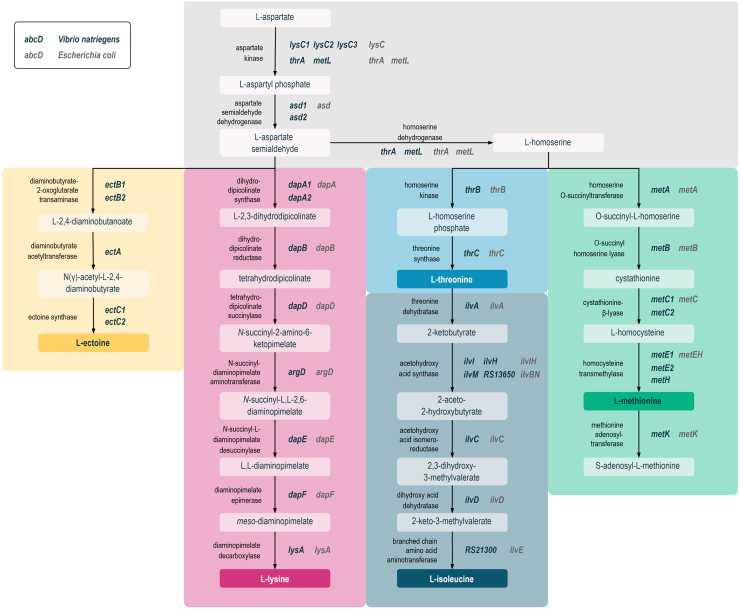 Figure 1
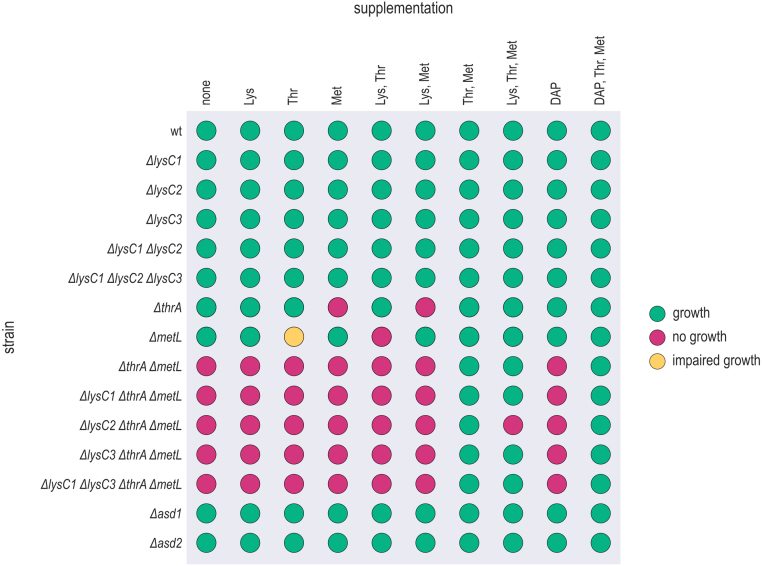 Figure 2
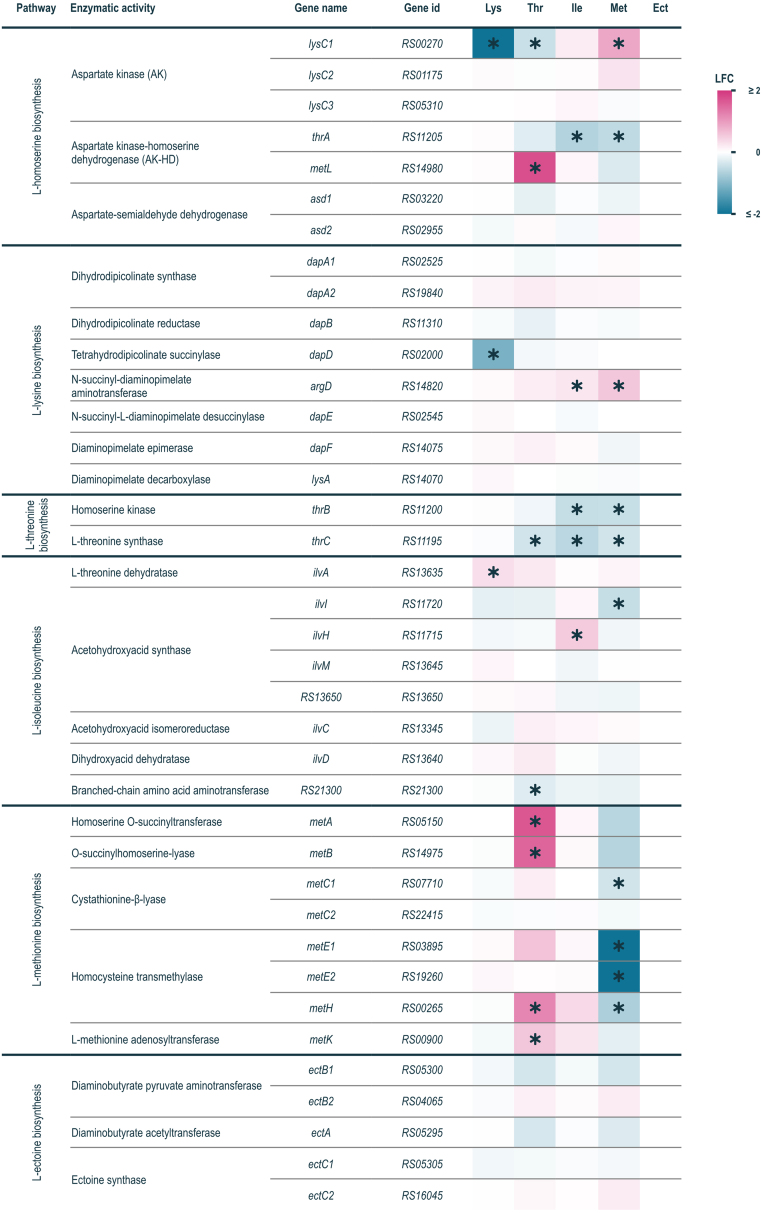 Figure 3
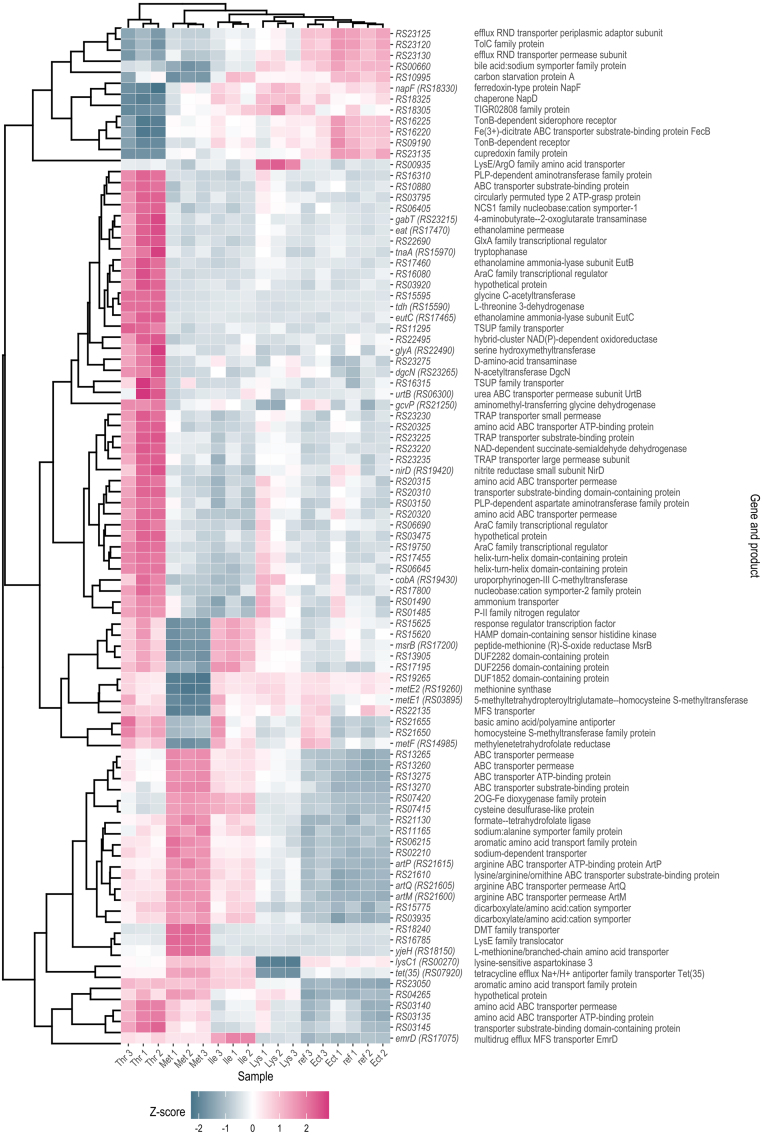 Figure 4
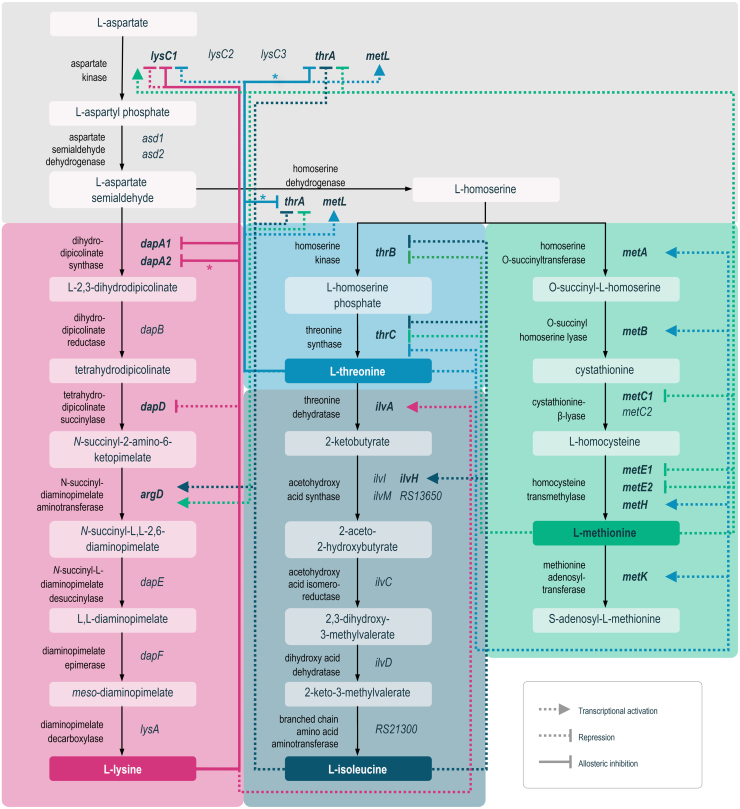 Figure 5
Peer Reviews
No public reviews on file for this paper yet. If you reviewed it on a platform where reviews are public (OpenReview, ICLR, NeurIPS, ICML), you can paste yours below so the community can read it here.
Videos
No videos yet. Explain this paper in a talk, walkthrough, or lecture? Add one.
Taxonomy
TopicsEnzyme Structure and Function · Microbial Metabolic Engineering and Bioproduction · Bacterial Genetics and Biotechnology