C-reactive Protein to Albumin Ratio and Fluid Overload as Predictors of Mortality in Comparison to Pediatric Risk of Mortality (PRISM) III Score in Critically Ill Children in a Tertiary Care Hospital: A Prospective Cohort Study
Ankita Mandal, Keerti Swarnkar, Shikha Malik

TL;DR
This study shows that the CRP to albumin ratio is a useful and low-cost predictor of mortality and complications in critically ill children, similar to the PRISM III score.
Contribution
The study introduces the CRP-to-albumin ratio as a novel, cost-effective predictor of mortality and MODS in critically ill children.
Findings
Non-survivors had a significantly higher CRP-to-albumin ratio than survivors.
A CRP-to-albumin ratio of 10.73 showed high sensitivity and specificity for mortality.
The ratio was strongly correlated with the PRISM III score and predicted MODS risk.
Abstract
Objectives: To study the predictive value of the C-reactive protein (CRP) to albumin ratio and fluid overload for the development of Multiple Organ Dysfunction Syndrome (MODS) and mortality in critically ill children, and compare it with the Pediatric Risk of Mortality (PRISM) III score. Methods: This prospective cohort study was conducted in the pediatric intensive care unit (PICU) of a tertiary care hospital in central India. PRISM-III scoring, CRP, and albumin level were done within 24 hours of admission. Early and cumulative fluid overload were calculated. Sensitivity and specificity were calculated for the CRP-to-albumin ratio and fluid overload for MODS and mortality, and compared with the PRISM III score. Results: We enrolled 102 critically ill children. The median CRP-to-albumin ratio was significantly higher in non-survivors than survivors (25.30 vs. 3.37, respectively)…
Genes, proteins, chemicals, diseases, species, mutations and cell lines named across the full text — each resolved to its canonical identifier and authoritative record.
Click any figure to enlarge with its caption.
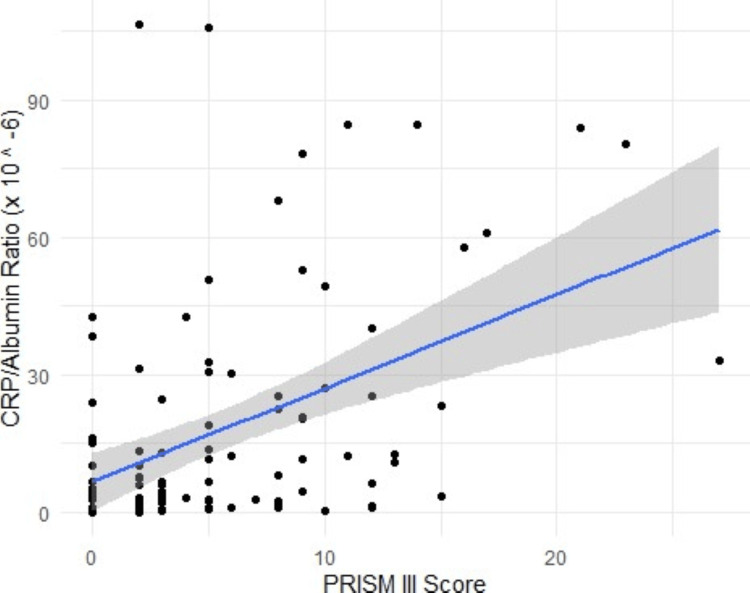 Figure 1
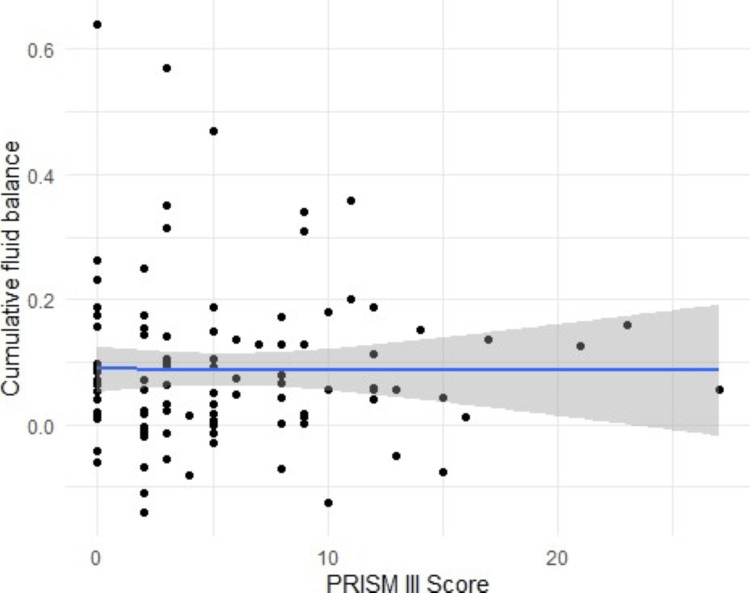 Figure 2
Peer Reviews
No public reviews on file for this paper yet. If you reviewed it on a platform where reviews are public (OpenReview, ICLR, NeurIPS, ICML), you can paste yours below so the community can read it here.
Videos
No videos yet. Explain this paper in a talk, walkthrough, or lecture? Add one.
Taxonomy
TopicsSepsis Diagnosis and Treatment · Hemodynamic Monitoring and Therapy · Trauma, Hemostasis, Coagulopathy, Resuscitation