Fracture prediction using 3D-DXA-finite element based femoral strength: a prospective study in postmenopausal women
Yvan Gugler, Philippe Zysset, Serge Ferrari, Emmanuel Biver

TL;DR
This study shows that 3D DXA-based femoral strength can better predict fractures in postmenopausal women than traditional 2D bone density measurements.
Contribution
The study introduces 3D DXA-based finite element analysis as a novel method to improve fracture risk prediction in non-osteoporotic women.
Findings
Femoral strength estimated from 3D DXA improves fracture risk prediction compared to conventional 2D aBMD.
A strength threshold of 2600 N outperforms traditional T-score thresholds in classifying fracture risk.
25% of low-trauma fracture cases and 27% of major osteoporotic fractures occurred in non-osteoporotic women with fragile femoral strength.
Abstract
Although areal bone mineral density (aBMD) measured by DXA is a good predictor of fractures, nearly half of low-trauma fractures occur in individuals without osteoporosis (T-score > −2.5 SD). This study investigated whether femoral strength estimated from 3D DXA-based finite element (FE) analysis enhances the prediction of incident fractures compared with conventional 2D DXA-derived aBMD. Baseline hip DXA scans from 740 postmenopausal women in the Geneva Retirees Cohort were analyzed. 3D reconstructions of the proximal femur were generated to estimate femoral strength using FE analysis and to derive structural bone parameters. Over a mean follow-up of 5.7 ± 1.5 years, 100 low-trauma fractures were recorded, including 44 major osteoporotic fractures (MOF), 89% at non-hip sites. Femoral strength, total and trabecular vBMD, some cortical parameters, and conventional areal BMD were all…
Genes, proteins, chemicals, diseases, species, mutations and cell lines named across the full text — each resolved to its canonical identifier and authoritative record.
Click any figure to enlarge with its caption.
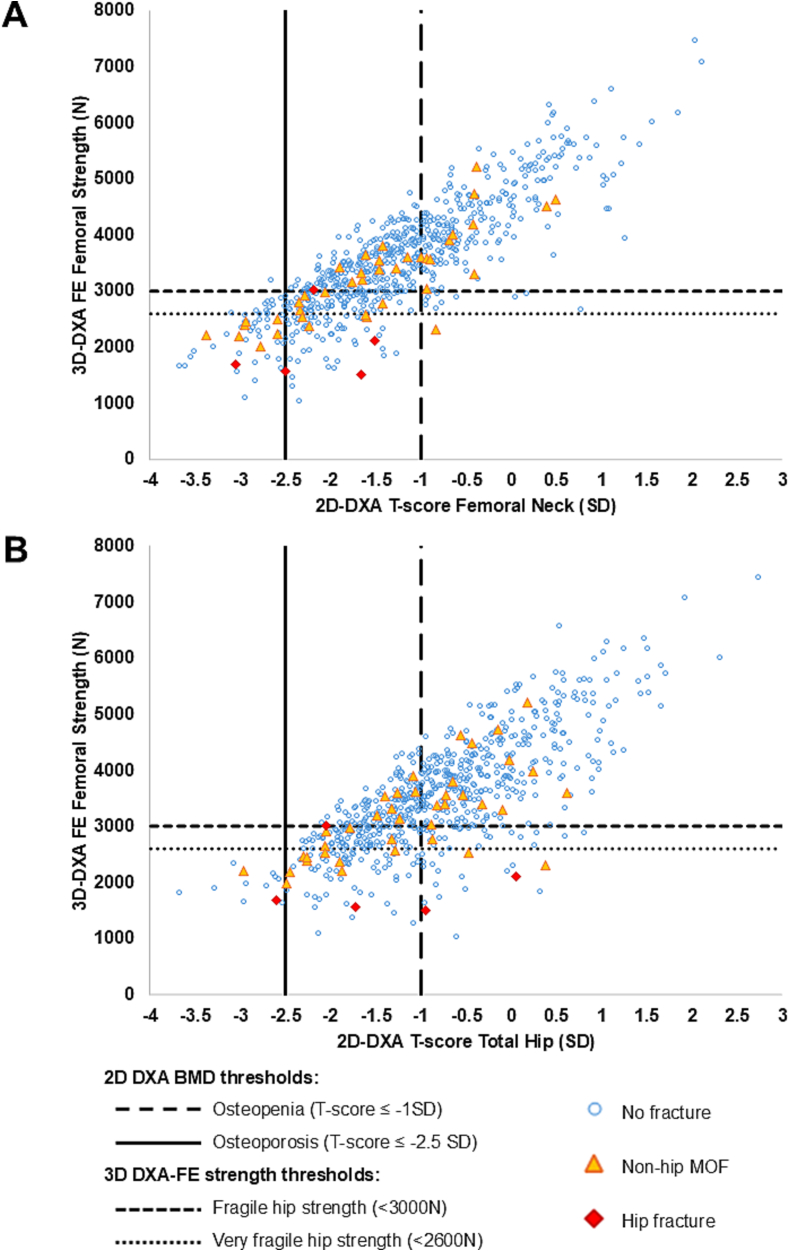 Figure 1
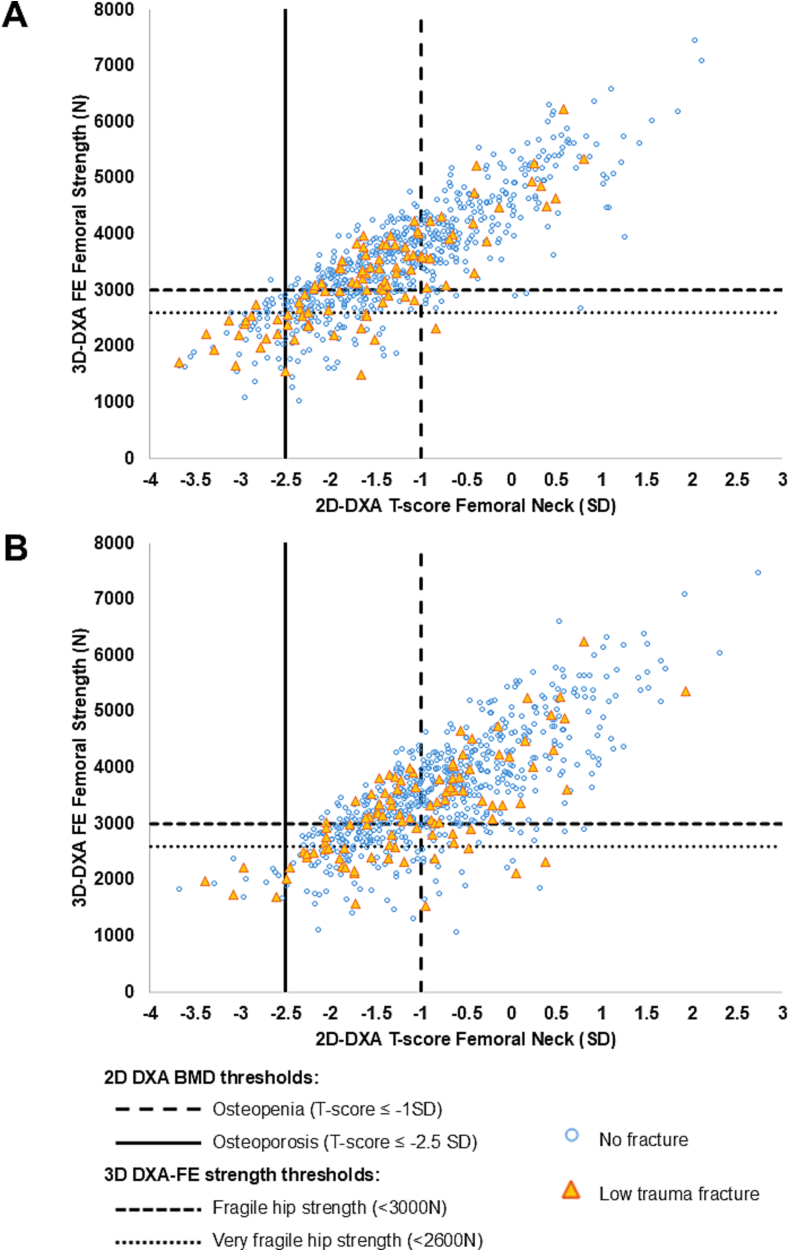 Figure 2
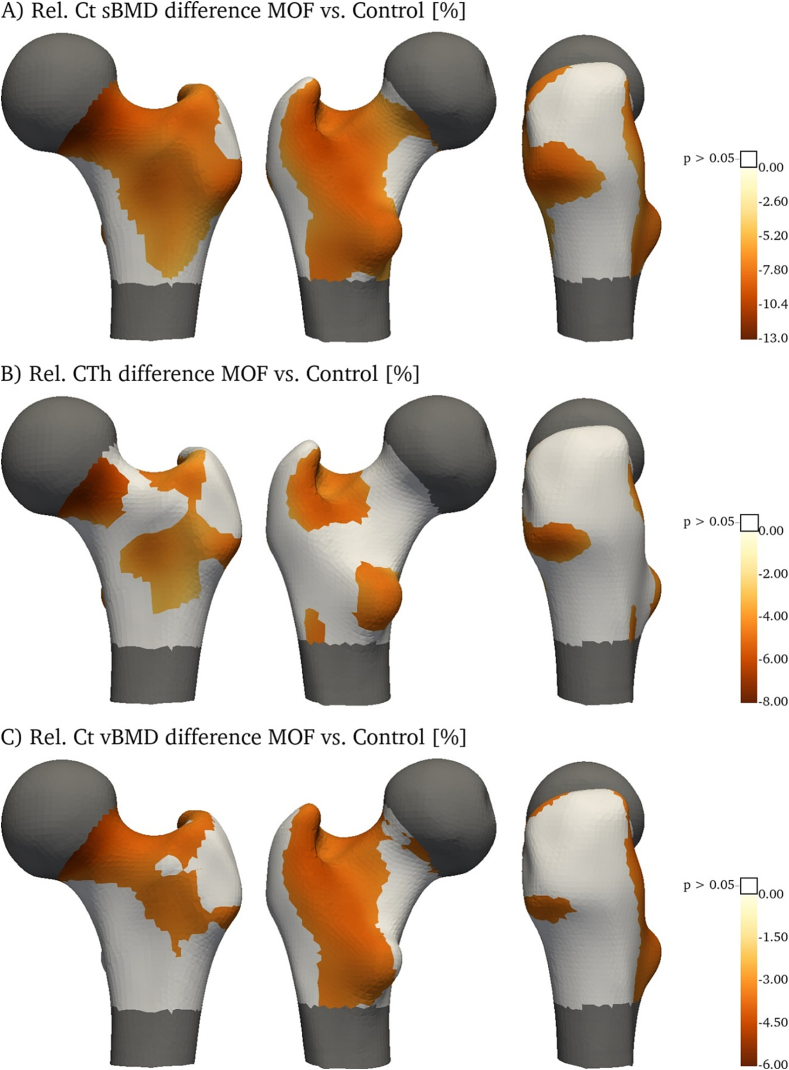 Figure 3
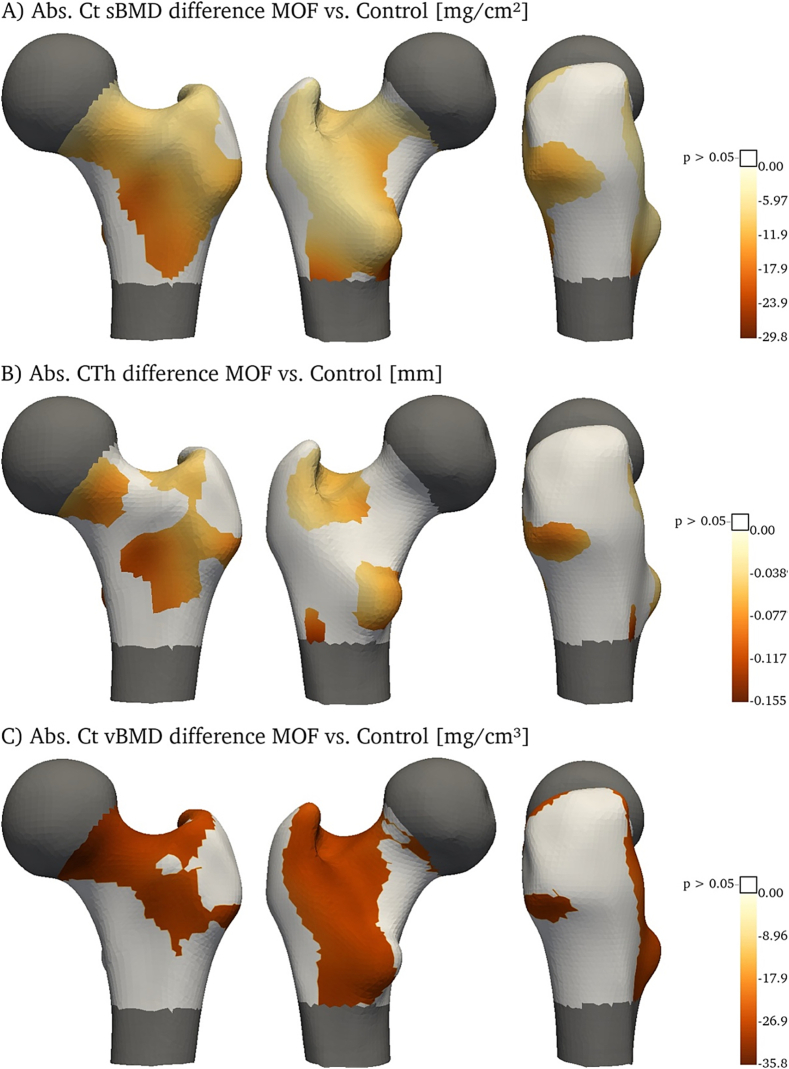 Figure 4
Peer Reviews
No public reviews on file for this paper yet. If you reviewed it on a platform where reviews are public (OpenReview, ICLR, NeurIPS, ICML), you can paste yours below so the community can read it here.
Videos
No videos yet. Explain this paper in a talk, walkthrough, or lecture? Add one.
Taxonomy
TopicsBone health and osteoporosis research · Bone fractures and treatments · Hip and Femur Fractures