FDA-approved PDE4 inhibitors alleviate the dominant toxicity of ALS-FTD-associated CHCHD10S59L in Drosophila and human cells
Swati Maitra, Do-Won Ham, Minwoo Baek, Yun-Jeong Choe, Nam Chul Kim

TL;DR
FDA-approved PDE4 inhibitors reduce mitochondrial damage caused by a CHCHD10 mutation linked to ALS-FTD in both human cells and fruit flies.
Contribution
FDA-approved PDE4 inhibitors are shown to alleviate CHCHD10S59L toxicity via a cAMP/PKA-dependent mechanism involving the PINK1/Parkin pathway.
Findings
PDE4 inhibitors reduce mitochondrial defects caused by CHCHD10S59L in human cells and Drosophila.
The protective effects of PDE4 inhibitors depend on cAMP/PKA signaling and involve the PINK1/Parkin pathway.
Low-dose forskolin combined with PDE4 inhibitors synergistically reduces mitochondrial toxicity.
Abstract
Mutations in CHCHD10 are a genetic cause of ALS-FTD. In our previous studies using Drosophila expressing C2C10HS81L and human cells expressing CHCHD10S59L, we found that the aberrant activation of the PINK1/Parkin pathway drives cellular toxicity, and pseudo-substrate inhibitors of PINK1 or mitofusin-2 agonists can mitigate these effects. Evidence from in vitro, in vivo, and chemical approaches supports PINK1 inhibition as a promising strategy for CHCHD10S59L-associated disease. Here, we show that FDA-approved PDE4 inhibitors significantly reduce CHCHD10S59L-induced mitochondrial morphological and functional defects in both human cells and Drosophila. These protective effects occur through a cAMP/PKA-dependent mechanism, indicating that elevated cAMP signaling attenuates aberrant PINK1/Parkin activation. Moreover, forskolin combined with PDE4 inhibitors synergistically decreases…
Genes, proteins, chemicals, diseases, species, mutations and cell lines named across the full text — each resolved to its canonical identifier and authoritative record.
Click any figure to enlarge with its caption.
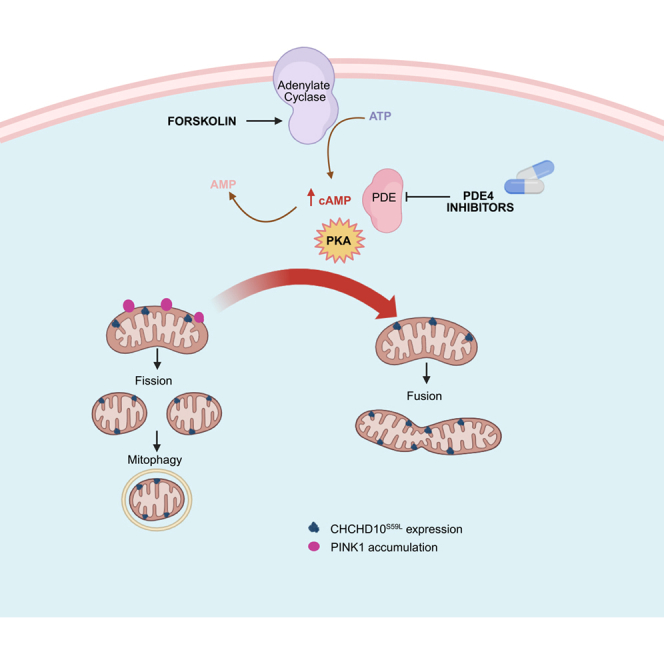 Figure 1
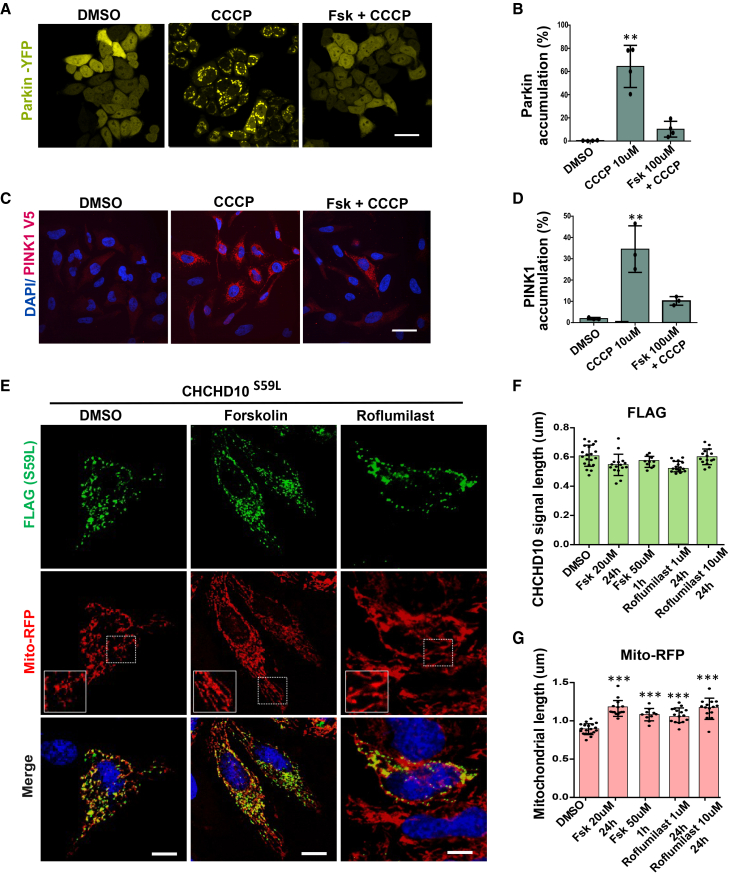 Figure 2
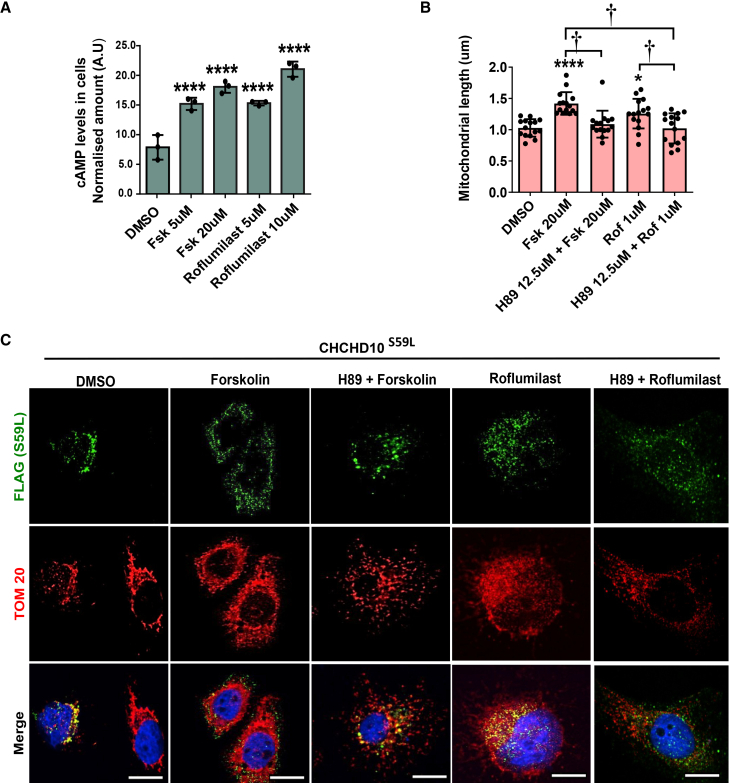 Figure 3
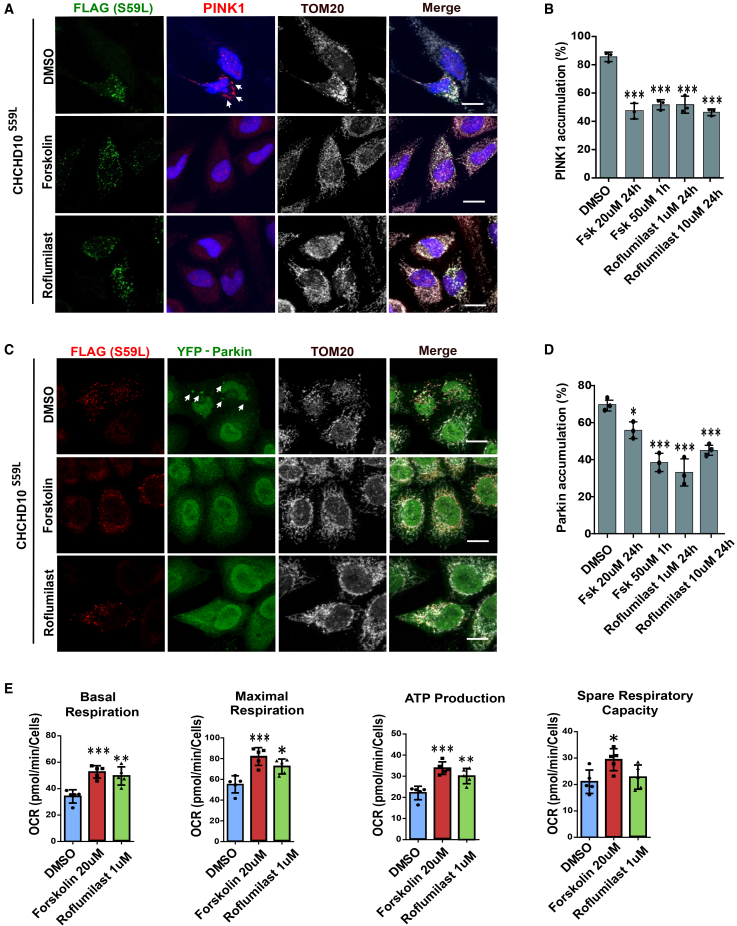 Figure 4
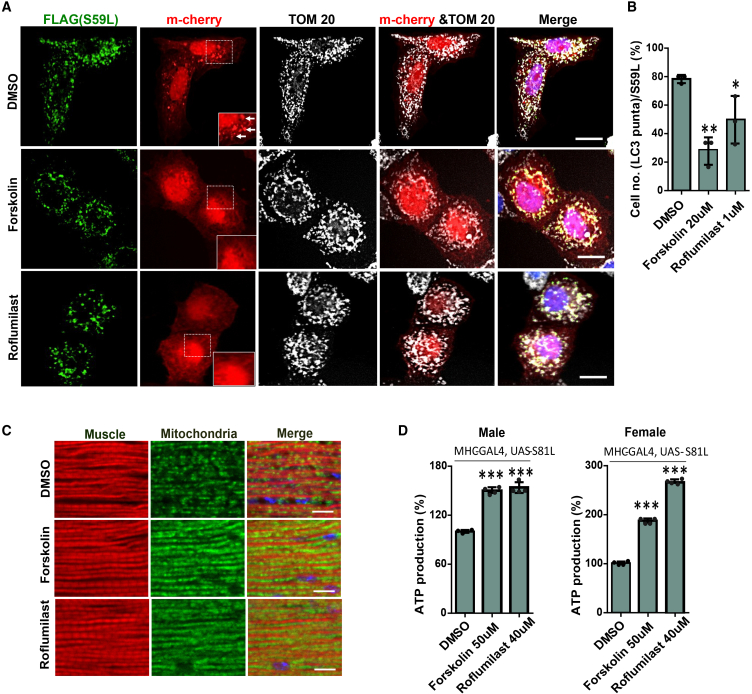 Figure 5
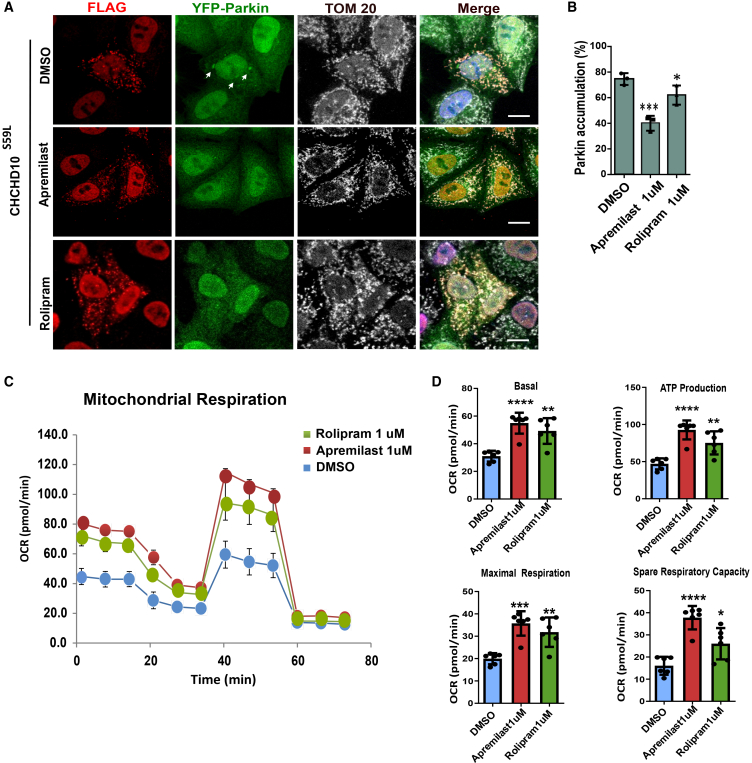 Figure 6
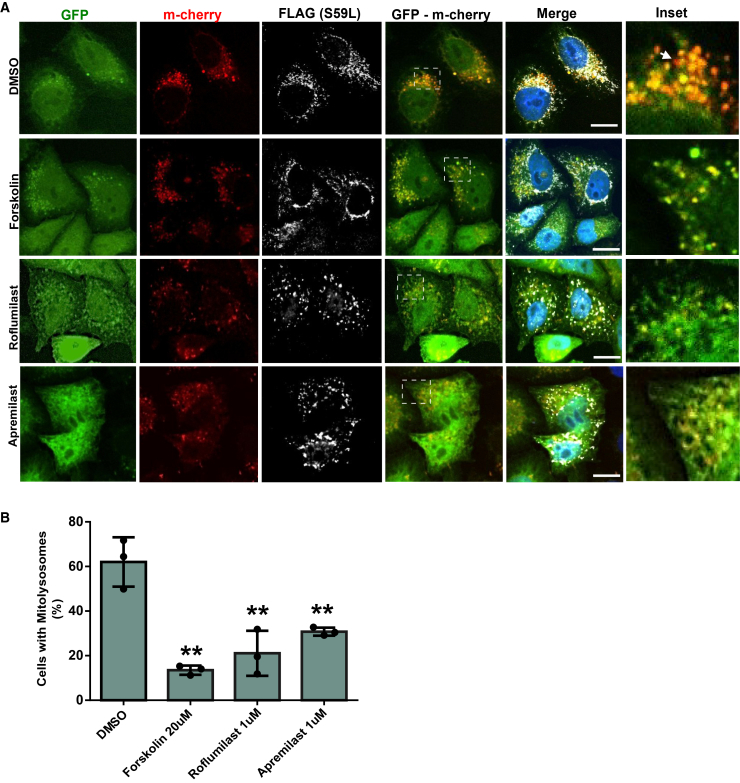 Figure 7
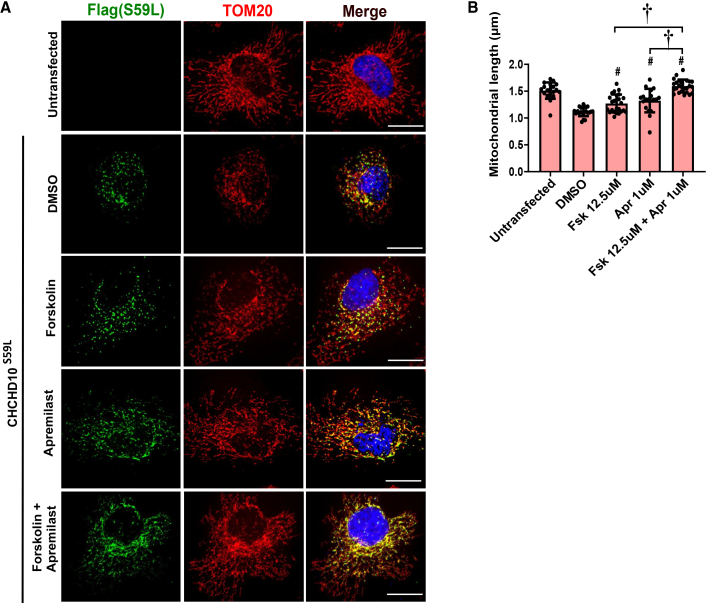 Figure 8
Peer Reviews
No public reviews on file for this paper yet. If you reviewed it on a platform where reviews are public (OpenReview, ICLR, NeurIPS, ICML), you can paste yours below so the community can read it here.
Videos
No videos yet. Explain this paper in a talk, walkthrough, or lecture? Add one.
Taxonomy
TopicsPhosphodiesterase function and regulation · Amyotrophic Lateral Sclerosis Research · Protein Kinase Regulation and GTPase Signaling