The stress-activated kinase p38 mediates non-canonical activation of Src and tyrosine phosphorylation of the adapter protein TAB1
Iimi Onuma, Yusuke Iwata, Yue Zhou, Mai Nakada, Arisa Kondo, Hiroyuki Iwahara, Kanako Natori, Satoru Yokoyama, Kazuyasu Chihara, Kenji Takeuchi, Kiyonao Sada, Tatsuhiko Ozawa, Mineyuki Mizuguchi, Nobuyuki Yamagishi, Michael Kracht, Hiroaki Sakurai

TL;DR
This paper shows that the protein Src can be activated through a new mechanism involving serine phosphorylation, which could improve cancer treatment strategies.
Contribution
The study reveals a non-canonical activation mechanism of Src through serine phosphorylation and identifies new markers for Src activity.
Findings
Src phosphorylates TAB1 at Y481, altering the TAK1-TAB1 interaction.
p38 kinase enhances Src activity by phosphorylating Src at serine 75.
Src's SH2 domain interacts differently with TAB1 compared to FAK.
Abstract
Src is a non-receptor tyrosine kinase that is overexpressed and highly activated in many cancers and is one of the key factors contributing to malignant transformation. According to current concepts, Src activity relies on tyrosine phosphorylation, and phospho(p) Y419 in the activation loop is often regarded as a marker of its activation. However, recent studies have shown that pY419 may contribute to substrate selection. Therefore, the mechanisms underlying Src activation other than classical tyrosine phosphorylation warrant further study. We herein demonstrated that Src phosphorylates a novel substrate, TAB1, directly at Y481 in the TAK1-binding domain, changing the TAK1-TAB1 interaction. p38 enhances Src-mediated TAB1 phosphorylation through the direct phosphorylation of Src at N-terminal S75. Moreover, the mode of substrate recognition by the SH2 domain of Src is different in TAB1…
Genes, proteins, chemicals, diseases, species, mutations and cell lines named across the full text — each resolved to its canonical identifier and authoritative record.
Click any figure to enlarge with its caption.
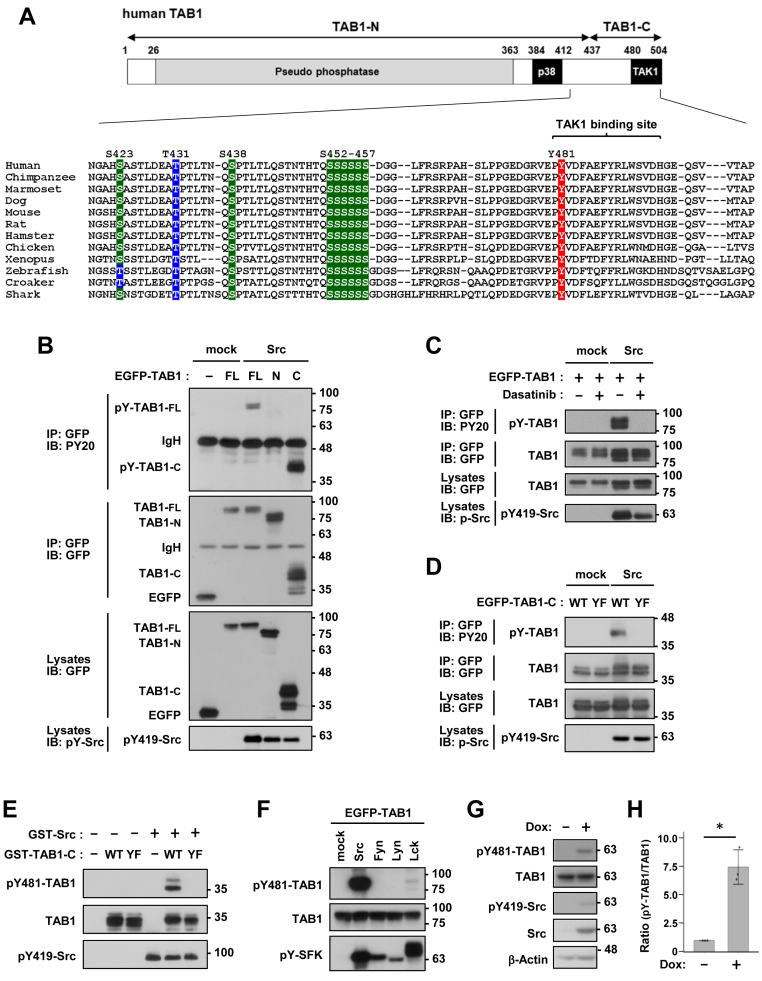 Figure 1
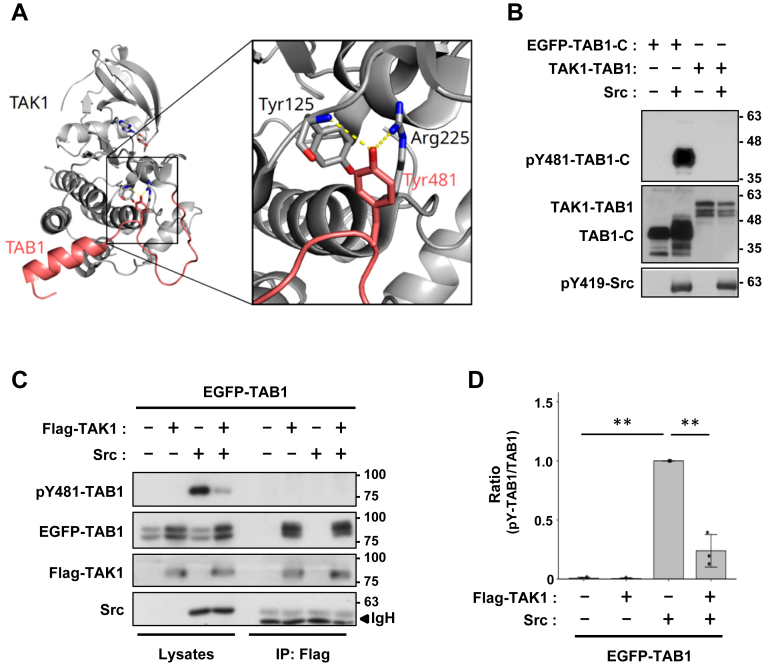 Figure 2
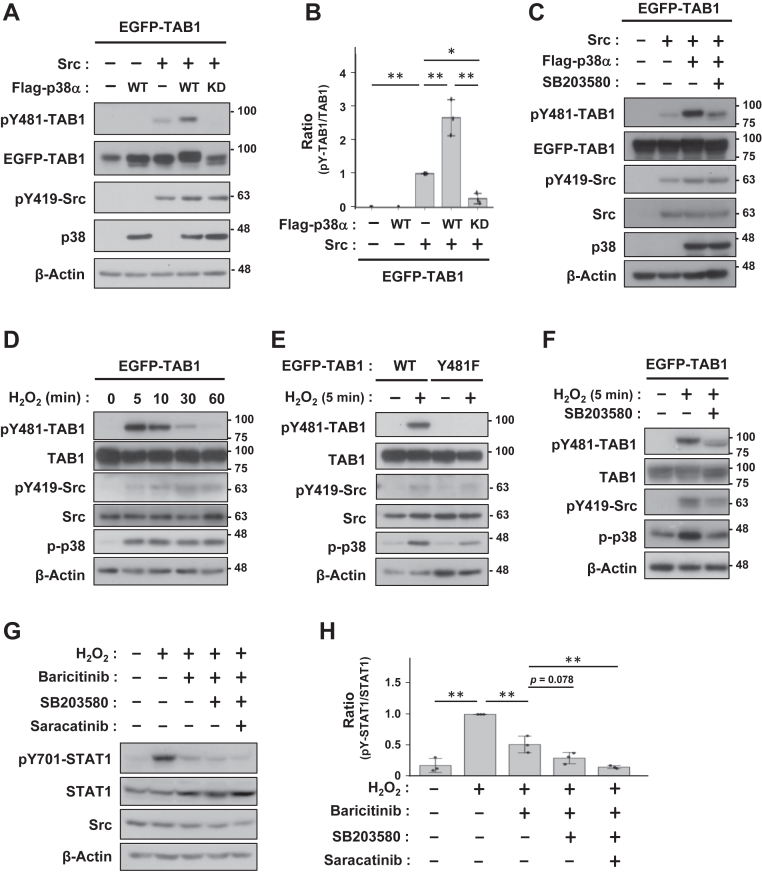 Figure 3
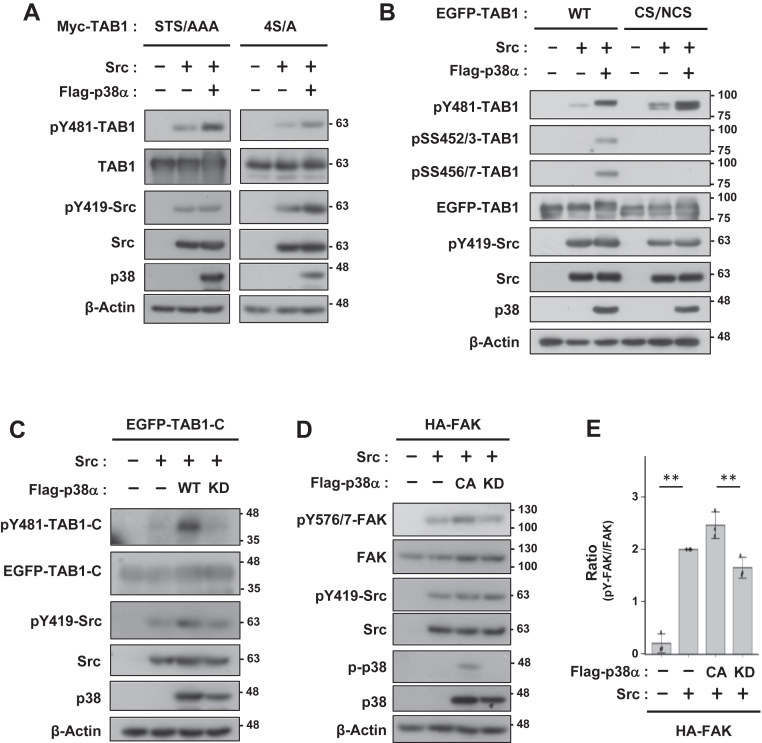 Figure 4
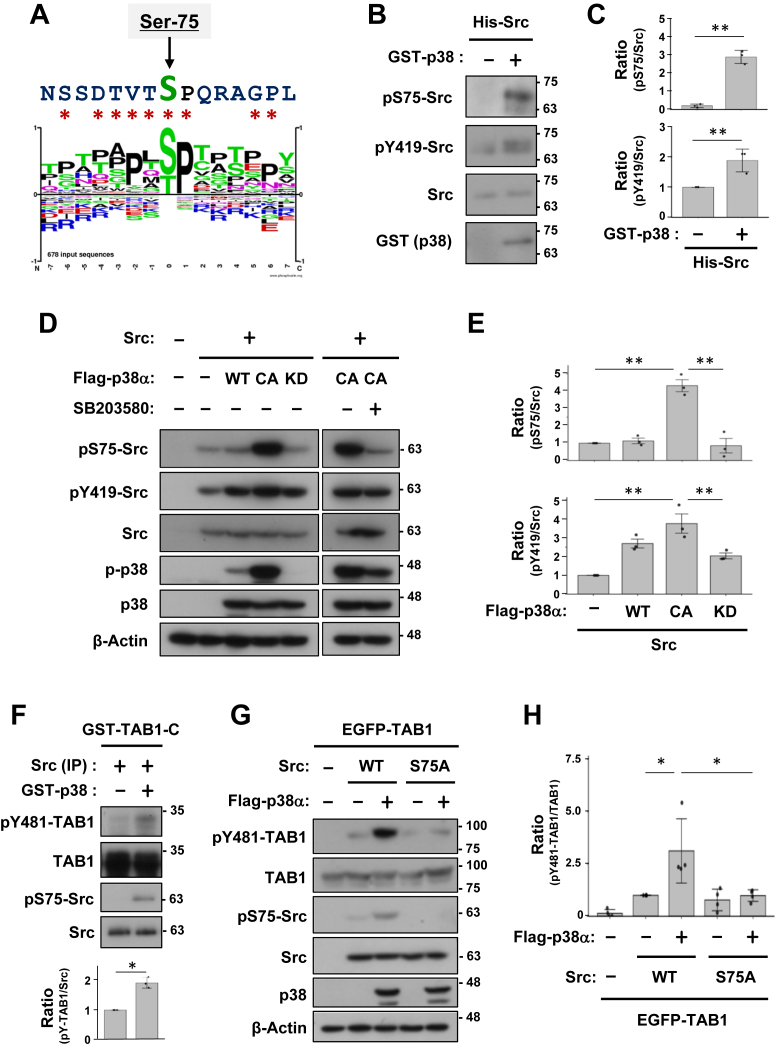 Figure 5
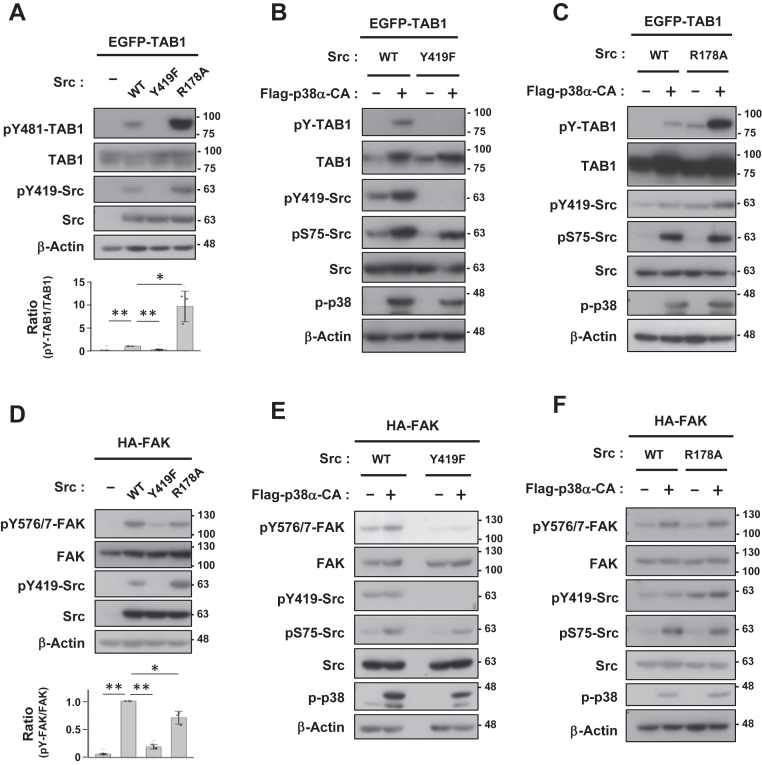 Figure 6
Peer Reviews
No public reviews on file for this paper yet. If you reviewed it on a platform where reviews are public (OpenReview, ICLR, NeurIPS, ICML), you can paste yours below so the community can read it here.
Videos
No videos yet. Explain this paper in a talk, walkthrough, or lecture? Add one.
Taxonomy
TopicsProtein Kinase Regulation and GTPase Signaling · NF-κB Signaling Pathways · Melanoma and MAPK Pathways