Sex differences in the three-dimensional morphology of unruptured intracranial aneurysms
Maarten J. Kamphuis, Phebe J. Groenheide, Laura T. van der Kamp, Margot van Genderen, Ruben P.A. van Eijk, Jeroen Hendrikse, Gabriel J.E. Rinkel, Mervyn D.I. Vergouwen, Ynte M. Ruigrok, Irene C. van der Schaaf

TL;DR
This study found that women have smaller intracranial aneurysm volumes and different shape characteristics compared to men, but these differences do not explain the higher rupture risk in women.
Contribution
The study provides new insights into sex-based differences in aneurysm morphology and their relation to rupture risk.
Findings
Women had smaller aneurysm volumes than men in multivariable analysis.
Women had higher shape index and lower curvedness compared to men.
3D aneurysm morphology did not explain the higher rupture risk in women.
Abstract
Women have a higher rupture risk of intracranial aneurysms than men. One possible explanation is that aneurysm volume and shape irregularity, both linked to rupture risk, may differ between women and men. We investigated this with 3-dimensional morphological aneurysm parameters. In a random sample of consecutive patients with unruptured intracranial aneurysms diagnosed between 2008 and 2018, we quantified volume and shape parameters describing global (sphericity, elongation, and flatness) and local shape (shape index and curvedness) on CT or MR angiography scans. We compared these parameters between women and men (reference) with univariable and multivariable linear regression analysis (global parameters) and binary logistic regression analysis (local parameters). The multivariable analysis was adjusted for the confounders: age, hypertension, smoking status, aneurysm size, location,…
Genes, proteins, chemicals, diseases, species, mutations and cell lines named across the full text — each resolved to its canonical identifier and authoritative record.
Click any figure to enlarge with its caption.
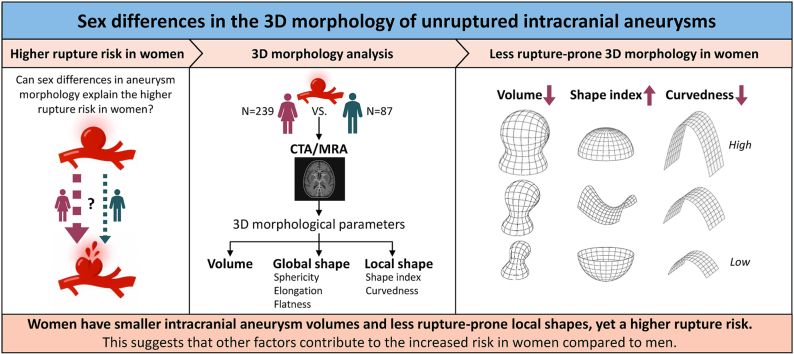 Figure 1
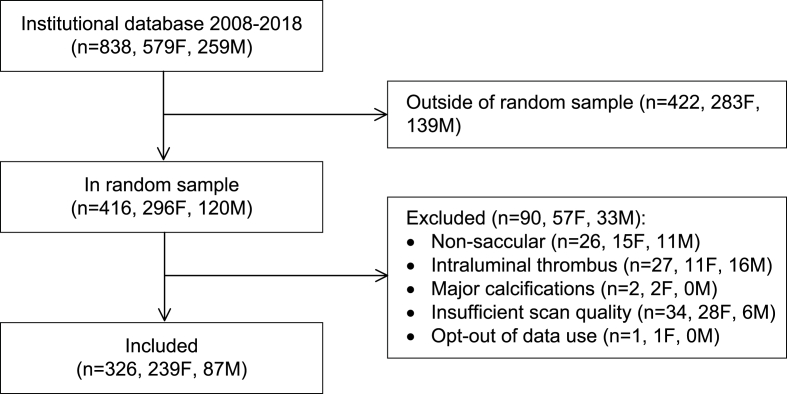 Figure 2
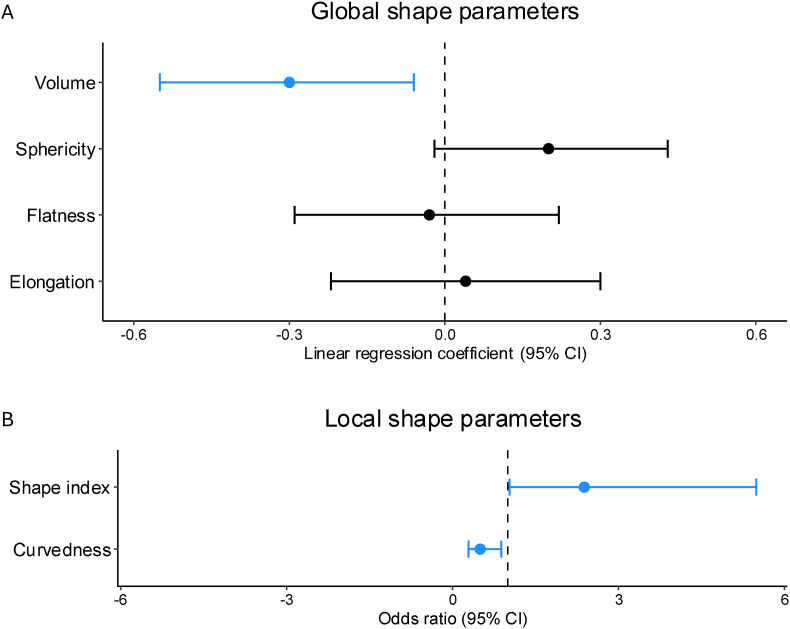 Figure 3
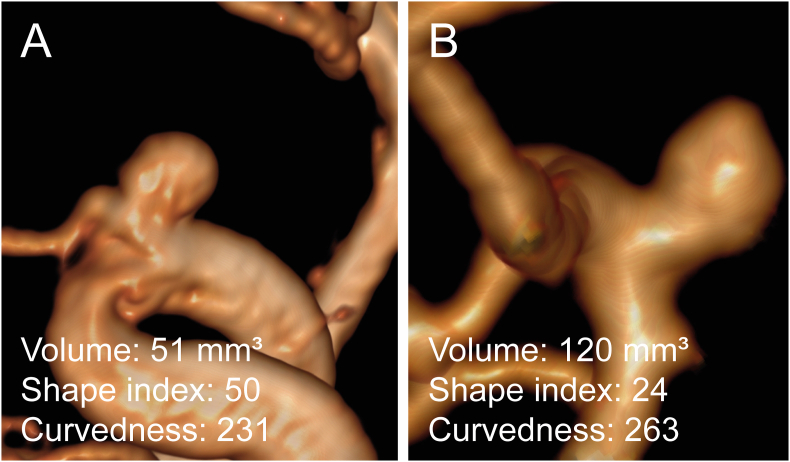 Figure 4
Peer Reviews
No public reviews on file for this paper yet. If you reviewed it on a platform where reviews are public (OpenReview, ICLR, NeurIPS, ICML), you can paste yours below so the community can read it here.
Videos
No videos yet. Explain this paper in a talk, walkthrough, or lecture? Add one.
Taxonomy
TopicsIntracranial Aneurysms: Treatment and Complications · Meningioma and schwannoma management · Aortic aneurysm repair treatments