Additive value of early-phase β-Amyloid-PET for the differential diagnosis of non-Alzheimer’s disease dementia
Sebastian Eckenweber, Friederike Völter, Nicolai Franzmeier, Carla Palleis, Olivia Wagemann, Endy Weidinger, Sabrina Katzdobler, Elisabeth Wlasich, Katja Sandkühler, Guido Böning, Johannes Gnörich, Maximilian Scheifele, Florian Eckenweber, Daniel Janowitz, Carolin Kurz

TL;DR
Early-phase β-amyloid-PET scans help distinguish non-Alzheimer’s dementia types by detecting neurodegeneration patterns, improving diagnostic accuracy.
Contribution
Demonstrates the additive diagnostic value of early-phase β-amyloid-PET for non-Alzheimer’s dementia beyond amyloid status.
Findings
Visual assessment of early-phase β-amyloid-PET identified neurodegeneration in 78.8% of amyloid-negative cases.
75.3% of A-/N+ cases were correctly assigned to diagnostic categories using visual assessment.
Logistic regression models provided comparable accuracy but were less effective than visual assessment in assigning diagnoses.
Abstract
•Early-phase β-amyloid-PET reliably detects neurodegenerative perfusion patterns.•The visual read identified neurodegeneration in 78.8% of amyloid-negative cases.•75.3% of A-/N+ cases were correctly assigned to diagnostic categories.•Logistic regression models may aid in cases of uncertainty. Early-phase β-amyloid-PET reliably detects neurodegenerative perfusion patterns. The visual read identified neurodegeneration in 78.8% of amyloid-negative cases. 75.3% of A-/N+ cases were correctly assigned to diagnostic categories. Logistic regression models may aid in cases of uncertainty. Recent studies demonstrated strong agreement between early-phase β-amyloid-PET perfusion imaging and glucose hypometabolism assessed by [18F]FDG-PET, indicating the potential of early-phase β-amyloid-PET as a surrogate biomarker of neuronal injury. We therefore aimed to investigate the additive value of…
Genes, proteins, chemicals, diseases, species, mutations and cell lines named across the full text — each resolved to its canonical identifier and authoritative record.
Click any figure to enlarge with its caption.
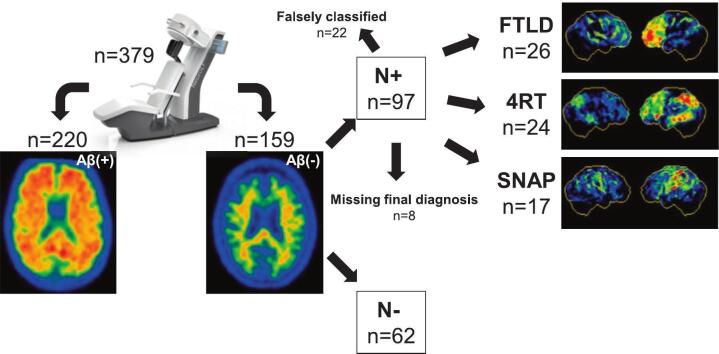 Figure 1
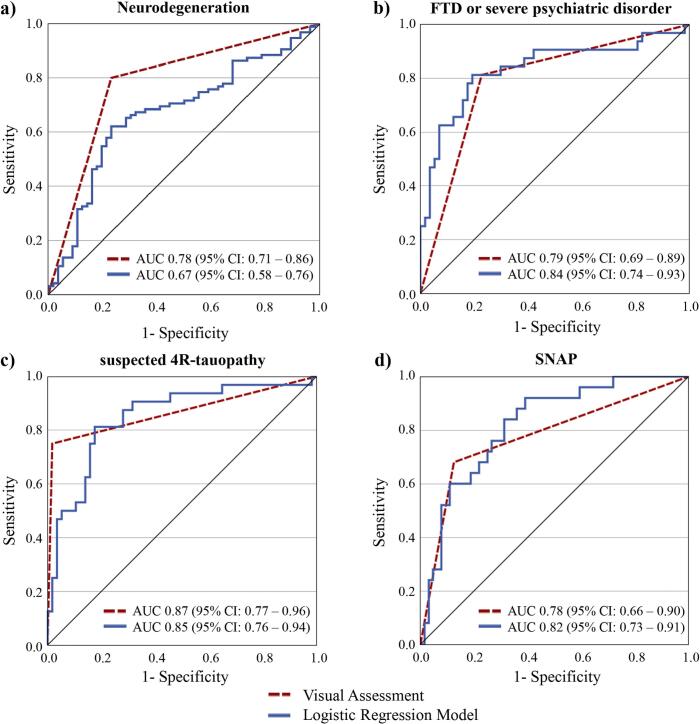 Figure 2
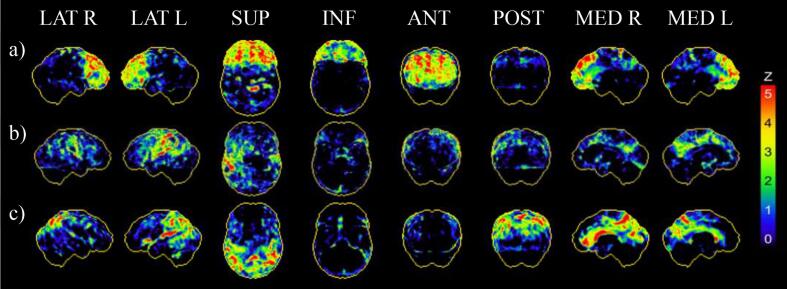 Figure 3
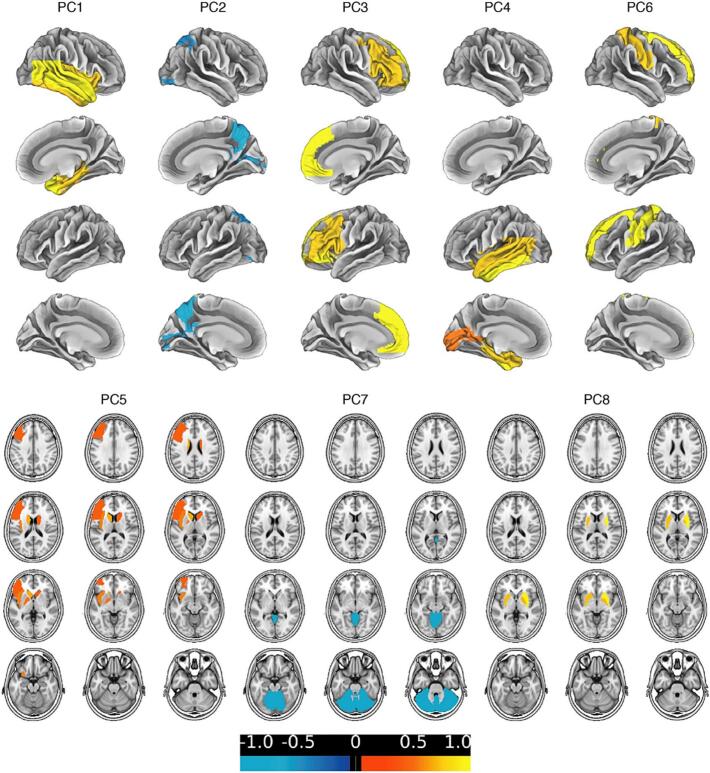 Figure 4
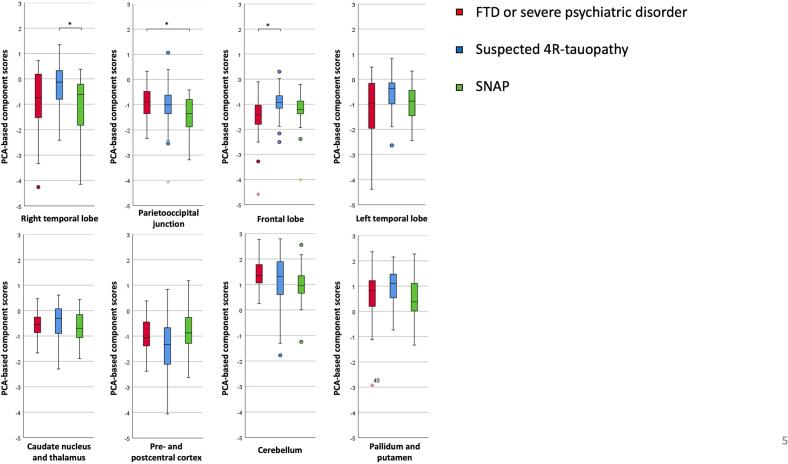 Figure 5
Peer Reviews
No public reviews on file for this paper yet. If you reviewed it on a platform where reviews are public (OpenReview, ICLR, NeurIPS, ICML), you can paste yours below so the community can read it here.
Videos
No videos yet. Explain this paper in a talk, walkthrough, or lecture? Add one.
Taxonomy
TopicsDementia and Cognitive Impairment Research · Medical Imaging Techniques and Applications · Alzheimer's disease research and treatments