Personalized PHQ-9 test length using probability density estimation based on conditional probability and K-Nearest Neighbours
Zahraa Abdulhussein, Marcia Scazufca, Pepijn van de Ven

TL;DR
This paper introduces a dynamic version of the PHQ-9 depression test that adapts the number of questions based on responses, improving accuracy and reducing respondent burden.
Contribution
A novel dynamic PHQ-9 model using conditional probability and KNN for early classification of depression.
Findings
The dynamic PHQ-9 model outperforms PHQ-DEP-4 in sensitivity, specificity, and Youden index.
47%–66% of respondents required only two questions, reducing respondent burden.
The model performs robustly across diverse populations with varying depression prevalence.
Abstract
The Patient Health Questionnaire-9 (PHQ-9) is a tool consisting of nine items designed to assess the severity of depression in individuals. Shorter versions have been developed such as the PHQ-DEP-4, which includes four items, and the PHQ-2, which consists of just two. These fixed-length formats have been developed to facilitate rapid screening, particularly for identifying individuals eligible for clinical trials. In this study, we propose and evaluate a dynamic version of the PHQ-9, in which the number of questions administered varies according to the respondent’s answers. This adaptive approach estimates the likelihood of depression conditional on the responses given thus far and can terminate the assessment early when a confident classification (depressed or non-depressed) can be made before all nine questions are completed. The model relies on a historical datasets of completed…
Genes, proteins, chemicals, diseases, species, mutations and cell lines named across the full text — each resolved to its canonical identifier and authoritative record.
Click any figure to enlarge with its caption.
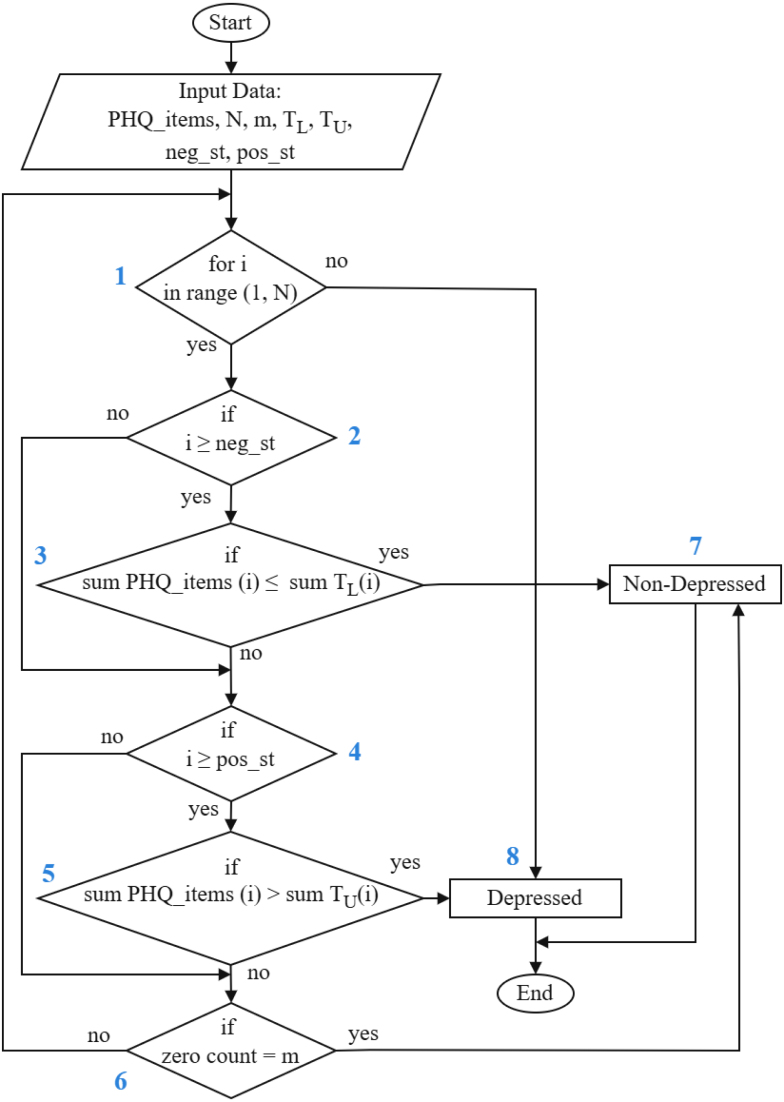 Figure 1
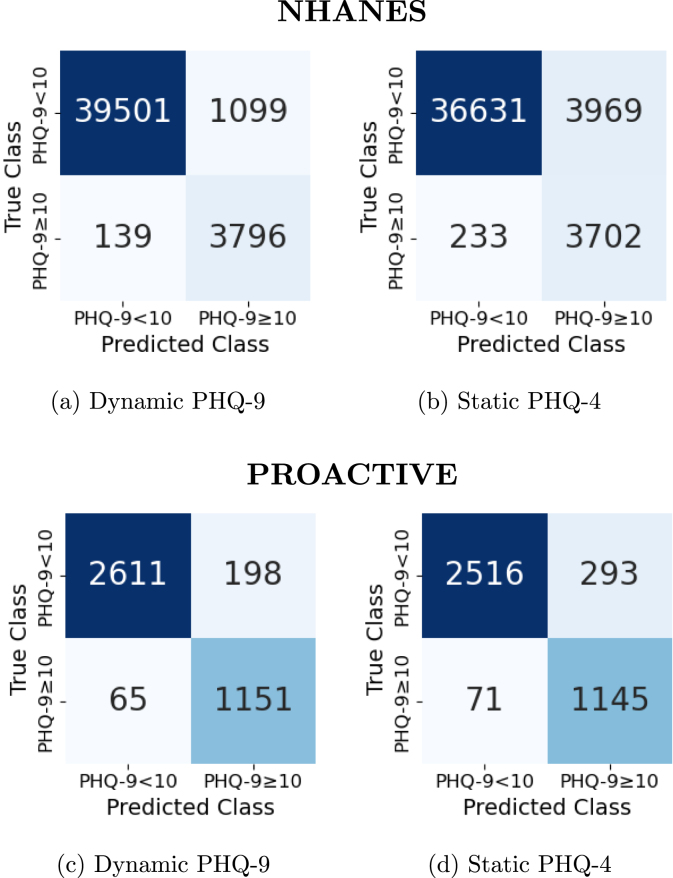 Figure 2
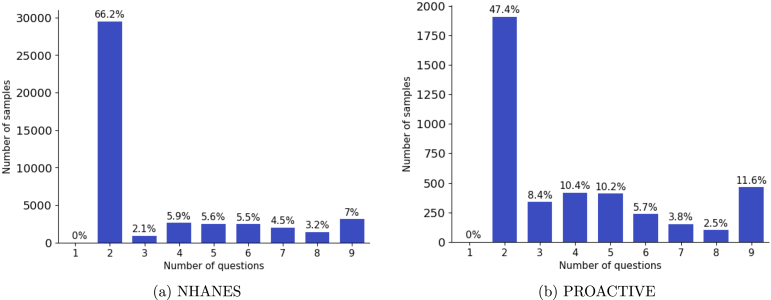 Figure 3
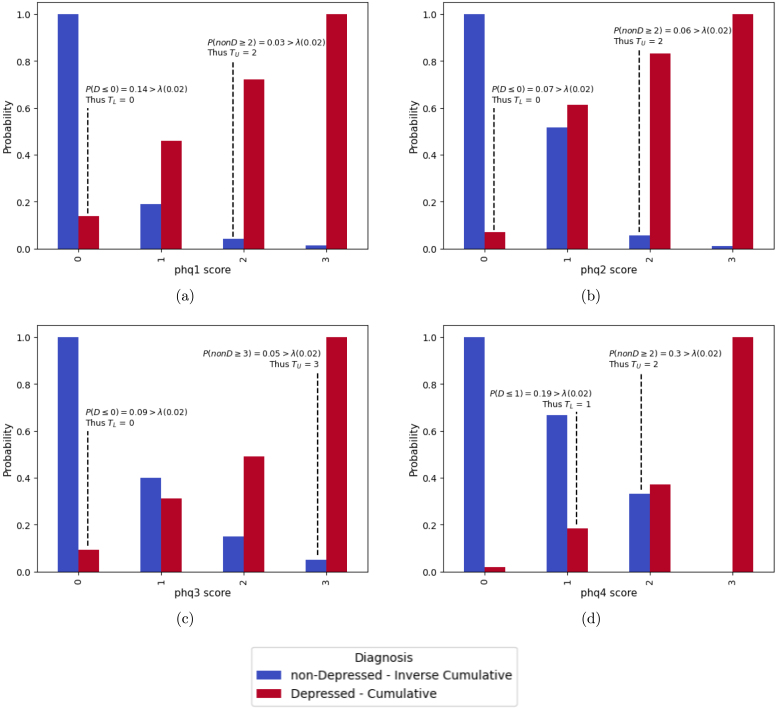 Figure 4
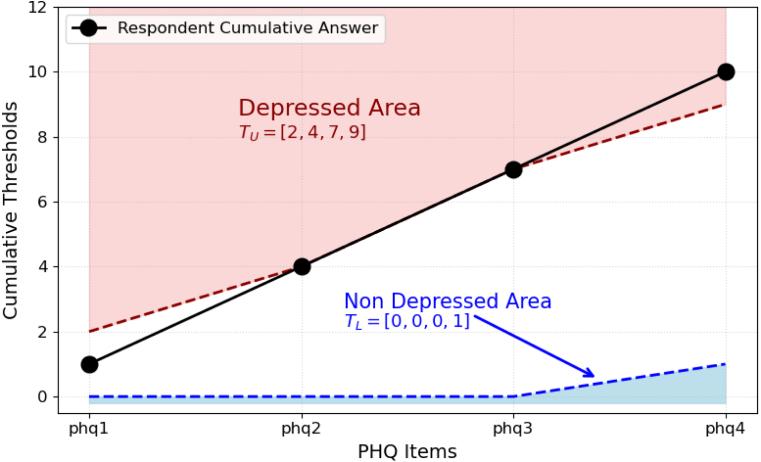 Figure 5
Peer Reviews
No public reviews on file for this paper yet. If you reviewed it on a platform where reviews are public (OpenReview, ICLR, NeurIPS, ICML), you can paste yours below so the community can read it here.
Videos
No videos yet. Explain this paper in a talk, walkthrough, or lecture? Add one.
Taxonomy
TopicsMental Health via Writing · Digital Mental Health Interventions · Machine Learning in Healthcare