The role of dexamethasone during treatment phases in glioblastoma: Insights from a retrospective observational study
Juliane Göbel, Maximilian Scheer, Clemens Kirchner, Sandra Leisz, Julian Prell, Christian Strauss, Sebastian Simmermacher, Stefan Rampp

TL;DR
This study finds that dexamethasone affects survival in glioblastoma patients differently depending on the treatment phase, with benefits post-surgery but risks during adjuvant therapy.
Contribution
The study identifies phase-specific effects of dexamethasone on survival outcomes in glioblastoma patients and suggests optimal dose thresholds for each treatment phase.
Findings
Dexamethasone use postoperatively was linked to improved overall and progression-free survival.
Higher dexamethasone doses during adjuvant therapy were associated with worse survival outcomes.
Patients not receiving dexamethasone during adjuvant therapy had significantly longer survival times.
Abstract
Glioblastoma (GBM) is the most aggressive primary brain tumor in adults. Dexamethasone (DEX) is commonly used to manage peritumoral edema, but its impact on overall survival (OS) and progression-free survival (PFS) remains unclear across treatment phases. In this retrospective single-center study, we analyzed data from 106 GBM patients treated between 2016 and 2020 at the University Hospital Halle. We examined the effects of DEX on OS and PFS during the preoperative, postoperative, and adjuvant therapy phases using Kaplan-Meier and Cox regression analyses. Cutoff analyses identified phase-specific DEX dose thresholds. Preoperatively, DEX had no significant effect on OS (HR: 0.998, p = 0.379) or PFS (HR: 0.998, p = 0.373), though a positive trend is possible. Postoperatively, DEX was associated with improved OS (HR: 0.995, p = 0.017) and PFS (HR: 0.995, p = 0.029). Conversely, during…
Genes, proteins, chemicals, diseases, species, mutations and cell lines named across the full text — each resolved to its canonical identifier and authoritative record.
Click any figure to enlarge with its caption.
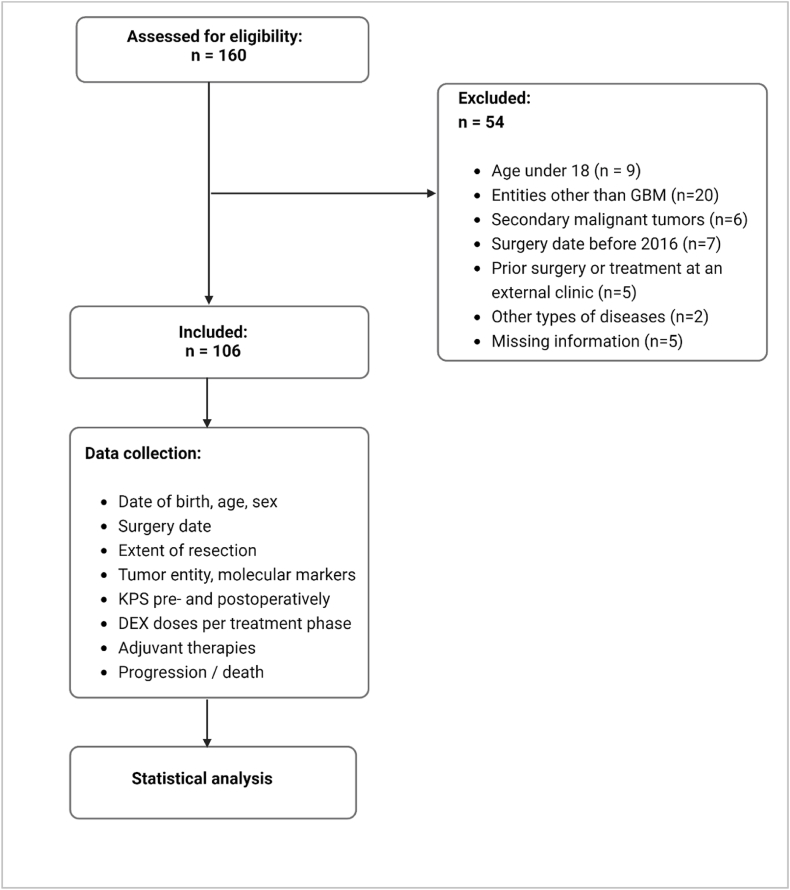 Figure 1
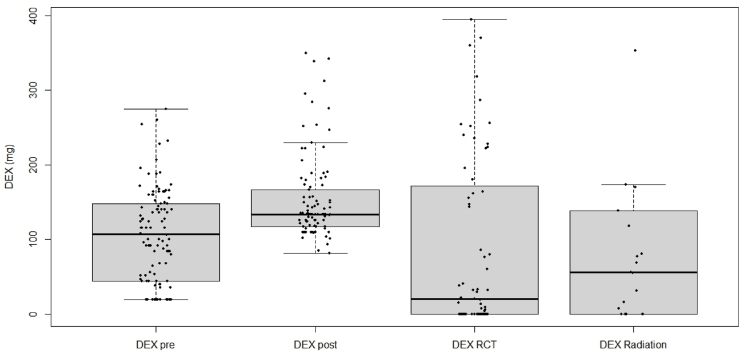 Figure 2
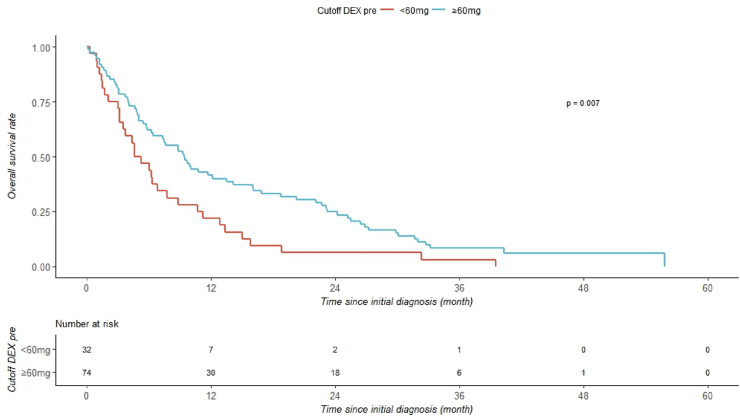 Figure 3
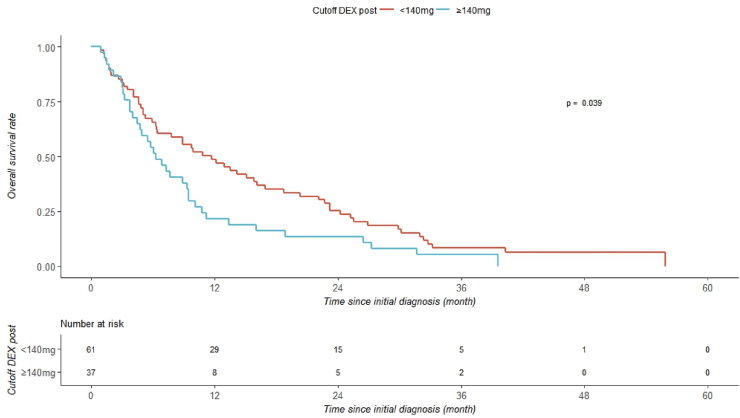 Figure 4
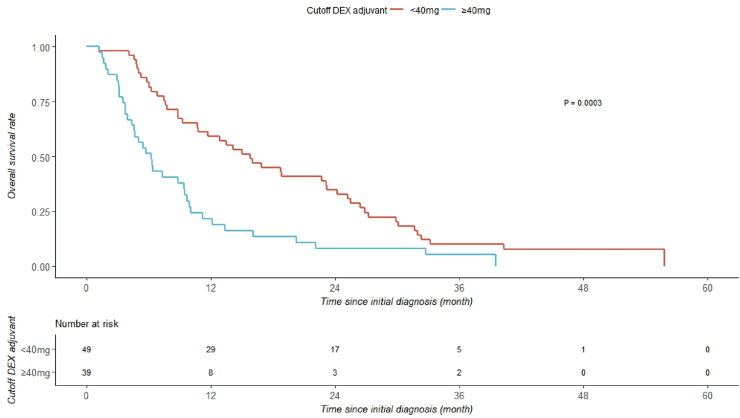 Figure 5
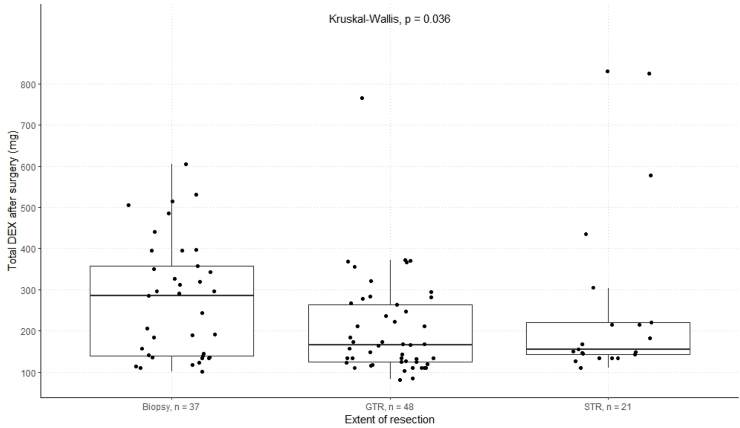 Figure 6
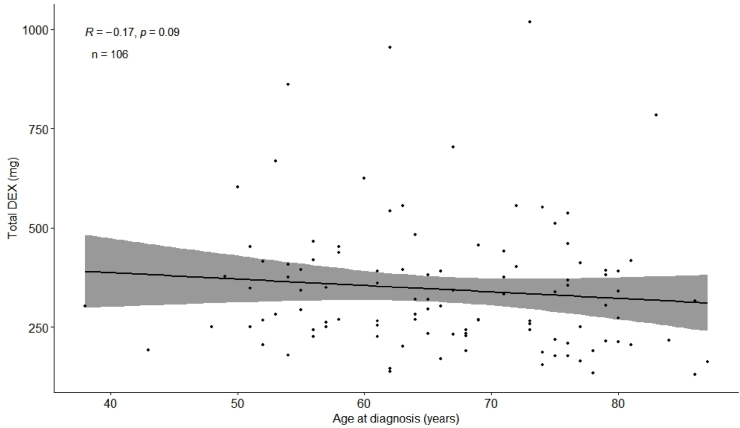 Figure 7
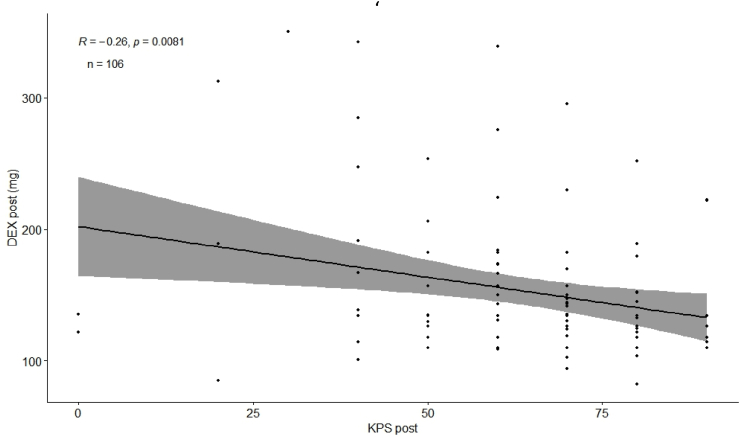 Figure 8
Peer Reviews
No public reviews on file for this paper yet. If you reviewed it on a platform where reviews are public (OpenReview, ICLR, NeurIPS, ICML), you can paste yours below so the community can read it here.
Videos
No videos yet. Explain this paper in a talk, walkthrough, or lecture? Add one.
Taxonomy
TopicsGlioma Diagnosis and Treatment · Brain Metastases and Treatment · Meningioma and schwannoma management