Survodutide acts through circumventricular organs in the brain and activates neuronal regions associated with appetite regulation
Tina Zimmermann, Katherin Bleymehl, Peter Haebel, Johanna Perens, Urmas Roostalu, Jacob Hecksher-Sørensen, Jonas Doerr, Sebastian Jarosch, Daniel Lam, Holger Klein, Anton Pekcec, Samar N. Chehimi, Richard C. Crist, Benjamin C. Reiner, Matthew R. Hayes, Robert Augustin

TL;DR
Survodutide, a new drug for obesity and MASH, works by targeting brain regions linked to appetite control through the GLP-1R receptor.
Contribution
First demonstration that GCGR is barely detectable in key brain regions, highlighting GLP-1R's role in survodutide's mechanism.
Findings
Survodutide activates GLP-1R–expressing satiety nuclei, suppressing food intake.
GCGR expression is minimal in AP and ARH, indicating limited central glucagon action.
Survodutide accesses CVOs and adjacent nuclei without uniform BBB penetration.
Abstract
Survodutide is a novel GCG/GLP-1 receptor (GCGR/GLP-1R) dual agonist in clinical development for people with obesity and people with metabolic dysfunction-associated steatohepatitis (MASH). Preclinically, survodutide demonstrated body weight lowering efficacy through decreased energy intake and increased energy expenditure. Here, we investigated the central site of action of survodutide and provide further insights into its mechanism of action in reducing body weight. We assessed GCGR and GLP1R expression in human and mouse circumventricular organs (CVOS) and showed for the first time that GCGR is barely detectable in area postrema (AP) and arcuate nucleus of the hypothalamus (ARH) at the single cell level. In contrast, GLP1R is expressed in these tissues. Using a fluorophore labeled survodutide to visualize sites of action in the mouse brain, survodutide was observed to directly access…
Genes, proteins, chemicals, diseases, species, mutations and cell lines named across the full text — each resolved to its canonical identifier and authoritative record.
Click any figure to enlarge with its caption.
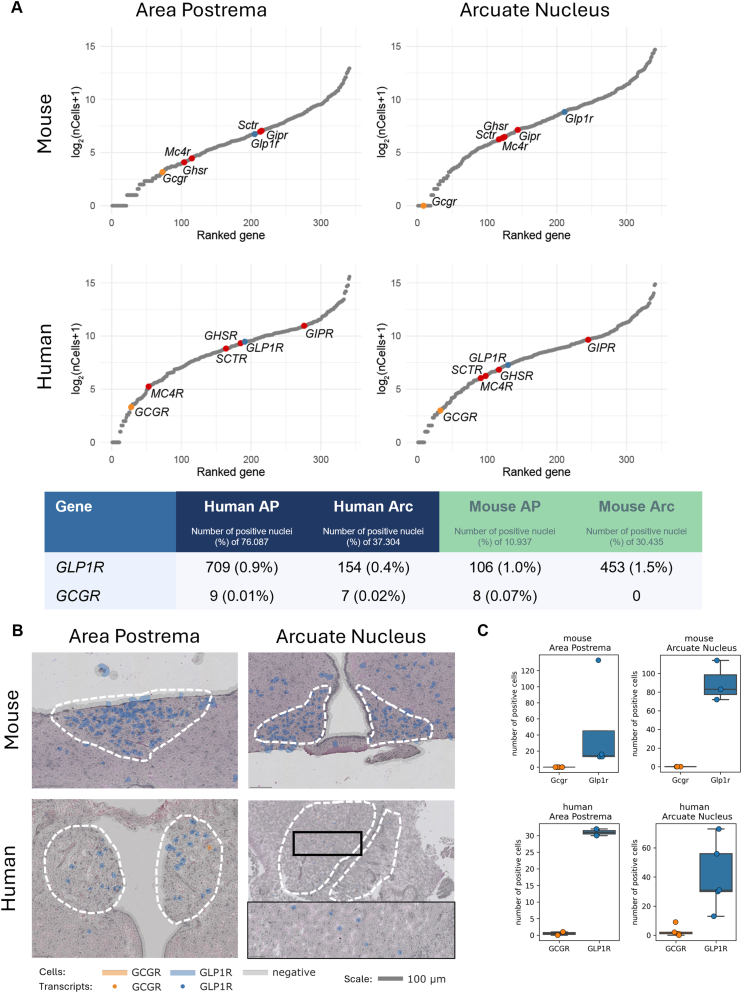 Figure 1
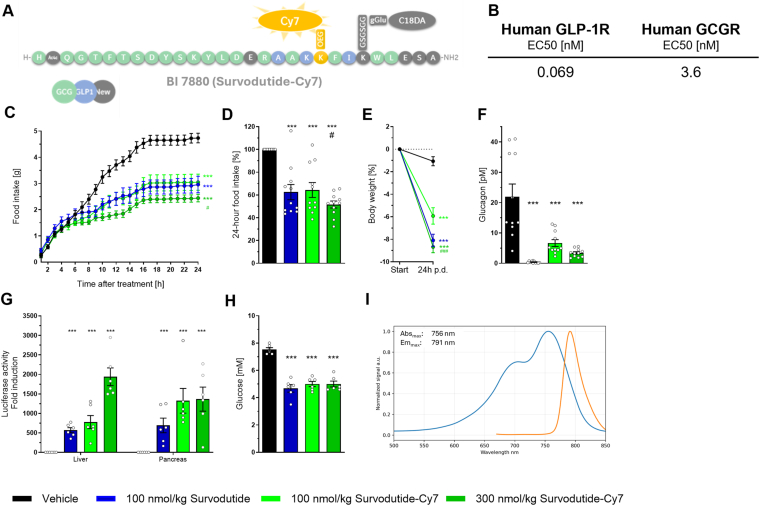 Figure 2
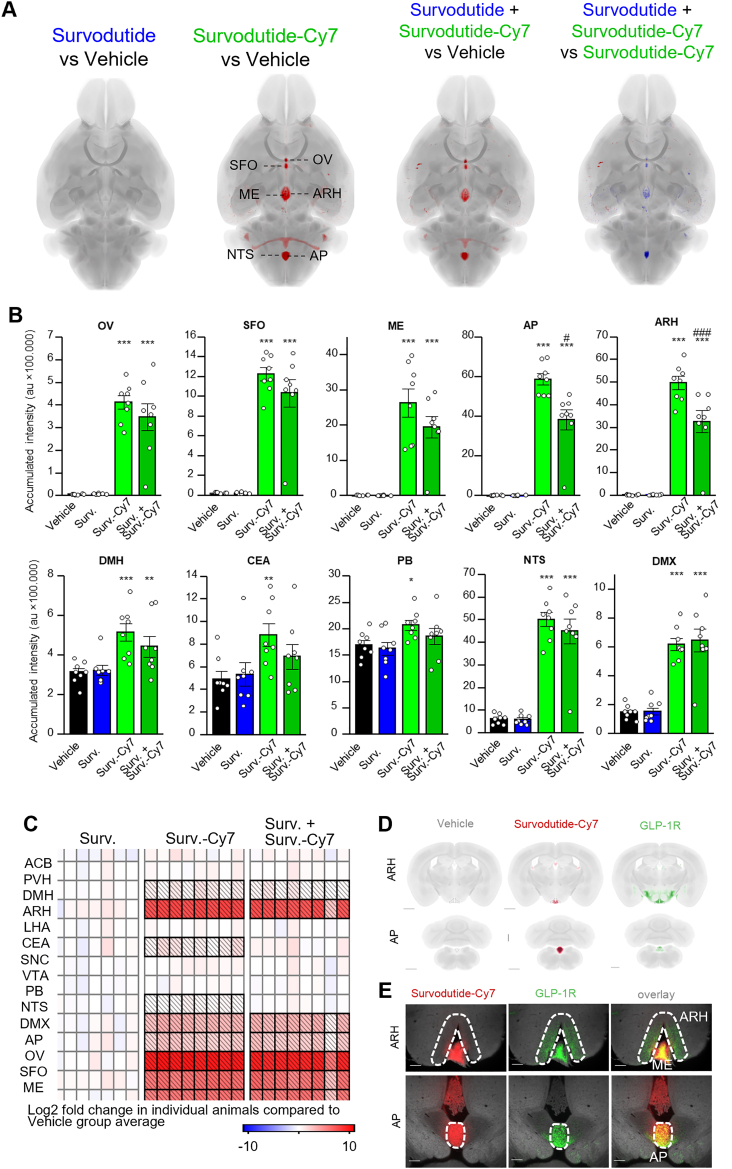 Figure 3
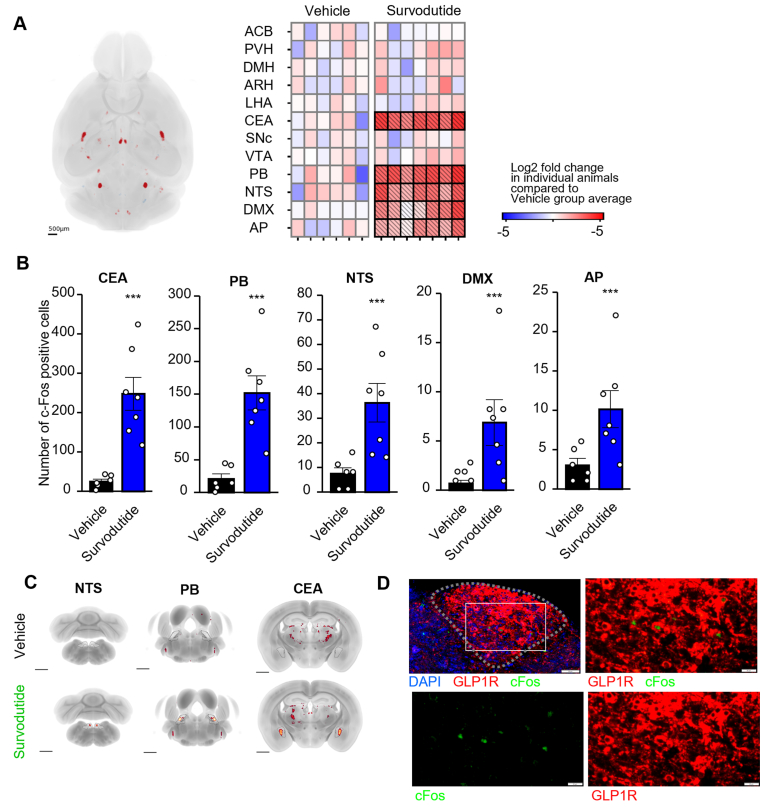 Figure 4
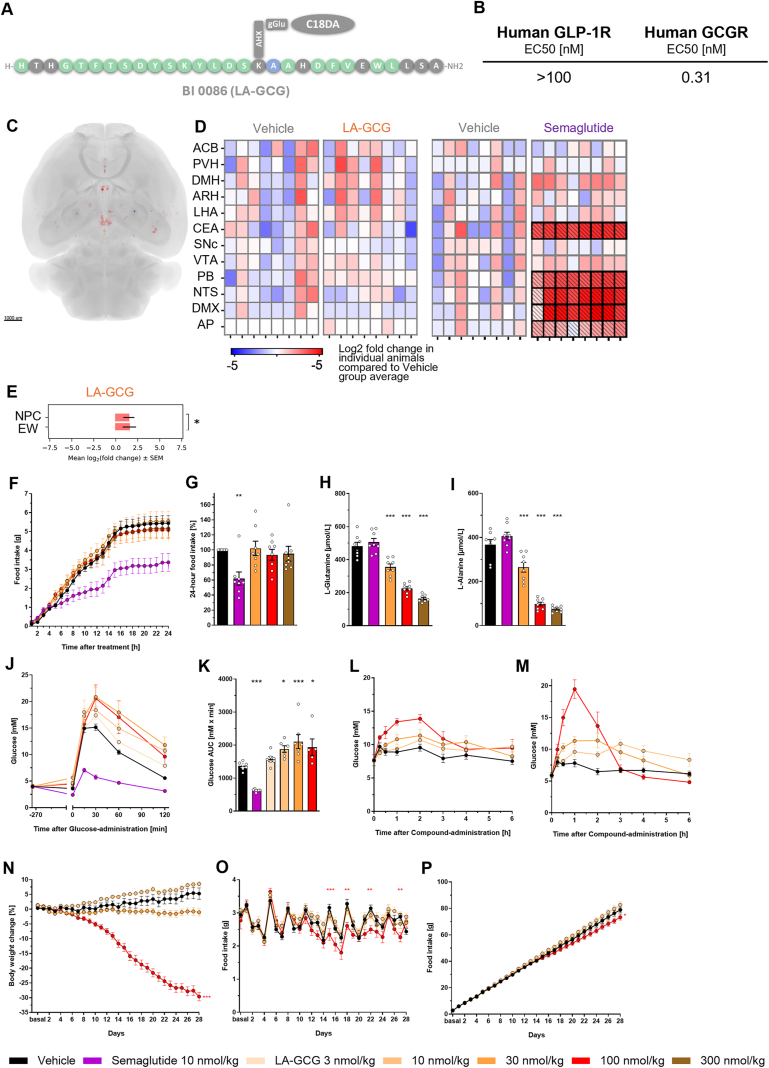 Figure 5
Peer Reviews
No public reviews on file for this paper yet. If you reviewed it on a platform where reviews are public (OpenReview, ICLR, NeurIPS, ICML), you can paste yours below so the community can read it here.
Videos
No videos yet. Explain this paper in a talk, walkthrough, or lecture? Add one.
Taxonomy
TopicsDiabetes Treatment and Management · Regulation of Appetite and Obesity · Adipose Tissue and Metabolism