Clinical implications of a novel SERPINA1 variant c.236 T > A: Challenges in characterizing new rare alpha-1 antitrypsin mutations
Arturo Olivares-Rivera, Hilal Ersöz, Philipp Höger, Martina Veith, Timm Greulich, Kai Schlamp, Sabina Janciauskiene, Felix Herth, Franziska C. Trudzinski

TL;DR
This paper discusses a rare alpha-1 antitrypsin mutation and its varied clinical effects in two siblings, highlighting the challenges in diagnosing and treating such genetic conditions.
Contribution
The paper introduces a novel SERPINA1 variant and illustrates its clinical implications through a case study of two siblings with differing disease progression.
Findings
Two siblings with the same SERPINA1 mutation showed different clinical outcomes despite similar genetic backgrounds.
The older sibling required a lung transplant due to severe disease progression, while the younger sibling had milder symptoms managed with medication.
Smoking history and genetic screening are emphasized as important factors in managing alpha-1 antitrypsin deficiency.
Abstract
Severe alpha-1 antitrypsin deficiency (AATD) is a rare genetic condition characterized by low levels of alpha-1 antitrypsin (AAT), leading to progressive lung and/or liver disease. Most severe cases are linked to the Z allele (c.1096G > A (p.Glu366Lys)) of the SERPINA1 gene but characterizing patients with rare mutations remains challenging. This case report discusses the clinical significance of a novel SERPINA1 variant, c.236 T > A (p.Val79Glu; ClinVar accession SCV007334878), and the challenges in profiling such cases. Two male siblings carried both the common Z allele mutation and the novel exon 2 mutation. Despite genetic similarities, their clinical courses diverged. The older brother, a 66-year-old patient, presented with very severe airflow obstruction (GOLD stage IV) and an AAT level of 0.32 g/L. After years of pharmacologic treatment and endoscopic lung volume reduction, his…
Genes, proteins, chemicals, diseases, species, mutations and cell lines named across the full text — each resolved to its canonical identifier and authoritative record.
Click any figure to enlarge with its caption.
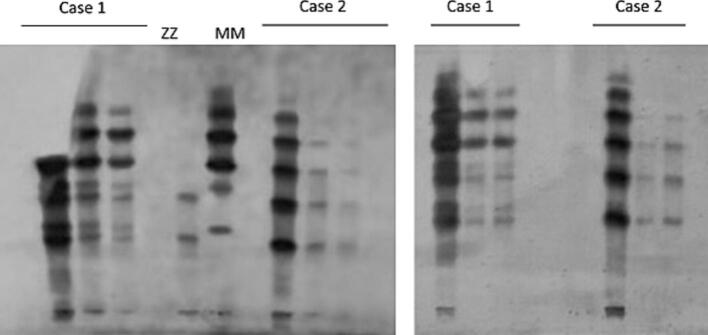 Figure 1
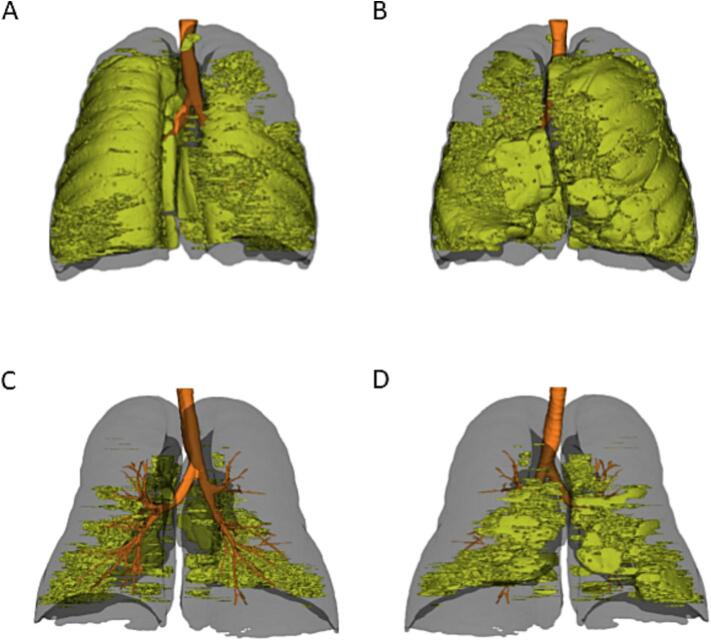 Figure 2
Peer Reviews
No public reviews on file for this paper yet. If you reviewed it on a platform where reviews are public (OpenReview, ICLR, NeurIPS, ICML), you can paste yours below so the community can read it here.
Videos
No videos yet. Explain this paper in a talk, walkthrough, or lecture? Add one.
Taxonomy
TopicsProtease and Inhibitor Mechanisms · Cellular transport and secretion · Protein Kinase Regulation and GTPase Signaling