Molecular basis of trypsin's autolysis resistance acetylation for sustained enzymatic activity
Xiaozhan Qu, Tengfei Liu, Yalong Xu, Chen Wang, Xueao Zheng, Yixiao Zhang, Peijian Cao, Qiansi Chen

TL;DR
This paper reveals how acetylation makes trypsin more resistant to self-destruction while slightly reducing its activity.
Contribution
The study identifies the molecular mechanism by which acetylation stabilizes trypsin and alters its active site structure.
Findings
Acetylation increases trypsin's stability, retaining 80.78% activity after six hours of autolysis.
Acetylation causes structural changes that slightly misalign catalytic residues and alter substrate binding.
Allosteric effects from acetylation propagate to the active site, distorting its geometry.
Abstract
Acetylation serves as an effective strategy to enhance trypsin's resistance to autolysis, yet the underlying molecular mechanism remains unclear. Integrating molecular dynamics (MD) simulations and biochemical assays, we show that acetylation induces global stabilization (RMSD decreased by 0.03 nm) coupled with structural expansion (Rg increased by 0.01 nm) and a significant (p < 0.05) increase in local flexibility. These perturbations propagate allosterically to the active site, resulting in its precise structural distortion. Experimentally, acetylated trypsin exhibited markedly improved stability, retaining 80.78% of its activity after six hours of autolysis versus only 54.2% for the native enzyme, despite an initial activity reduction of 23.2%. The molecular basis for this trade-off is an allosterically rewired state that enhances structural integrity while slightly misaligning…
Genes, proteins, chemicals, diseases, species, mutations and cell lines named across the full text — each resolved to its canonical identifier and authoritative record.
Click any figure to enlarge with its caption.
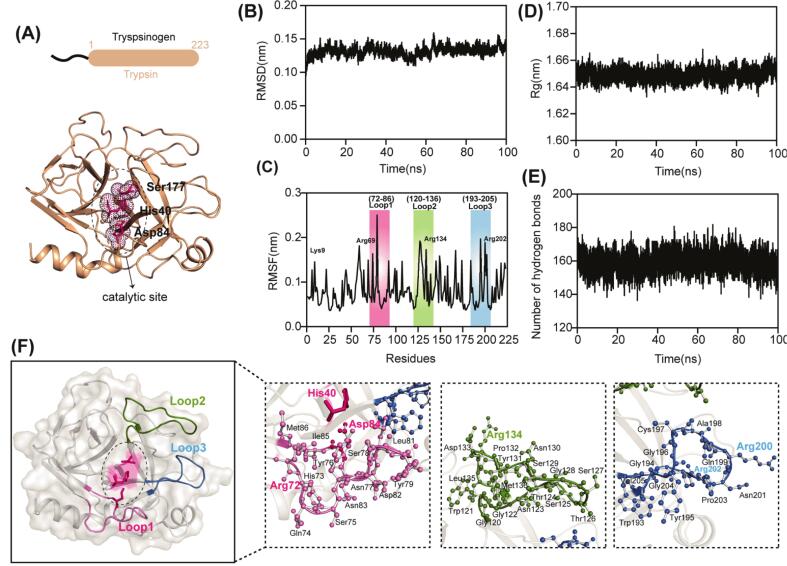 Figure 1
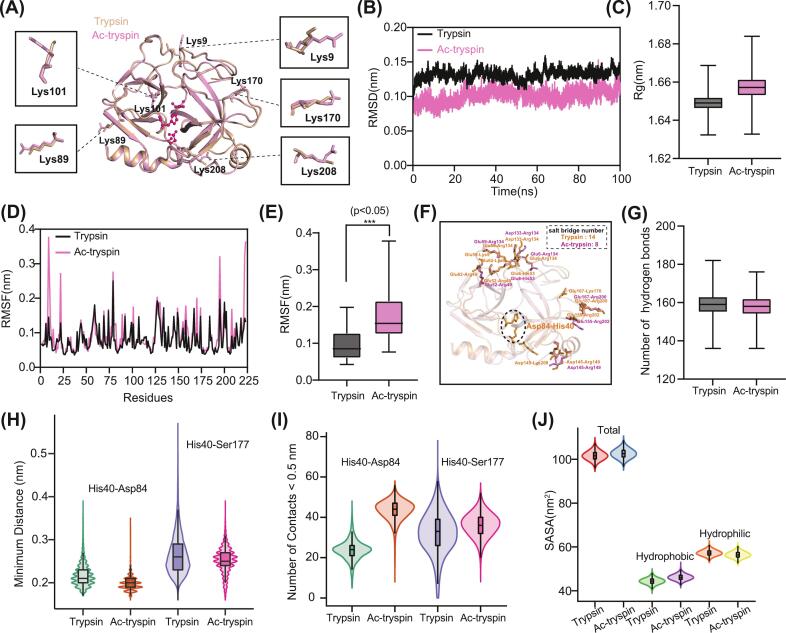 Figure 2
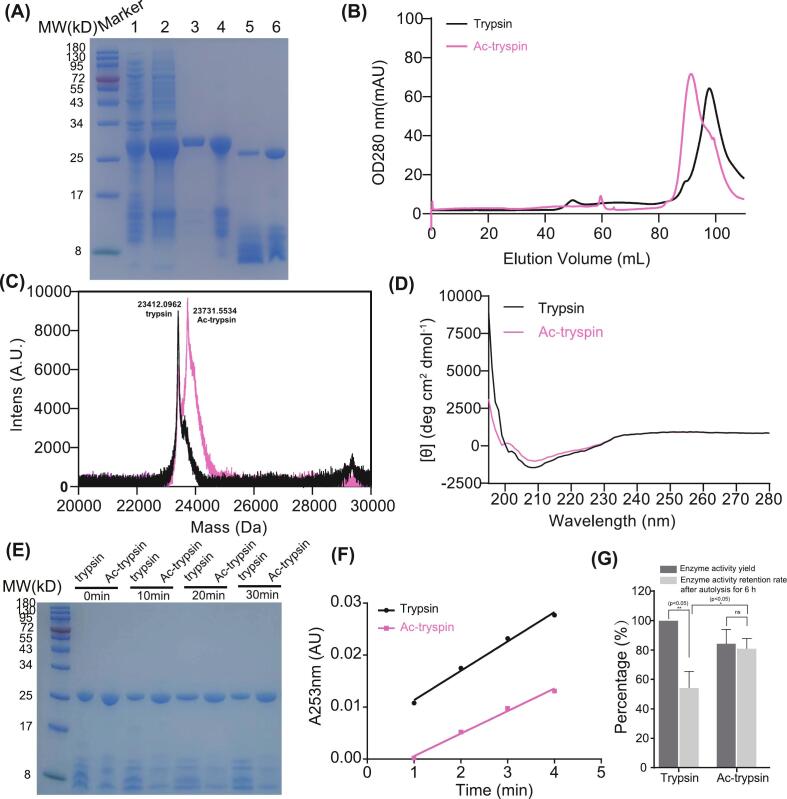 Figure 3
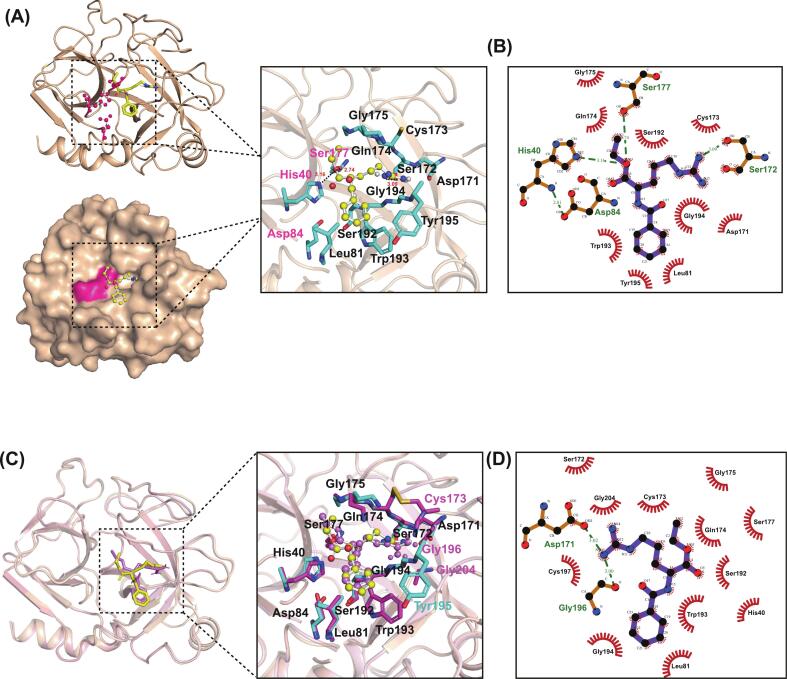 Figure 4
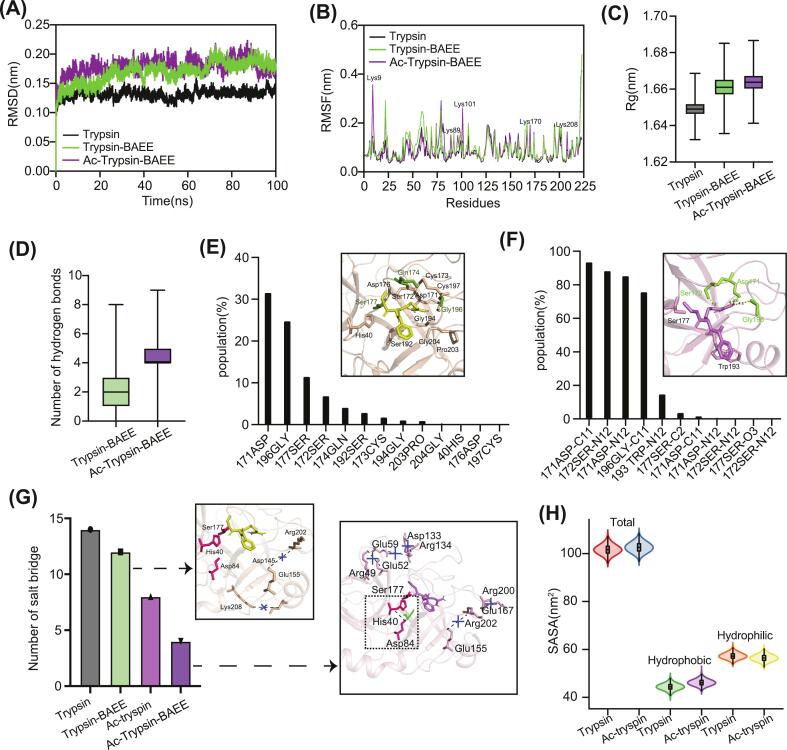 Figure 5
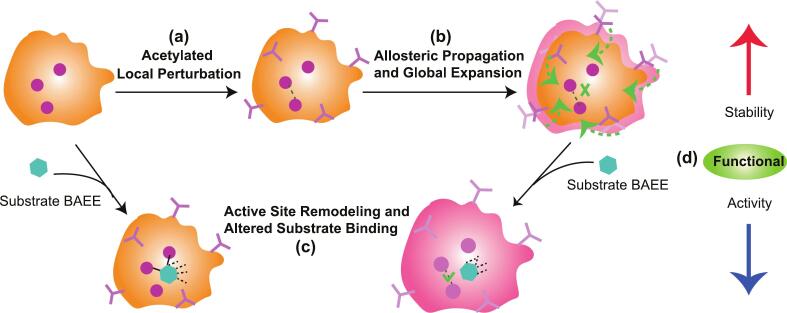 Figure 6
Peer Reviews
No public reviews on file for this paper yet. If you reviewed it on a platform where reviews are public (OpenReview, ICLR, NeurIPS, ICML), you can paste yours below so the community can read it here.
Videos
No videos yet. Explain this paper in a talk, walkthrough, or lecture? Add one.
Taxonomy
TopicsEnzyme Catalysis and Immobilization · Enzyme Production and Characterization · Protease and Inhibitor Mechanisms