A framework for the molecular identification of CHIP for clinical research
Philip Harraka, Robert L. O’Reilly, Jared Burke, Paul Yeh, Kerryn Howlett, Kiarash Behrouzfar, Daniele Belluoccio, Amanda Rewse, Brigid M. Lynch, Kristen J. Bubb, Stephen J. Nicholls, Roger L. Milne, Melissa C. Southey

TL;DR
This study created a consistent framework to identify individuals with CHIP, a condition linked to aging-related diseases, using genetic data from 2,328 participants.
Contribution
The study introduces a systematic and resource-efficient framework for categorizing CHIP status in clinical research.
Findings
15% of participants were identified as CHIP positive with 400 CHIP-associated variants.
62% of participants were classified as CHIP negative with no somatic variation in target regions.
23% of participants had indeterminate CHIP status due to uninterpretable variants.
Abstract
Clonal hematopoiesis of indeterminate potential (CHIP) is associated with many diseases of aging. Large research initiatives are needed to develop clinical guidelines for the management of individuals with CHIP and their risk of disease. However, little guidance is available for the classification of variants as CHIP associated or how to identify individuals consistently and systematically as having CHIP. This study aimed to develop and execute a resource-mindful framework for identifying individuals with CHIP, and those without, for downstream clinical studies. This framework was used to categorize CHIP in a cross-section of 2,328 participants from the Australian Breakthrough Cancer Study. DNA extracted from saliva samples was sequenced for a panel of ten gene regions that frequently carry variants that are associated with CHIP. Variants in these regions were curated for CHIP according…
Genes, proteins, chemicals, diseases, species, mutations and cell lines named across the full text — each resolved to its canonical identifier and authoritative record.
Click any figure to enlarge with its caption.
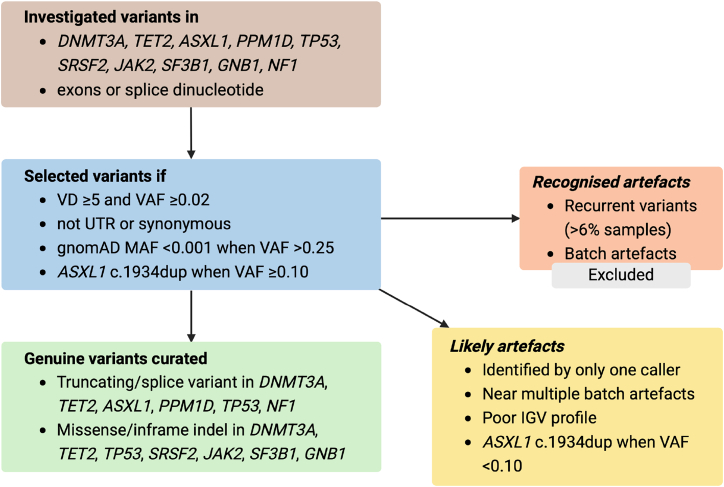 Figure 1
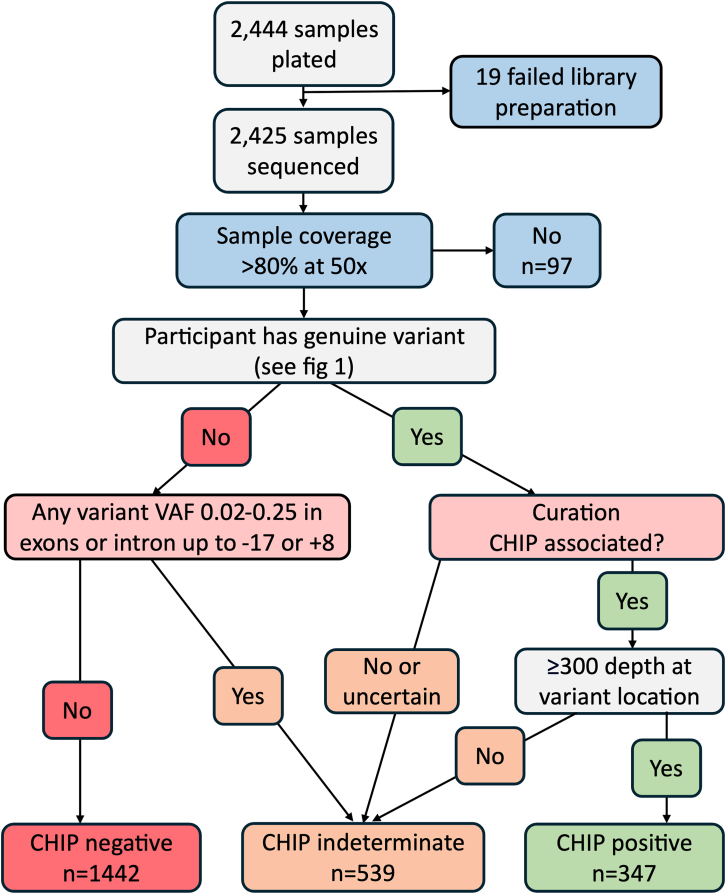 Figure 2
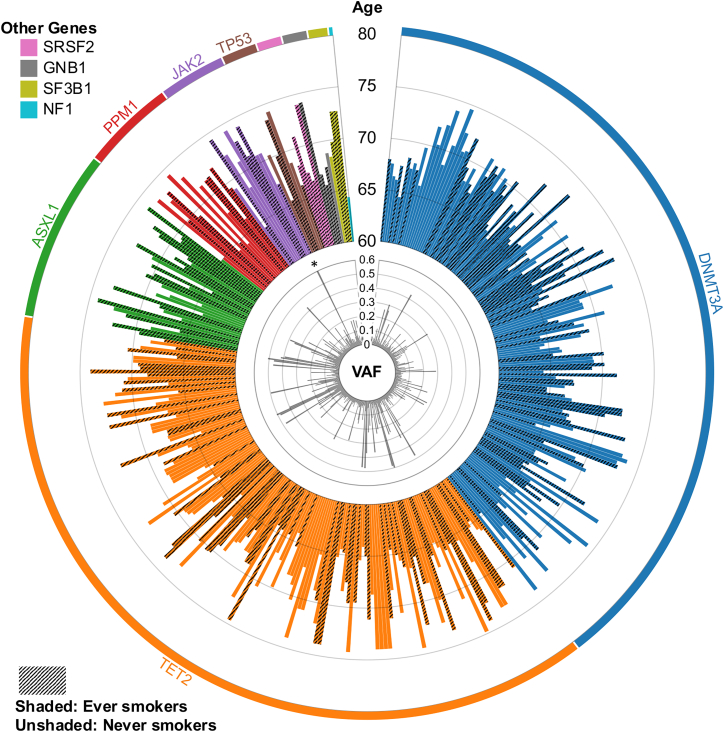 Figure 3
Peer Reviews
No public reviews on file for this paper yet. If you reviewed it on a platform where reviews are public (OpenReview, ICLR, NeurIPS, ICML), you can paste yours below so the community can read it here.
Videos
No videos yet. Explain this paper in a talk, walkthrough, or lecture? Add one.
Taxonomy
TopicsGenomics and Rare Diseases · Amyotrophic Lateral Sclerosis Research · Acute Myeloid Leukemia Research