Predicting complications in emergency department patients with acute coronary syndrome – Existing risk scores versus a new logistic regression model
T. Nilsson, M. Strömfors, A. Trägårdh, A. Mokhtari, A.M. Khoshnood, U. Ekelund

TL;DR
A new logistic regression model outperforms existing risk scores in predicting complications for acute coronary syndrome patients in emergency departments.
Contribution
A novel logistic regression model using ED variables provides better complication prediction than established risk scores for ACS patients.
Findings
7% of acute coronary syndrome patients experienced serious complications.
The new logistic regression model achieved an AUROC of 0.84, surpassing six existing risk scores.
Key predictors included age, STEMI, troponin, lactate, shock index, Killip class, and new ECG changes.
Abstract
Patients with acute coronary syndrome (ACS) are often admitted to monitored wards due to the risk of complications. Several risk prediction scores exist, but their use in the emergency department (ED) is limited. We aimed to compare the ability of existing risk scores with a new logistic regression model in predicting complications in ACS patients. This was a secondary analysis of data from the ESC TROP trial (NCT03421873), including ACS patients from five EDs in Region Skåne, Sweden (2017–2018). Complications were identified via diagnosis and/or intervention codes and manual chart review. GRACE, GRACE FFE, TIMI, HEART, ACTION ICU, and CHA₂DS₂-VASc scores were calculated. A new logistic regression model was developed, and its predictive performance was assessed using the area under the ROC curve (AUROC) and a net reclassification improvement analysis (NRI). Among 2223 ACS patients,…
Genes, proteins, chemicals, diseases, species, mutations and cell lines named across the full text — each resolved to its canonical identifier and authoritative record.
Click any figure to enlarge with its caption.
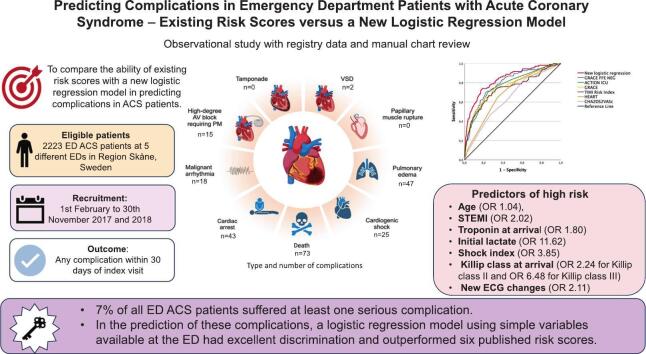 Figure 1
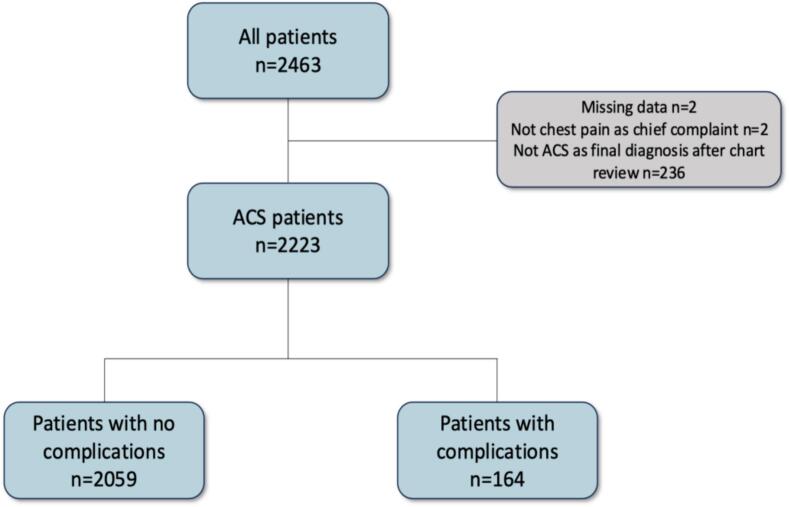 Figure 2
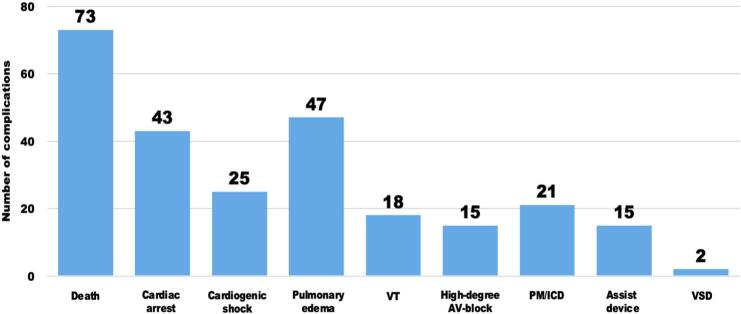 Figure 3
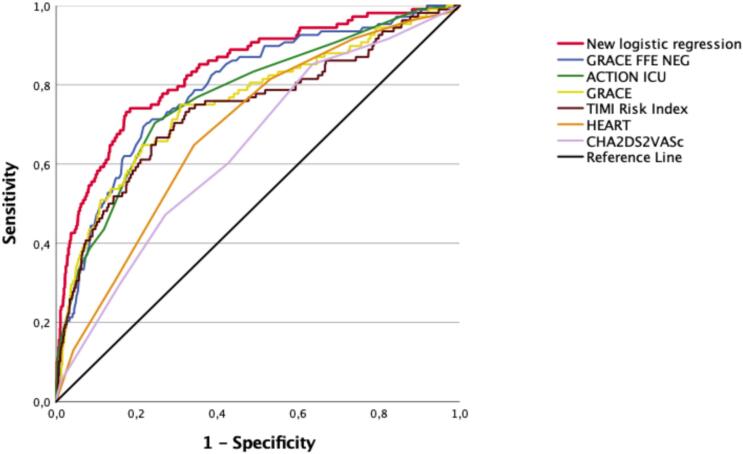 Figure 4
Peer Reviews
No public reviews on file for this paper yet. If you reviewed it on a platform where reviews are public (OpenReview, ICLR, NeurIPS, ICML), you can paste yours below so the community can read it here.
Videos
No videos yet. Explain this paper in a talk, walkthrough, or lecture? Add one.
Taxonomy
TopicsAcute Myocardial Infarction Research · Statistical Methods in Epidemiology · Sepsis Diagnosis and Treatment