Sex–specific associations between frailty and long-term outcomes in patients with acute myocardial infarction: a national population-based study
Hasan Mohiaddin, Chijioke Horatio Mosanya, Claire Lawson, Kamlesh Khunti, Angela Wood, Iain B. Squire, Gerry P. McCann, Abdulla A. Damluji, Sergio Buccheri, Mohamad A. Alkhouli, Mamas A. Mamas, Muhammad Rashid

TL;DR
This study finds that frailty has a stronger link to mortality in men than women after heart attacks, despite being more common in women.
Contribution
The study reveals sex-specific differences in how frailty affects mortality after acute myocardial infarction.
Findings
Severe frailty was associated with a 26% higher mortality risk in males compared to females after adjusting for other factors.
Frailty was more prevalent in females, but its impact on mortality was stronger in males.
Males received more intensive treatment across all frailty levels compared to females.
Abstract
Frailty and female sex are both recognised independent predictors of adverse outcomes after acute myocardial infarction (AMI). While females presenting with AMI are known to have a higher burden of frailty than males, it is unknown whether this fully explains sex-based disparities in outcomes, or if the prognostic impact of frailty itself differs between the sexes. We conducted a retrospective national cohort study using data from the Myocardial Ischaemia National Audit Project (MINAP), linked to hospital admission and mortality registries in England and Wales between 2005 and 2019. Frailty was assessed using the Secondary Care Administrative Records Frailty (SCARF) index and categorised as fit, mild, moderate, or severe. Multivariable Cox proportional hazards models were used with a primary outcome of all-cause mortality at 1-year. Of 931,133 patients with AMI, 317,967 (34.1%) were…
Genes, proteins, chemicals, diseases, species, mutations and cell lines named across the full text — each resolved to its canonical identifier and authoritative record.
Click any figure to enlarge with its caption.
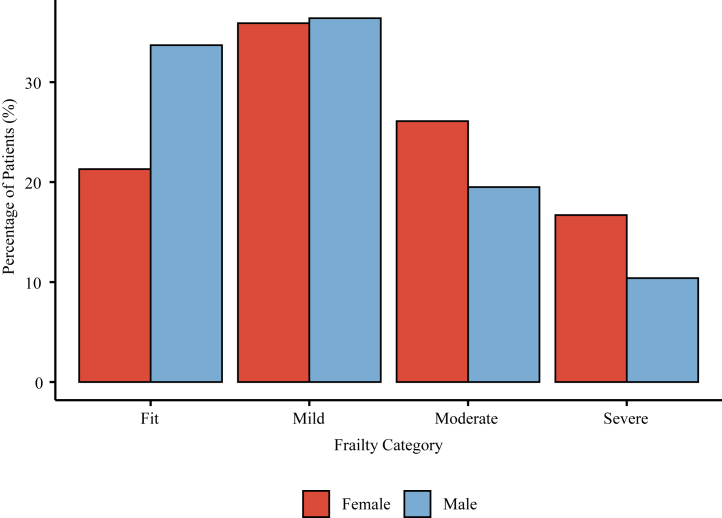 Figure 1
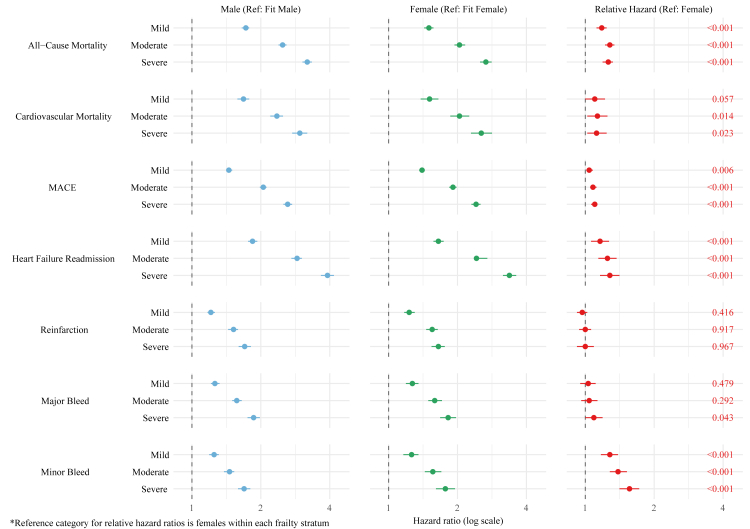 Figure 2
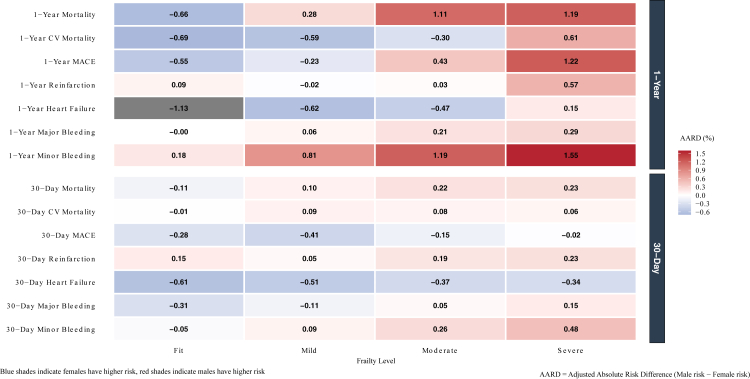 Figure 3
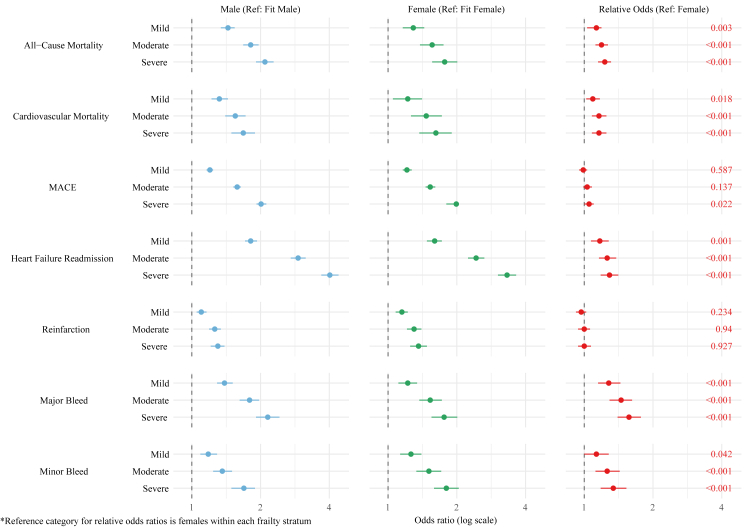 Figure 4
Peer Reviews
No public reviews on file for this paper yet. If you reviewed it on a platform where reviews are public (OpenReview, ICLR, NeurIPS, ICML), you can paste yours below so the community can read it here.
Videos
No videos yet. Explain this paper in a talk, walkthrough, or lecture? Add one.
Taxonomy
TopicsFrailty in Older Adults · Chronic Disease Management Strategies · Heart Failure Treatment and Management