Dealing with heavy menstrual bleeding in very rare bleeding disorders: from a patient’s perspective
Priyanka Raheja, Rezan Abdul-Kadir, Maja Johanne Søndergaard Knudsen, Christina Burgess, Saskia E.M. Schols

TL;DR
This paper shares personal stories of women with rare bleeding disorders to highlight the challenges of heavy menstrual bleeding and the need for better awareness and care.
Contribution
The paper introduces personal narratives from women with very rare bleeding disorders to emphasize their unique health challenges and advocate for improved support.
Findings
Heavy menstrual bleeding in women with rare bleeding disorders causes significant physical and psychosocial challenges.
Personal stories reveal the overwhelming difficulties in diagnosis and management of these disorders.
Sharing patient perspectives can raise awareness and improve quality of life for affected women.
Abstract
Data on heavy menstrual bleeding in women with very rare bleeding disorders, such as very rare coagulation factor deficiencies or severe inherited platelet disorders, are scarce. Heavy menstrual bleeding is a common health problem in premenopausal women, causing both physical and psychosocial challenges. For women with very rare bleeding disorders, these challenges are unimaginably overwhelming, from hurdles during the diagnostic trajectory, facing regular monthly blood loss, to finding recognition of their unique position in life. Providing these women with a platform to share their life stories with their own true perspectives will increase awareness of this global health problem. In this opinion paper, we report the personal stories of 3 women living with very rare bleeding disorders and provide a future perspective on improving the quality of life for this population.
Genes, proteins, chemicals, diseases, species, mutations and cell lines named across the full text — each resolved to its canonical identifier and authoritative record.
Click any figure to enlarge with its caption.
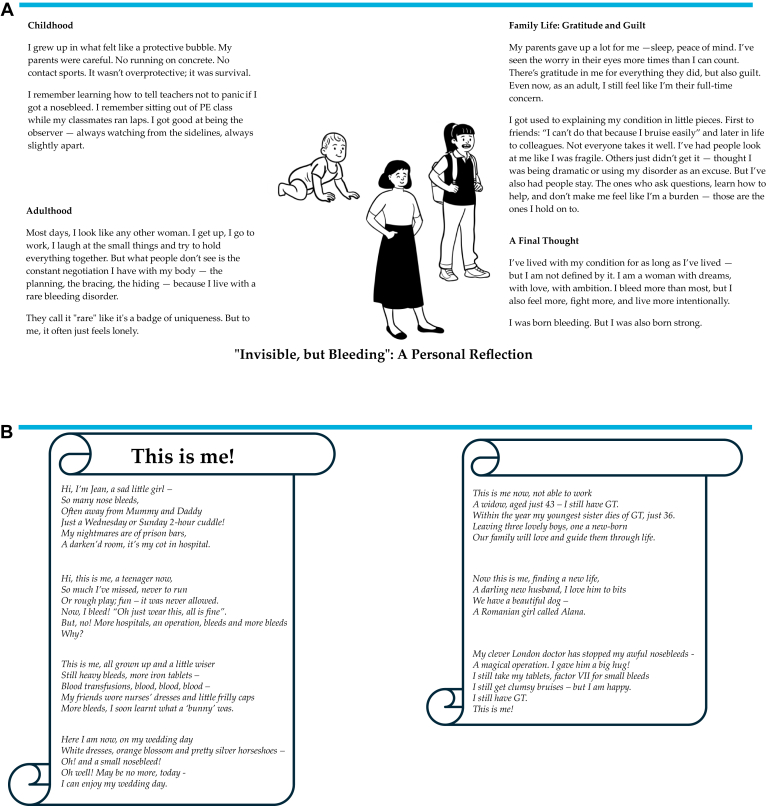 Figure 1
Peer Reviews
No public reviews on file for this paper yet. If you reviewed it on a platform where reviews are public (OpenReview, ICLR, NeurIPS, ICML), you can paste yours below so the community can read it here.
Videos
No videos yet. Explain this paper in a talk, walkthrough, or lecture? Add one.
Taxonomy
TopicsUterine Myomas and Treatments · Gynecological conditions and treatments · Gestational Trophoblastic Disease Studies