De novo biosynthesis of 1,5-diamino-2-hydroxypentane from glucose via combination of fermentation and whole-cell catalysis
Zhijie Zheng, Zhongliang Chen, Tongqing Tang, Haoyu Lu, Qian Xu, Zixun Yang, Wei Liu, Chaoqiang Wu, Shewei Hu, Feifei Chen, Alei Zhang, Kequan Chen

TL;DR
Scientists created a green method to produce a useful chemical from glucose using bacteria and enzymes.
Contribution
A novel biosynthetic pathway for 1,5-diamino-2-hydroxypentane from glucose using fermentation and whole-cell catalysis.
Findings
A strain of E. coli produced 40.2 g/L of 3-hydroxylysine through optimized fermentation.
Lysine decarboxylase converted 3-hydroxylysine to 2-OH-PDA with 99.7% molar efficiency.
The process offers an economical and environmentally friendly route for 2-OH-PDA synthesis.
Abstract
1,5-Diamino-2-hydroxypentane (2-OH-PDA) is a novel aliphatic β-amino alcohol with potential for a wide range of applications, and its efficient and green synthesis has attracted increasing attention. In this study, we developed a biosynthetic pathway for 2-OH-PDA from glucose. Firstly, the Fe2+/α-ketoglutarate (α-KG)-dependent l-Lysine-3-hydroxylase (K3H) was heterologously expressed in E coli NT1003 capable of highly producing l-lysine to construct a biosynthetic pathway strain of 3-hydroxylysine (3-OH-lysine). By intensifying the pathway, introducing a glutamate oxidation system, and optimizing the fermentation conditions, 40.2 g/L 3-OH-lysine were achieved in the fed-batch fermentation. Then, lysine decarboxylase (SpLDC) was used to catalyze the decarboxylation of 3-OH-lysine to 2-OH-PDA, yielding 29.2 g/L with a molar conversion efficiency of 99.7%. This study provides an…
Genes, proteins, chemicals, diseases, species, mutations and cell lines named across the full text — each resolved to its canonical identifier and authoritative record.
Click any figure to enlarge with its caption.
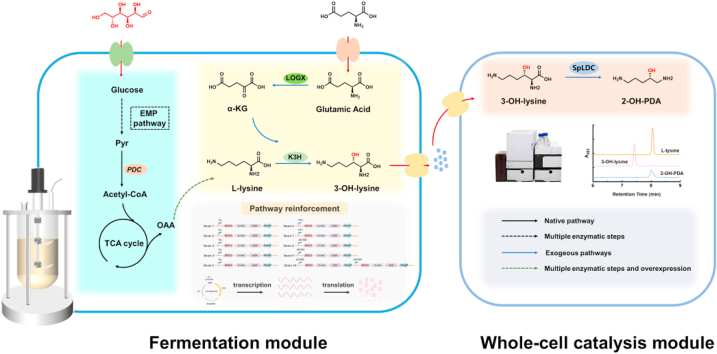 Figure 1
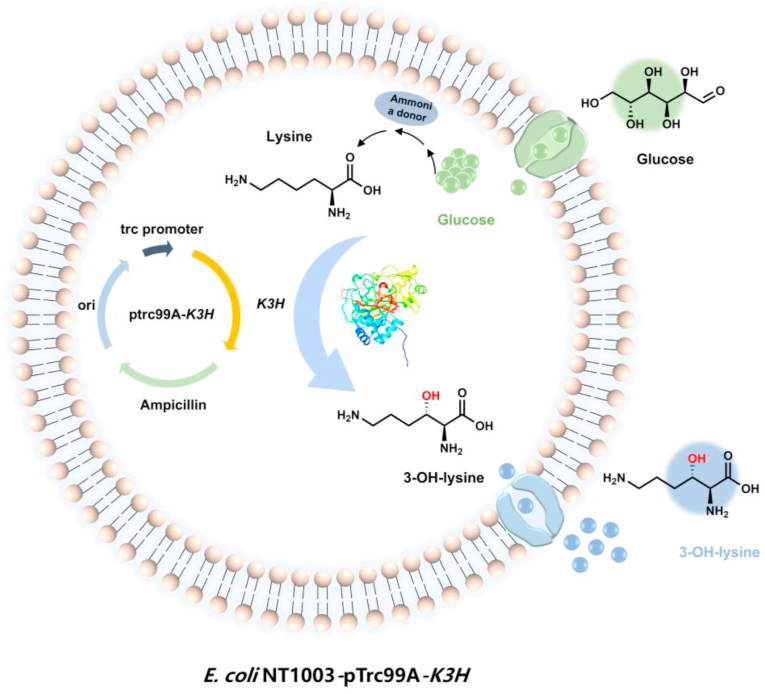 Figure 2
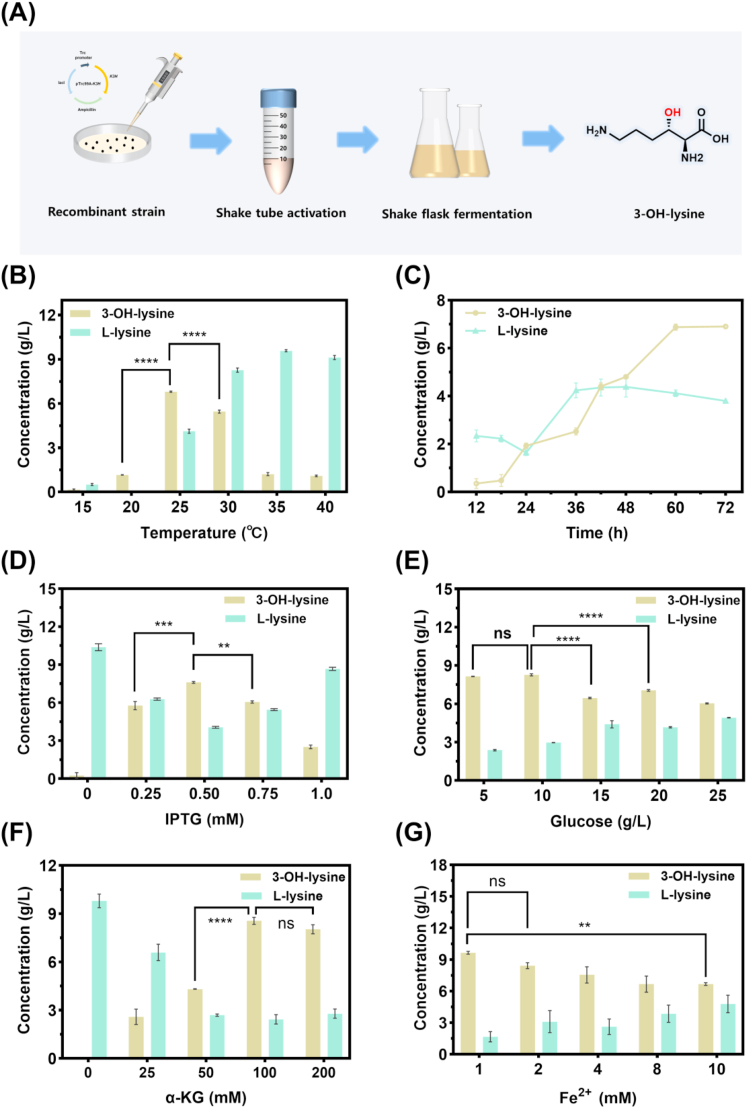 Figure 3
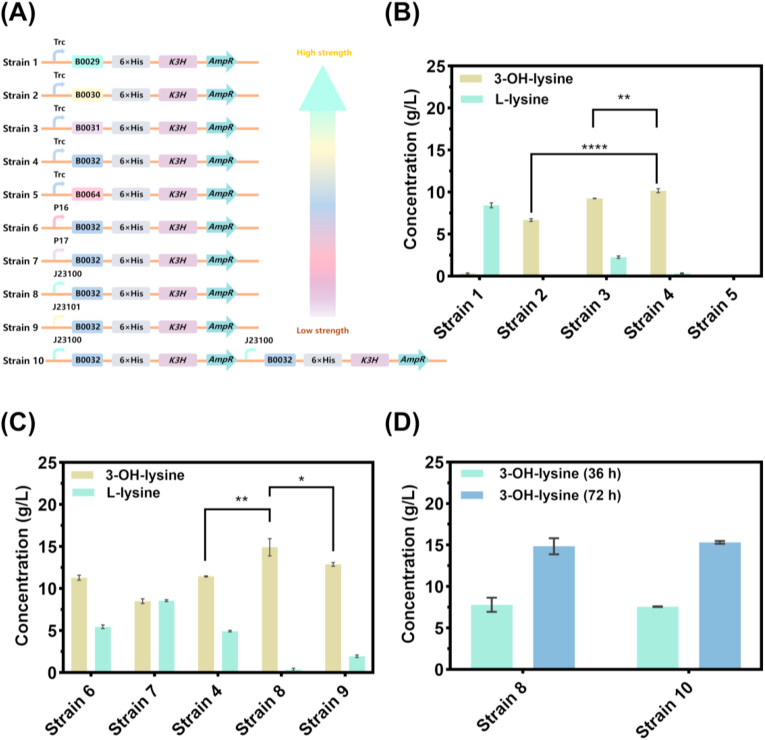 Figure 4
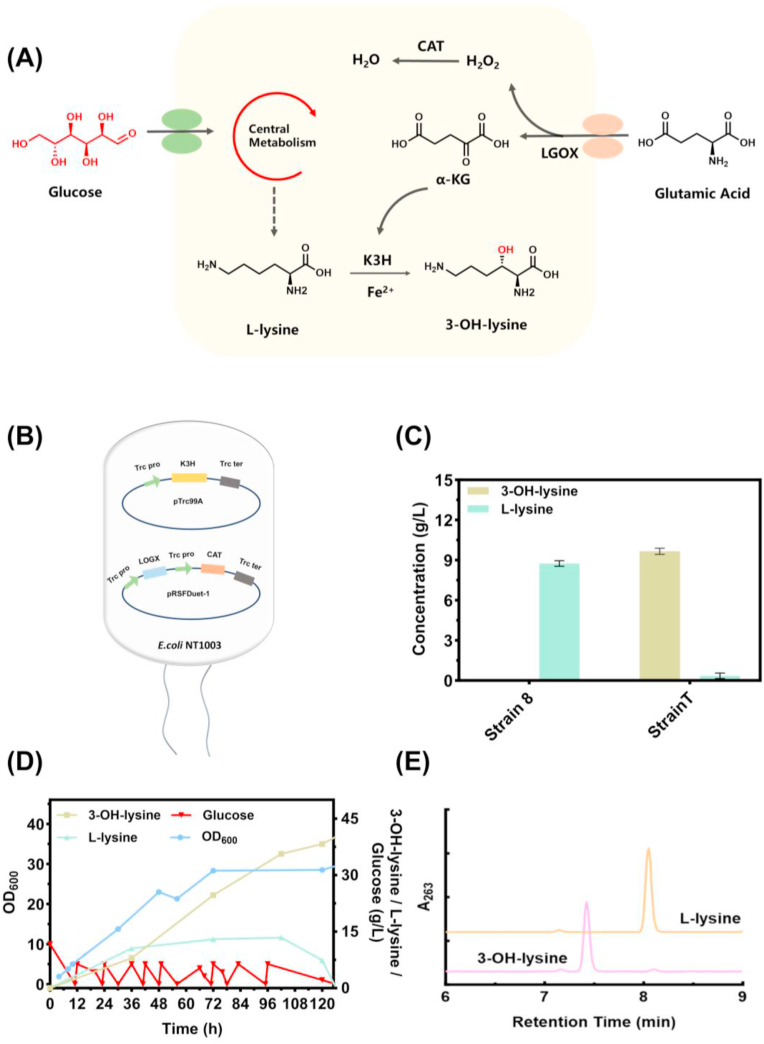 Figure 5
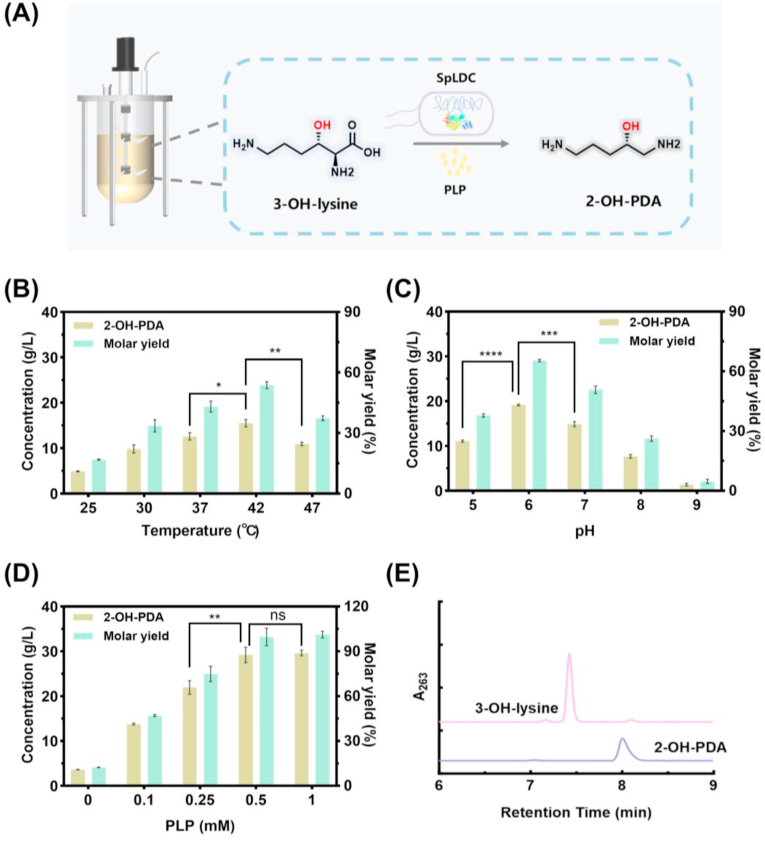 Figure 6
Peer Reviews
No public reviews on file for this paper yet. If you reviewed it on a platform where reviews are public (OpenReview, ICLR, NeurIPS, ICML), you can paste yours below so the community can read it here.
Videos
No videos yet. Explain this paper in a talk, walkthrough, or lecture? Add one.
Taxonomy
TopicsEnzyme Structure and Function · Microbial Metabolic Engineering and Bioproduction · Amino Acid Enzymes and Metabolism