Sweat gland carcinoma with neuroendocrine differentiation (SCAND) arising in the axilla: A case report highlighting diagnostic challenges and surgical management
Maiko Inada, Takashi Nouchi, Yoshifumi Iwahashi, Miwako Miyasaka, Yutaka Inaba, Shinichi Asamura

TL;DR
A rare case of sweat gland carcinoma with neuroendocrine features in the axilla is reported, emphasizing the difficulty in diagnosis and the need for thorough surgical management.
Contribution
This case report adds to the limited literature on SCAND by highlighting diagnostic and surgical challenges in a real-world clinical setting.
Findings
SCAND was diagnosed after initial misdiagnosis as an epidermal cyst, requiring re-excision and lymph node dissection.
Immunohistochemistry confirmed neuroendocrine differentiation and hormone-related markers in tumor cells.
No recurrence or metastasis was observed at 12 months post-surgery, despite extensive lymph node involvement.
Abstract
Sweat gland carcinoma with neuroendocrine differentiation (SCAND) is a rare, newly recognized cutaneous adnexal tumor arising from sweat glands and characterized by neuroendocrine features. Given its rarity and resemblance to benign lesions, clinical diagnosis can be challenging. A 73-year-old man presented with a 40-year history of intermittent discharge from a right axillary mass, which had initially been diagnosed as an epidermal cyst. Following lesion excision along the tumor margin at a local clinic, histopathological analysis revealed apocrine carcinoma, and the surgical margin could not be definitively confirmed to be negative. He was then referred to our department, where positron emission tomography-computed tomography demonstrated abnormal uptake in the right axillary lymph nodes, with a maximum standardized uptake value of 5.70. We performed wide local excision with a 1-cm…
Genes, proteins, chemicals, diseases, species, mutations and cell lines named across the full text — each resolved to its canonical identifier and authoritative record.
Click any figure to enlarge with its caption.
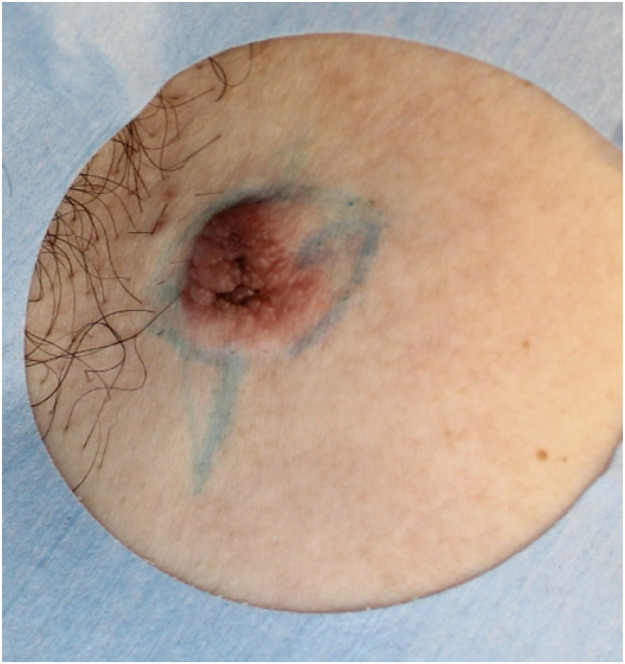 Figure 1
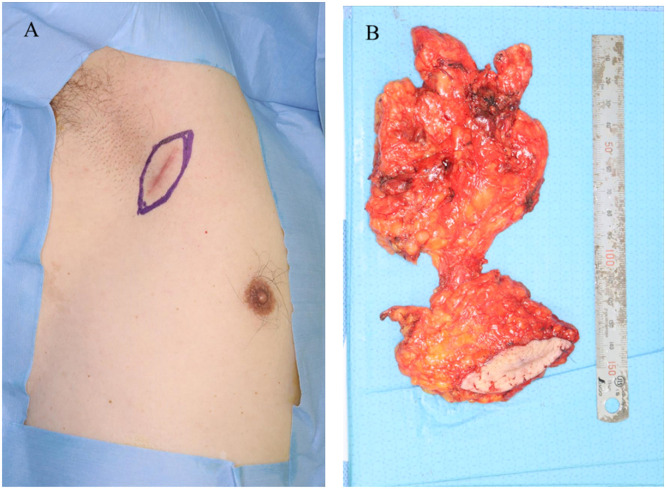 Figure 2
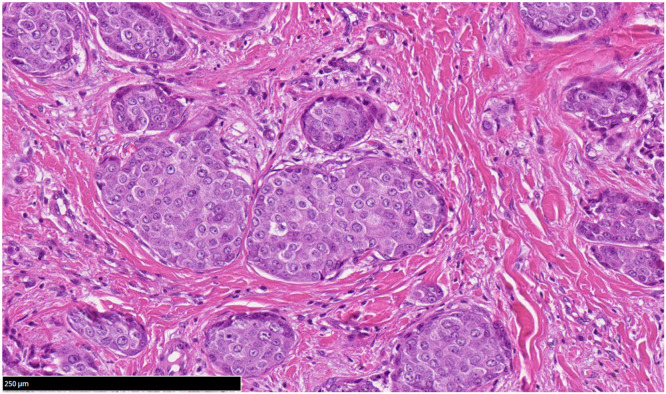 Figure 3
Peer Reviews
No public reviews on file for this paper yet. If you reviewed it on a platform where reviews are public (OpenReview, ICLR, NeurIPS, ICML), you can paste yours below so the community can read it here.
Videos
No videos yet. Explain this paper in a talk, walkthrough, or lecture? Add one.
Taxonomy
TopicsCancer and Skin Lesions · Salivary Gland Tumors Diagnosis and Treatment · Oral and Craniofacial Lesions