Safety and efficacy of long-term filgotinib treatment in Japanese patients with ulcerative colitis: an interim subgroup analysis of the SELECTION long-term extension study
Katsuyoshi Matsuoka, Erina Hata, Toshihiko Kaise, Christine Rudolph, Toshifumi Hibi

TL;DR
This study evaluated the long-term safety and effectiveness of filgotinib in Japanese patients with ulcerative colitis, finding it to be generally safe and beneficial over up to three years.
Contribution
The study provides new long-term safety and efficacy data for filgotinib in Japanese patients with ulcerative colitis.
Findings
Filgotinib showed acceptable long-term safety with infection and herpes zoster rates of 54.4 and 3.9 per 100 cPYE, respectively.
Completers maintained over 50% remission in health-related quality of life and biomarkers after 96 weeks.
Non-responders showed improved remission rates in symptoms, quality of life, and biomarkers after 144 weeks.
Abstract
Filgotinib is an oral, once-daily, Janus kinase 1 preferential inhibitor approved for ulcerative colitis. This interim analysis assessed long-term outcomes of filgotinib in Japanese patients with moderate-to-severe ulcerative colitis. In the long-term extension of the phase 2b/3 SELECTION trial (SELECTIONLTE; NCT02914535), SELECTION completers (Week 10 responders) continued filgotinib 200 mg (FIL200), filgotinib 100 mg (FIL100), or placebo, and non–responders received FIL200. Here, safety was evaluated over ⁓4 years in Japanese patients who received FIL200 in SELECTIONLTE using exposure-adjusted incidence rates (EAIRs) per 100 censored patient-years of exposure (cPYE). Efficacy was assessed over 96 weeks in Japanese completers and 144 weeks in Japanese non–responders who received filgotinib (FIL200 for completers; FIL100 or FIL200 for non–responders) in SELECTION and FIL200 in…
Genes, proteins, chemicals, diseases, species, mutations and cell lines named across the full text — each resolved to its canonical identifier and authoritative record.
Click any figure to enlarge with its caption.
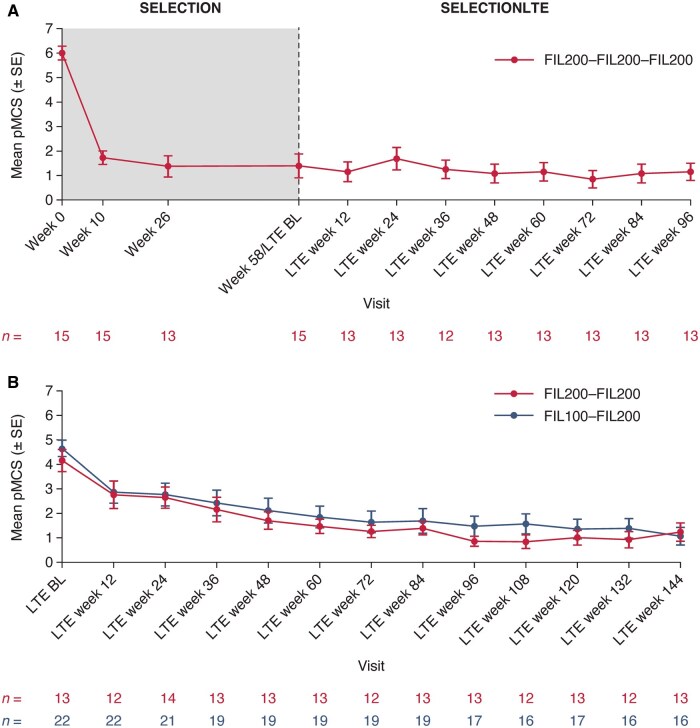 Figure 1
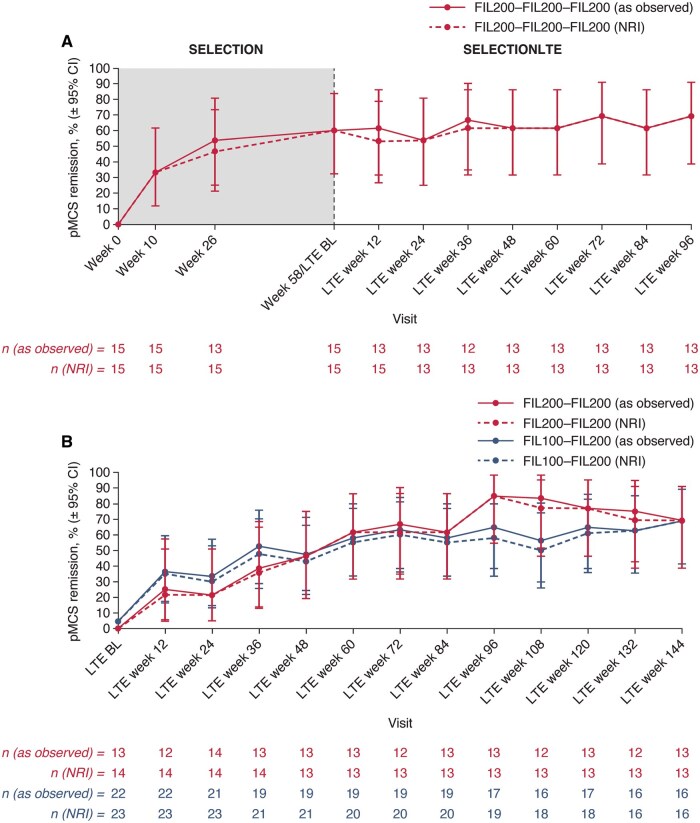 Figure 2
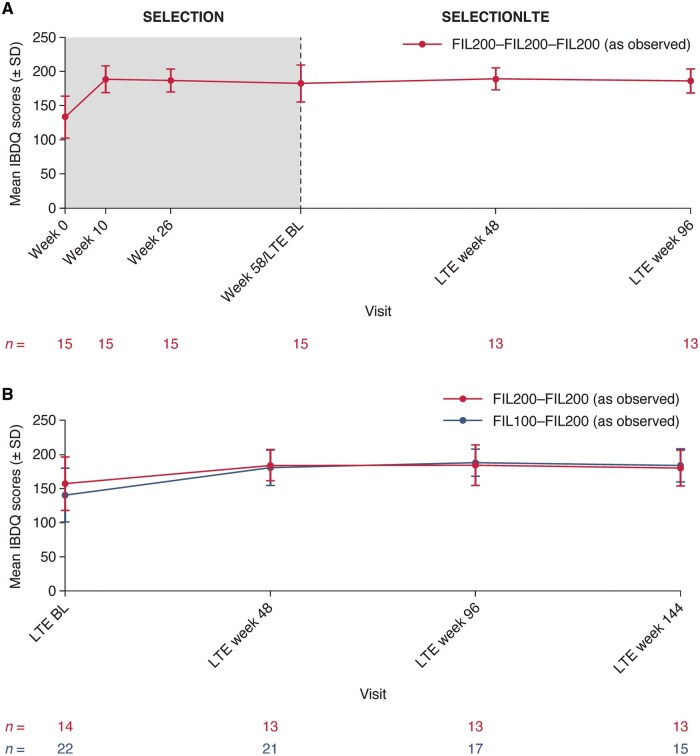 Figure 3
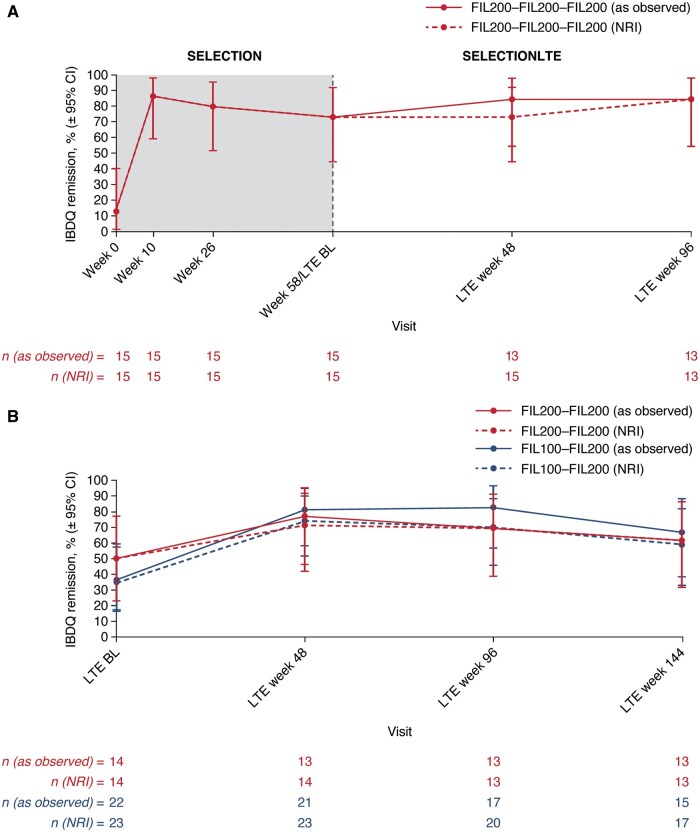 Figure 4
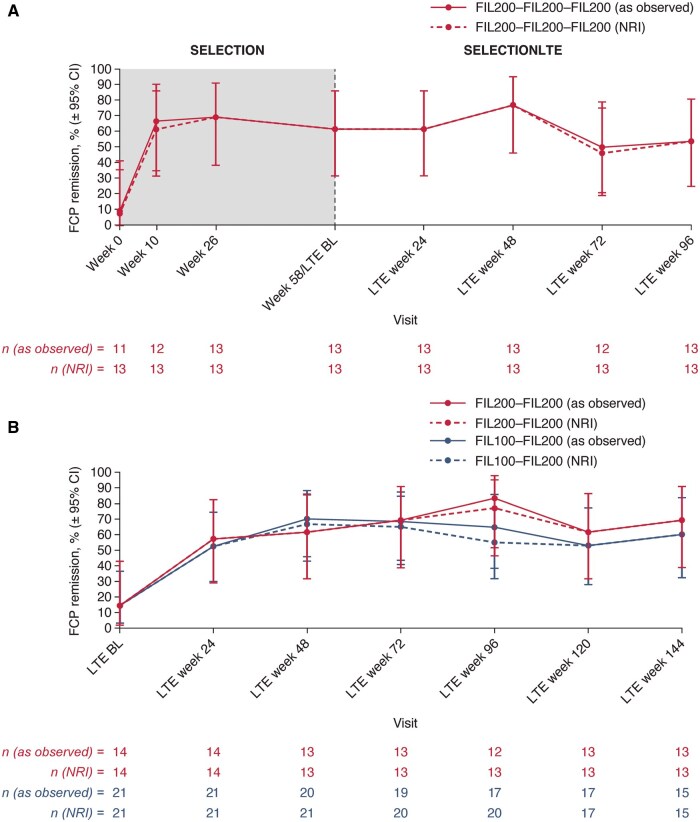 Figure 5
Peer Reviews
No public reviews on file for this paper yet. If you reviewed it on a platform where reviews are public (OpenReview, ICLR, NeurIPS, ICML), you can paste yours below so the community can read it here.
Videos
No videos yet. Explain this paper in a talk, walkthrough, or lecture? Add one.
Taxonomy
TopicsInflammatory Bowel Disease · Rheumatoid Arthritis Research and Therapies · Spondyloarthritis Studies and Treatments