Multidimensional cognitive reserve and cognitive outcomes in glioblastoma: a pre- and postoperative analysis
Sophie Rauch, Yizhou Wan, Ajay Halai, Tom Manly, Haiyan Zheng, Roxanne Mayrand, Rohitashwa Sinha, Alexis Joannides, Richard Mair, Robert Morris, Thomas Santarius, Matthew Lambon-Ralph, Stephen J. Price

TL;DR
This study explores how cognitive reserve, including education and lifestyle, affects cognitive function in glioblastoma patients before and after surgery.
Contribution
The study introduces a multidimensional assessment of cognitive reserve and its differential impact on cognitive outcomes in glioblastoma patients.
Findings
Higher cognitive reserve predicts better preoperative performance in global deficit, executive function, memory, and recognition memory.
Education directly affects executive function, independent of lifestyle activities.
Work and leisure activities are linked to better recognition memory in the acute postoperative phase.
Abstract
Glioblastoma (GBM) is the most aggressive primary brain tumour in adults. One factor which is widely considered to have protective effects for cognition in age-related decline is cognitive reserve. However, little research has been done into the relationship between cognitive reserve and cognitive function in GBM. We investigated whether a multidimensional construct of cognitive reserve predicts cognitive outcomes before and after surgery. 43 adult patients with GBM (mean age = 62) took the Cognitive Reserve Index Questionnaire and participated in the OCS-BRIDGE cognitive screen at preoperatively, at 72 h and 6–8 weeks postoperatively. Linear regressions and mediation analyses assessed the relationship between cognitive reserve proxies (education, work and leisure) and cognitive performance across domains. Higher overall cognitive reserve significantly predicted better preoperative…
Genes, proteins, chemicals, diseases, species, mutations and cell lines named across the full text — each resolved to its canonical identifier and authoritative record.
Click any figure to enlarge with its caption.
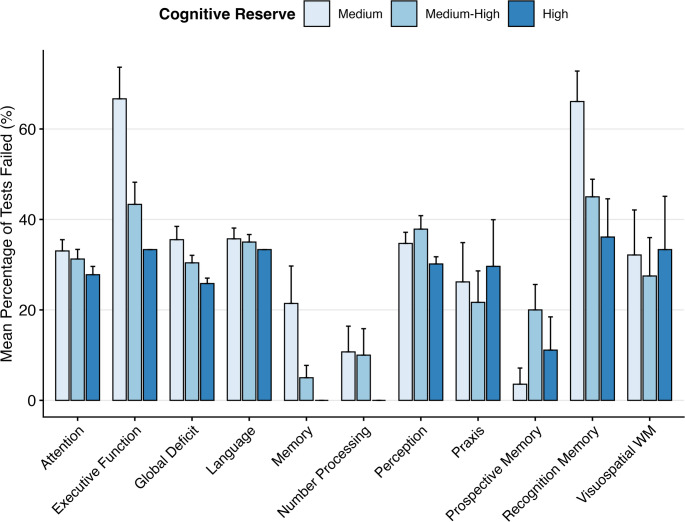 Figure 3
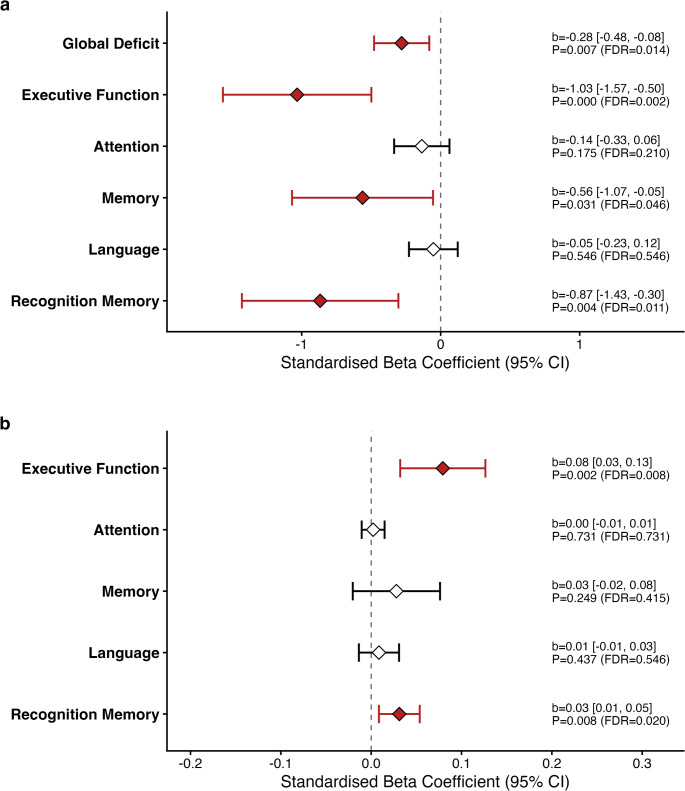 Figure 4
Peer Reviews
No public reviews on file for this paper yet. If you reviewed it on a platform where reviews are public (OpenReview, ICLR, NeurIPS, ICML), you can paste yours below so the community can read it here.
Videos
No videos yet. Explain this paper in a talk, walkthrough, or lecture? Add one.
Taxonomy
TopicsGlioma Diagnosis and Treatment · Cancer-related cognitive impairment studies · Dementia and Cognitive Impairment Research