A new-engineered integrative tool to target the terminal compartment of the Streptomyces chromosome
Nicolas Delhaye, François R. Pélé, Hoda Jaffal, Sylvie Lautru, Hervé Leh, Stéphanie G. Bury-Moné

TL;DR
This paper introduces a new genetic engineering tool for Streptomyces bacteria that targets the terminal part of the chromosome, enabling efficient integration of transgenes.
Contribution
A new integrative tool based on the Samy phage that targets the terminal compartment of Streptomyces chromosomes is introduced.
Findings
Samy integrase mediates specific integration in six Streptomyces strains from different clades.
The Samy-attB site is conserved and located in the terminal compartment of most Streptomyces chromosomes.
Heterologous expression of albonoursin gene clusters from Samy, PhiC31, and R4-attB sites yields equivalent production levels.
Abstract
Phages are a valuable resource for the genetic engineering of Streptomyces antibiotic-producing bacteria. Indeed, a few integrative vectors based on phage integrase are available to insert transgenes at specific genomic loci. Chromosome conformation captures previously demonstrated that the Streptomyces linear chromosome is organized in two spatial compartments: the central compartment encompassing the most conserved and highly expressed genes in exponential phase, and the terminal compartments enriched in poorly conserved sequences including specialized metabolite biosynthetic gene clusters. This study introduces a new integrative tool based on a recently described phage, Samy, which specifically targets the terminal compartment of its native host chromosome. Samy is related to PhiC31 phage and, like the latter, encodes a serine integrase. Whereas PhiC31 targets a site generally…
Genes, proteins, chemicals, diseases, species, mutations and cell lines named across the full text — each resolved to its canonical identifier and authoritative record.
Click any figure to enlarge with its caption.
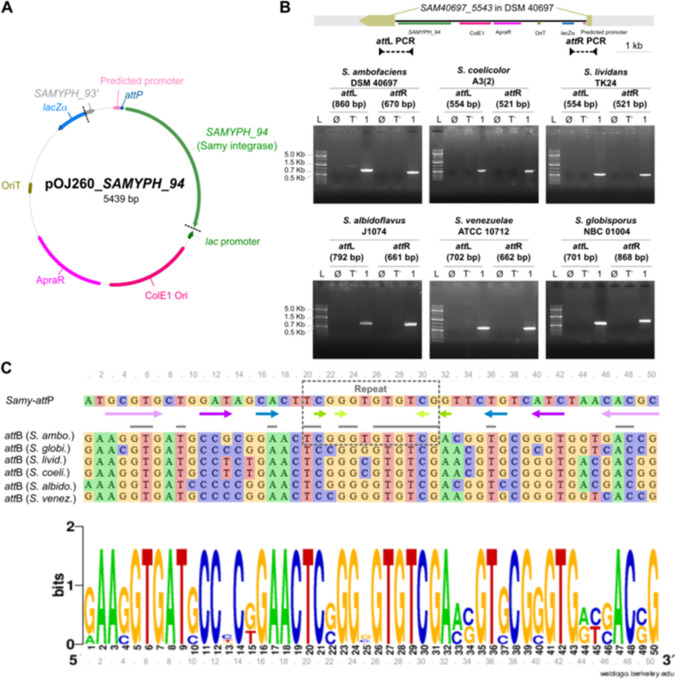 Figure 1
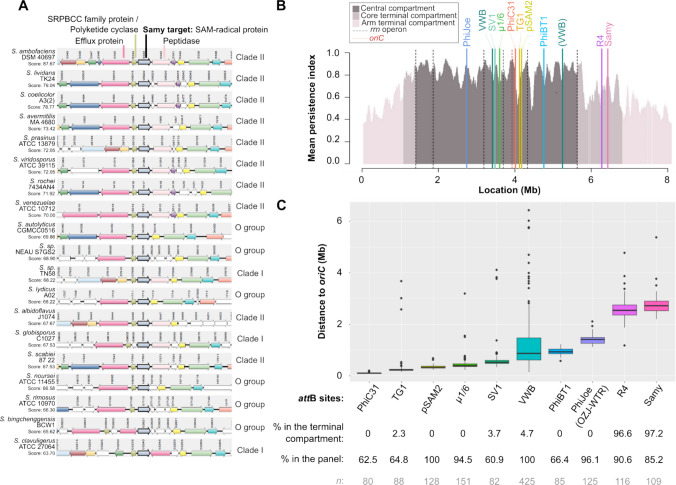 Figure 2
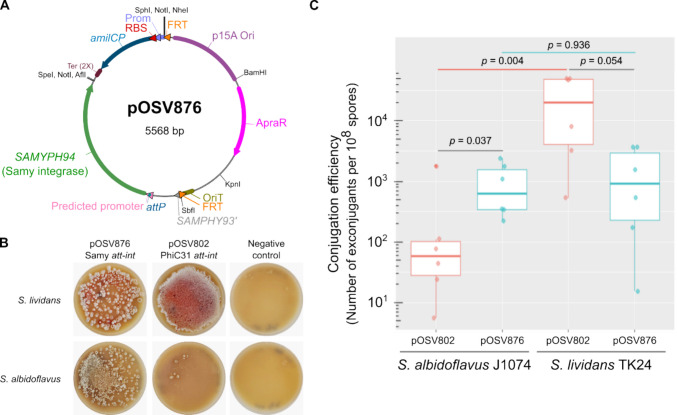 Figure 3
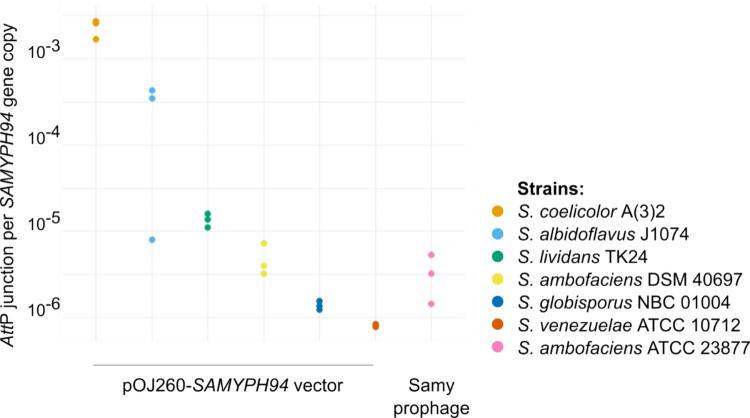 Figure 4
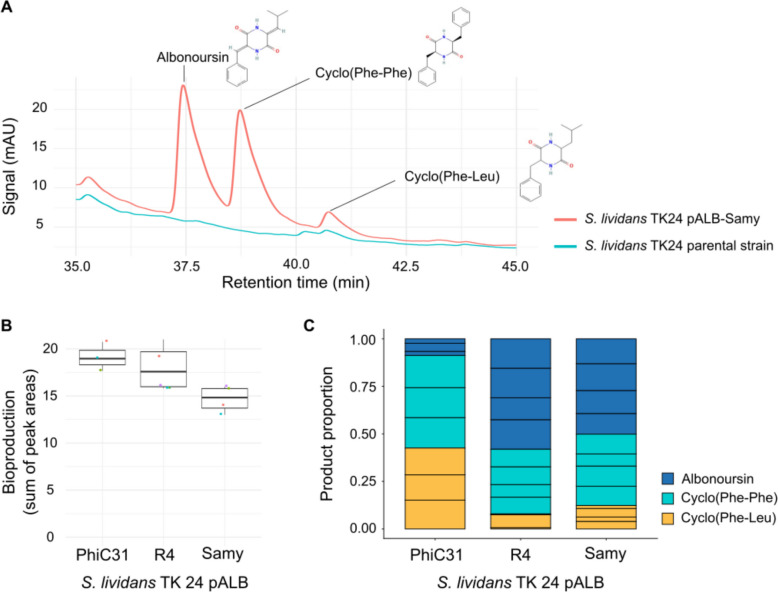 Figure 5
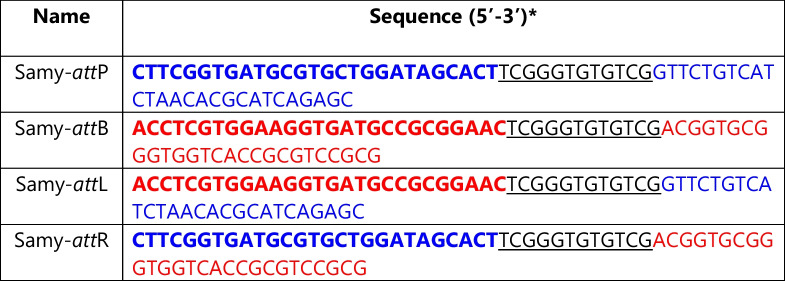 Figure 6
Peer Reviews
No public reviews on file for this paper yet. If you reviewed it on a platform where reviews are public (OpenReview, ICLR, NeurIPS, ICML), you can paste yours below so the community can read it here.
Videos
No videos yet. Explain this paper in a talk, walkthrough, or lecture? Add one.
Taxonomy
TopicsMicrobial Natural Products and Biosynthesis · Bacteriophages and microbial interactions · Cyclopropane Reaction Mechanisms