Genotypic and Phenotypic Characterization of Salmonella Typhimurium Strains Isolated from Swine in the Southern Region of Brazil
Giovana do Nascimento Pereira, Isabella Cardeal Campos, Carolina Nogueira Gomes, Felipe Pinheiro Vilela, Jalusa Deon Kich, Marc William Allard, Juliana Pfrimer Falcão

TL;DR
This study analyzed Salmonella Typhimurium strains from swine in Brazil, finding they are genetically similar and possess virulence and stress survival traits that could pose risks to human health.
Contribution
The study provides new insights into the genetic and phenotypic traits of S. Typhimurium strains in Brazilian swine, highlighting potential public health concerns.
Findings
Most S. Typhimurium strains from swine in Brazil are genetically similar with ≥98.2% ANI similarity.
All strains carried key virulence genes and showed high survival under acid and oxidative stress.
The presence of heavy metal tolerance genes raises concerns about antibiotic resistance co-selection.
Abstract
Salmonella Typhimurium has long been one of the most frequently isolated serovars in animal and human infections. Pork has been involved in the dissemination of S. Typhimurium to humans and plays an important role in the epidemiology of this infection. This study aimed to characterize genotypically and phenotypically S. Typhimurium strains isolated from swine in Brazil. The genomic relatedness among 17 of the 18 S. Typhimurium genomes was ≥ 90% according to Gegenees analysis, while ANI analysis showed ≥ 98.2% similarity across all 18 genomes, with most strains belonging to SNP cluster PDS000201117.2. Virulence factors and stress-related genes were searched at NCBI Pathogen Detection. All strains carried the iroB, iroC, sinH, asr, golS, and golT genes. Under acid stress, all strains survived after 10 min and 1 h. Under oxidative stress, 17 (94.44%) strains survived after 10 min, and 11…
Genes, proteins, chemicals, diseases, species, mutations and cell lines named across the full text — each resolved to its canonical identifier and authoritative record.
Click any figure to enlarge with its caption.
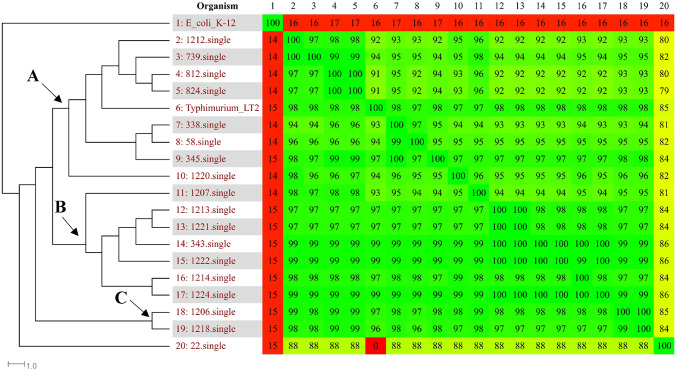 Figure 1
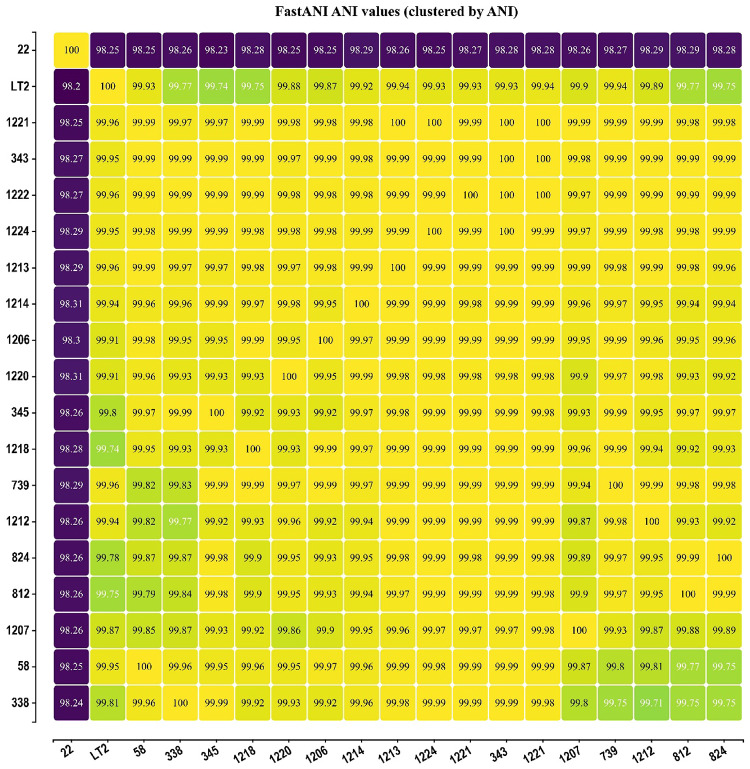 Figure 2
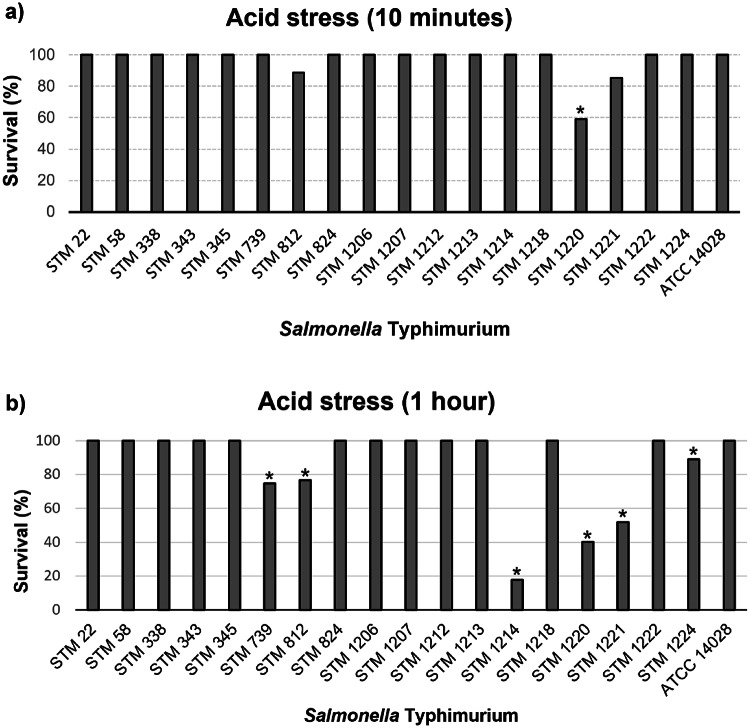 Figure 3
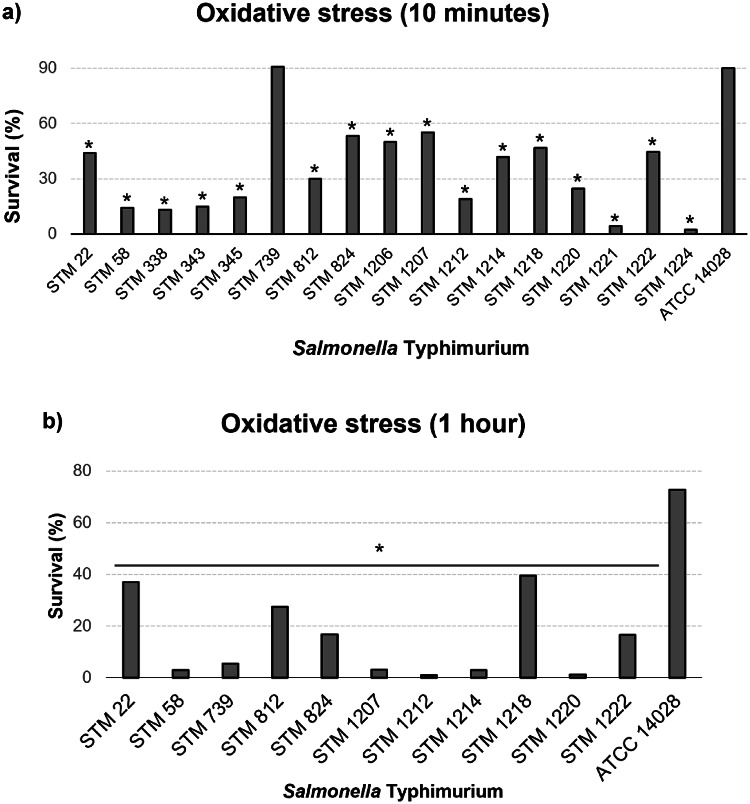 Figure 4
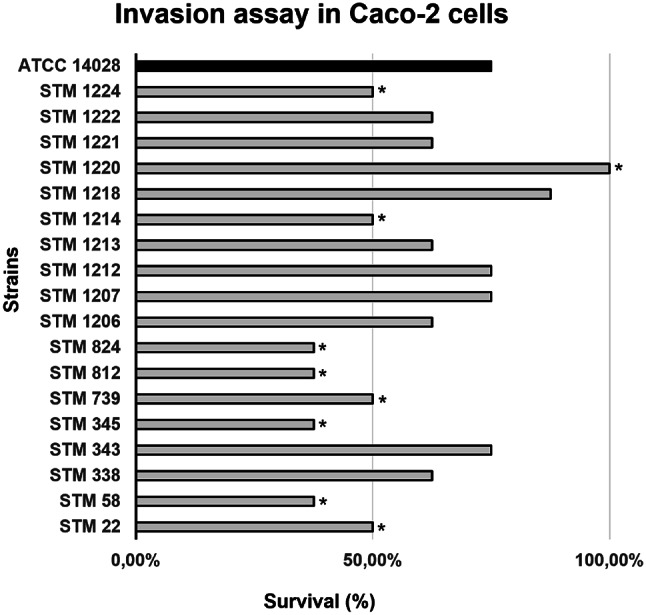 Figure 5
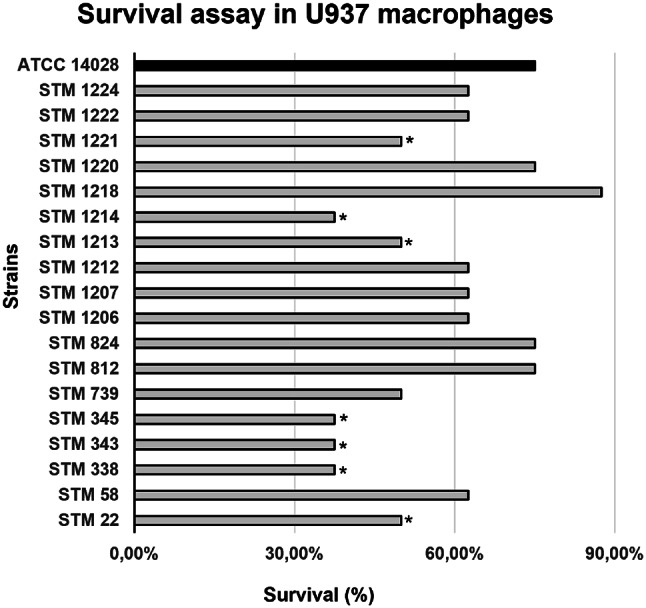 Figure 6
Peer Reviews
No public reviews on file for this paper yet. If you reviewed it on a platform where reviews are public (OpenReview, ICLR, NeurIPS, ICML), you can paste yours below so the community can read it here.
Videos
No videos yet. Explain this paper in a talk, walkthrough, or lecture? Add one.
Taxonomy
TopicsSalmonella and Campylobacter epidemiology · Veterinary medicine and infectious diseases · Escherichia coli research studies