Post-Feeding Larval Mobility and Burial Behaviour of two Forensically Relevant Species, Peckia (Peckia) chrysostoma (Wiedemann) and Peckia (Sarcodexia) lambens (Wiedemann) (Diptera: Sarcophagidae)
Henrique Rafael Pontes Ferreira, Taciano Moura Barbosa, Simão Dias Vasconcelos

TL;DR
This study compares the movement and burial behavior of two fly species important in forensic investigations, helping experts estimate time and location of death more accurately.
Contribution
The study introduces a new Larval Mobility Arena to quantify and compare larval dispersal and burial behavior in two forensically relevant fly species.
Findings
Peckia (P.) chrysostoma larvae moved faster and traveled farther than P. (S.) lambens.
Peckia (P.) chrysostoma showed oriented movement, while P. (S.) lambens dispersed in a scattered pattern.
Both species buried themselves immediately upon reaching the substrate, with no difference in burrowing time.
Abstract
In forensic entomology (FE), understanding larval dispersal is crucial for determining key data such as the time, distance, trajectory, speed, and burial depth for pupation. This study aimed to characterize the mobility, horizontal dispersal and burial behaviour of larvae of two forensically important species of Sarcophagidae: Peckia (Peckia) chrysostoma (Wiedemann) and Peckia (Sarcodexia) lambens (Wiedemann). To achieve that, we designed and assessed the efficacy of a Larval Mobility Arena (LMA). Third-instar larvae of each species were released in the centre of the LMA and the following variables were quantified: speed, trajectory orientation, distance travelled, time to reach the soil, and time to burial. Peckia (P.) chrysostoma showed a higher speed (x̄ = 1.58) (P = 0.002) and a greater total distance travelled (x̄ = 61.58) (P = 0.04) compared to P. (S.) lambens (speed x̄ = 1.31;…
Genes, proteins, chemicals, diseases, species, mutations and cell lines named across the full text — each resolved to its canonical identifier and authoritative record.
Click any figure to enlarge with its caption.
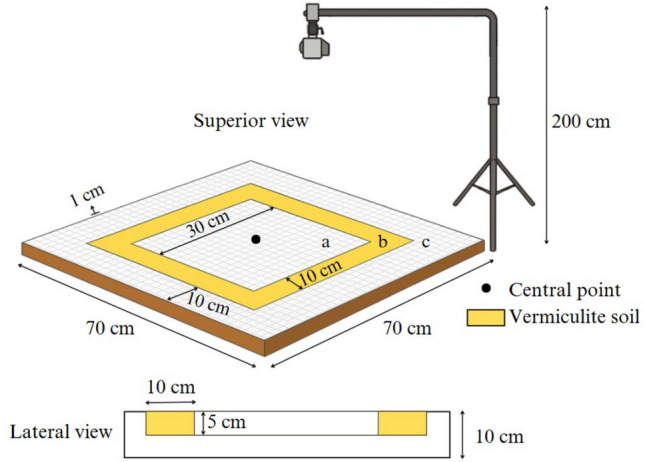 Figure 1
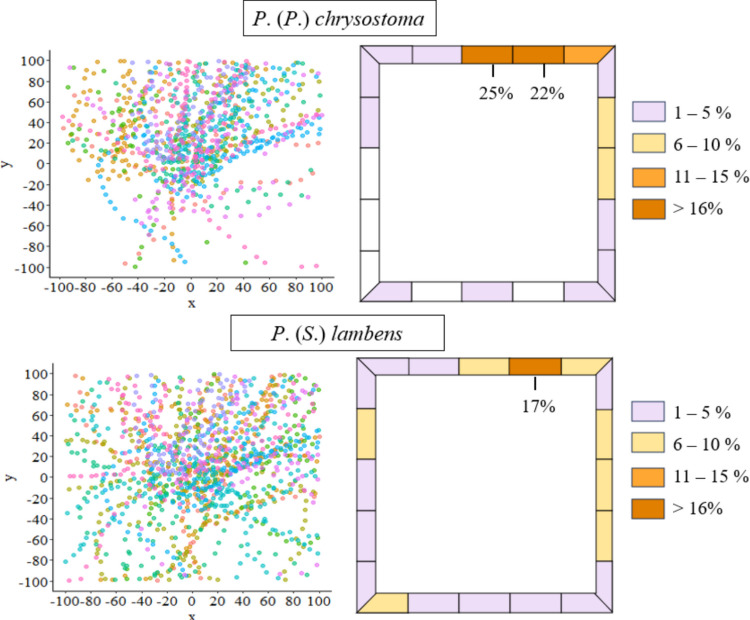 Figure 2
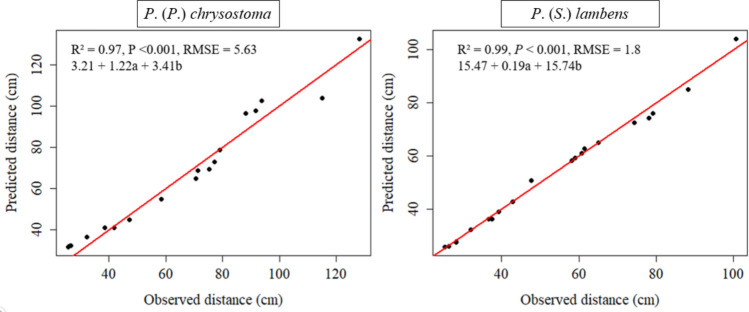 Figure 3
Peer Reviews
No public reviews on file for this paper yet. If you reviewed it on a platform where reviews are public (OpenReview, ICLR, NeurIPS, ICML), you can paste yours below so the community can read it here.
Videos
No videos yet. Explain this paper in a talk, walkthrough, or lecture? Add one.
Taxonomy
TopicsForensic Entomology and Diptera Studies · Autopsy Techniques and Outcomes · Diptera species taxonomy and behavior