Cutaneous α-Synuclein Pathology as a Differential Marker: A Histological and Statistical Comparison across Neurodegenerative Disease Groups
Dorota Šebelová, Kateřina Menšíková, Michaela Kaiserová, Lenka Satke, Zuzana Grambalová, Kateřina Čížková, Zdeněk Tauber, Kateřina Klíčová, Dominik Hraboš, Sarah E. V. Cook, Jana Zapletalová, Petr Kaňovský

TL;DR
Skin biopsies can detect early signs of neurodegenerative diseases by identifying phosphorylated α-synuclein and measuring nerve fiber density.
Contribution
This study demonstrates that cutaneous α-synuclein pathology and IENFD patterns can serve as differential diagnostic markers for neurodegenerative diseases.
Findings
p-α-syn was significantly more prevalent in patient groups compared to controls.
IENFD was most reduced in tauopathies and most preserved in MSA.
p-α-syn positivity correlated with shorter disease duration, suggesting early detection potential.
Abstract
There is an urgent need for early and accurate biomarkers of neurodegenerative disorders. Due to the high innervation and accessibility of the skin, a skin biopsy is a minimally invasive method of detecting phosphorylated α-synuclein (p-α-syn) and assessing intraepidermal nerve fiber density (IENFD). We analyzed biopsies taken from the back and the leg of patients with parkinsonian syndromes (Park.sy.), α-synucleinopathies, multiple system atrophies (MSA), tauopathies, and other neurological disorders, as well as from healthy controls. Double immunofluorescence was performed for p-α-syn (Ser129) and protein gene product 9.5 (PGP 9.5), alongside quantitative IENFD assessment. p-α-syn was significantly more prevalent in the patient groups than in the control group. The highest prevalence was observed in patients with parkinsonian syndromes, α-synucleinopathies and MSA. Tauopathies showed…
Genes, proteins, chemicals, diseases, species, mutations and cell lines named across the full text — each resolved to its canonical identifier and authoritative record.
Click any figure to enlarge with its caption.
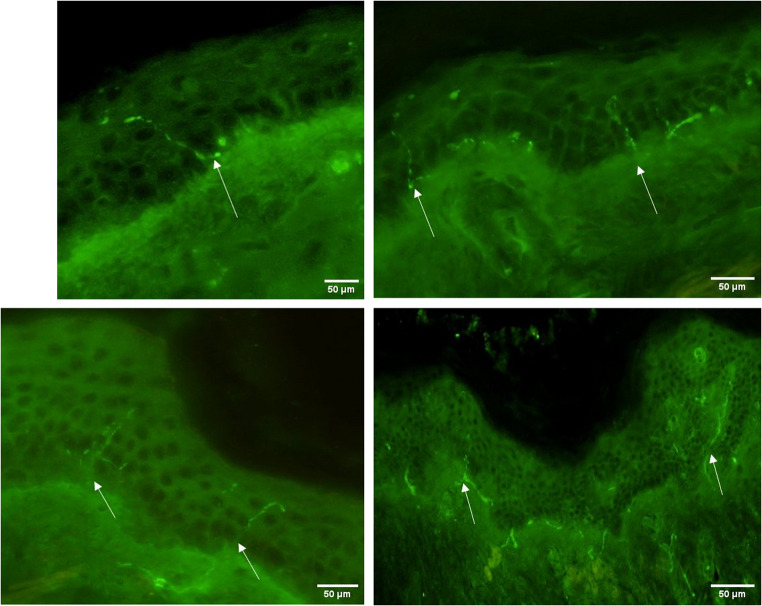 Figure 1
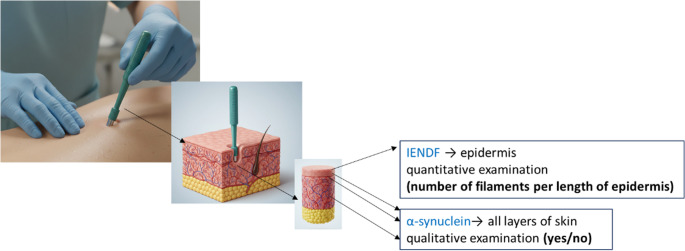 Figure 2
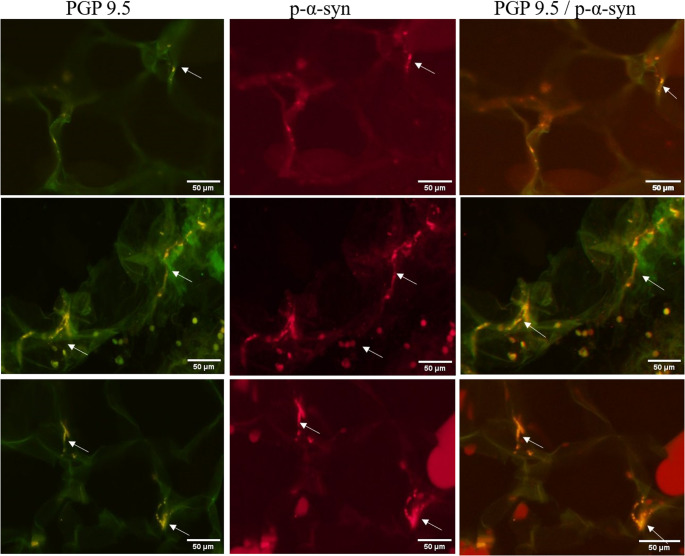 Figure 3
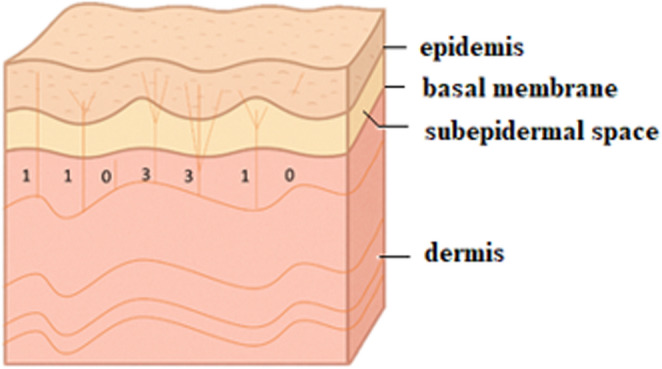 Figure 4
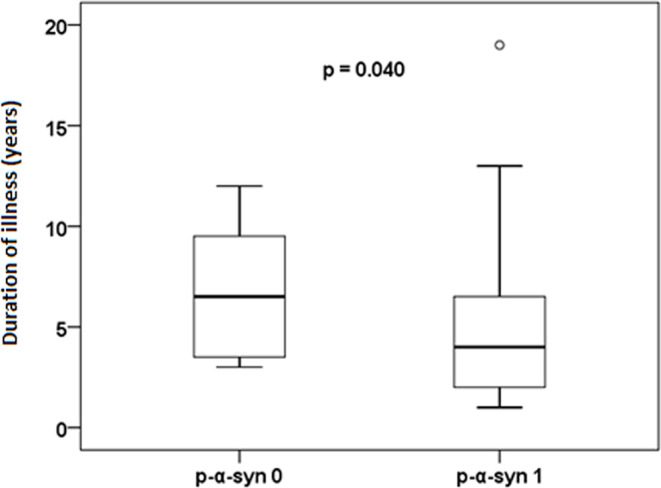 Figure 5
 Figure 6
Peer Reviews
No public reviews on file for this paper yet. If you reviewed it on a platform where reviews are public (OpenReview, ICLR, NeurIPS, ICML), you can paste yours below so the community can read it here.
Videos
No videos yet. Explain this paper in a talk, walkthrough, or lecture? Add one.
Taxonomy
TopicsParkinson's Disease Mechanisms and Treatments · Botulinum Toxin and Related Neurological Disorders · Neurological disorders and treatments