Underuse of bystander defibrillation on females during out-of-hospital cardiac arrest: a retrospective observational study in Aotearoa New Zealand
Verity F. Todd, Heather Hutchinson, Vinuli Withanarachchie, Andy Swain, Sarah Maessen, Aroha Brett, Bridget Dicker

TL;DR
Women in New Zealand are less likely to receive bystander defibrillation during cardiac arrests, despite equal CPR rates, suggesting a need for targeted interventions.
Contribution
This study identifies sex disparities in bystander defibrillation in New Zealand and explores how patient and event characteristics mediate these disparities.
Findings
Females had 39% lower odds of receiving bystander defibrillation compared to males after adjusting for covariates.
In shockable rhythms, the sex disparity in defibrillation was not significant after adjustment.
Ethnicity and socioeconomic deprivation contribute to layered inequities in emergency cardiac care.
Abstract
•High overall bystander CPR rates (76.9%) with no sex-based differences.•Only 1.9% of females received defibrillation vs 5.4% of males in cardiac arrest.•Females had 39% lower odds of bystander defibrillation despite equal CPR rates.•In shockable rhythms, patient and event characteristics mediate the sex disparity in bystander defibrillation.•Ethnicity and deprivation create layered inequities in emergency cardiac care. High overall bystander CPR rates (76.9%) with no sex-based differences. Only 1.9% of females received defibrillation vs 5.4% of males in cardiac arrest. Females had 39% lower odds of bystander defibrillation despite equal CPR rates. In shockable rhythms, patient and event characteristics mediate the sex disparity in bystander defibrillation. Ethnicity and deprivation create layered inequities in emergency cardiac care. Early bystander CPR and defibrillation improve…
Genes, proteins, chemicals, diseases, species, mutations and cell lines named across the full text — each resolved to its canonical identifier and authoritative record.
Click any figure to enlarge with its caption.
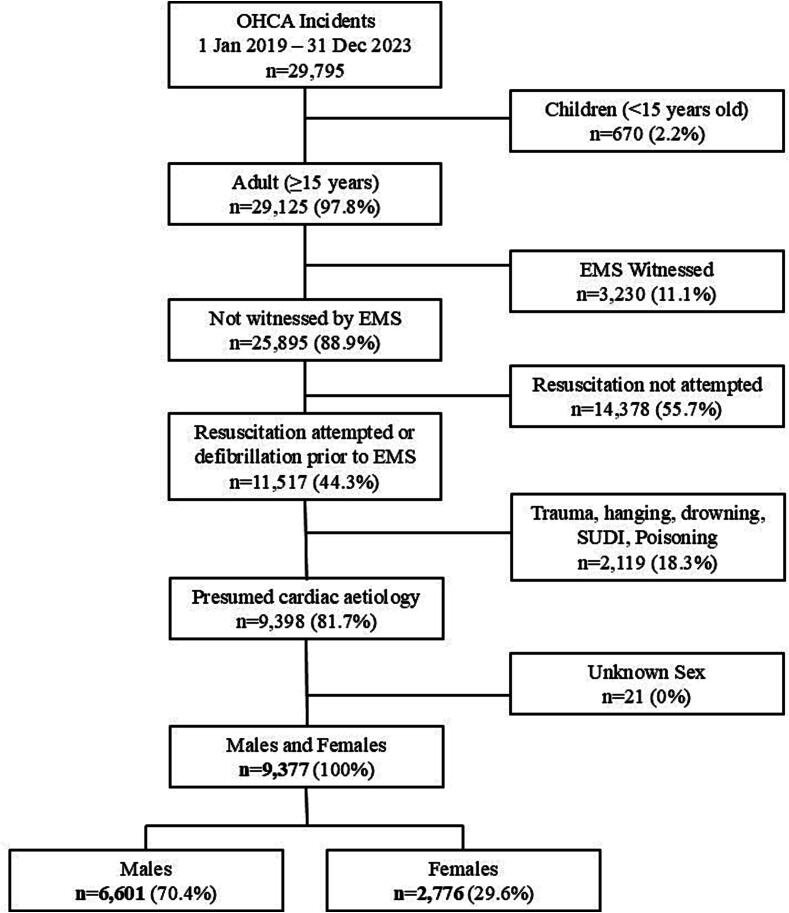 Figure 1
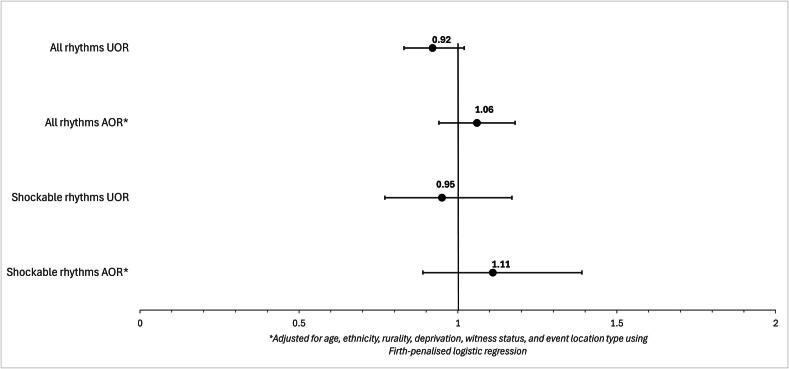 Figure 2
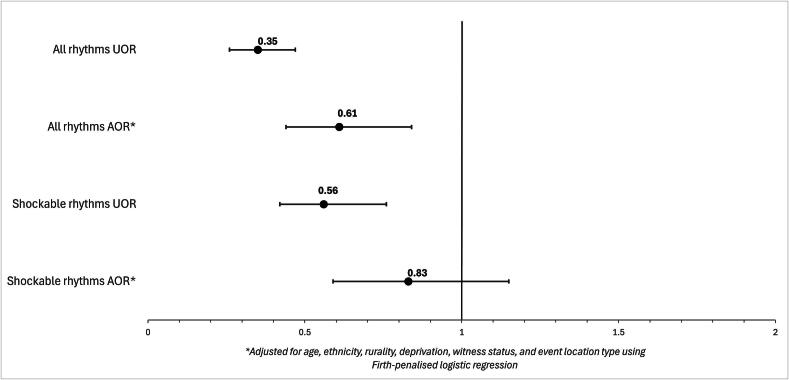 Figure 3
Peer Reviews
No public reviews on file for this paper yet. If you reviewed it on a platform where reviews are public (OpenReview, ICLR, NeurIPS, ICML), you can paste yours below so the community can read it here.
Videos
No videos yet. Explain this paper in a talk, walkthrough, or lecture? Add one.
Taxonomy
TopicsCardiac Arrest and Resuscitation · Simulation-Based Education in Healthcare · Mechanical Circulatory Support Devices