Improved Safety of Nucleic Acid Amplification Technology Combined With Serological Tests for Screening Blood Donors: A Systematic Review and Meta‐Analysis
Heloise Skiavine Madeira, Aline Ávila Brustolin, Marcos Elias da Silva Almeida, Maiara Vanusa Guedes Ribeiro, Raul Gomes Aguera, Fernando Américo Jorge, Luciana Dias Ghiraldi, Débora de Castro Moreira, Maria Valdrinez Campana Lonardoni, Dennis Armando Bertolini

TL;DR
Combining nucleic acid amplification tests with serological tests improves blood donor screening safety for Hepatitis C, HIV, and Hepatitis B.
Contribution
Demonstrates the added safety of combining NAT with serological tests for blood donor screening through a systematic review and meta-analysis.
Findings
HBV infection was most common among donors with positive NAT results.
Positive NAT results after negative serology showed significant pooled frequencies for HBV and HCV but not for HIV.
Molecular testing significantly improves detection of bloodborne infections during the diagnostic window period.
Abstract
No laboratory test performed to date provides an absolute guarantee for detecting infectious agents. Nucleic acid amplification techniques/tests (NAT) associated with serological tests can increase safety and provide greater diagnostic accuracy for patients. We investigated the added safety of NAT technology combined with serological tests for screening blood donors for Hepatitis C virus (HCV), human immunodeficiency virus (HIV) and hepatitis B virus (HBV). Data were obtained from a systematic search conducted up until march 30, 2024 in five electronic databases: PubMed, Web of Science, Scopus, Embase, and the Cochrane library. Twenty‐nine studies, published between 1998 and 2023, were included in the review. Notably, HBV infection was predominant among donors with positive NAT results, with 425 cases, including 373 with positive serology and 52 with negative serology. Data from the…
Genes, proteins, chemicals, diseases, species, mutations and cell lines named across the full text — each resolved to its canonical identifier and authoritative record.
Click any figure to enlarge with its caption.
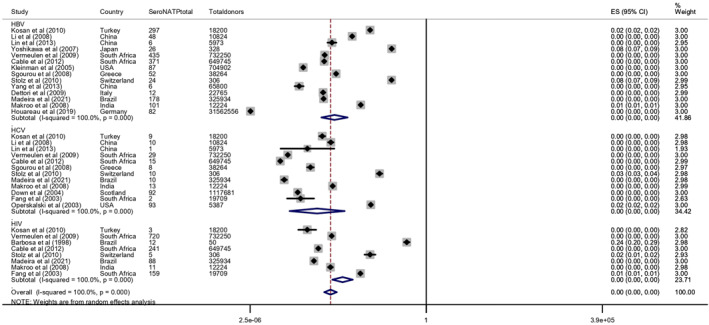 Figure 1
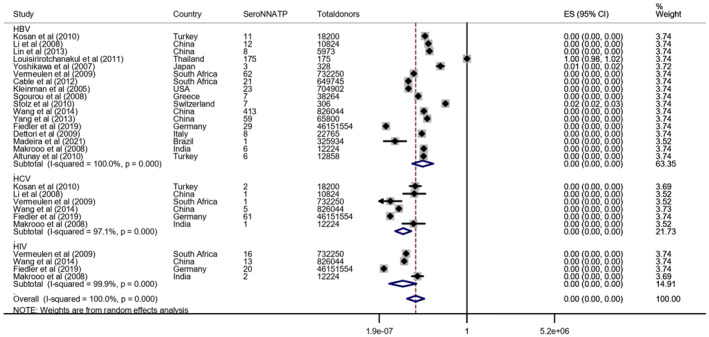 Figure 2
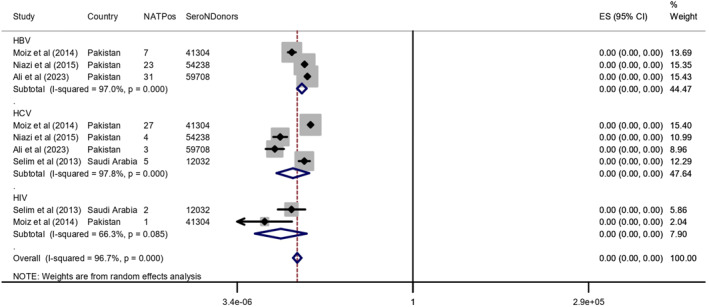 Figure 3
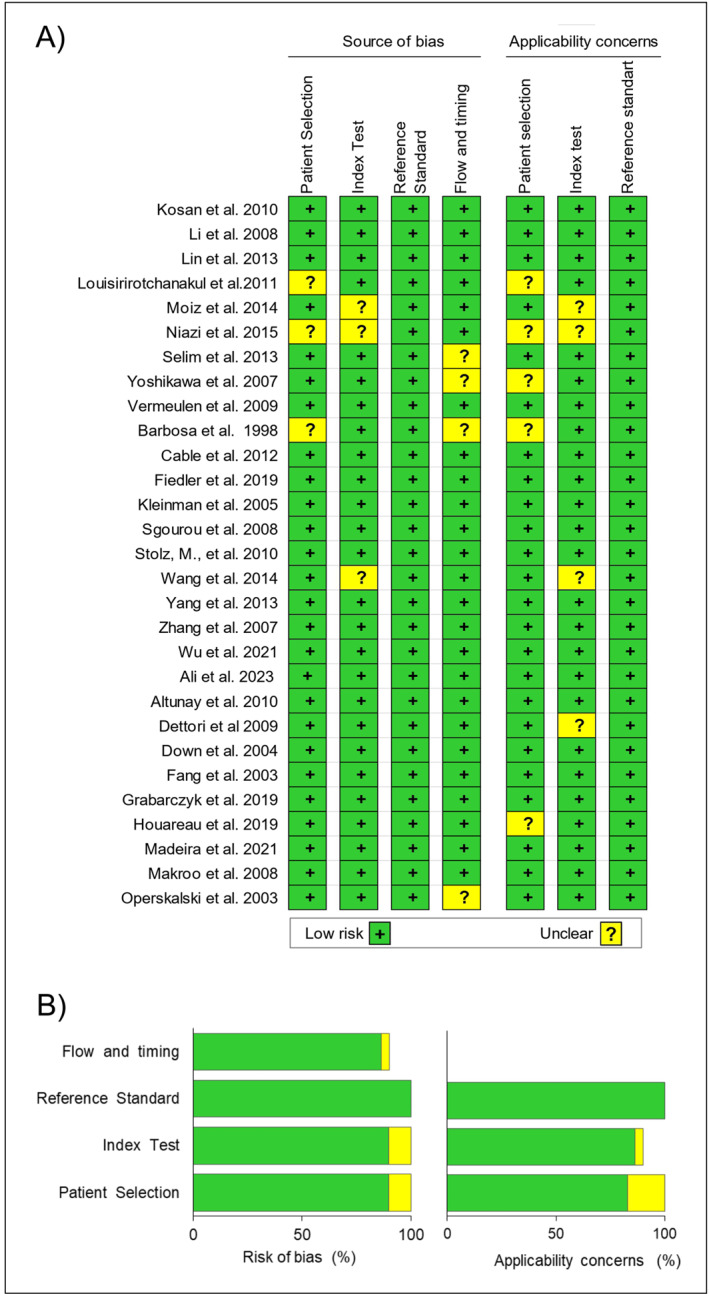 Figure 4
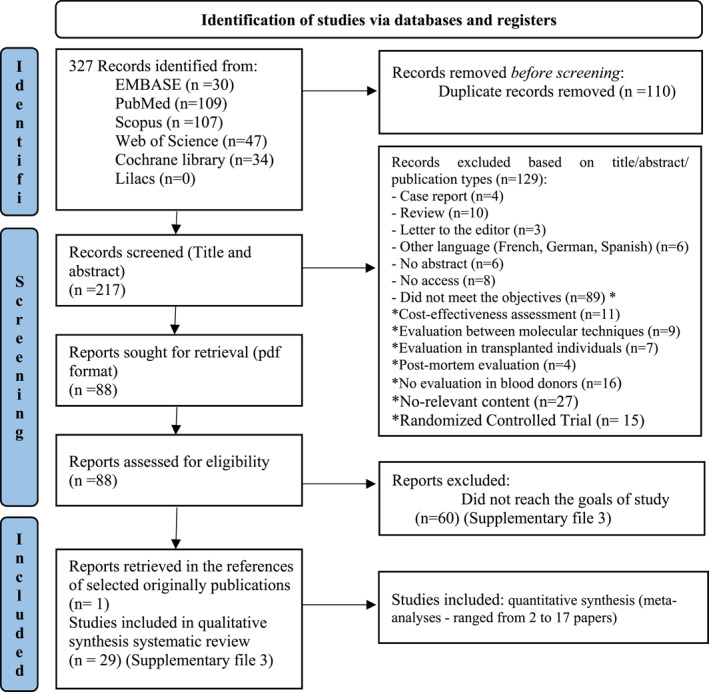 Figure 5
Peer Reviews
No public reviews on file for this paper yet. If you reviewed it on a platform where reviews are public (OpenReview, ICLR, NeurIPS, ICML), you can paste yours below so the community can read it here.
Videos
No videos yet. Explain this paper in a talk, walkthrough, or lecture? Add one.
Taxonomy
TopicsHepatitis B Virus Studies · Hepatitis C virus research · HIV Research and Treatment